
BuddhistCatholicContemplativeEvangelicalGeneral ChristianHinduJewishLatter-day SaintMuslimNew VisionsProgressive Christian
Beliefs
- Buddhist
- Catholic
- Contemplative
- Evangelical
- General Christian
- Hindu
- Jewish
- Latter-day Saint
- More Voices
- Muslim
- New Visions
- Pagan
- Progressive Christian
Topics
- Religion News
- Food and Religion
- Sports and Religion
- Religious Art
- Religious Music and Entertainment
- Religious Events
- History and Religion
- Style and Religion
- Politics and Religion
- Women in Religion
- Recreation Outdoors and Religion
- Business Finance and Religion
- Careers Workplace and Religion
- Education and Religion
- Family Parenting and Religion
- Health Fitness and Religion
- Home and Religion
- Relationships and Religion
- Technology and Religion
- Travel and Religion
Columnists
- Buddhist Columnists
- Business Finance and Religion Columnists
- Careers Workplace and Religion Columnists
- Catholic Columnists
- Contemplative Columnists
- Education and Religion Columnists
- Evangelists Columnists
- Family Parenting and Religion Columnists
- General Christian Columnists
- Health Fitness and Religion Columnists
- Hindu Columnists
- History and Religion Columnists
- Home and Religion Columnists
- Jewish Columnists
- More Voices Columnists
- Latter Day Columnists
- Muslim Columnists
- New Visions Columnists
- Nonreligious Columnists
- Pagan Columnists
- Politics and Religion Columnists
- Progressive Columnists
- Recreation Outdoors and Religion Columnists
- Relationships and Religion Columnists
- Religion News Columnists
- Religious Art Columnists
- Religious Events Columnists
- Religious Music and Entertainment Columnists
- Sports and Religion Columnists
- Style and Religion Columnists
- Technology and Religion Columnists
- Travel and Religion Columnists
- Women in Religion Columnists
Resource Library
- 2026 Calendar
- Library of World Religions
- The 100 Most Holy Places on Earth
- Patheos Answers
- Podcasts
- Videos
- Faith Leaders Database
- Anglican Episcopalian
- Bahai
- Baptist
- Buddhism
- Christianity
- Confucianism
- Eastern Orthodoxy
- Hinduism
- Holiness and Pentecostal
- ISKCON
- Islam
- Judaism
- Lutheran
- Methodist
- The Church of Jesus Christ of Latter-day Saints
- New Age
- Paganism
- Presbytarian and Reformed
- Protestantism
- Religion Behind the Scenes
- Roman Catholic
- Scientology
- Shia Islam
- Sikhism
- Sufism
- Sunni Islam
- Taoism
- Zen
- See all religions
Research Tools
 Ad-Free & Subscriber Log-In Subscription Support
Ad-Free & Subscriber Log-In Subscription Support
Follow Patheos 

- Trending:
- Forgiveness
- |
- Marriage
- |
- Consciousness
- |
- Death Penalty
- |
- Election
- |
- Halloween

- Home
- Evangelical
- Five Lessons From An Age that Vanished in 1975: the Emperor Haile Selassie- Warning, Lesson, Sorrow
Five Lessons From An Age that Vanished in 1975: the Emperor Haile Selassie- Warning, Lesson, Sorrow
Last updated on: May 10, 2019 at 6:23 pm by John Mark N. Reynolds
Five Lessons From An Age that Vanished in 1975: the Emperor Haile Selassie- Warning, Lesson, Sorrow 2019-05-10T18:23:49-04:00 John Mark N. Reynolds
Patheos Explore the world's faith through different perspectives on religion and spirituality! Patheos has the views of the prevalent religions and spiritualities of the world.
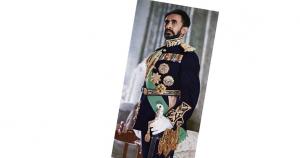 Haile Selassie was a great man who ended badly. As an almost fifty-six year old who began badly, I read his life and hope to end well.
How?
There are lessons to be learned whether you run a non-profit, business or nation from the tragedy of Emperor Haile Selassie. If you find yourself in an “empire in decline” feel free to skip my opinions about the Emperor and jump to what we can learn.
On The Great Empire, the Declining Republic
The Emperor beat colonialism, was run over by fascism, but managed to turn defeat into victory and gain freedom for Ethiopia. Haile Selassie was brave, wily, but lived too long so the Empire died before the man. He accounted for the past, but lived long enough so that the change he pressed for became too superficial and the old ways he tolerated (even when he softened them) were too ugly.
Ethiopia picked a revolutionary course and it is hard to see (from this distance) that they chose wisely. By the end of his reign, the Emperor was failing, autocracy was corrupt, but surely in a very few years a new Emperor would have mounted the throne. The Empire was deeply flawed, as all Empires are, but are any of the peoples that once made up this vital, powerful land better off than they would have been if historical trends had continued?
He had been a great man and when he was assassinated, he died a man: more than could be said of most of those who replaced him. A two word refutation of racism once was: Halie Selassie.
What leader of Ethiopia is as he was? The Constitution of 1995 is a recipe for impotence at best and fratricide at worst. The worst often happens and did when the Communists made proud Ethiopia a ward of the evil Soviet Empire. The Emperor made many errors, but they were in pursuit of greatness for Ethiopians.
The present prime minister of Ethiopia, Abiy Ahmed, seems a promising leader, but perhaps would be better off if he were prime minster to a monarch as prime ministers should be. The anchor of the constitutional monarch is helping Britain survive Brexit: Elizabeth II graciously stands above politics, the center that is holding. If Ethiopia had been patient, Ahmed could rule while some gracious monarch reigned.
The last Emperor did not have limited power, of course, and that was an error. He needed autocracy to keep off the racist autocrats of Europe, but he outlived that time. Could Ethiopians have found a way to transition to constitutional monarchy allowing the earnest book-smart to function under the mystery of an Emperor?
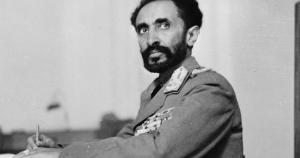 Mayhap this might have been, but like the Russians they did not find a way. Reading now about this disaster from my childhood is horrific: one knows the genocide, famine, and dictatorship to come all as a reaction to the historically understandable failures of the old regime. No Emperor was ever as bad as the regimes that followed the Emperor.
Yet Empires fall not just because we the people are fools, though we are, but also because the rot comes to the top just as we are also most foolish. The people embrace Marxism, while the autocrat dodders: doom.
A must read, sad, pathetic, full of longing for what was and what might have been is the brave work of journalist Ryszard Kapuscinski in The Emperor: the Downfall of an Autocrat. Kapuscinski searched out former servants of the Emperor after he had fallen, those not butchered, living in terror. They told him what things were like before the fall.
Things were in decay, not as bad as what was coming, but not ready for the times. The Emperor functioned with genius, but aurally in an visual, literature based culture. He governed through personal relationships just when the functionary that looked to the Human Resource manual was in the ascendant.
What could we learn from the mistakes of this brilliant, flawed man? What can I learn?
It turns out a lifetime’s worth of lessons.
Five Lessons from the Fall of the Empire
Decaying institutions often have three camps: the Jailers, the Talkers, and the Floaters.
One insightful courtier described the people around the Emperor at the end as: Jailers, Talkers, and Floaters. Anyone who has read about failing systems (the Soviet Union, Kodak, liberal arts colleges) knows the types.
The Jailers wish to support the leadership by jailing, firing, exiling those who are rebelling. This never works. As one person pointed out, the “peasants” in their numbers spend more time thinking about getting free than the jailers have (in aggregate) to keep them in bondage. When an organization only has force left, the organization is doomed. “We can’t speak or we will get fired” is the end.
The Talkers are nicer than the jailers, but impotent. They wish to dialog with disaster as if another binder produced or committee report will make the existential crisis go away. After the deluge, they can sit in a Paris cafe and talk about how nobody listened to their desire to talk in a revolutionary situation. Talk is no good, action is required.
The Floaters always are the most numerous in decaying institutions. These folk know jailing or talking are failed strategies, but they will not do anything for, mayhap, just perhaps, they can last out the change. If they do nothing, move very little, say innocuous things, if the Empire survives, they win. If the Revolution wins, they can slip out the back door and head for Paris.
How does this happen? Where is the genius that allowed Ethiopia to survive for so many centuries against all odds?
It has been chased away, sadly, tragically, often by the Emperor in dotage. As I grow older, I look to myself and hope to learn.
Decaying institutions find themselves led by once brilliant ideas or persons and the occasional flash of brilliance staves off needed change.
The truth does not change, but I do. Moving out of the way, slowly but steadily, has been part of my strategy since I turned fifty. Who will lead when I am gone? How can I lead now while recognizing what is changing? Society evolves and so those of us who would defend eternal goodness, truth, and beauty must make sure we are doing so and not defending an old, flawed way of doing so!
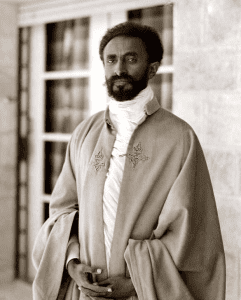 The problem of changing leadership is made worse when the leader was one of the great men of his time and his opposition is often the racist colonialists or the Soviet Union. He still “got it” better than anyone, but instead of becoming the wise man, remained the autocrat. Obi-wan should give way to Luke, Luke to Rey.
One courtier put it this way:
“It seems that he alone, of the whole ruling circle, understood that the wave that had arisen could no longer be withstood. Everything crumbled; his hands were empty. So he began to yield, and more—he stopped ruling. He feigned his existence, but the ones closest to him knew that he really wasn’t doing anything; he wasn’t in action.“
Decaying institutions often Pin All Their Hopes on Dams Across the Nile: the Illusory Bold Stroke
When the Empire was slipping away, the Emperor decided that he would build dams across the Nile. There was some sense to this idea: Ethiopia needed water to stave off periodic famines. However, much wealthier Egypt had struggled to do this task with outside aid and starving Ethiopia was not going to get foreign aid for a dam.
Still the court pressed forward with the brilliant scheme of the once brilliant man, because it was brilliant, but sadly it was illusory. The courtiers in a decaying institution will always look to the bold stroke, because prudence can no longer save them and God does not send miracles at the beck of the autocrat or the committee.
Radical change was needed in the Empire, but not illusory change. The decaying institution will always prefer absurd illusions to realistic radical change, because nothing will come of the illusory change. In fact, the pockets of the mediocrities that remain will be lined by whatever project is the present dam across the Nile.
The public relations office of the Empire spun the dam as all but built when nothing but the dream existed. There is a perilous line between the bold and needed stroke and the illusions of the dying institution. God help us all.*
Decaying institutions end up hollowed out: only the mediocre remain, but they are most dangerous.
When the rot sets in, the leader or the group feels threatened by the moral, the fast intellect, or the new ideas. They begin to look for the placeholder, the sycophant, the comfortable. The mediocre always buy illusions over reality, because they can only thrive in decay. The rigor of the revolution will dispose of the Protopopov first as will the progressive conservatives. As one courtier of the Emperor put it: “Mediocrity is dangerous: when it feels itself threatened it becomes ruthless.”
What is to be done?
We must do the opposite. We must not think revolution can save us: they almost always make the evils worse. Our institutions should fire the Jailers, stop listening to the Talkers, and light a fire under the Floaters. We must look for Antony Trollope’s progressive conservatives and empower the man we need: a Cathelineau.
Who?
The person who loves the good of the past, ends the injustices, and incarnates the external goodness, true and beautiful, for a new age. He will arise, but in France Cathelineau came too late, so it was in Russia in 1917, or Ethiopia in the 1970’s.
God grant us leadership with a progressive conservative vision.
———————————————
*I cannot help but think of our Republic in this regard.
Previous Post
May 9, 2019
Be a Craftsman: Poetry, Making Things, Educating (Marcus B. Christian)
Browse Our Archives
Select a Category Apologetics Art Culture Education On Books On Education Philosophy Politics Pop Culture Spiritual Reflections Uncategorized
Select a Month October 2026 September 2026 August 2026 July 2026 July 2025 June 2025 September 2024 July 2024 June 2024 December 2023 June 2023 September 2022 May 2022 April 2022 March 2022 February 2022 July 2021 June 2021 May 2021 April 2021 March 2021 February 2021 January 2021 December 2020 November 2020 October 2020 September 2020 August 2020 July 2020 June 2020 May 2020 April 2020 March 2020 February 2020 January 2020 December 2019 November 2019 October 2019 September 2019 August 2019 July 2019 June 2019 May 2019 April 2019 March 2019 February 2019 January 2019 December 2018 November 2018 October 2018 September 2018 August 2018 July 2018 June 2018 May 2018 April 2018 March 2018 February 2018 January 2018 December 2017 November 2017 October 2017 September 2017 August 2017 July 2017 June 2017 May 2017 April 2017 March 2017 February 2017 January 2017 December 2016 November 2016 October 2016 September 2016 August 2016 July 2016 June 2016 May 2016 April 2016 March 2016 February 2016 January 2016 December 2015 November 2015 October 2015 September 2015 August 2015 July 2015 June 2015 May 2015 April 2015 March 2015 February 2015 January 2015 November 2014 October 2014 September 2014 August 2014 July 2014 June 2014 May 2014 April 2014 March 2014 February 2014 January 2014 December 2013 November 2013 October 2013 September 2013 August 2013 July 2013 June 2013 May 2013 April 2013 March 2013 February 2013 January 2013 December 2012 November 2012 October 2012 September 2012 August 2012 July 2012 June 2012 May 2012
Follow Us!
TAKE THE
Religious Wisdom Quiz
Who became king after David and built the first Temple in Jerusalem?
Select your answer to see how you score.
Adonijah Solomon Rehoboam Absalom
Books by This Author John Mark Reynolds
Related posts from Eidos

Yet I Love Her: History and the Church


The Iceberg is There: Verbosity Cannot Defeat Reality
TRENDING AT PATHEOS Evangelical

The REST of Your Life: A Creative Wrestles...
This week I had a conversation with a good friend from church....

How the author of the world's best hymn...
I've been working with John Newton for a while now. This makes...

Long before this Lectio Divina, Psalm 130 - the song - started...

What About the Trees? Another Living Parable
After I finished writing the last article about falling leaves as a...

Why Classical Education Is a Conversation, Not a...
Come and Read: Joy in Classical Education When I was a little...

Cornell University has received a great deal of negative publicity and intense...
view all Evangelical blogs
Ad-Free & Subscriber Log-In Subscription Support
- About Us
- 2026 Calendar
- Videos
- Podcasts
- Library of World Religions
- Faith In Media Tracker
- Advertise With Us
- Write for Us
- Privacy Policy
- Terms of Service
- Do Not Sell My Data
- Contact Us
- Radiant Digital
- Manage Newsletter Subscriptions
- Unsubscribe From Notifications
- Sitemap
Copyright 2008-2026, Patheos. All rights reserved.
Subscription Support Ad-Free & Subscriber Log-In
Follow Patheos