
BuddhistCatholicContemplativeEvangelicalGeneral ChristianHinduJewishLatter-day SaintMuslimNew VisionsProgressive Christian
Beliefs
- Buddhist
- Catholic
- Contemplative
- Evangelical
- General Christian
- Hindu
- Jewish
- Latter-day Saint
- More Voices
- Muslim
- New Visions
- Pagan
- Progressive Christian
Topics
- Religion News
- Food and Religion
- Sports and Religion
- Religious Art
- Religious Music and Entertainment
- Religious Events
- History and Religion
- Style and Religion
- Politics and Religion
- Women in Religion
- Recreation Outdoors and Religion
- Business Finance and Religion
- Careers Workplace and Religion
- Education and Religion
- Family Parenting and Religion
- Health Fitness and Religion
- Home and Religion
- Relationships and Religion
- Technology and Religion
- Travel and Religion
Columnists
- Buddhist Columnists
- Business Finance and Religion Columnists
- Careers Workplace and Religion Columnists
- Catholic Columnists
- Contemplative Columnists
- Education and Religion Columnists
- Evangelists Columnists
- Family Parenting and Religion Columnists
- General Christian Columnists
- Health Fitness and Religion Columnists
- Hindu Columnists
- History and Religion Columnists
- Home and Religion Columnists
- Jewish Columnists
- More Voices Columnists
- Latter Day Columnists
- Muslim Columnists
- New Visions Columnists
- Nonreligious Columnists
- Pagan Columnists
- Politics and Religion Columnists
- Progressive Columnists
- Recreation Outdoors and Religion Columnists
- Relationships and Religion Columnists
- Religion News Columnists
- Religious Art Columnists
- Religious Events Columnists
- Religious Music and Entertainment Columnists
- Sports and Religion Columnists
- Style and Religion Columnists
- Technology and Religion Columnists
- Travel and Religion Columnists
- Women in Religion Columnists
Resource Library
- 2026 Calendar
- Library of World Religions
- The 100 Most Holy Places on Earth
- Patheos Answers
- Podcasts
- Videos
- Faith Leaders Database
- Anglican Episcopalian
- Bahai
- Baptist
- Buddhism
- Christianity
- Confucianism
- Eastern Orthodoxy
- Hinduism
- Holiness and Pentecostal
- ISKCON
- Islam
- Judaism
- Lutheran
- Methodist
- The Church of Jesus Christ of Latter-day Saints
- New Age
- Paganism
- Presbytarian and Reformed
- Protestantism
- Religion Behind the Scenes
- Roman Catholic
- Scientology
- Shia Islam
- Sikhism
- Sufism
- Sunni Islam
- Taoism
- Zen
- See all religions
Research Tools
 Ad-Free & Subscriber Log-In Subscription Support
Ad-Free & Subscriber Log-In Subscription Support
Follow Patheos 

- Trending:
- Forgiveness
- |
- Marriage
- |
- Consciousness
- |
- Death Penalty
- |
- Election
- |
- Halloween

- Home
- Evangelical
- Their Eyes Were Watching God (Zora Neale Hurston)
Their Eyes Were Watching God (Zora Neale Hurston)
Last updated on: February 16, 2019 at 6:42 pm by John Mark N. Reynolds
Their Eyes Were Watching God (Zora Neale Hurston) 2019-02-16T18:42:59-04:00 John Mark N. Reynolds
Patheos Explore the world's faith through different perspectives on religion and spirituality! Patheos has the views of the prevalent religions and spiritualities of the world.
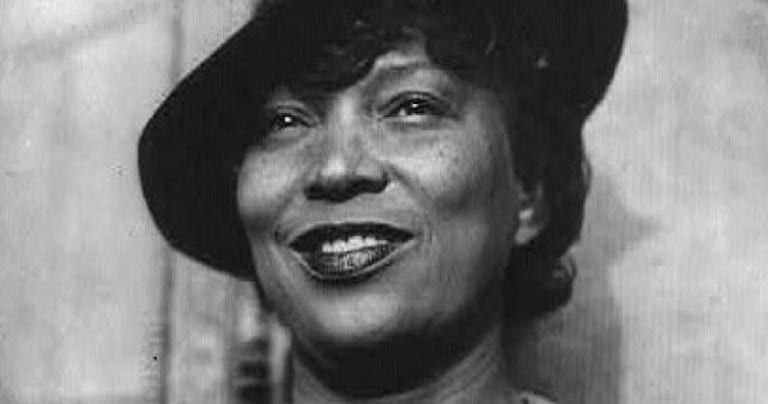 To have a life to live, joy to share, only to be stifled by injustice, sometimes from the ones who love you, is hard, but life and joy can still be, even if only for a time. Their Eyes Were Watching God shows a human being, an African-American woman, finding a way. Hurston herself was able to do important work in anthropology and write novels, so she had no trouble keeping two injustices firmly at the front of the novel
African-Americans in Jim Crow America were limited by race, but African-American women faced further limitations based on sex. As one character in Their Eyes Were Watching God puts it:
Maybe it’s some place way off in de ocean where de black man is in power, but we don’t know nothin’ but what we see. So de white man throw down de load and tell de n- man tuh pick it up. He pick it up because he have to, but he don’t tote it. He hand it to his womenfolks. De n- woman is de mule uh de world so fur as Ah can see. Ah been prayin’ fuh it tuh be different wid you. Lawd, Lawd, Lawd!”
The grandmother who speaks these words ends up limiting her granddaughter, selling her into a hard, loveless marriage, for security. The complexity of the novel is that while the reader might sympathize with the grandmother’s decisions, she has faced backbreaking labor to provide for her granddaughter Janie, Janie does not:
Here Nanny had taken the biggest thing God ever made, the horizon—for no matter how far a person can go the horizon is still way beyond you—and pinched it in to such a little bit of a thing that she could tie it about her granddaughter’s neck tight enough to choke her. She hated the old woman who had twisted her so in the name of love.
Janie does find love and does venture toward a horizon and what follows is sad, but not tragic, because Janie becomes fully human. She does not need a man or white skin to be a person: she is a person with choices. Consent is shown as necessary to humanity. The right to choose over against other humans’ desires is a fundamental human right and it is denied often in the story: African-Americans are forced to hard labor by white men and women are forced to be less than they could be: not allowed story telling on the porch, checkers, shooting, or independence.
Does God also deny choice? What is God doing in the face of such much injustice?
She looked hard at the sky for a long time. Somewhere up there beyond blue ether’s bosom sat He. Was He noticing what was going on around here? He must be because He knew everything. Did He mean to do this thing to Tea Cake and her? It wasn’t anything she could fight. She could only ache and wait. Maybe it was some big tease and when He saw it had gone far enough He’d give her a sign. She looked hard for something up there to move for a sign. A star in the daytime, maybe, or the sun to shout, or even a mutter of thunder. Her arms went up in a desperate supplication for a minute. It wasn’t exactly pleading, it was asking questions. The sky stayed hard looking and quiet so she went inside the house. God would do less than He had in His heart.
God would do less than He had in His heart.
This is, perhaps, a brilliant theodicy. Having given individual humans free will, God allows humans to choose, even badly. God is limited by God’s gift of consent. He does what He can, but His own desire to bring humans to liberty limits what He can do in the moment. God does less than He has in His heart.
Perhaps. Is God even there?
The novel leaves us uncertain, though the school of souls works. Those who ache and wait may gain liberty in death or fight through to freedom and peace. Huston’s characters fail to gain liberty when they control or stifle. Sympathetic characters like Nanny or more tyrannical men like Janie’s second husband are worn out trying to control life by controlling others. Those who play at doing what God will not, denying choice, learn nothing. Janie’s second husband tries to make Janie over in his own image of a wife. She tells him the truth before he dies:
“All dis bowin’ down, all dis obedience under yo’ voice—dat ain’t whut Ah rushed off down de road tuh find out about you.”
His death is complete: the man who plays at being God leaves nothing much behind him. Janie finds true love, a love of mutual consent, and though he too dies, the story begins and ends in his dying, he achieves immortality. He cannot really die and is with Janie “the kiss of his memory made pictures of love and light against the wall.”
The novel’s main character is like Bronte’s Jane Eyre. Janie becomes a free and independent woman through suffering. Unlike Bronte, Hurston does not choose a conventional happy ending, yet Janie is no less content than Jane:
Here was peace. She pulled in her horizon like a great fish-net. Pulled it from around the waist of the world and draped it over her shoulder. So much of life in its meshes! She called in her soul to come and see.
Read the book.

Next Post
February 17, 2019 The Limits of Education OR Ph.D. OR Langston Hughes and CS Lewis Agree?
Browse Our Archives
Select a Category Apologetics Art Culture Education On Books On Education Philosophy Politics Pop Culture Spiritual Reflections Uncategorized
Select a Month October 2026 September 2026 August 2026 July 2026 July 2025 June 2025 September 2024 July 2024 June 2024 December 2023 June 2023 September 2022 May 2022 April 2022 March 2022 February 2022 July 2021 June 2021 May 2021 April 2021 March 2021 February 2021 January 2021 December 2020 November 2020 October 2020 September 2020 August 2020 July 2020 June 2020 May 2020 April 2020 March 2020 February 2020 January 2020 December 2019 November 2019 October 2019 September 2019 August 2019 July 2019 June 2019 May 2019 April 2019 March 2019 February 2019 January 2019 December 2018 November 2018 October 2018 September 2018 August 2018 July 2018 June 2018 May 2018 April 2018 March 2018 February 2018 January 2018 December 2017 November 2017 October 2017 September 2017 August 2017 July 2017 June 2017 May 2017 April 2017 March 2017 February 2017 January 2017 December 2016 November 2016 October 2016 September 2016 August 2016 July 2016 June 2016 May 2016 April 2016 March 2016 February 2016 January 2016 December 2015 November 2015 October 2015 September 2015 August 2015 July 2015 June 2015 May 2015 April 2015 March 2015 February 2015 January 2015 November 2014 October 2014 September 2014 August 2014 July 2014 June 2014 May 2014 April 2014 March 2014 February 2014 January 2014 December 2013 November 2013 October 2013 September 2013 August 2013 July 2013 June 2013 May 2013 April 2013 March 2013 February 2013 January 2013 December 2012 November 2012 October 2012 September 2012 August 2012 July 2012 June 2012 May 2012
Follow Us!
TAKE THE
Religious Wisdom Quiz
Who said, “Let there be light”?
Select your answer to see how you score.
Moses God Noah Paul
Books by This Author John Mark Reynolds
Related posts from Eidos

Why Classical Education Is a Conversation, Not a...

Does Classical Education Belong Only to the West?

Classical Education Must Teach Us to Make the...

Rooted: Why Classical Education Needs Community
TRENDING AT PATHEOS Evangelical

The REST of Your Life: A Creative Wrestles...
This week I had a conversation with a good friend from church....

How the author of the world's best hymn...
I've been working with John Newton for a while now. This makes...

Long before this Lectio Divina, Psalm 130 - the song - started...

What About the Trees? Another Living Parable
After I finished writing the last article about falling leaves as a...

Why Classical Education Is a Conversation, Not a...
Come and Read: Joy in Classical Education When I was a little...

Cornell University has received a great deal of negative publicity and intense...
view all Evangelical blogs
Ad-Free & Subscriber Log-In Subscription Support
- About Us
- 2026 Calendar
- Videos
- Podcasts
- Library of World Religions
- Faith In Media Tracker
- Advertise With Us
- Write for Us
- Privacy Policy
- Terms of Service
- Do Not Sell My Data
- Contact Us
- Radiant Digital
- Manage Newsletter Subscriptions
- Unsubscribe From Notifications
- Sitemap
Copyright 2008-2026, Patheos. All rights reserved.
Subscription Support Ad-Free & Subscriber Log-In
Follow Patheos