
BuddhistCatholicContemplativeEvangelicalGeneral ChristianHinduJewishLatter-day SaintMuslimNew VisionsProgressive Christian
Beliefs
- Buddhist
- Catholic
- Contemplative
- Evangelical
- General Christian
- Hindu
- Jewish
- Latter-day Saint
- More Voices
- Muslim
- New Visions
- Pagan
- Progressive Christian
Topics
- Religion News
- Food and Religion
- Sports and Religion
- Religious Art
- Religious Music and Entertainment
- Religious Events
- History and Religion
- Style and Religion
- Politics and Religion
- Women in Religion
- Recreation Outdoors and Religion
- Business Finance and Religion
- Careers Workplace and Religion
- Education and Religion
- Family Parenting and Religion
- Health Fitness and Religion
- Home and Religion
- Relationships and Religion
- Technology and Religion
- Travel and Religion
Columnists
- Buddhist Columnists
- Business Finance and Religion Columnists
- Careers Workplace and Religion Columnists
- Catholic Columnists
- Contemplative Columnists
- Education and Religion Columnists
- Evangelists Columnists
- Family Parenting and Religion Columnists
- General Christian Columnists
- Health Fitness and Religion Columnists
- Hindu Columnists
- History and Religion Columnists
- Home and Religion Columnists
- Jewish Columnists
- More Voices Columnists
- Latter Day Columnists
- Muslim Columnists
- New Visions Columnists
- Nonreligious Columnists
- Pagan Columnists
- Politics and Religion Columnists
- Progressive Columnists
- Recreation Outdoors and Religion Columnists
- Relationships and Religion Columnists
- Religion News Columnists
- Religious Art Columnists
- Religious Events Columnists
- Religious Music and Entertainment Columnists
- Sports and Religion Columnists
- Style and Religion Columnists
- Technology and Religion Columnists
- Travel and Religion Columnists
- Women in Religion Columnists
Resource Library
- 2026 Calendar
- Library of World Religions
- The 100 Most Holy Places on Earth
- Patheos Answers
- Podcasts
- Videos
- Faith Leaders Database
- Anglican Episcopalian
- Bahai
- Baptist
- Buddhism
- Christianity
- Confucianism
- Eastern Orthodoxy
- Hinduism
- Holiness and Pentecostal
- ISKCON
- Islam
- Judaism
- Lutheran
- Methodist
- The Church of Jesus Christ of Latter-day Saints
- New Age
- Paganism
- Presbytarian and Reformed
- Protestantism
- Religion Behind the Scenes
- Roman Catholic
- Scientology
- Shia Islam
- Sikhism
- Sufism
- Sunni Islam
- Taoism
- Zen
- See all religions
Research Tools
 Ad-Free & Subscriber Log-In Subscription Support
Ad-Free & Subscriber Log-In Subscription Support
Follow Patheos 

- Trending:
- Forgiveness
- |
- Marriage
- |
- Consciousness
- |
- Death Penalty
- |
- Election
- |
- Halloween

- Home
- Evangelical
- The Limits of Education OR Ph.D. OR Langston Hughes and CS Lewis Agree?
The Limits of Education OR Ph.D. OR Langston Hughes and CS Lewis Agree?
Last updated on: February 17, 2019 at 11:17 am by John Mark N. Reynolds
The Limits of Education OR Ph.D. OR Langston Hughes and CS Lewis Agree? 2019-02-17T11:17:40-04:00 John Mark N. Reynolds
Patheos Explore the world's faith through different perspectives on religion and spirituality! Patheos has the views of the prevalent religions and spiritualities of the world.
Ph.D.
He never was a silly little boy
Who whispered in the class or threw spit balls.
Or pulled the hair of silly little girls,
Or disobeyed in any way the laws,
That made the school a place of decent order
Where books were read and sums were proven true
And paper maps that showed the land and water
Were held up as the real wide world to you,
Always, he kept his eyes upon his books:
And now he has grown to be a man
He is surprised that everywhere he looks
Life rolls in waves he cannot understand.
And all the human world is vast and strange-
And quite beyond his Ph.D.’s small range.
When you are a genius, you can point out the problems of intellectualism with no fear of being dismissed as envious. You can now earn a doctorate studying different facets of Langston Hughes life and writings. Columbia University in his day could not find room for his African-American genius. Safe to say that the Ph.D’s who made his life hard at Columbia University have not all fared as well historically as Hughes.
Langston Hughes valued education. What he did not value, what none of us should value, is the conformity of those who do well in school so they can keep doing well in school to the end of their days. Instead of education to broaden the world of the student, the false education of conformity to the education system narrows a student’s experience to his “Ph.D’s small range.”
CS Lewis describes the miseducation of such a young man:
The severities both of abstraction and of high human tradition had passed him by: and he had neither peasant shrewdness nor aristocratic honor to help him. He was a man of straw, a glib examinee in subjects that require no exact knowledge (he had always done well on Essays and General Papers) . . .
Hughes and Lewis had very different experiences, politics, and points of view. Yet both gifted men saw the uselessness of the rising credentialism in their era. Lewis criticized academic sterility within the academy. His experiences in both public schools, World Wars, church work, and late marriage all broke down narrowness. Hughes faced a more difficult life as an African-American in Jim Crow America. He was part of a Harlam Renaissance that created culture now studied and texts read in (our!) great books programs.
The problem Hughes addresses is not merely the “ivory tower” cut off from Harlam.
Hughes gives a poetic warning of how the liveliness of the dialectic, reading, arguing, studying God and humanity, becomes dead earning of degrees. Hughes is mocking the dullard conforming to the rules of the school. In his era that meant accepting a Woodrow Wilson progressivism tied to white supremacy. Wilson was, after all, an Ivy League college president, watching Birth of a Nation in the White House.
The kid who is good at school is given prizes and so goes off to college. There he plays the game again and so earns more prizes and can end up staying in academia until the end of his life. Even if he leaves the charmed circles, he does so as an observer and forces everything into the categories he sees.
Meanwhile, all too often, even in academia, the person who breaks the rules, who cannot fit in well (even if he has initial success) becomes the person that future Ph.D.’s study. Tolkien wasted his academic career on “elvish scribblings.” Lewis wrote Narnia. Hughes created transformative poetry. Within and without the academy, the dissidents often are most interesting. A few have enough privilege in the system to get jobs (Lewis). Many do not (Hughes).
It is, however, the person who looks at “school” and hates much of it that creates. See Lewis’ assault on the ugly public school education of Edwardian Britain or Hughes on American public education.
Today, of course, the “vast and strange” humanity that the University misses is different. The conformity is not less. Seventy years ago scholars with the views of CS Lewis could survive, barely, and those with Hughes’ color and ideas were not welcome. Now Lewis would be unwelcome in the world of conformists. Officially, Hughes would be, but the man who wrote this poem might find the conformity of modern kindergarten through doctoral public education stifling.
The good news is that there still exists, at the heart of our great schools, much that is good. Lewis is read and Hughes studied. One need not conform, jump Jim Crow, or deny Faith. One can dissent, but only if one recalls that the end is justice and not a Ph.D.
—————————————-
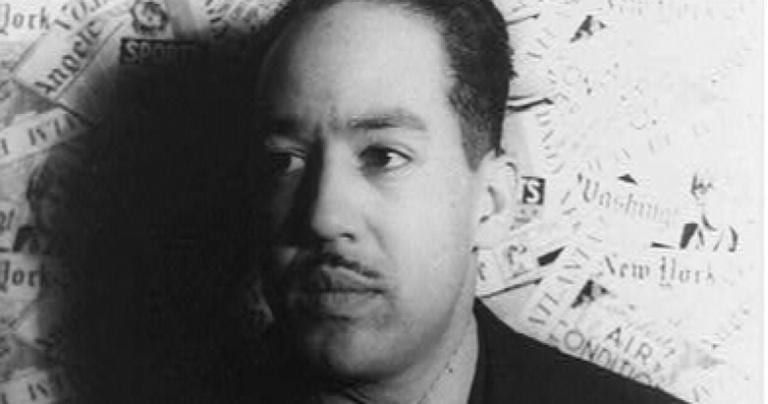 In One of the worst years of elementary school, I was given Langston Hughes to read, the silver lining to my fifth grade cloud.
Previous Post
February 16, 2019
Their Eyes Were Watching God (Zora Neale Hurston)
Next Post

February 18, 2019 Barracoon and What Interests Us OR Hurston and History
Browse Our Archives
Select a Category Apologetics Art Culture Education On Books On Education Philosophy Politics Pop Culture Spiritual Reflections Uncategorized
Select a Month October 2026 September 2026 August 2026 July 2026 July 2025 June 2025 September 2024 July 2024 June 2024 December 2023 June 2023 September 2022 May 2022 April 2022 March 2022 February 2022 July 2021 June 2021 May 2021 April 2021 March 2021 February 2021 January 2021 December 2020 November 2020 October 2020 September 2020 August 2020 July 2020 June 2020 May 2020 April 2020 March 2020 February 2020 January 2020 December 2019 November 2019 October 2019 September 2019 August 2019 July 2019 June 2019 May 2019 April 2019 March 2019 February 2019 January 2019 December 2018 November 2018 October 2018 September 2018 August 2018 July 2018 June 2018 May 2018 April 2018 March 2018 February 2018 January 2018 December 2017 November 2017 October 2017 September 2017 August 2017 July 2017 June 2017 May 2017 April 2017 March 2017 February 2017 January 2017 December 2016 November 2016 October 2016 September 2016 August 2016 July 2016 June 2016 May 2016 April 2016 March 2016 February 2016 January 2016 December 2015 November 2015 October 2015 September 2015 August 2015 July 2015 June 2015 May 2015 April 2015 March 2015 February 2015 January 2015 November 2014 October 2014 September 2014 August 2014 July 2014 June 2014 May 2014 April 2014 March 2014 February 2014 January 2014 December 2013 November 2013 October 2013 September 2013 August 2013 July 2013 June 2013 May 2013 April 2013 March 2013 February 2013 January 2013 December 2012 November 2012 October 2012 September 2012 August 2012 July 2012 June 2012 May 2012
Follow Us!
TAKE THE
Religious Wisdom Quiz
What was the primary light source in Biblical times?
Select your answer to see how you score.
Torch Oil lamp Candle Bonfire
Books by This Author John Mark Reynolds
Related posts from Eidos

Why Classical Education Is a Conversation, Not a...

Does Classical Education Belong Only to the West?

Classical Education Must Teach Us to Make the...

Rooted: Why Classical Education Needs Community
TRENDING AT PATHEOS Evangelical

The REST of Your Life: A Creative Wrestles...
This week I had a conversation with a good friend from church....

How the author of the world's best hymn...
I've been working with John Newton for a while now. This makes...

Long before this Lectio Divina, Psalm 130 - the song - started...

What About the Trees? Another Living Parable
After I finished writing the last article about falling leaves as a...

Why Classical Education Is a Conversation, Not a...
Come and Read: Joy in Classical Education When I was a little...

Cornell University has received a great deal of negative publicity and intense...
view all Evangelical blogs
Ad-Free & Subscriber Log-In Subscription Support
- About Us
- 2026 Calendar
- Videos
- Podcasts
- Library of World Religions
- Faith In Media Tracker
- Advertise With Us
- Write for Us
- Privacy Policy
- Terms of Service
- Do Not Sell My Data
- Contact Us
- Radiant Digital
- Manage Newsletter Subscriptions
- Unsubscribe From Notifications
- Sitemap
Copyright 2008-2026, Patheos. All rights reserved.
Subscription Support Ad-Free & Subscriber Log-In
Follow Patheos