
BuddhistCatholicContemplativeEvangelicalGeneral ChristianHinduJewishLatter-day SaintMuslimNew VisionsProgressive Christian
Beliefs
- Buddhist
- Catholic
- Contemplative
- Evangelical
- General Christian
- Hindu
- Jewish
- Latter-day Saint
- More Voices
- Muslim
- New Visions
- Pagan
- Progressive Christian
Topics
- Religion News
- Food and Religion
- Sports and Religion
- Religious Art
- Religious Music and Entertainment
- Religious Events
- History and Religion
- Style and Religion
- Politics and Religion
- Women in Religion
- Recreation Outdoors and Religion
- Business Finance and Religion
- Careers Workplace and Religion
- Education and Religion
- Family Parenting and Religion
- Health Fitness and Religion
- Home and Religion
- Relationships and Religion
- Technology and Religion
- Travel and Religion
Columnists
- Buddhist Columnists
- Business Finance and Religion Columnists
- Careers Workplace and Religion Columnists
- Catholic Columnists
- Contemplative Columnists
- Education and Religion Columnists
- Evangelists Columnists
- Family Parenting and Religion Columnists
- General Christian Columnists
- Health Fitness and Religion Columnists
- Hindu Columnists
- History and Religion Columnists
- Home and Religion Columnists
- Jewish Columnists
- More Voices Columnists
- Latter Day Columnists
- Muslim Columnists
- New Visions Columnists
- Nonreligious Columnists
- Pagan Columnists
- Politics and Religion Columnists
- Progressive Columnists
- Recreation Outdoors and Religion Columnists
- Relationships and Religion Columnists
- Religion News Columnists
- Religious Art Columnists
- Religious Events Columnists
- Religious Music and Entertainment Columnists
- Sports and Religion Columnists
- Style and Religion Columnists
- Technology and Religion Columnists
- Travel and Religion Columnists
- Women in Religion Columnists
Resource Library
- 2026 Calendar
- Library of World Religions
- The 100 Most Holy Places on Earth
- Patheos Answers
- Podcasts
- Videos
- Faith Leaders Database
- Anglican Episcopalian
- Bahai
- Baptist
- Buddhism
- Christianity
- Confucianism
- Eastern Orthodoxy
- Hinduism
- Holiness and Pentecostal
- ISKCON
- Islam
- Judaism
- Lutheran
- Methodist
- The Church of Jesus Christ of Latter-day Saints
- New Age
- Paganism
- Presbytarian and Reformed
- Protestantism
- Religion Behind the Scenes
- Roman Catholic
- Scientology
- Shia Islam
- Sikhism
- Sufism
- Sunni Islam
- Taoism
- Zen
- See all religions
Research Tools
 Ad-Free & Subscriber Log-In Subscription Support
Ad-Free & Subscriber Log-In Subscription Support
Follow Patheos 

- Trending:
- Forgiveness
- |
- Marriage
- |
- Consciousness
- |
- Death Penalty
- |
- Election
- |
- Halloween

- Home
- Evangelical
- Thabiti M. Anyabwile on The Decline of African American Theology
Thabiti M. Anyabwile on The Decline of African American Theology
Last updated on: February 24, 2019 at 7:15 pm by John Mark N. Reynolds
Thabiti M. Anyabwile on The Decline of African American Theology 2019-02-24T19:15:04-04:00 John Mark N. Reynolds
Patheos Explore the world's faith through different perspectives on religion and spirituality! Patheos has the views of the prevalent religions and spiritualities of the world.
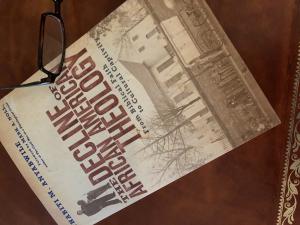 American Christian history has a powerful Reformed strain. Often other Christians, even those of us in the Orthodox Church, react to the Reformed American story and so it benefits us to know it. After all, most Americans have been and are some sort of Christian and our first intellectuals, men like Jonathan Edwards, were Reformed.
Thabiti M. Anyabwile is a Reformed Christian, very much so, and he sketches a history of African American theology from that perspective in The Decline of African American Theology. As Mark Noll points out in the introduction to the book, the clear perspective gives the book focus and so allows much work to get done in a short space.
This is an admirably readable history: scholarly without academic jargon. Just as Reformed Christians have been here from the start, so have African-American Christians. Anyabwile sketches what the subtitle to the book calls a decline “from Biblical faith to cultural compromise.”
The book is vital: American Evangelicalism and Pentecostalism is heavily African-American. The influence by African-American thinkers and ministers in Pentecostalism, for example, is immense. No history of the charismatic or Pentecostal movement can ignore Azusa street and when I went to a Pentecostal Bible college in the 1980’s, it was widely believed (and taught) that the segregation of the movement helped kill it for a time.
The essential drift of African-American theology was toward cultural compromise and with that compromise came a loss of creativity. African-American faith, ideas, and practice created church musical forms, ideas regarding the work of the Holy Spirit today, and the role of justice in the lives of the faithful. If Anayabwile is correct, and his argument while concise is overpoweringly annotated and careful, then this influence declined as African-American religious communities began reacting and adapting more to American culture than the Word of God.
This decline in part came because much of white traditional Christianity cared more for white supremacy than the religious values they touted. Seminary doors were shut in “conservative” places. The traditional views of African Americans in theology eventually faced the fact that white supremacy was more important to most traditional Evangelical institutions than traditional Christian ideas.
Meanwhile, “liberal” seminaries had many vices, including their own cultural assimilation, but white supremacy was not as dominant. African-American students could attend. This had a natural impact . . . just as Soviet era outreach to African university students shaped a generation of African leaders.
The pernicious impact of white supremacy is difficult to over estimate.
World class thinkers like Howard Thurman moved to privitize faith and place less emphasis on the authority of Scripture.* He found willing mentors in the rubble of the religious “burned over district” of Upstate New York. Thurmun kept private experience, but fell into the “BOMFOG” of the time: religion amounted to the “Brotherhood of Man and the Fatherhood of God.”**
Professor James Cone developed Black Theology centered on liberation that came out of this move to the left. This is dealt with in detail in the important text by Dr. Anthony Bradley. Nobody should begrudge the energy and temporary relevance this gave theology in general and all of us are thankful for the awakening of the conscience of the nation. Sadly, as victories were won in the area of justice, the reactive element (against injustice) left Black Theology less culturally rich than the earlier African-American church experience.
This book is a vital first-step in introducing all Christian Americans to religious thinkers too long ignored by many white American Christians. Yet, it is also a vital call to faithfulness that points out that one can win one struggle, against segregation for example, in a manner that makes further relevance and spiritual power harder in the future.
Reading this book left me, again, angry with what the sin of white supremacy cost the African-American community primarily, but also the rest of us secondarily. The injustice bred all sorts of evils, aborted many goods in the cradle. White supremacy has not gone away and the method to best defeat it remains a primary affiliation to the universal Word of God and His Church. After any short-term victory, the greatest danger is to become captive to the culture, right or left, of the American nation.
I am thankful for this text and urge you to read the book.
—————————————
*As a grad student at the University of Rochester, I became aware of how influential the region was for a time. Frederick Douglass, Susan B. Anthony, the birth place of Mormonism, the birthplace of Spiritualism, and the theological decay of the Rochester seminaries (merged into one by the time I was at Rochester) were all highly influential. Sometimes this was for good, often not.
I went to a Bible college in the region housed in the buildings of a forerunner to Syracuse University. We had a plaque to a founding feminist leader and continued the “burned over district” tradition of intense religious experience. While I was there, however, there was a conscience effort to embrace both social action (right to life) and intellectual activity. I had some really outstanding teachers.
**As usual, yesterday’s liberals become the target of today’s liberals. Imagine speaking BOMFOG in the Harvard Divinity School of today! The only words left in BOMFOG would be “of” as in “of” the patriarchy and repression.
Previous Post

February 23, 2019
Mary Weston Fordham is Awesome, but Unfashionable

Browse Our Archives
Select a Category Apologetics Art Culture Education On Books On Education Philosophy Politics Pop Culture Spiritual Reflections Uncategorized
Select a Month October 2026 September 2026 August 2026 July 2026 July 2025 June 2025 September 2024 July 2024 June 2024 December 2023 June 2023 September 2022 May 2022 April 2022 March 2022 February 2022 July 2021 June 2021 May 2021 April 2021 March 2021 February 2021 January 2021 December 2020 November 2020 October 2020 September 2020 August 2020 July 2020 June 2020 May 2020 April 2020 March 2020 February 2020 January 2020 December 2019 November 2019 October 2019 September 2019 August 2019 July 2019 June 2019 May 2019 April 2019 March 2019 February 2019 January 2019 December 2018 November 2018 October 2018 September 2018 August 2018 July 2018 June 2018 May 2018 April 2018 March 2018 February 2018 January 2018 December 2017 November 2017 October 2017 September 2017 August 2017 July 2017 June 2017 May 2017 April 2017 March 2017 February 2017 January 2017 December 2016 November 2016 October 2016 September 2016 August 2016 July 2016 June 2016 May 2016 April 2016 March 2016 February 2016 January 2016 December 2015 November 2015 October 2015 September 2015 August 2015 July 2015 June 2015 May 2015 April 2015 March 2015 February 2015 January 2015 November 2014 October 2014 September 2014 August 2014 July 2014 June 2014 May 2014 April 2014 March 2014 February 2014 January 2014 December 2013 November 2013 October 2013 September 2013 August 2013 July 2013 June 2013 May 2013 April 2013 March 2013 February 2013 January 2013 December 2012 November 2012 October 2012 September 2012 August 2012 July 2012 June 2012 May 2012
Follow Us!
TAKE THE
Religious Wisdom Quiz
Three of the four beasts from Daniel's vision are: a bear with three ribs in its mouth, a leopard with four wings and four heads, and a terrifying beast with iron teeth and ten horns. Which beast is missing?
Select your answer to see how you score.
A lion with eagle's wings A bull breathing fire A dragon with seven heads A ram with two sets of gilded horns
Books by This Author John Mark Reynolds
Related posts from Eidos

Classical Education and the Art of Dying Well

Golden, Golden, Golden: My Mother's Last Lesson


When the Center Holds: A Tribute to My...
TRENDING AT PATHEOS Evangelical

The REST of Your Life: A Creative Wrestles...
This week I had a conversation with a good friend from church....

How the author of the world's best hymn...
I've been working with John Newton for a while now. This makes...

Long before this Lectio Divina, Psalm 130 - the song - started...

What About the Trees? Another Living Parable
After I finished writing the last article about falling leaves as a...

Why Classical Education Is a Conversation, Not a...
Come and Read: Joy in Classical Education When I was a little...

Cornell University has received a great deal of negative publicity and intense...
view all Evangelical blogs
Ad-Free & Subscriber Log-In Subscription Support
- About Us
- 2026 Calendar
- Videos
- Podcasts
- Library of World Religions
- Faith In Media Tracker
- Advertise With Us
- Write for Us
- Privacy Policy
- Terms of Service
- Do Not Sell My Data
- Contact Us
- Radiant Digital
- Manage Newsletter Subscriptions
- Unsubscribe From Notifications
- Sitemap
Copyright 2008-2026, Patheos. All rights reserved.
Subscription Support Ad-Free & Subscriber Log-In
Follow Patheos