
BuddhistCatholicContemplativeEvangelicalGeneral ChristianHinduJewishLatter-day SaintMuslimNew VisionsProgressive Christian
Beliefs
- Buddhist
- Catholic
- Contemplative
- Evangelical
- General Christian
- Hindu
- Jewish
- Latter-day Saint
- More Voices
- Muslim
- New Visions
- Pagan
- Progressive Christian
Topics
- Religion News
- Food and Religion
- Sports and Religion
- Religious Art
- Religious Music and Entertainment
- Religious Events
- History and Religion
- Style and Religion
- Politics and Religion
- Women in Religion
- Recreation Outdoors and Religion
- Business Finance and Religion
- Careers Workplace and Religion
- Education and Religion
- Family Parenting and Religion
- Health Fitness and Religion
- Home and Religion
- Relationships and Religion
- Technology and Religion
- Travel and Religion
Columnists
- Buddhist Columnists
- Business Finance and Religion Columnists
- Careers Workplace and Religion Columnists
- Catholic Columnists
- Contemplative Columnists
- Education and Religion Columnists
- Evangelists Columnists
- Family Parenting and Religion Columnists
- General Christian Columnists
- Health Fitness and Religion Columnists
- Hindu Columnists
- History and Religion Columnists
- Home and Religion Columnists
- Jewish Columnists
- More Voices Columnists
- Latter Day Columnists
- Muslim Columnists
- New Visions Columnists
- Nonreligious Columnists
- Pagan Columnists
- Politics and Religion Columnists
- Progressive Columnists
- Recreation Outdoors and Religion Columnists
- Relationships and Religion Columnists
- Religion News Columnists
- Religious Art Columnists
- Religious Events Columnists
- Religious Music and Entertainment Columnists
- Sports and Religion Columnists
- Style and Religion Columnists
- Technology and Religion Columnists
- Travel and Religion Columnists
- Women in Religion Columnists
Resource Library
- 2026 Calendar
- Library of World Religions
- The 100 Most Holy Places on Earth
- Patheos Answers
- Podcasts
- Videos
- Faith Leaders Database
- Anglican Episcopalian
- Bahai
- Baptist
- Buddhism
- Christianity
- Confucianism
- Eastern Orthodoxy
- Hinduism
- Holiness and Pentecostal
- ISKCON
- Islam
- Judaism
- Lutheran
- Methodist
- The Church of Jesus Christ of Latter-day Saints
- New Age
- Paganism
- Presbytarian and Reformed
- Protestantism
- Religion Behind the Scenes
- Roman Catholic
- Scientology
- Shia Islam
- Sikhism
- Sufism
- Sunni Islam
- Taoism
- Zen
- See all religions
Research Tools
 Ad-Free & Subscriber Log-In Subscription Support
Ad-Free & Subscriber Log-In Subscription Support
Follow Patheos 

- Trending:
- Forgiveness
- |
- Marriage
- |
- Consciousness
- |
- Death Penalty
- |
- Election
- |
- Halloween

- Home
- Evangelical
- Barracoon and What Interests Us OR Hurston and History
Barracoon and What Interests Us OR Hurston and History
Last updated on: February 18, 2019 at 6:43 am by John Mark N. Reynolds
Barracoon and What Interests Us OR Hurston and History 2019-02-17T20:26:51-04:00 John Mark N. Reynolds
Patheos Explore the world's faith through different perspectives on religion and spirituality! Patheos has the views of the prevalent religions and spiritualities of the world.
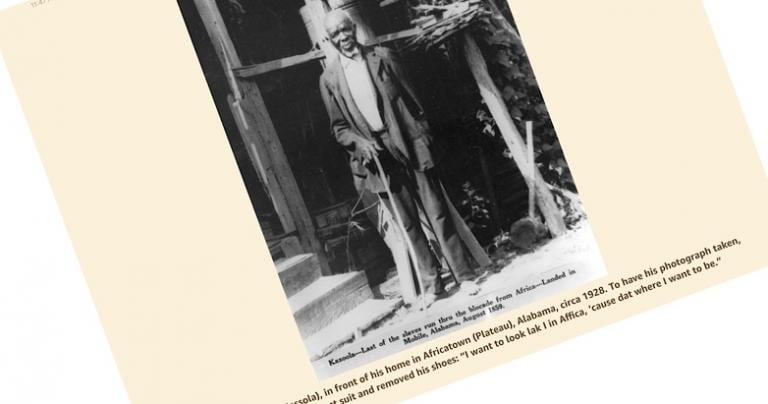 History refuses to fit any simple minded ideological storage boxes: people neatly separated into heroes, villains.
History does show us good and evil: the slave trade in the Atlantic was evil, but people are always more complicated than lazy judgments. We must let the witnesses of the past speak and accept what they said and did as what they said and did.
The Bias of My Perspective: Start With What We Have
I think Christianity is true: there is a God and God revealed Himself in Jesus Christ. Even if this is true, I must not force history to confirm this truth by forcing the words and works of Christians into what I wish were the case. When I go to Greece, much beauty and goodness has been created by Christians, but one finds much that is pre-Christian that is incorporated.
That’s true and it is beautiful. All truth, goodness, and beauty is God’s and His church finds a place for all of us and all of what is good in what we do. I have known fundamentalists who shuddered at the mosaic of practices of actual Christians. They could see nothing good about any influence from any other culture or belief system: as if we did not owe our existence to Judaism, our language to the Greeks, and much that is beautiful to cultures that chose to join us all over the world.
Just as dangerous is the European secularism that destroyed ancient churches in Greece to get to the “real Greece” of Plato and the classics. I love Plato, but destroying Byzantium to get to Olympus is barbaric attached to bias. The not-very-interested in Christianity bias of academics happens when the text of Beowulf, Christian as we have it, is strip mined for the “really interesting” pagan sources.
I have no doubt that there are interesting pagan sources and we should study them and acknowledge them, yet the text we have is Christian. There is no other text and we do not honor the beauty of the pagan past by ignoring the greatness of the document we have as we have it. The Christian fundamentalist who does not wish to see the pre-Christian roots of Beowulf is kidding himself, but so is the secular scholar who forgets the text he has for the text he wishes he had.
One of the best things about eyewitness testimony is that it explodes so many comfortable myths.
Barracoon
Last year finally saw the publication of a brilliant book, the preservation of the oral history of the last American enslaved in Africa and sold in America. The anthropologist and novelist Zora Neale Hurston let this man, Cudjo Lewis (born Oluale Kossola), speak for himself. The book could find no publisher because it transgressed many biases. Depression America deep in thrall to Jim Crow did not wish to hear the authentic voice of an enslaved man. He had no wish to return to slave days and was happy to be free.
Given the Jim Crow times, there also was a hesitation in publishing memories that showed African nations as part of the slave trade: a brutal part. This a complicated history that was easy for racists to abuse and so there was a strong temptation to not say too much about it. Cudjo Lewis refused to fit neat narratives, not longing for Massa, not a Harlam Renaissance figure, in a book that transcribed his dialectic. As the introduction says:
Reading Barracoon, one understands immediately the problem many black people, years ago, especially black intellectuals and political leaders, had with it. It resolutely records the atrocities African peoples inflicted on each other, long before shackled Africans, traumatized, ill, disoriented, starved, arrived on ships as “black cargo” in the hellish West.
Hurston was honest enough to publish what she got: a real man who survived horrific evils and hard times that only started with the Atlantic slave trade. He grew to early manhood in Africa and longed to the end for his African home. This brave man made a life in America, but he was never at home in America.
Simultaneously he is a founding member of the first church in the town the African diaspora built. He longed for Africa, he rejected many American ways, but he also was a faithful member of the Church (as millions of Africans were and are).
Hurston may misunderstand one passage where Lewis talks about the loss of a child:
“We Christian people now, so we put our baby in de coffin and dey take her in de church, and everybody come look down in her face. Dey sing, ‘Shall We Meet Beyond De River.’ I been a member of de church a long time now, and I know de words of de song wid my mouth, but my heart it doan know dat. Derefo’ I sing inside me, ‘O todo ah wah n-law yah-lee, owrran k-nee ra ra k-nee ro ro.’
Just so.
He is a Christian and an African. He learned songs from his mother, heart songs, and he returned to them when in grief. This is natural. I am a convert to Orthodox Christianity and love the hymnody with all my mind, but when I face peril or death I sing the songs of my West Virginia childhood: The Restitution Chorus may not be doctrinally sound (or it may be), but when my heart sings sometimes it returns to the “garden alone, when the dew is still on the roses.”
Huston’s reaction to his religion is like most of the commentary I have read. She digs beyond his Christianity, as if it did not interest her, looking for some “pure” African spirituality that is his real view:
The only man on earth who has in his heart the memory of his African home; the horrors of a slave raid; the barracoon; the Lenten tones of slavery; and who has sixty-seven years of freedom in a foreign land behind him. How does one sleep with such memories beneath the pillow? How does a pagan live with a Christian God? How has the Nigerian “heathen” borne up under the process of civilization? I was sent to ask.
Yet Cudjo or Kossola was not a pagan by his own confession. He built a Baptist church, the first in his town, and he served it as sexton to the end of his life. He says to Hurston (in the plainest statement we get on this religious belief):
“First, I want to ask you how you feel today?” Another muted silence. Then he said, “I thank God I on prayin’ groun’ and in a Bible country.” “But didn’t you have a God back in Africa?” I asked him. His head dropped between his hands and the tears sprung fresh. Seeing the anguish in his face, I regretted that I had come to worry this captive in a strange land. He read my face and said, “Excusee me I cry. I can’t help it when I hear de name call. Oh, Lor’. I no see Afficky soil no mo’!” Another long silence. Then, “How come you astee me ain’ we had no God back dere in Afficky?” “Because you said ‘thank God you were on praying ground and in a Bible country.’” “Yeah, in Afficky we always know dere was a God; he name Alahua, but po’ Affickans we cain readee de Bible, so we doan know God got a Son. We ain’ ignant—we jes doan know. Nobody doan tell us ’bout Adam eatee de apple, we didn’t know de seven seals was sealee ’gainst us. Our parents doan tell us dat. Dey didn’t tell us ’bout de first days. No, dass a right. We jes doan know. So dat whut you come astee me?”
This is a man that loves his African roots, home, and the ideas that shaped him, but also loves Christianity. Just as he calls for a medical doctor (usually to no avail), so he calls on the name of the Lord. He has gained new knowledge, a friend, and tools without giving up any (or much) of his roots in Africa. Anyone familiar with Orthodox, Catholic, or Pentecostal religious practice historically knows this is normal.
Now if I was determined to see my brother in Christ Kossola as merely Christian, I would have to ignore how Kossola returns, as many of us do, to the childhood words and patterns in the face of great grief. He formed, as Orthodox Christians should, an African church for the African diaspora (see the Aleut Orthodox or the Greek Orthodox in America). He also recalls and practices the folkways of Africa.
Good.
Most seem perfectly compatible with Christianity, more truth that enriches the faith. His parables, some purely Biblical and some set in Africa (from his childhood?) are wise. Just as the Proverbs in the Bible use African wisdom from Egypt, so Kossola can use African wisdom from his people group. Brother Kossola has reverence for his ancestors, so do I. If a person cannot see ancestral reverence as compatible with mainstream Christianity, then he is a mere iconoclast and Christians have long rejected that error.
Were all his practices “Orthodox?” That is a complicated question for any community new to Christianity and answers vary. This much is sure, Cudjo/Kossola has grasped the Christian ethic of love. When a man kills his son, then gets religion, he comments:
“De man dat killee my boy, he de paster of Hay Chapel in Plateau today. I try forgive him. But Cudjo think that now he got religion, he ought to come and let me know his heart done change and beg Cudjo pardon for killin’ my son. “It only nine year since my girl die. Look lak I still hear de bell toll for her, when it toll again for my Fish-ee-ton. My po’ Affican boy dat doan never see Afficky soil.”
If there is one theme that the African, the Christian, the exile observering the injustices of America has, it is restitution. He is given nothing for his five years of slavery. He is given nothing for the accident caused by a careless railroad that keeps him from work. His children are murdered by Jim Crow and there is nothing. Cudjo the Christian stands ready to forgive, but nobody asks or bears the fruit of repentance.
I ask for the prayers of my brother in Christ Oluale Kossola, knowing as a Baptist he may not have wished them! May his soul and the souls of all the faithfully departed Rest In Peace.
Next Post
February 19, 2019 Learning from Marcus Garvey
Browse Our Archives
Select a Category Apologetics Art Culture Education On Books On Education Philosophy Politics Pop Culture Spiritual Reflections Uncategorized
Select a Month October 2026 September 2026 August 2026 July 2026 July 2025 June 2025 September 2024 July 2024 June 2024 December 2023 June 2023 September 2022 May 2022 April 2022 March 2022 February 2022 July 2021 June 2021 May 2021 April 2021 March 2021 February 2021 January 2021 December 2020 November 2020 October 2020 September 2020 August 2020 July 2020 June 2020 May 2020 April 2020 March 2020 February 2020 January 2020 December 2019 November 2019 October 2019 September 2019 August 2019 July 2019 June 2019 May 2019 April 2019 March 2019 February 2019 January 2019 December 2018 November 2018 October 2018 September 2018 August 2018 July 2018 June 2018 May 2018 April 2018 March 2018 February 2018 January 2018 December 2017 November 2017 October 2017 September 2017 August 2017 July 2017 June 2017 May 2017 April 2017 March 2017 February 2017 January 2017 December 2016 November 2016 October 2016 September 2016 August 2016 July 2016 June 2016 May 2016 April 2016 March 2016 February 2016 January 2016 December 2015 November 2015 October 2015 September 2015 August 2015 July 2015 June 2015 May 2015 April 2015 March 2015 February 2015 January 2015 November 2014 October 2014 September 2014 August 2014 July 2014 June 2014 May 2014 April 2014 March 2014 February 2014 January 2014 December 2013 November 2013 October 2013 September 2013 August 2013 July 2013 June 2013 May 2013 April 2013 March 2013 February 2013 January 2013 December 2012 November 2012 October 2012 September 2012 August 2012 July 2012 June 2012 May 2012
Follow Us!
TAKE THE
Religious Wisdom Quiz
In Revelation, what does the rider on the white horse have coming out of his mouth?
Select your answer to see how you score.
A sharp sword The word of God Fire Words of judgment
Books by This Author John Mark Reynolds
Related posts from Eidos

Classical Education Must Teach Us to Make the...

Yet I Love Her: History and the Church


The Iceberg is There: Verbosity Cannot Defeat Reality
TRENDING AT PATHEOS Evangelical

The REST of Your Life: A Creative Wrestles...
This week I had a conversation with a good friend from church....

How the author of the world's best hymn...
I've been working with John Newton for a while now. This makes...

Long before this Lectio Divina, Psalm 130 - the song - started...

What About the Trees? Another Living Parable
After I finished writing the last article about falling leaves as a...

Why Classical Education Is a Conversation, Not a...
Come and Read: Joy in Classical Education When I was a little...

Cornell University has received a great deal of negative publicity and intense...
view all Evangelical blogs
Ad-Free & Subscriber Log-In Subscription Support
- About Us
- 2026 Calendar
- Videos
- Podcasts
- Library of World Religions
- Faith In Media Tracker
- Advertise With Us
- Write for Us
- Privacy Policy
- Terms of Service
- Do Not Sell My Data
- Contact Us
- Radiant Digital
- Manage Newsletter Subscriptions
- Unsubscribe From Notifications
- Sitemap
Copyright 2008-2026, Patheos. All rights reserved.
Subscription Support Ad-Free & Subscriber Log-In
Follow Patheos