
BuddhistCatholicContemplativeEvangelicalGeneral ChristianHinduJewishLatter-day SaintMuslimNew VisionsProgressive Christian
Beliefs
- Buddhist
- Catholic
- Contemplative
- Evangelical
- General Christian
- Hindu
- Jewish
- Latter-day Saint
- More Voices
- Muslim
- New Visions
- Pagan
- Progressive Christian
Topics
- Religion News
- Food and Religion
- Sports and Religion
- Religious Art
- Religious Music and Entertainment
- Religious Events
- History and Religion
- Style and Religion
- Politics and Religion
- Women in Religion
- Recreation Outdoors and Religion
- Business Finance and Religion
- Careers Workplace and Religion
- Education and Religion
- Family Parenting and Religion
- Health Fitness and Religion
- Home and Religion
- Relationships and Religion
- Technology and Religion
- Travel and Religion
Columnists
- Buddhist Columnists
- Business Finance and Religion Columnists
- Careers Workplace and Religion Columnists
- Catholic Columnists
- Contemplative Columnists
- Education and Religion Columnists
- Evangelists Columnists
- Family Parenting and Religion Columnists
- General Christian Columnists
- Health Fitness and Religion Columnists
- Hindu Columnists
- History and Religion Columnists
- Home and Religion Columnists
- Jewish Columnists
- More Voices Columnists
- Latter Day Columnists
- Muslim Columnists
- New Visions Columnists
- Nonreligious Columnists
- Pagan Columnists
- Politics and Religion Columnists
- Progressive Columnists
- Recreation Outdoors and Religion Columnists
- Relationships and Religion Columnists
- Religion News Columnists
- Religious Art Columnists
- Religious Events Columnists
- Religious Music and Entertainment Columnists
- Sports and Religion Columnists
- Style and Religion Columnists
- Technology and Religion Columnists
- Travel and Religion Columnists
- Women in Religion Columnists
Resource Library
- 2026 Calendar
- Library of World Religions
- The 100 Most Holy Places on Earth
- Patheos Answers
- Podcasts
- Videos
- Faith Leaders Database
- Anglican Episcopalian
- Bahai
- Baptist
- Buddhism
- Christianity
- Confucianism
- Eastern Orthodoxy
- Hinduism
- Holiness and Pentecostal
- ISKCON
- Islam
- Judaism
- Lutheran
- Methodist
- The Church of Jesus Christ of Latter-day Saints
- New Age
- Paganism
- Presbytarian and Reformed
- Protestantism
- Religion Behind the Scenes
- Roman Catholic
- Scientology
- Shia Islam
- Sikhism
- Sufism
- Sunni Islam
- Taoism
- Zen
- See all religions
Research Tools
 Ad-Free & Subscriber Log-In Subscription Support
Ad-Free & Subscriber Log-In Subscription Support
Follow Patheos 

- Trending:
- Forgiveness
- |
- Marriage
- |
- Consciousness
- |
- Death Penalty
- |
- Election
- |
- Halloween

- Home
- Evangelical
- Ignore Anyone Who Ignores Early Bible Translations
Ignore Anyone Who Ignores Early Bible Translations
Last updated on: January 19, 2019 at 11:50 am by John Mark N. Reynolds
Ignore Anyone Who Ignores Early Bible Translations 2019-01-19T11:50:00-04:00 John Mark N. Reynolds
Patheos Explore the world's faith through different perspectives on religion and spirituality! Patheos has the views of the prevalent religions and spiritualities of the world.
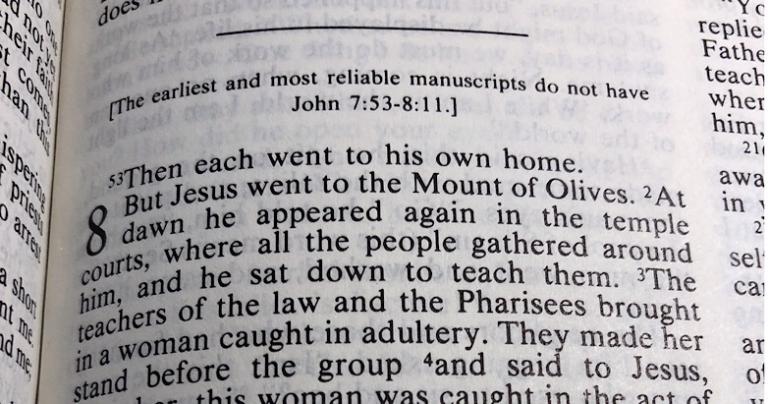
Did you know that there are Aramaic translations of the New Testament from the fifth century? This is important because Jesus Himself almost surely spoke in Aramaic.
A minority of scholars have argued that some of the New Testament was translated from Aramaic to Greek, but that seems unlikely. Greek was the common language of the place where Christianity was born. The disciples and apostles would have hired scribes who tended to write in Greek.
The importance of early translations of New Testament books is a vital reason to accept what almost all scholars, Christian and non-Christian, accept: We know what Paul wrote in Romans and what was intended even in books with unknown authors like Hebrews.
Very old translations into other languages are “checks” on the manuscript tradition.
Sometimes ill-informed people will use the “telephone” analogy to describe the transmission of ancient texts. This is stupid enough that most scholars do not bother to debunk it, but since it pops up every so often it’s worth a comment.
There is a fun youth group game where people whisper a secret to each other. At the end of a long line of listeners, the last announces what she has heard. Behold! Often the message has been garbled! Oddly, I have heard this used (though not by scholars trained in ancient textual criticism) as a description of the transmission of Biblical texts to us.
I met a man who imagined monks copying texts, adding stuff, and then other monks copying that new stuff and adding stuff of their own, to the point that we cannot be sure what a New Testament book says. He used the “telephone” game as an analogy.
Beyond noting that nobody under forty has a clue what a “telephone” is (in the sense needed), I responded that the analogy is fatally bad.
First, copying books in ancient times was big business and the customer wanted an original. Mess up and risk not being paid.
Second, the copies that the customer ordered did not take place in a youth group room with people whispering. The copy could be compared to the original in real time.
Mistakes were made, but mostly predictable ones (skipping lines, words, repeating) and they were fairly rare. The buyer wanted a perfect text. Though he never got it, he got one that was very good.
Since we have access to many copied manuscripts, to fragments to check our manuscripts, classics folk and Christians can relax. Plato may be wrong, Paul crazy, but we know what both thinkers said.
If you think that Plato and Paul were right, then you can rejoice: we have the goods.
Skepticism about textual transmission had a day in the nineteenth century, but oral transmission defeated it utterly. When working on Homer in grad school, I learned that nineteenth-century scholars assumed that if a work was transmitted orally innovation and addition would run riot. Instead, when someone studied existing oral cultures, they discovered a high degree of accuracy in transmission.
Oral performers got it right, and “errors” were rarer than anticipated. In fact, an individual performer’s “innovation” would get washed out by the conformity (in that area) of most other performers.
This was a shock to the academic system if you were the white man’s burden sort of person who thought ancient peoples were easily duped.
History laughs out loud at our chronological prejudice.
Let us assume that someone controlled all the Greek manuscript traditions (CONSTANTINE!) in a giant Dan Brown conspiracy. The fact that fragments discovered centuries after the “accepted” text confirm that text should defeat this paranoia.
Assume it does not. Instead, we have translations that in a few cases (see the “camel” going through the eye of a needle in the Aramaic) depart from the mainstream Greek text. These are very ancient translations that cannot depend (given their differences) on our mainstream Greek textual tradition. What do we discover?
We have the Gospels the evangelists wrote and the epistles produced by Paul. Almost surely, almost entirely.
Relax.
Read Paul in Romans and follow the argument. Agree or disagree, you are reading what Paul wrote more surely than you are reading what Plato wrote in Timaeus.
Only idiots, academic eccentrics, and advocates think otherwise.
Rachel Motte edited this essay.
Previous Post

January 15, 2019
Hey! Almost every Bible has important information some of us miss.
Next Post

January 17, 2019 A Beauty So Piercing
Browse Our Archives
Select a Category Apologetics Art Culture Education On Books On Education Philosophy Politics Pop Culture Spiritual Reflections Uncategorized
Select a Month October 2026 September 2026 August 2026 July 2026 July 2025 June 2025 September 2024 July 2024 June 2024 December 2023 June 2023 September 2022 May 2022 April 2022 March 2022 February 2022 July 2021 June 2021 May 2021 April 2021 March 2021 February 2021 January 2021 December 2020 November 2020 October 2020 September 2020 August 2020 July 2020 June 2020 May 2020 April 2020 March 2020 February 2020 January 2020 December 2019 November 2019 October 2019 September 2019 August 2019 July 2019 June 2019 May 2019 April 2019 March 2019 February 2019 January 2019 December 2018 November 2018 October 2018 September 2018 August 2018 July 2018 June 2018 May 2018 April 2018 March 2018 February 2018 January 2018 December 2017 November 2017 October 2017 September 2017 August 2017 July 2017 June 2017 May 2017 April 2017 March 2017 February 2017 January 2017 December 2016 November 2016 October 2016 September 2016 August 2016 July 2016 June 2016 May 2016 April 2016 March 2016 February 2016 January 2016 December 2015 November 2015 October 2015 September 2015 August 2015 July 2015 June 2015 May 2015 April 2015 March 2015 February 2015 January 2015 November 2014 October 2014 September 2014 August 2014 July 2014 June 2014 May 2014 April 2014 March 2014 February 2014 January 2014 December 2013 November 2013 October 2013 September 2013 August 2013 July 2013 June 2013 May 2013 April 2013 March 2013 February 2013 January 2013 December 2012 November 2012 October 2012 September 2012 August 2012 July 2012 June 2012 May 2012
Follow Us!
TAKE THE
Religious Wisdom Quiz
An entire city of 120,000 people repented, yet I was angry when God relented from judgment. Why was I displeased?
Select your answer to see how you score.
Because they were enemies Because I looked foolish Because my prophecy failed Because God showed mercy
Books by This Author John Mark Reynolds
Related posts from Eidos

Classical Education Must Teach Us to Make the...

The Iceberg is There: Verbosity Cannot Defeat Reality

One Weeping Icon at Christmas is Enough

The Power of Dissenting Societies: A Thought
TRENDING AT PATHEOS Evangelical

The REST of Your Life: A Creative Wrestles...
This week I had a conversation with a good friend from church....

How the author of the world's best hymn...
I've been working with John Newton for a while now. This makes...

Long before this Lectio Divina, Psalm 130 - the song - started...

What About the Trees? Another Living Parable
After I finished writing the last article about falling leaves as a...

Why Classical Education Is a Conversation, Not a...
Come and Read: Joy in Classical Education When I was a little...

Cornell University has received a great deal of negative publicity and intense...
view all Evangelical blogs
Ad-Free & Subscriber Log-In Subscription Support
- About Us
- 2026 Calendar
- Videos
- Podcasts
- Library of World Religions
- Faith In Media Tracker
- Advertise With Us
- Write for Us
- Privacy Policy
- Terms of Service
- Do Not Sell My Data
- Contact Us
- Radiant Digital
- Manage Newsletter Subscriptions
- Unsubscribe From Notifications
- Sitemap
Copyright 2008-2026, Patheos. All rights reserved.
Subscription Support Ad-Free & Subscriber Log-In
Follow Patheos