
BuddhistCatholicContemplativeEvangelicalGeneral ChristianHinduJewishLatter-day SaintMuslimNew VisionsProgressive Christian
Beliefs
- Buddhist
- Catholic
- Contemplative
- Evangelical
- General Christian
- Hindu
- Jewish
- Latter-day Saint
- More Voices
- Muslim
- New Visions
- Pagan
- Progressive Christian
Topics
- Religion News
- Food and Religion
- Sports and Religion
- Religious Art
- Religious Music and Entertainment
- Religious Events
- History and Religion
- Style and Religion
- Politics and Religion
- Women in Religion
- Recreation Outdoors and Religion
- Business Finance and Religion
- Careers Workplace and Religion
- Education and Religion
- Family Parenting and Religion
- Health Fitness and Religion
- Home and Religion
- Relationships and Religion
- Technology and Religion
- Travel and Religion
Columnists
- Buddhist Columnists
- Business Finance and Religion Columnists
- Careers Workplace and Religion Columnists
- Catholic Columnists
- Contemplative Columnists
- Education and Religion Columnists
- Evangelists Columnists
- Family Parenting and Religion Columnists
- General Christian Columnists
- Health Fitness and Religion Columnists
- Hindu Columnists
- History and Religion Columnists
- Home and Religion Columnists
- Jewish Columnists
- More Voices Columnists
- Latter Day Columnists
- Muslim Columnists
- New Visions Columnists
- Nonreligious Columnists
- Pagan Columnists
- Politics and Religion Columnists
- Progressive Columnists
- Recreation Outdoors and Religion Columnists
- Relationships and Religion Columnists
- Religion News Columnists
- Religious Art Columnists
- Religious Events Columnists
- Religious Music and Entertainment Columnists
- Sports and Religion Columnists
- Style and Religion Columnists
- Technology and Religion Columnists
- Travel and Religion Columnists
- Women in Religion Columnists
Resource Library
- 2026 Calendar
- Library of World Religions
- The 100 Most Holy Places on Earth
- Patheos Answers
- Podcasts
- Videos
- Faith Leaders Database
- Anglican Episcopalian
- Bahai
- Baptist
- Buddhism
- Christianity
- Confucianism
- Eastern Orthodoxy
- Hinduism
- Holiness and Pentecostal
- ISKCON
- Islam
- Judaism
- Lutheran
- Methodist
- The Church of Jesus Christ of Latter-day Saints
- New Age
- Paganism
- Presbytarian and Reformed
- Protestantism
- Religion Behind the Scenes
- Roman Catholic
- Scientology
- Shia Islam
- Sikhism
- Sufism
- Sunni Islam
- Taoism
- Zen
- See all religions
Research Tools
 Ad-Free & Subscriber Log-In Subscription Support
Ad-Free & Subscriber Log-In Subscription Support
Follow Patheos 

- Trending:
- Forgiveness
- |
- Marriage
- |
- Consciousness
- |
- Death Penalty
- |
- Election
- |
- Halloween

- Home
- Evangelical
- Clotel: the President’s Daughter (William Wells Brown)
Clotel: the President’s Daughter (William Wells Brown)
Last updated on: January 24, 2019 at 8:56 pm by John Mark N. Reynolds
Clotel: the President’s Daughter (William Wells Brown) 2019-01-24T20:56:14-04:00 John Mark N. Reynolds
Patheos Explore the world's faith through different perspectives on religion and spirituality! Patheos has the views of the prevalent religions and spiritualities of the world.
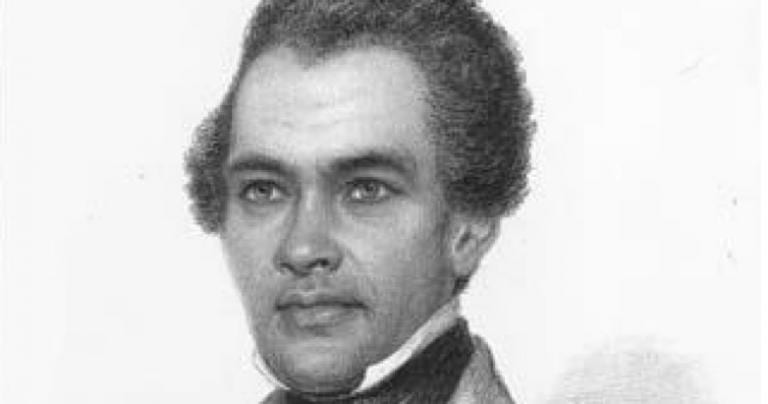 Some books are a revelation.
If you have not heard of the best selling novel, published before the Civil War, that more or less accused Thomas Jefferson of fathering a child, Clotel, with an enslaved woman, then you have learned something about who won Reconstruction. The North won the Civil War, but African Americans lost much of the peace when white Northerners reached out too quickly to the white rebels and slavers.
The heroes of abolition and their works, especially those of African-Americans, were pushed out of the memory of the majority. Instead, the focus turned to reconciliation and the “suffering” of the Southern white person after the War. The novelist Thomas Dixon is one example (see The Klansman0 and get the blockbuster early film Birth of a Nation for his horrifically racist whitewash of the pre-Civil War South.) The greater man, the enslaved man who escaped, educated himself, and became a public intellectual was pushed to the margins of “mainstream” culture.
William Wells Brown had told the truth about the slavery culture of the Civil War and the nation that elected scientific racist Woodrow Wilson was going to remember his truth. His novel was too powerful, his place as the first published African-American playwrite, and non-fiction writing to be remembered. Woodrow Wilson showed Birth of a Nation in the White House.
Brown had only the benefits of talent and the truth.
The push into obscurity of a man who helped recruit American troops to save the Union, William Wells Brown, and Thomas Dixon, a man who praised men who tore down our flag, reveals the racist rebellion that won the popular narrative about the War right through Gone with the Wind.
Abolition won the War, but segregation Reconstruction.*
Let’s read Brown and get our history back.
What of his novel?
Clotel is a brisk book, a series of scenes telling the truth about Southern slavery. Like Uncle Tom’s Cabin, a twenty-first century reader must learn the language of the time. Early Victorians liked sentiment and would only tolerate so much ugliness. Brown was brutal by the standards of the time. The full truth, the fact of life in a slave culture, was worse, he said in lectures, than words that could be said from a podium.
Read the book knowing that it was shocking and that the sentiment pulled the reader forward into an emotional knowledge of the evils of slavery that Brown could not merely say. Early American Victorians could be brought to act on sentiment that pushed them in moral directions sanctioned by Christianity and republican values. In this sense, the novel is persuasion and Brown (by the standards of the time) was good at it. Brown refused to allow middle class folk, or Americans without slaves themselves, to escape the systematic guilt of slavery. He published the book in Britain while pointing out the British had sown the seeds of slavery in North America. The cultured were not spared:
It does the cause of emancipation but little good to cry out in tones of execration against the traders, the kidnappers, the hireling overseers, and brutal drivers, so long as nothing is said to fasten the guilt on those who move in a higher circle.
Clotel begins with a robust defense of Christian marriage and the unnatural policies that slave culture encouraged:
Marriage is, indeed, the first and most important institution of human existence—the foundation of all civilisation and culture—the root of church and state. It is the most intimate covenant of heart formed among mankind; and for many persons the only relation in which they feel the true sentiments of humanity.
Enslaved husbands and wives were separated and enslaved people had no protection against the designs of their masters:
Reader, when you take into consideration the fact, that amongst the slave population no safeguard is thrown around virtue, and no inducement held out to slave women to be chaste, you will not be surprised when we tell you that immorality and vice pervade the cities of the Southern States in a manner unknown in the cities and towns of the Northern States. Indeed most of the slave women have no higher aspiration than that of becoming the finely-dressed mistress of some white man. And at Negro balls and parties, this class of women usually cut the greatest figure.
The young Clotel is first scene on the auction block put up to bid:
This was a Southern auction, at which the bones, muscles, sinews, blood, and nerves of a young lady of sixteen were sold for five hundred dollars; her moral character for two hundred; her improved intellect for one hundred; her Christianity for three hundred; and her chastity and virtue for four hundred dollars more.
This was honesty without embellishment that had to be written in Europe lest the author be arrested under the Fugitive Slave Laws.
I am not in a place to judge the language or descriptions of the book. They are hard to read (though nothing as ugly as Dixon) and may represent the compromises an African-American author had to make to persuade a white audience. Be warned.
Brown shows that corrupting power of slavery as Clotel is forced into a “marriage” with no legal status, but that she honored before God. She has a child with her “husband.” Americans prided themselves on their love of liberty compared to old Europe, but:
Clotel now urged Horatio to remove to France or England, where both her [sic] and her child would be free, and where colour was not a crime.
Brown makes an interesting argument when he shows that a Christian defense of slavery (put in the mouth of an intellectually fatuous preacher) drives men to infidelity. Since most readers of the novel would not want infidelity, the Christian liberty-loving daughter of the preacher is the attractive option. Against her father’s rambling defense of the Bible and slavery, his friend’s love of liberty yet lack of a moral compass, she argues that what is good for humans in general is the will of God and what degrades them cannot be. She concludes:
This single passage of Scripture should cause us to have respect to the rights of the slave. True Christian love is of an enlarged, disinterested nature. It loves all who love the Lord Jesus Christ in sincerity, without regard to colour or condition.
Brown demonstrates that defenses of slavery are based on particular passages pulled out of historical context that ignore the message of the New Testament. Infidelity in response threatens the moral order. Christianity and liberty must be linked. This is redemptive:
A silence followed this exhortation from the young Christian. But her remarks had done a noble work. The father’s heart was touched; and the sceptic, for the first time, was viewing Christianity in its true light.
The novel has fictional characters enacting real events, more tableau than plot. The ending is moving, slavery corrupts all. Still the soul created in God’s image can never be conquered. As a man Brown could be enslaved, but not made a slave. He can be ignored, but not refuted. His truth goes marching on.
Thomas Jefferson almost surely fathered the children of an enslaved Sally Hemings.
Lord Jesus Christ, son of God, have mercy on us.
———————————————————-
*Not all of it, of course, and leaders like US Grant, imperfect, still did much good in office. Sadly, much more was undone when “Lilly White Republicans” forced powerful African American politicians into a powerless role in the Republican Party.
Previous Post

January 23, 2019
Grieving Over the Years
Next Post

January 25, 2019 Ten Obvious Facts About Some Great Books I Sometimes Forget
Browse Our Archives
Select a Category Apologetics Art Culture Education On Books On Education Philosophy Politics Pop Culture Spiritual Reflections Uncategorized
Select a Month October 2026 September 2026 August 2026 July 2026 July 2025 June 2025 September 2024 July 2024 June 2024 December 2023 June 2023 September 2022 May 2022 April 2022 March 2022 February 2022 July 2021 June 2021 May 2021 April 2021 March 2021 February 2021 January 2021 December 2020 November 2020 October 2020 September 2020 August 2020 July 2020 June 2020 May 2020 April 2020 March 2020 February 2020 January 2020 December 2019 November 2019 October 2019 September 2019 August 2019 July 2019 June 2019 May 2019 April 2019 March 2019 February 2019 January 2019 December 2018 November 2018 October 2018 September 2018 August 2018 July 2018 June 2018 May 2018 April 2018 March 2018 February 2018 January 2018 December 2017 November 2017 October 2017 September 2017 August 2017 July 2017 June 2017 May 2017 April 2017 March 2017 February 2017 January 2017 December 2016 November 2016 October 2016 September 2016 August 2016 July 2016 June 2016 May 2016 April 2016 March 2016 February 2016 January 2016 December 2015 November 2015 October 2015 September 2015 August 2015 July 2015 June 2015 May 2015 April 2015 March 2015 February 2015 January 2015 November 2014 October 2014 September 2014 August 2014 July 2014 June 2014 May 2014 April 2014 March 2014 February 2014 January 2014 December 2013 November 2013 October 2013 September 2013 August 2013 July 2013 June 2013 May 2013 April 2013 March 2013 February 2013 January 2013 December 2012 November 2012 October 2012 September 2012 August 2012 July 2012 June 2012 May 2012
Follow Us!
TAKE THE
Religious Wisdom Quiz
Who became king after David and built the first Temple in Jerusalem?
Select your answer to see how you score.
Adonijah Solomon Rehoboam Absalom
Books by This Author John Mark Reynolds
Related posts from Eidos

Classical Education Must Teach Us to Make the...

The Man of All Talents: the Extraordinary Life...

TRENDING AT PATHEOS Evangelical

The REST of Your Life: A Creative Wrestles...
This week I had a conversation with a good friend from church....

How the author of the world's best hymn...
I've been working with John Newton for a while now. This makes...

Long before this Lectio Divina, Psalm 130 - the song - started...

What About the Trees? Another Living Parable
After I finished writing the last article about falling leaves as a...

Why Classical Education Is a Conversation, Not a...
Come and Read: Joy in Classical Education When I was a little...

Cornell University has received a great deal of negative publicity and intense...
view all Evangelical blogs
Ad-Free & Subscriber Log-In Subscription Support
- About Us
- 2026 Calendar
- Videos
- Podcasts
- Library of World Religions
- Faith In Media Tracker
- Advertise With Us
- Write for Us
- Privacy Policy
- Terms of Service
- Do Not Sell My Data
- Contact Us
- Radiant Digital
- Manage Newsletter Subscriptions
- Unsubscribe From Notifications
- Sitemap
Copyright 2008-2026, Patheos. All rights reserved.
Subscription Support Ad-Free & Subscriber Log-In
Follow Patheos