
BuddhistCatholicContemplativeEvangelicalGeneral ChristianHinduJewishLatter-day SaintMuslimNew VisionsProgressive Christian
Beliefs
- Buddhist
- Catholic
- Contemplative
- Evangelical
- General Christian
- Hindu
- Jewish
- Latter-day Saint
- More Voices
- Muslim
- New Visions
- Pagan
- Progressive Christian
Topics
- Religion News
- Food and Religion
- Sports and Religion
- Religious Art
- Religious Music and Entertainment
- Religious Events
- History and Religion
- Style and Religion
- Politics and Religion
- Women in Religion
- Recreation Outdoors and Religion
- Business Finance and Religion
- Careers Workplace and Religion
- Education and Religion
- Family Parenting and Religion
- Health Fitness and Religion
- Home and Religion
- Relationships and Religion
- Technology and Religion
- Travel and Religion
Columnists
- Buddhist Columnists
- Business Finance and Religion Columnists
- Careers Workplace and Religion Columnists
- Catholic Columnists
- Contemplative Columnists
- Education and Religion Columnists
- Evangelists Columnists
- Family Parenting and Religion Columnists
- General Christian Columnists
- Health Fitness and Religion Columnists
- Hindu Columnists
- History and Religion Columnists
- Home and Religion Columnists
- Jewish Columnists
- More Voices Columnists
- Latter Day Columnists
- Muslim Columnists
- New Visions Columnists
- Nonreligious Columnists
- Pagan Columnists
- Politics and Religion Columnists
- Progressive Columnists
- Recreation Outdoors and Religion Columnists
- Relationships and Religion Columnists
- Religion News Columnists
- Religious Art Columnists
- Religious Events Columnists
- Religious Music and Entertainment Columnists
- Sports and Religion Columnists
- Style and Religion Columnists
- Technology and Religion Columnists
- Travel and Religion Columnists
- Women in Religion Columnists
Resource Library
- 2026 Calendar
- Library of World Religions
- The 100 Most Holy Places on Earth
- Patheos Answers
- Podcasts
- Videos
- Faith Leaders Database
- Anglican Episcopalian
- Bahai
- Baptist
- Buddhism
- Christianity
- Confucianism
- Eastern Orthodoxy
- Hinduism
- Holiness and Pentecostal
- ISKCON
- Islam
- Judaism
- Lutheran
- Methodist
- The Church of Jesus Christ of Latter-day Saints
- New Age
- Paganism
- Presbytarian and Reformed
- Protestantism
- Religion Behind the Scenes
- Roman Catholic
- Scientology
- Shia Islam
- Sikhism
- Sufism
- Sunni Islam
- Taoism
- Zen
- See all religions
Research Tools
 Ad-Free & Subscriber Log-In Subscription Support
Ad-Free & Subscriber Log-In Subscription Support
Follow Patheos 

- Trending:
- Forgiveness
- |
- Marriage
- |
- Consciousness
- |
- Death Penalty
- |
- Election
- |
- Halloween

- Home
- Evangelical
- The Phoney Victory: Contrarian Hitchens (The Other One)
The Phoney Victory: Contrarian Hitchens (The Other One)
Last updated on: December 2, 2018 at 4:52 pm by John Mark N. Reynolds
The Phoney Victory: Contrarian Hitchens (The Other One) 2018-12-02T16:52:37-04:00 John Mark N. Reynolds
Patheos Explore the world's faith through different perspectives on religion and spirituality! Patheos has the views of the prevalent religions and spiritualities of the world.
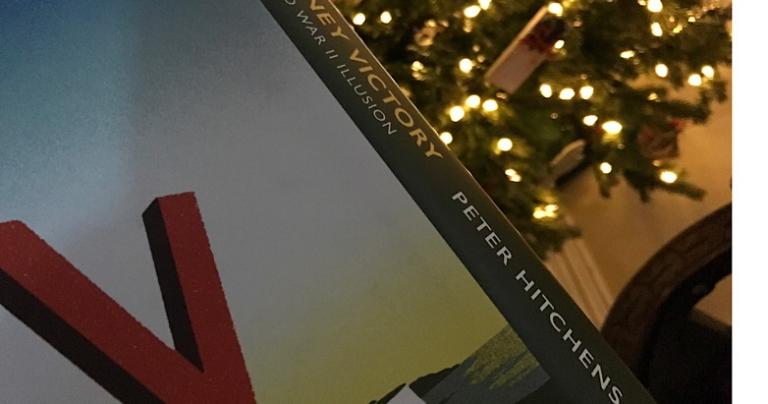 There must have been something wonderfully contrarian in the water of the Hitchen’s house as the two brothers, Christopher and Peter, were growing up.
Christopher was not always right, but he was interesting and boldly opined. Brother Peter is more in my tribe (being a theist), but proves that theism does not prevent intellectual cussedness. Peter Hitchens always is worth reading whether arguing against thoughtless drug legalization or in defense of values now forgotten.
Peter Hitchens’ latest book The Phoney Victory dares commit impiety, though impiety against patriotism, and the legends of the patriotic, does not seem that shocking in the new millennium. Hitchens argues that Great Britain did not fight a good war in War World II, started the war for a bad reason, and ended up a fundamental loser.
Is it possible to read a book such as this and not be misunderstood?
Hitchens has no sympathy for Nazi Germany, thinking that eventually war would have been necessary. He admires the courage of the warriors.
Why write the book?
Peter Hitchens believes that in Britain, myths about World War II infest policy making and cause bad decisions. World War II is the “good war,” appeasement is bad, and Churchillian rhetoric beyond reproach. Britain stood “shoulder-to-shoulder” with the United States of America in a “special relationship.”
Instead, Hitchens pictures World War II Britain as a fading power going to war to prove she still mattered. A debtor nation (to this day!) to the United States from World War I, she was picked clean by Uncle Scrooge before being “helped.” Great Britain came out of World War II a ward of the United States of America. She lost the first phase of the War and was second tier in the rest of it. If Britain had a chance of remaining a great power, losing World War II finished off her chances.
What of the argument?
Hitchens is very good at squashing foolish over simplifications regarding the War. Most of the facts or examples he uses to support his case are well known to anyone who reads more than superficially about the War. “Plucky Poland” was not a good ally, being at once impossible for Britain to save and with a government not worth saving. If you get most of your history from Hollywood (The King’s Speech comes in for a roasting), then you should read the book.
And yet . . .
History is complicated and people say a great many things while making it. People said what Hitchens says they said, but they also said many other things. This is a book pleading a case, but like any contrarian argument when one puts the book down one wonders.
Great Britain and her Empire, most vitally India, faced change soon. Instead of hastening Britains decline to second-tier status, I think winning World War II (and she was on the winning side) arguably created sympathy for plucky Britain. The United States was bound to eclipse the Empire. World War II made her protectors sympthetic to her existence. Colonialism (thank God) fell away rapidly, but in a world where Britain had her basic existence and a measure of dignity guaranteed by one of the two super powers.
Things did not have to turn out even this well for Britain. The United States might have let the Empire fall in much more Roman manner.
Hitchens is right: twisting the lion’s tail was good US politics right up to World War II. At the very least, the great wordsmith Winston Churchill created a United Kingdom that Americans found hard to hate. Good Queen Elizabeth, the last head of state to have served in World War II, has done her bit as well. World War II may have attempted the impossible, keep Britain a great power, but her “foolish” assault on Nazi Germany turned out just right.
And after all, while the motives may have been mixed and timing imperfect, going to war with Nazi Germany and lasting to the finish (unlike the hapless French) was not a bad way to go. The destruction of Fascism was not phoney and if Britain had less to do with it than she claims, then at least she picked the right side and went on picking correctly when she stood stalwertly against Communism in the Cold War.
The American government surely has acted in her self-interest, but Americans (as a people) also love Great Britain. That matters. When Argentina attacked the Falklands, for good or bad, the impulse of many Americans was to stand with our brave ally. Governments had to account for this fact.
Was Hitler ever going to invade Great Britain? Perhaps not. Did the RAF save England? Maybe less that we might want to believe. Historians, and I am not one, will debate this contrarian take.
Why am I not persuaded? This fine book (and you should buy and read it for the good debunking it does) reminds me of an early draft of my dissertation. I made a case for a particular reading of Plato . . .covering all my bases. The entire thing failed when my advisor asked in so many words: “Maybe. You have answered the objections, but why believe this to start?”
The argument was clever, but calling World War II a phoney victory smells wrong. Why?
Perhaps Hitchens is right in all he says, yet still the Nazis are gone and Queen Elizabeth reigns. This may not be victory, but if so, it is one of the better defeats in human history. American governments may say and do cynical things, but the American people were changed by World War II, even if some of what changed us was a Hollywood and Churhillian myth. Britain matters to us more than her size would demand.
As the greatest power on the planet, surely that is some kind of real victory.
God bless the special relationship and the United Kingdom.

Next Post

December 3, 2018 The Necessity of the Stranger Friend (Laws)
Browse Our Archives
Select a Category Apologetics Art Culture Education On Books On Education Philosophy Politics Pop Culture Spiritual Reflections Uncategorized
Select a Month October 2026 September 2026 August 2026 July 2026 July 2025 June 2025 September 2024 July 2024 June 2024 December 2023 June 2023 September 2022 May 2022 April 2022 March 2022 February 2022 July 2021 June 2021 May 2021 April 2021 March 2021 February 2021 January 2021 December 2020 November 2020 October 2020 September 2020 August 2020 July 2020 June 2020 May 2020 April 2020 March 2020 February 2020 January 2020 December 2019 November 2019 October 2019 September 2019 August 2019 July 2019 June 2019 May 2019 April 2019 March 2019 February 2019 January 2019 December 2018 November 2018 October 2018 September 2018 August 2018 July 2018 June 2018 May 2018 April 2018 March 2018 February 2018 January 2018 December 2017 November 2017 October 2017 September 2017 August 2017 July 2017 June 2017 May 2017 April 2017 March 2017 February 2017 January 2017 December 2016 November 2016 October 2016 September 2016 August 2016 July 2016 June 2016 May 2016 April 2016 March 2016 February 2016 January 2016 December 2015 November 2015 October 2015 September 2015 August 2015 July 2015 June 2015 May 2015 April 2015 March 2015 February 2015 January 2015 November 2014 October 2014 September 2014 August 2014 July 2014 June 2014 May 2014 April 2014 March 2014 February 2014 January 2014 December 2013 November 2013 October 2013 September 2013 August 2013 July 2013 June 2013 May 2013 April 2013 March 2013 February 2013 January 2013 December 2012 November 2012 October 2012 September 2012 August 2012 July 2012 June 2012 May 2012
Follow Us!
TAKE THE
Religious Wisdom Quiz
Who said, "I am the resurrection and the life"?
Select your answer to see how you score.
Peter Moses Jesus Paul
Books by This Author John Mark Reynolds
Related posts from Eidos

Classical Education Must Teach Us to Make the...


The Man of All Talents: the Extraordinary Life...
TRENDING AT PATHEOS Evangelical

The REST of Your Life: A Creative Wrestles...
This week I had a conversation with a good friend from church....

How the author of the world's best hymn...
I've been working with John Newton for a while now. This makes...

Long before this Lectio Divina, Psalm 130 - the song - started...

What About the Trees? Another Living Parable
After I finished writing the last article about falling leaves as a...

Why Classical Education Is a Conversation, Not a...
Come and Read: Joy in Classical Education When I was a little...

Cornell University has received a great deal of negative publicity and intense...
view all Evangelical blogs
Ad-Free & Subscriber Log-In Subscription Support
- About Us
- 2026 Calendar
- Videos
- Podcasts
- Library of World Religions
- Faith In Media Tracker
- Advertise With Us
- Write for Us
- Privacy Policy
- Terms of Service
- Do Not Sell My Data
- Contact Us
- Radiant Digital
- Manage Newsletter Subscriptions
- Unsubscribe From Notifications
- Sitemap
Copyright 2008-2026, Patheos. All rights reserved.
Subscription Support Ad-Free & Subscriber Log-In
Follow Patheos