
BuddhistCatholicContemplativeEvangelicalGeneral ChristianHinduJewishLatter-day SaintMuslimNew VisionsProgressive Christian
Beliefs
- Buddhist
- Catholic
- Contemplative
- Evangelical
- General Christian
- Hindu
- Jewish
- Latter-day Saint
- More Voices
- Muslim
- New Visions
- Pagan
- Progressive Christian
Topics
- Religion News
- Food and Religion
- Sports and Religion
- Religious Art
- Religious Music and Entertainment
- Religious Events
- History and Religion
- Style and Religion
- Politics and Religion
- Women in Religion
- Recreation Outdoors and Religion
- Business Finance and Religion
- Careers Workplace and Religion
- Education and Religion
- Family Parenting and Religion
- Health Fitness and Religion
- Home and Religion
- Relationships and Religion
- Technology and Religion
- Travel and Religion
Columnists
- Buddhist Columnists
- Business Finance and Religion Columnists
- Careers Workplace and Religion Columnists
- Catholic Columnists
- Contemplative Columnists
- Education and Religion Columnists
- Evangelists Columnists
- Family Parenting and Religion Columnists
- General Christian Columnists
- Health Fitness and Religion Columnists
- Hindu Columnists
- History and Religion Columnists
- Home and Religion Columnists
- Jewish Columnists
- More Voices Columnists
- Latter Day Columnists
- Muslim Columnists
- New Visions Columnists
- Nonreligious Columnists
- Pagan Columnists
- Politics and Religion Columnists
- Progressive Columnists
- Recreation Outdoors and Religion Columnists
- Relationships and Religion Columnists
- Religion News Columnists
- Religious Art Columnists
- Religious Events Columnists
- Religious Music and Entertainment Columnists
- Sports and Religion Columnists
- Style and Religion Columnists
- Technology and Religion Columnists
- Travel and Religion Columnists
- Women in Religion Columnists
Resource Library
- 2026 Calendar
- Library of World Religions
- The 100 Most Holy Places on Earth
- Patheos Answers
- Podcasts
- Videos
- Faith Leaders Database
- Anglican Episcopalian
- Bahai
- Baptist
- Buddhism
- Christianity
- Confucianism
- Eastern Orthodoxy
- Hinduism
- Holiness and Pentecostal
- ISKCON
- Islam
- Judaism
- Lutheran
- Methodist
- The Church of Jesus Christ of Latter-day Saints
- New Age
- Paganism
- Presbytarian and Reformed
- Protestantism
- Religion Behind the Scenes
- Roman Catholic
- Scientology
- Shia Islam
- Sikhism
- Sufism
- Sunni Islam
- Taoism
- Zen
- See all religions
Research Tools
 Ad-Free & Subscriber Log-In Subscription Support
Ad-Free & Subscriber Log-In Subscription Support
Follow Patheos 

- Trending:
- Forgiveness
- |
- Marriage
- |
- Consciousness
- |
- Death Penalty
- |
- Election
- |
- Halloween

- Home
- Evangelical
- The Heart of Classical Education or Avoid Starting World War I by Soft Headed, Hard Heartedness (4/5)
The Heart of Classical Education or Avoid Starting World War I by Soft Headed, Hard Heartedness (4/5)
Last updated on: November 14, 2018 at 10:51 am by John Mark N. Reynolds
The Heart of Classical Education or Avoid Starting World War I by Soft Headed, Hard Heartedness (4/5) 2018-11-14T10:51:47-04:00 John Mark N. Reynolds
Patheos Explore the world's faith through different perspectives on religion and spirituality! Patheos has the views of the prevalent religions and spiritualities of the world.

Williams Jennings Bryan stood in Dayton and battled for the humane. He was no scholar, but his opposition to Darwinism, whatever the merits, came from a fierce hatred of the Darwinian justification for the killing fields of World War I. This misuse of science (or even philosophical Darwinism) kept a certain kind of classically educated leader comfortable with the deaths of millions. The fit would survive having conveniently arranged for back-of-the-lines jobs. Industry and creativity would boom, because the demands of the War would bring full employement and demand for new weaponry. The military would produce new weapons using innovative technology that after the War would make things better for those who survived.
Bryan, progressive and Christian, hated war and despised those who ground through a generation and failed to see the evil they had done.
Christians reviving classical education should note that the classical education of the late Victorian and Edwardian era did this evil and so should be careful to avoid reviving the evils of racialism and colonialism. These false ideas were not necessary to classical, Christian education, and were contrary in fact to classical, Christian education, but grew like a cancer in (for example) the classical system prior to World War I.
We cannot pick up or merely revive that education. In fact, World War I had to lead to an accounting: what had gone wrong? How had the brightest and best gone so badly? This was particularly true when one considers that too many educated folk who opposed the War fell into evil ideologies like Bolshevism as the solution. World War I was bad, but the evil kept coming.
Bryan and some Christians had too simplistic a take on the problem and developed a suspicion of liberal arts and classical education because they saw the harm that had been done. Fundamentalist responses had the merit of seeing the evils, but with a solution that could not have maintained the goods of science and culture and simultaneously spread them.
The analysis of the white American fundamentalists acccepted the “scientific racism” of the time, for example. Bryan himself had opposed the Spanish American war and colonialism up to a point, but he was inconsistent. Education needed a cure from within, but Bryan and the fundamentalists had never been within the system so missed the virtues that remained.
Yet we must not lose the evils that a misunderstanding of science and a loss religious or virtue training produced in classical education. Things went wrong.
The common image of God in all humankind was denied in colonialism and mitigated in class structure.
A classical education exposed students to Aristotle and his much abused section in Politics I.6 about natural slaves. The powerful found it easy to create a hierarchy of “races” that justified exploitation. Any check in classical literature to this idea was ignored. The Bible was twisted to show the same hierarchy. Criticisms from global scholars and Christians in colonized lands were ignored. Finallly, science was also twisted to support the same power dynamic.
The power of classical Christian education, and the safety, had been the checks and balances of philosophy, theology, and natural philosophy (science) on the constant temptation to read, reveal, or report what we wish to read, reveal, or report. One might be twisted, but the others would slow down the self-serving error.
Human rights were also denied by class structures within the nation that defended injustice. The white poor were driven to death in industry. The leaders justified it by a selected reading of the classics, the Bible, or Darwin.
What was missing?
The dialectic tension of classical education had been destroyed. Ideology (either of the powerful or the revolutionary) and not discussion was key. Science might have checked this, but alone, science is easy prey for the ideologue. The classically trained misused science to put Christian ideas in a subordinate place.
Orthodox Christianity was pulverized or ignored in the “outer world.” Christianity was reduced to merely affective, a “woman’s place.”
Perhaps, another universal view could have replaced Christianity in the partnership with classics and science, but nothing did. No ethical system or worldview capable of educating the mind and heart in virtue replaced Christianity in the educational system. None ever has. Is it possible to sustain classic and scientific culture without a largely Christian population or value set?
We cannot know as nobody has done it yet.
In the time running up to World War I, too many men (and they were almost all men) thought of truth as brutal and grace as cut off from reason. A man was tough (Jack London, Theodore Roosevelt). The private sphere, the realm of the woman, might be tender, but in the greater world, manly virtues (brutal takes on Aristotle, Darwin) had to prevail. Read Heart of Darkness to see the result. Nature was red in tooth and claw, the nursery had to be left behind by men, even with regret and respect.
World War I was not the start of the trouble. The foulness was being practiced on much of the world through colonialism before it turned on its propagators in World War I.
William Jennings Bryan was on to something.
Moral and religious arguments against inhumanity were reduced to “womanly” sentiment in degenerate classical education. Humility is the key trait that faded away.
Charles Dickens tried, but failed to stop this path.His book Hard Times brutalized the turn toward ugliness in education. This helped. The character of Scrooge in Christmas Carol pictured the limits of inhumane business practices. Society did not need to be Darwinian. We could choose to do better as (Dickens would have said) the Savior showed us.
Yet to win against the cultural drift, Dickens (too often) reduced morality and religion to sentiment. His best case was the ugliness of the dark, Satanic world that was being created, but he lacked the education (classical and Christian) to show that both were being abused and marginalized.
Dickens, like Bryan, did not know how to respond to misuses of science to support evils that were occurring long before Darwin.
Gone was the hardheaded, soft-hearted religion of a great man like John Chrysostom: world class classical education with the humility of a revelation of God in the person of Jesus Christ. This combination gave him the courage to oppose evil rulers and the humility that kept him from abusing the power of his eloquence. This pastor, leader, philosopher, theologian refused to bow to power or choose between reason and passion. Instead, he allowed his deepest soul to keep the creative tension between the two.
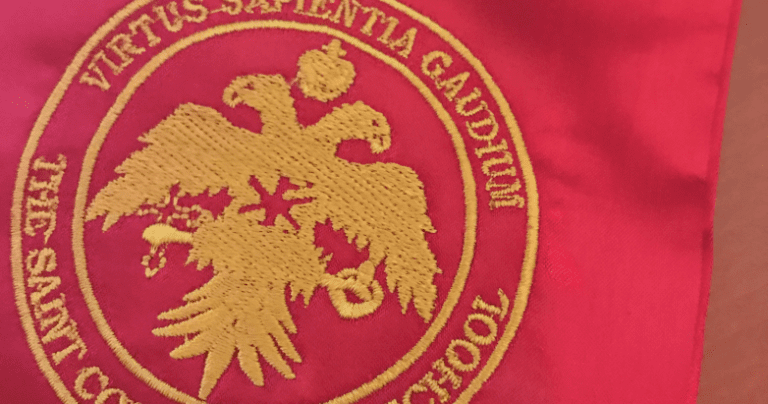
The eagle of Constantinople had two heads with one body: a dialog of equal powers that could end only in death. This classical Christian education where the Greek philosophers were read and theological training continued together for almost the entire thousand year life of the City was good.
Humility is “to know yourself.” Moderns before the First World War began to reduce this to self-understanding when mostly this was to know one’s place in justice without the community and the cosmos. When one stands before the good God, then one knows one is not such a much. Humility is a natural result of a proper vision of God and cosmos.
Humility is missing in too much pre-World War I classical education: the future masters of creation were being trained. In Mary Poppins (1964), the father seeks a nanny to raise children to rule in the Empire . . .in the Age of Men. This is funny if not taken seriously, but the humor fails if taken seriously. Humility lacking the powers of 1914 took themselves deadly seriously.
Sign up for the classical education that learned from World War I: college and K-12.
———————————————
This is a five part series: 1, 2, 3, 4,


Browse Our Archives
Select a Category Apologetics Art Culture Education On Books On Education Philosophy Politics Pop Culture Spiritual Reflections Uncategorized
Select a Month October 2026 September 2026 August 2026 July 2026 July 2025 June 2025 September 2024 July 2024 June 2024 December 2023 June 2023 September 2022 May 2022 April 2022 March 2022 February 2022 July 2021 June 2021 May 2021 April 2021 March 2021 February 2021 January 2021 December 2020 November 2020 October 2020 September 2020 August 2020 July 2020 June 2020 May 2020 April 2020 March 2020 February 2020 January 2020 December 2019 November 2019 October 2019 September 2019 August 2019 July 2019 June 2019 May 2019 April 2019 March 2019 February 2019 January 2019 December 2018 November 2018 October 2018 September 2018 August 2018 July 2018 June 2018 May 2018 April 2018 March 2018 February 2018 January 2018 December 2017 November 2017 October 2017 September 2017 August 2017 July 2017 June 2017 May 2017 April 2017 March 2017 February 2017 January 2017 December 2016 November 2016 October 2016 September 2016 August 2016 July 2016 June 2016 May 2016 April 2016 March 2016 February 2016 January 2016 December 2015 November 2015 October 2015 September 2015 August 2015 July 2015 June 2015 May 2015 April 2015 March 2015 February 2015 January 2015 November 2014 October 2014 September 2014 August 2014 July 2014 June 2014 May 2014 April 2014 March 2014 February 2014 January 2014 December 2013 November 2013 October 2013 September 2013 August 2013 July 2013 June 2013 May 2013 April 2013 March 2013 February 2013 January 2013 December 2012 November 2012 October 2012 September 2012 August 2012 July 2012 June 2012 May 2012
Follow Us!
TAKE THE
Religious Wisdom Quiz
Who was the Ethiopian eunuch reading when Philip approached his chariot?
Select your answer to see how you score.
The Psalms Isaiah the prophet Jeremiah the prophet The book of Moses
Books by This Author John Mark Reynolds
Related posts from Eidos

Why Classical Education Is a Conversation, Not a...

Does Classical Education Belong Only to the West?

Classical Education Must Teach Us to Make the...

Rooted: Why Classical Education Needs Community
TRENDING AT PATHEOS Evangelical

The REST of Your Life: A Creative Wrestles...
This week I had a conversation with a good friend from church....

How the author of the world's best hymn...
I've been working with John Newton for a while now. This makes...

Long before this Lectio Divina, Psalm 130 - the song - started...

What About the Trees? Another Living Parable
After I finished writing the last article about falling leaves as a...

Why Classical Education Is a Conversation, Not a...
Come and Read: Joy in Classical Education When I was a little...

Cornell University has received a great deal of negative publicity and intense...
view all Evangelical blogs
Ad-Free & Subscriber Log-In Subscription Support
- About Us
- 2026 Calendar
- Videos
- Podcasts
- Library of World Religions
- Faith In Media Tracker
- Advertise With Us
- Write for Us
- Privacy Policy
- Terms of Service
- Do Not Sell My Data
- Contact Us
- Radiant Digital
- Manage Newsletter Subscriptions
- Unsubscribe From Notifications
- Sitemap
Copyright 2008-2026, Patheos. All rights reserved.
Subscription Support Ad-Free & Subscriber Log-In
Follow Patheos