
BuddhistCatholicContemplativeEvangelicalGeneral ChristianHinduJewishLatter-day SaintMuslimNew VisionsProgressive Christian
Beliefs
- Buddhist
- Catholic
- Contemplative
- Evangelical
- General Christian
- Hindu
- Jewish
- Latter-day Saint
- More Voices
- Muslim
- New Visions
- Pagan
- Progressive Christian
Topics
- Religion News
- Food and Religion
- Sports and Religion
- Religious Art
- Religious Music and Entertainment
- Religious Events
- History and Religion
- Style and Religion
- Politics and Religion
- Women in Religion
- Recreation Outdoors and Religion
- Business Finance and Religion
- Careers Workplace and Religion
- Education and Religion
- Family Parenting and Religion
- Health Fitness and Religion
- Home and Religion
- Relationships and Religion
- Technology and Religion
- Travel and Religion
Columnists
- Buddhist Columnists
- Business Finance and Religion Columnists
- Careers Workplace and Religion Columnists
- Catholic Columnists
- Contemplative Columnists
- Education and Religion Columnists
- Evangelists Columnists
- Family Parenting and Religion Columnists
- General Christian Columnists
- Health Fitness and Religion Columnists
- Hindu Columnists
- History and Religion Columnists
- Home and Religion Columnists
- Jewish Columnists
- More Voices Columnists
- Latter Day Columnists
- Muslim Columnists
- New Visions Columnists
- Nonreligious Columnists
- Pagan Columnists
- Politics and Religion Columnists
- Progressive Columnists
- Recreation Outdoors and Religion Columnists
- Relationships and Religion Columnists
- Religion News Columnists
- Religious Art Columnists
- Religious Events Columnists
- Religious Music and Entertainment Columnists
- Sports and Religion Columnists
- Style and Religion Columnists
- Technology and Religion Columnists
- Travel and Religion Columnists
- Women in Religion Columnists
Resource Library
- 2026 Calendar
- Library of World Religions
- The 100 Most Holy Places on Earth
- Patheos Answers
- Podcasts
- Videos
- Faith Leaders Database
- Anglican Episcopalian
- Bahai
- Baptist
- Buddhism
- Christianity
- Confucianism
- Eastern Orthodoxy
- Hinduism
- Holiness and Pentecostal
- ISKCON
- Islam
- Judaism
- Lutheran
- Methodist
- The Church of Jesus Christ of Latter-day Saints
- New Age
- Paganism
- Presbytarian and Reformed
- Protestantism
- Religion Behind the Scenes
- Roman Catholic
- Scientology
- Shia Islam
- Sikhism
- Sufism
- Sunni Islam
- Taoism
- Zen
- See all religions
Research Tools
 Ad-Free & Subscriber Log-In Subscription Support
Ad-Free & Subscriber Log-In Subscription Support
Follow Patheos 

- Trending:
- Forgiveness
- |
- Marriage
- |
- Consciousness
- |
- Death Penalty
- |
- Election
- |
- Halloween

- Home
- Evangelical
- Ancient Legends (Timaeus)
Ancient Legends (Timaeus)
Last updated on: October 15, 2018 at 5:28 am by John Mark N. Reynolds
Ancient Legends (Timaeus) 2018-10-14T22:29:36-04:00 John Mark N. Reynolds
Patheos Explore the world's faith through different perspectives on religion and spirituality! Patheos has the views of the prevalent religions and spiritualities of the world.
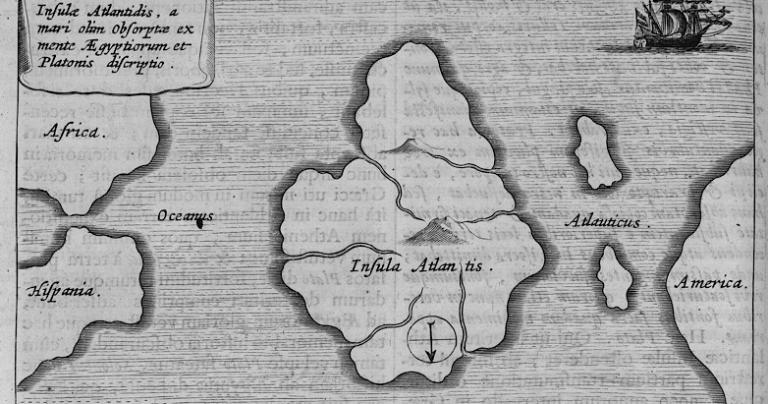
A story like Atlantis is not historical, more like the Lord of the Rings than the Gospel of John or Thucydides’ History of the Peloponnesian Wars. Instead, stories like Atlantis fill in the history we have lost in deep time*. Socrates wants to see the ideal in motion, but history will never give us the ideal. We are broken. History, as the Bible shows, gives us flawed King David. Yet still humankind needs tales, like that of Arthur, to fill the gaps.
The search for such a story leads the Greeks to Egypt, mother Africa, where humankind goes to be born. There they hear a story, not history, but a myth of origins.
‘You are young,’ the old priest replied, ‘young in soul, every one of you. Your souls are devoid of beliefs about antiquity handed down by ancient tradition. Your souls lack any learning made hoary by time.
We live history, are saved by reality, but gain hope, a vision of where reality might be found, by the hypothetical history that is well told. Plato, Dante, Tolkien did this well. . . Lovecraft not so much.
The oldest building in Britain makes an American tourist realize how young his nation is, but then a visit to Greece makes even ancient Britain juvenile, then Egypt beckons where mature takes on a new meaning. Mother Africa beckons with stories of human childhood. We do not know, we cannot know, the lost loves of mothers and fathers in mother Ethiopia or the struggles of a city against barbarism in the heart of Africa centuries before the pyramids were reared.
This is the severe mercy of heaven lest we despair. In the school of souls that is this life, nothing is new. Evils are defeated in the village only to be renewed in another generation. Only God can know all and know hope. He knows all history and the end of history sitting timelessly on His throne. The pattern is not endless and the arc of history is Godward.
Yet we are young, Plato is right. We are born and live. Our lives matter to us and to God. They will not be forgotten by Him, though human history will record little of what we say or do. We do not matter much to human history and are not even worth recording in the sweep of deep time.
God has given us “sacred history” and the ability to do science to help mind the gaps, but a second tool is imagination. We postulate and tell myths. These are not “true” indeed, but if told well are true in intent. Minis Tirith is Constantinople without the (needed) historic and moral complexity.
Human history doesn’t give us icons, hagiography does. This is sacred history where we double down on the good as an example to us.
The “likely stories” we tell ourselves about the world matter. Most of human history is lost, unwritten, unrecorded, unmemorialized. We are awash with data about our dotage, but know next to nothing of the childhood or youth of humanity. Those tales, loves, and lives are lost as history.
This is where we must tell “likely stories” or myths to fill the loss. Different eras picture this unrecorded history (this state of nature) differently. Some make our ancestors savages, others have mythologized the unwritten past as being the way they wish we are. Novelists have told stories of matriarchies, white supremacy, free love: we have invented a past as we must. Are we ascending from brutes as secular Victorians believed? Or are we fallen from a Golden Age as the Greeks thought?
We must tell such stories and good myth makers can save us from serious errors or present us with splendid opportunities.
When philosophers thought about human origins, how they pictured the “state of nature” before the coming of the state shaped what they thought of the role of government. Locke did not think our pre-history was so bad, Hobbes thought it horrible. Locke justified revolution in some cases against a bad government, because even the worst, a return to the “state of nature” was bad, but not horrid. For Hobbes, there was no government that could be worse than the nasty, brutish times before government.
Locke was more deeply Christian and so salvation history helped him. Thank God.
We are all young and even the deepest time, the moment of the start of the cosmos, is nothing to timeless God. God is I AM and after cosmic cold death will be I AM. He is the alpha and omega of time.
We tell stories, some very old, but we are all young before God. Thank God that He is good and a father to us.
——————-
*Whether one is “young earth” or “old earth,” most of history is lost. It would merely be a matter of degree. Sacred Scripture preserves an outline of salvation history, but even so much is lost that would not have been forgotten in a better world. We are chronologically lonely: cut off from our ancestors by death.
Previous Post

October 14, 2018
The Story: Every Word Is True (Timaeus)
Next Post
October 16, 2018 An Artificial Controversy (A Guest Post by Dr. Eric Holloway)
Browse Our Archives
Select a Category Apologetics Art Culture Education On Books On Education Philosophy Politics Pop Culture Spiritual Reflections Uncategorized
Select a Month October 2026 September 2026 August 2026 July 2026 July 2025 June 2025 September 2024 July 2024 June 2024 December 2023 June 2023 September 2022 May 2022 April 2022 March 2022 February 2022 July 2021 June 2021 May 2021 April 2021 March 2021 February 2021 January 2021 December 2020 November 2020 October 2020 September 2020 August 2020 July 2020 June 2020 May 2020 April 2020 March 2020 February 2020 January 2020 December 2019 November 2019 October 2019 September 2019 August 2019 July 2019 June 2019 May 2019 April 2019 March 2019 February 2019 January 2019 December 2018 November 2018 October 2018 September 2018 August 2018 July 2018 June 2018 May 2018 April 2018 March 2018 February 2018 January 2018 December 2017 November 2017 October 2017 September 2017 August 2017 July 2017 June 2017 May 2017 April 2017 March 2017 February 2017 January 2017 December 2016 November 2016 October 2016 September 2016 August 2016 July 2016 June 2016 May 2016 April 2016 March 2016 February 2016 January 2016 December 2015 November 2015 October 2015 September 2015 August 2015 July 2015 June 2015 May 2015 April 2015 March 2015 February 2015 January 2015 November 2014 October 2014 September 2014 August 2014 July 2014 June 2014 May 2014 April 2014 March 2014 February 2014 January 2014 December 2013 November 2013 October 2013 September 2013 August 2013 July 2013 June 2013 May 2013 April 2013 March 2013 February 2013 January 2013 December 2012 November 2012 October 2012 September 2012 August 2012 July 2012 June 2012 May 2012
Follow Us!
TAKE THE
Religious Wisdom Quiz
True or False: The apostles drew lots to choose Matthias to replace Judas.
Select your answer to see how you score.
FALSE TRUE
Books by This Author John Mark Reynolds
Related posts from Eidos

Classical Education Must Teach Us to Make the...

Yet I Love Her: History and the Church


The Iceberg is There: Verbosity Cannot Defeat Reality
TRENDING AT PATHEOS Evangelical

The REST of Your Life: A Creative Wrestles...
This week I had a conversation with a good friend from church....

How the author of the world's best hymn...
I've been working with John Newton for a while now. This makes...

Long before this Lectio Divina, Psalm 130 - the song - started...

What About the Trees? Another Living Parable
After I finished writing the last article about falling leaves as a...

Why Classical Education Is a Conversation, Not a...
Come and Read: Joy in Classical Education When I was a little...

Cornell University has received a great deal of negative publicity and intense...
view all Evangelical blogs
Ad-Free & Subscriber Log-In Subscription Support
- About Us
- 2026 Calendar
- Videos
- Podcasts
- Library of World Religions
- Faith In Media Tracker
- Advertise With Us
- Write for Us
- Privacy Policy
- Terms of Service
- Do Not Sell My Data
- Contact Us
- Radiant Digital
- Manage Newsletter Subscriptions
- Unsubscribe From Notifications
- Sitemap
Copyright 2008-2026, Patheos. All rights reserved.
Subscription Support Ad-Free & Subscriber Log-In
Follow Patheos