
BuddhistCatholicContemplativeEvangelicalGeneral ChristianHinduJewishLatter-day SaintMuslimNew VisionsProgressive Christian
Beliefs
- Buddhist
- Catholic
- Contemplative
- Evangelical
- General Christian
- Hindu
- Jewish
- Latter-day Saint
- More Voices
- Muslim
- New Visions
- Pagan
- Progressive Christian
Topics
- Religion News
- Food and Religion
- Sports and Religion
- Religious Art
- Religious Music and Entertainment
- Religious Events
- History and Religion
- Style and Religion
- Politics and Religion
- Women in Religion
- Recreation Outdoors and Religion
- Business Finance and Religion
- Careers Workplace and Religion
- Education and Religion
- Family Parenting and Religion
- Health Fitness and Religion
- Home and Religion
- Relationships and Religion
- Technology and Religion
- Travel and Religion
Columnists
- Buddhist Columnists
- Business Finance and Religion Columnists
- Careers Workplace and Religion Columnists
- Catholic Columnists
- Contemplative Columnists
- Education and Religion Columnists
- Evangelists Columnists
- Family Parenting and Religion Columnists
- General Christian Columnists
- Health Fitness and Religion Columnists
- Hindu Columnists
- History and Religion Columnists
- Home and Religion Columnists
- Jewish Columnists
- More Voices Columnists
- Latter Day Columnists
- Muslim Columnists
- New Visions Columnists
- Nonreligious Columnists
- Pagan Columnists
- Politics and Religion Columnists
- Progressive Columnists
- Recreation Outdoors and Religion Columnists
- Relationships and Religion Columnists
- Religion News Columnists
- Religious Art Columnists
- Religious Events Columnists
- Religious Music and Entertainment Columnists
- Sports and Religion Columnists
- Style and Religion Columnists
- Technology and Religion Columnists
- Travel and Religion Columnists
- Women in Religion Columnists
Resource Library
- 2026 Calendar
- Library of World Religions
- The 100 Most Holy Places on Earth
- Patheos Answers
- Podcasts
- Videos
- Faith Leaders Database
- Anglican Episcopalian
- Bahai
- Baptist
- Buddhism
- Christianity
- Confucianism
- Eastern Orthodoxy
- Hinduism
- Holiness and Pentecostal
- ISKCON
- Islam
- Judaism
- Lutheran
- Methodist
- The Church of Jesus Christ of Latter-day Saints
- New Age
- Paganism
- Presbytarian and Reformed
- Protestantism
- Religion Behind the Scenes
- Roman Catholic
- Scientology
- Shia Islam
- Sikhism
- Sufism
- Sunni Islam
- Taoism
- Zen
- See all religions
Research Tools
 Ad-Free & Subscriber Log-In Subscription Support
Ad-Free & Subscriber Log-In Subscription Support
Follow Patheos 

- Trending:
- Forgiveness
- |
- Marriage
- |
- Consciousness
- |
- Death Penalty
- |
- Election
- |
- Halloween

- Home
- Evangelical
- The Great Wave (Timaeus)
The Great Wave (Timaeus)
Last updated on: October 14, 2018 at 4:15 pm by John Mark N. Reynolds
The Great Wave (Timaeus) 2018-10-14T16:15:21-04:00 John Mark N. Reynolds
Patheos Explore the world's faith through different perspectives on religion and spirituality! Patheos has the views of the prevalent religions and spiritualities of the world.
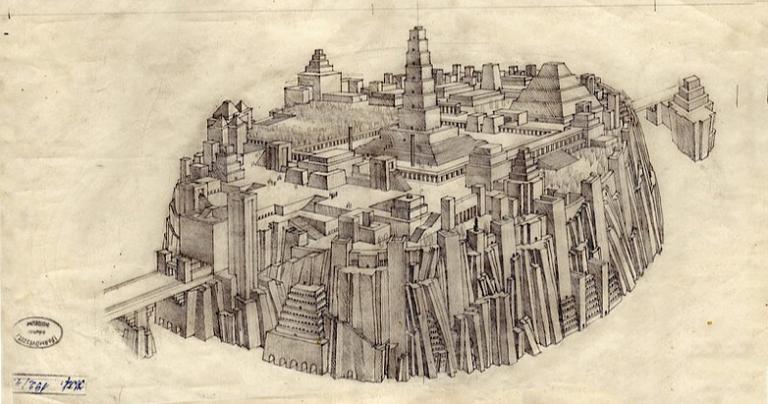 Tolkien began writing by being overwhelmed by the great sea wave that swept away Atlantis and so Lord of the Rings was born. So a scholar told me once, perhaps it is true. Certainly Numinor was much like Atlantis . . .
Atlantis ends with a great wave sweeping the might of man under the ocean.
People have approached me offering me maps to Atlantis when they heard my dissertation was on Timaeus. I looked, because maybe it was the start of a movie adventure, but sadly it is always (always, always, always) madness. Atlantis never existed, Plato says so as clearly as he can, but the story is so true in every sense, except the historical, that people keep looking.
I wrote a novel with a touch of Atlantis, because how could I not?
Plato created a likely story (myth) that helped us understand that “truth” is a complex idea. A story may have happened, that is a kind of truth, but if we tell it poorly, then the result of that telling may lie to us. When we hear that John Wilkes Booth is remembered, if the story is badly told, then we might think that doing evil is worthwhile. Instead of wanting to be Lincoln, we admire Booth.
God forbid.
To be fully true, the true story must also teach us to do what is good and beautiful or truth will be twisted to serve evil. There must be goodness in truth, because fundamentally truth is good. Fiction, think the parable of the prodigal son by Jesus, is true (as far as it goes) at a metaphysical level.
There was no prodigal, no father, but there is truth to the story.
History told morally is most powerful: Jesus was born, lived, died, and rose again. The world is changed by that myth that is true. The moral message is also powerful even in fiction. Plato gave us the fall of Atlantis, the great wave sweeping away the might Empire of men due to their pride, and that is true as far it goes.
Plato wrote a trilogy: Timaeus births Atlantis, Critias destroys her, and Hermocrates makes the story immortal.
How?
Timaeus introduces the plot that hooks to our memory of the Great Flood: proud men are destroyed by water when they reach too far. Critias retells the story, but ends, “unfinished” as the Great God prepares to destroy Atlantis. Just as Zeus begins to order destruction, the dialogue ends with his final command unsaid.
We stand at Armageddon and we. . . Wait.
Always.
That, just that, is the human condition if Plato is correct.
Plato leaves us looking for the end, but with no end that comes. This also is true. Our pride is washed away, but that pride continues and so Zeus is always preparing to announce our doom.
The Hermocrates which would end the trilogy was never written and this is just. Atlantis is always proud, always being destroyed, and never being resolved, because we are all Atlantans if Plato is right. The final word on Atlantis is unsaid, because we go on being Atlantans, or the victims of Atlantis, or looking for Atlantis.
We wonder if the great island will ever rise from the sea.
No.
Altantis is going, going . . . And when Christ returns will be gone. The Empire of human pride cannot stand on the Earth.
Previous Post
October 12, 2018
A Better Soul Over Time (Republic Book X)
Next Post

October 14, 2018 The Story: Every Word Is True (Timaeus)
Browse Our Archives
Select a Category Apologetics Art Culture Education On Books On Education Philosophy Politics Pop Culture Spiritual Reflections Uncategorized
Select a Month October 2026 September 2026 August 2026 July 2026 July 2025 June 2025 September 2024 July 2024 June 2024 December 2023 June 2023 September 2022 May 2022 April 2022 March 2022 February 2022 July 2021 June 2021 May 2021 April 2021 March 2021 February 2021 January 2021 December 2020 November 2020 October 2020 September 2020 August 2020 July 2020 June 2020 May 2020 April 2020 March 2020 February 2020 January 2020 December 2019 November 2019 October 2019 September 2019 August 2019 July 2019 June 2019 May 2019 April 2019 March 2019 February 2019 January 2019 December 2018 November 2018 October 2018 September 2018 August 2018 July 2018 June 2018 May 2018 April 2018 March 2018 February 2018 January 2018 December 2017 November 2017 October 2017 September 2017 August 2017 July 2017 June 2017 May 2017 April 2017 March 2017 February 2017 January 2017 December 2016 November 2016 October 2016 September 2016 August 2016 July 2016 June 2016 May 2016 April 2016 March 2016 February 2016 January 2016 December 2015 November 2015 October 2015 September 2015 August 2015 July 2015 June 2015 May 2015 April 2015 March 2015 February 2015 January 2015 November 2014 October 2014 September 2014 August 2014 July 2014 June 2014 May 2014 April 2014 March 2014 February 2014 January 2014 December 2013 November 2013 October 2013 September 2013 August 2013 July 2013 June 2013 May 2013 April 2013 March 2013 February 2013 January 2013 December 2012 November 2012 October 2012 September 2012 August 2012 July 2012 June 2012 May 2012
Follow Us!
TAKE THE
Religious Wisdom Quiz
True or False: Thomas doubted Jesus' resurrection until he saw and touched Jesus' wounds.
Select your answer to see how you score.
FALSE TRUE
Books by This Author John Mark Reynolds
Related posts from Eidos

Classical Education Must Teach Us to Make the...

Classical Education and the Art of Dying Well

Golden, Golden, Golden: My Mother's Last Lesson

TRENDING AT PATHEOS Evangelical

The REST of Your Life: A Creative Wrestles...
This week I had a conversation with a good friend from church....

How the author of the world's best hymn...
I've been working with John Newton for a while now. This makes...

Long before this Lectio Divina, Psalm 130 - the song - started...

What About the Trees? Another Living Parable
After I finished writing the last article about falling leaves as a...

Why Classical Education Is a Conversation, Not a...
Come and Read: Joy in Classical Education When I was a little...

Cornell University has received a great deal of negative publicity and intense...
view all Evangelical blogs
Ad-Free & Subscriber Log-In Subscription Support
- About Us
- 2026 Calendar
- Videos
- Podcasts
- Library of World Religions
- Faith In Media Tracker
- Advertise With Us
- Write for Us
- Privacy Policy
- Terms of Service
- Do Not Sell My Data
- Contact Us
- Radiant Digital
- Manage Newsletter Subscriptions
- Unsubscribe From Notifications
- Sitemap
Copyright 2008-2026, Patheos. All rights reserved.
Subscription Support Ad-Free & Subscriber Log-In
Follow Patheos