
BuddhistCatholicContemplativeEvangelicalGeneral ChristianHinduJewishLatter-day SaintMuslimNew VisionsProgressive Christian
Beliefs
- Buddhist
- Catholic
- Contemplative
- Evangelical
- General Christian
- Hindu
- Jewish
- Latter-day Saint
- More Voices
- Muslim
- New Visions
- Pagan
- Progressive Christian
Topics
- Religion News
- Food and Religion
- Sports and Religion
- Religious Art
- Religious Music and Entertainment
- Religious Events
- History and Religion
- Style and Religion
- Politics and Religion
- Women in Religion
- Recreation Outdoors and Religion
- Business Finance and Religion
- Careers Workplace and Religion
- Education and Religion
- Family Parenting and Religion
- Health Fitness and Religion
- Home and Religion
- Relationships and Religion
- Technology and Religion
- Travel and Religion
Columnists
- Buddhist Columnists
- Business Finance and Religion Columnists
- Careers Workplace and Religion Columnists
- Catholic Columnists
- Contemplative Columnists
- Education and Religion Columnists
- Evangelists Columnists
- Family Parenting and Religion Columnists
- General Christian Columnists
- Health Fitness and Religion Columnists
- Hindu Columnists
- History and Religion Columnists
- Home and Religion Columnists
- Jewish Columnists
- More Voices Columnists
- Latter Day Columnists
- Muslim Columnists
- New Visions Columnists
- Nonreligious Columnists
- Pagan Columnists
- Politics and Religion Columnists
- Progressive Columnists
- Recreation Outdoors and Religion Columnists
- Relationships and Religion Columnists
- Religion News Columnists
- Religious Art Columnists
- Religious Events Columnists
- Religious Music and Entertainment Columnists
- Sports and Religion Columnists
- Style and Religion Columnists
- Technology and Religion Columnists
- Travel and Religion Columnists
- Women in Religion Columnists
Resource Library
- 2026 Calendar
- Library of World Religions
- The 100 Most Holy Places on Earth
- Patheos Answers
- Podcasts
- Videos
- Faith Leaders Database
- Anglican Episcopalian
- Bahai
- Baptist
- Buddhism
- Christianity
- Confucianism
- Eastern Orthodoxy
- Hinduism
- Holiness and Pentecostal
- ISKCON
- Islam
- Judaism
- Lutheran
- Methodist
- The Church of Jesus Christ of Latter-day Saints
- New Age
- Paganism
- Presbytarian and Reformed
- Protestantism
- Religion Behind the Scenes
- Roman Catholic
- Scientology
- Shia Islam
- Sikhism
- Sufism
- Sunni Islam
- Taoism
- Zen
- See all religions
Research Tools
 Ad-Free & Subscriber Log-In Subscription Support
Ad-Free & Subscriber Log-In Subscription Support
Follow Patheos 

- Trending:
- Forgiveness
- |
- Marriage
- |
- Consciousness
- |
- Death Penalty
- |
- Election
- |
- Halloween

- Home
- Evangelical
- Disruption of the Mind (Reading Alan Noble as a Distracted Me 5/8)
Disruption of the Mind (Reading Alan Noble as a Distracted Me 5/8)
Last updated on: October 9, 2018 at 10:52 am by John Mark N. Reynolds
Disruption of the Mind (Reading Alan Noble as a Distracted Me 5/8) 2018-10-09T10:52:03-04:00 John Mark N. Reynolds
Patheos Explore the world's faith through different perspectives on religion and spirituality! Patheos has the views of the prevalent religions and spiritualities of the world.
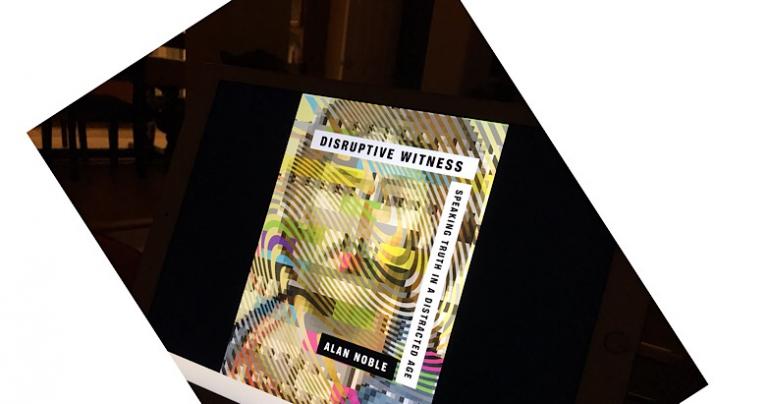
We are too busy to have deep views about anything for which we are not paid. We are distracted and so shallow, a condition that Professor Alan Noble describes as “secularism.”
We are distracting ourselves to death.
In his new book, Disruptive Witness, Noble recommends some community ideas. The Saint Constantine School has adopted some, such as:
Primary schools could move away from screens as much as possible and extend reading and silent-reading times.
Noble rightly sees that such voluntary activities will only nudge us in the right direction. We will continue to be distracted because we (mostly) enjoy being distracted. Any solution that gives power to some central administration to help us “contemplate” will be more dangerous than the distraction.
The Chinese atheist state might try to control citizens, but a free person must say no—if he can recall the evils of statism while playing a phone game. The central reason for decay is not distraction or even secularism, but a radical individualism severing connections to anything greater than self:
The heart of our distracted, secular age is a cognitive movement toward the individual.
None of us who is not the Son of God is the center of existence—not even of human existence. We are not taught this truth. Instead, we are sold products. The simplest way to sell is to cater to our needs. Professor Noble rightly sees that if the Church can disrupt the endless sales pitches, then we can offer hope for escaping our own heads.
The living God can help us move from endless self-centeredness to a Godwardness:
By movement I mean a habit of exercising belief that can form our hearts to know God. The result of these habits should be a deeper sense that we live in a created world sustained by a loving God, and an openness to the way creation and revelation pierce our buffered selves and interpret us.
I am not turned away from navel-gazing to stare into a void, but to look at the good, true and beautiful.
This is the movement we need—a double movement in which the goodness of being produces gratitude in us that glorifies and acknowledges a loving, transcendent, good, and beautiful God.
Alan Noble will not allow us to merely “choose God” as an option. He insists that God is real and so is the end of all our desires. We see goodness, rightly see God as the final cause of that goodness, and so are washed in super-abundant joy. God needs nothing but grants everything. The Professor is bold to say that no beauty, especially no person’s beauty, is for me, but for the glory of God.
In beauty, in the hint of glory, seen in creation or great art, Noble sees an allusion to the glory of God. Beauty is “a reference, a hint, a sign pointing toward something else.”
This is a good description of Diotima’s ladder in Symposium, a Platonism that Noble does not mention, but needs. It was Plato who began pointing from the love of someone or something beautiful to the Good. The cosmos itself points beyond itself because there is eternity in our hearts and the cosmos is not eternal, always changing and not eternal.
Is Alan Noble giving us Platonism for Evangelicals without once mentioning Plato?
Whatever Noble might think of this, he does give us a most valuable tool. Many have complained about individualism, but surely few wish to disappear into a sea of statism or mass culture. We can be people without individualism:
Christian personalism is a philosophical movement that started between the world wars, primarily in France. In his foundational text on the movement, Emmanuel Mounier differentiates personalism from individualism by noting that the latter is focused only on inwardness and defending the individual, whereas personalism moves inward only to move outward.
Even then, I might have accused Noble of looking to individuals to change and so avoid individualism. He is too logical, too consistent a thinker for that mistake. Instead, he concludes:
As we embody countercultural values and beliefs, we serve as lights in a world that many of our neighbors experience as dark, cold, and indifferent. But as valuable as these personal practices are, the greater witness must come from the church.
Buy the book.
_______________________
Alan Noble is the “co-founder and editor in chief of Christ and Pop Culture.” If you are not reading Christ and Pop Culture and you are interested in Christ and/or Pop Culture, then bad. Go and subscribe.
I am slow-reading his new book. Part 1, Part 2, Part 3, Part 4, Part 5,
Rachel Motte edited this essay.

Next Post
October 9, 2018 Disruptive Church (Reading Alan Noble as a Distracted Me 6/8)
Browse Our Archives
Select a Category Apologetics Art Culture Education On Books On Education Philosophy Politics Pop Culture Spiritual Reflections Uncategorized
Select a Month October 2026 September 2026 August 2026 July 2026 July 2025 June 2025 September 2024 July 2024 June 2024 December 2023 June 2023 September 2022 May 2022 April 2022 March 2022 February 2022 July 2021 June 2021 May 2021 April 2021 March 2021 February 2021 January 2021 December 2020 November 2020 October 2020 September 2020 August 2020 July 2020 June 2020 May 2020 April 2020 March 2020 February 2020 January 2020 December 2019 November 2019 October 2019 September 2019 August 2019 July 2019 June 2019 May 2019 April 2019 March 2019 February 2019 January 2019 December 2018 November 2018 October 2018 September 2018 August 2018 July 2018 June 2018 May 2018 April 2018 March 2018 February 2018 January 2018 December 2017 November 2017 October 2017 September 2017 August 2017 July 2017 June 2017 May 2017 April 2017 March 2017 February 2017 January 2017 December 2016 November 2016 October 2016 September 2016 August 2016 July 2016 June 2016 May 2016 April 2016 March 2016 February 2016 January 2016 December 2015 November 2015 October 2015 September 2015 August 2015 July 2015 June 2015 May 2015 April 2015 March 2015 February 2015 January 2015 November 2014 October 2014 September 2014 August 2014 July 2014 June 2014 May 2014 April 2014 March 2014 February 2014 January 2014 December 2013 November 2013 October 2013 September 2013 August 2013 July 2013 June 2013 May 2013 April 2013 March 2013 February 2013 January 2013 December 2012 November 2012 October 2012 September 2012 August 2012 July 2012 June 2012 May 2012
Follow Us!
TAKE THE
Religious Wisdom Quiz
Who became king after David and built the first Temple in Jerusalem?
Select your answer to see how you score.
Adonijah Solomon Rehoboam Absalom
Books by This Author John Mark Reynolds
Related posts from Eidos

Classical Education Must Teach Us to Make the...

Classical Education and the Art of Dying Well

Golden, Golden, Golden: My Mother's Last Lesson

TRENDING AT PATHEOS Evangelical

The REST of Your Life: A Creative Wrestles...
This week I had a conversation with a good friend from church....

How the author of the world's best hymn...
I've been working with John Newton for a while now. This makes...

Long before this Lectio Divina, Psalm 130 - the song - started...

What About the Trees? Another Living Parable
After I finished writing the last article about falling leaves as a...

Why Classical Education Is a Conversation, Not a...
Come and Read: Joy in Classical Education When I was a little...

Cornell University has received a great deal of negative publicity and intense...
view all Evangelical blogs
Ad-Free & Subscriber Log-In Subscription Support
- About Us
- 2026 Calendar
- Videos
- Podcasts
- Library of World Religions
- Faith In Media Tracker
- Advertise With Us
- Write for Us
- Privacy Policy
- Terms of Service
- Do Not Sell My Data
- Contact Us
- Radiant Digital
- Manage Newsletter Subscriptions
- Unsubscribe From Notifications
- Sitemap
Copyright 2008-2026, Patheos. All rights reserved.
Subscription Support Ad-Free & Subscriber Log-In
Follow Patheos