
BuddhistCatholicContemplativeEvangelicalGeneral ChristianHinduJewishLatter-day SaintMuslimNew VisionsProgressive Christian
Beliefs
- Buddhist
- Catholic
- Contemplative
- Evangelical
- General Christian
- Hindu
- Jewish
- Latter-day Saint
- More Voices
- Muslim
- New Visions
- Pagan
- Progressive Christian
Topics
- Religion News
- Food and Religion
- Sports and Religion
- Religious Art
- Religious Music and Entertainment
- Religious Events
- History and Religion
- Style and Religion
- Politics and Religion
- Women in Religion
- Recreation Outdoors and Religion
- Business Finance and Religion
- Careers Workplace and Religion
- Education and Religion
- Family Parenting and Religion
- Health Fitness and Religion
- Home and Religion
- Relationships and Religion
- Technology and Religion
- Travel and Religion
Columnists
- Buddhist Columnists
- Business Finance and Religion Columnists
- Careers Workplace and Religion Columnists
- Catholic Columnists
- Contemplative Columnists
- Education and Religion Columnists
- Evangelists Columnists
- Family Parenting and Religion Columnists
- General Christian Columnists
- Health Fitness and Religion Columnists
- Hindu Columnists
- History and Religion Columnists
- Home and Religion Columnists
- Jewish Columnists
- More Voices Columnists
- Latter Day Columnists
- Muslim Columnists
- New Visions Columnists
- Nonreligious Columnists
- Pagan Columnists
- Politics and Religion Columnists
- Progressive Columnists
- Recreation Outdoors and Religion Columnists
- Relationships and Religion Columnists
- Religion News Columnists
- Religious Art Columnists
- Religious Events Columnists
- Religious Music and Entertainment Columnists
- Sports and Religion Columnists
- Style and Religion Columnists
- Technology and Religion Columnists
- Travel and Religion Columnists
- Women in Religion Columnists
Resource Library
- 2026 Calendar
- Library of World Religions
- The 100 Most Holy Places on Earth
- Patheos Answers
- Podcasts
- Videos
- Faith Leaders Database
- Anglican Episcopalian
- Bahai
- Baptist
- Buddhism
- Christianity
- Confucianism
- Eastern Orthodoxy
- Hinduism
- Holiness and Pentecostal
- ISKCON
- Islam
- Judaism
- Lutheran
- Methodist
- The Church of Jesus Christ of Latter-day Saints
- New Age
- Paganism
- Presbytarian and Reformed
- Protestantism
- Religion Behind the Scenes
- Roman Catholic
- Scientology
- Shia Islam
- Sikhism
- Sufism
- Sunni Islam
- Taoism
- Zen
- See all religions
Research Tools
 Ad-Free & Subscriber Log-In Subscription Support
Ad-Free & Subscriber Log-In Subscription Support
Follow Patheos 

- Trending:
- Forgiveness
- |
- Marriage
- |
- Consciousness
- |
- Death Penalty
- |
- Election
- |
- Halloween

- Home
- Evangelical
- Disrupt the Culture! (Reading Alan Noble as a Distracted Me 7/8)
Disrupt the Culture! (Reading Alan Noble as a Distracted Me 7/8)
Last updated on: October 10, 2018 at 7:56 am by John Mark N. Reynolds
Disrupt the Culture! (Reading Alan Noble as a Distracted Me 7/8) 2018-10-10T07:56:15-04:00 John Mark N. Reynolds
Patheos Explore the world's faith through different perspectives on religion and spirituality! Patheos has the views of the prevalent religions and spiritualities of the world.
Culture is harder to create than destroy, just as books are easier to review than to write.
The collection of our garbage, the flushing of our toilet, the groceries in our store are miracles with so many interlocking parts, so many engineering, pioneering geniuses that I pause over anyone suggestion that we disrupt culture. My Nana taught me to appreciate the street light: all that free energy making the dangerous darkness bright.
Yet a culture can carry on only if the weeds are culled. God let’s the bad grow up with the good, because God thinks in centuries. If our job is to live just now in the City, then we must do justice as we can since we know that we will miss so much in any case.
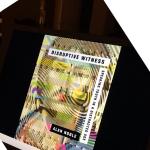
I have been interacting with Professor Alan Noble and his thoughtful book Disruptive Witness. His general argument, we are distracted and shallow, is sound. His prescriptions are sound, if one can quibble at times. He is, as he shares his life as a teacher, the kind of Professor you hope your kids get or that you have. He does not read books for the sake of the books, but for the sake of the reader, his students and himself.
Most of us think we are Frodo in Peter Jackson’s version of Lord of the Rings, but we are really the elf who dies at the start of the first film. We are not the center, much as we might wish, and in our hearts we know this is true. If there is no God, then our lives have meaning only so long as we can pretend we are writing a script as the director of our destiny.
We can do this, but it is unsatisfying. We want more. Anything that can be sold is false, just as mentoring without meeting, education purely online, is a fraud. We are incarnate and need more than the mental. We have to be there.
That would be fine, but even this is not enough. We are not a product, but a person and a person with eternity in our hearts. As a result, we need to be there (in the flesh), but face a Mystery that is bigger than anything that can be marketed, controlled, or generated out of our own passion.
If you can manipulate it, then it is not enough. Anybody who misses this thinks that love can be purchased. Noble has the balance: we feel with our bodies, are passionate in our hearts, and think with our minds. Literature can do all these things for us simultaneously. Plato said it best the story can save us if we will only believe it (Republic X) and if we have picked the right story: true historically and mythically.
Noble, like Plato, sees beauty, goodness, and truth as so real that we cannot ignore them. We may pretend that beauty is in the eye of the beholder, goodness is what the majority says it is, and truth is found by polling, but beauty, goodness, and truth are real. This concrete reality keeps breaking through the distractions.
Noble reads tragedy and so is ready for the reality we cannot escape: death. He is looking for stories that prepare us, help us experience before the final test, what is coming. We can live many different lives, but death is in common. Education is, as a result, at least in part a preparation for how to die well.
We know we will need to do this, but a consumer driven culture tries to hide this from us. Death, however, cannot be cheated. He comes. The right story can prepare us, the greatest story ever told can save us.
Maybe.
If not, then nothing less whole than a story can do so, because we are bodies, minds, and passions. Save all or none, because no man can live eternally without a body, a mind, or passion. When Noble calls for dialog about stories, he stands in the great tradition of Socrates, Jesus, and all the great educators that have ever lived. This is just what we need and Noble knows that this is not a hunt for “Christian” ideas or images.
We read to understand, not to justify our understanding. We must talk: open endedly talk. This dialectic is to the Fundamentalist a stumbling block and to the Modernist folly. Both wish to cut to the answer vouchsafed to them alone.
God save us from both.
Professor Noble chooses The Great Gatsby as a story that can inform us and I am reminded of the pleasure of a great teacher teaching on his story. Gatsby makes the human divine and so misses both. He turns the sign into the destination and is thus utterly lost. God help us all.
Why?
Noble is wise enough to know that we are sick enough to turn the disease into our fetish. We must die, so we court death. We experience pain as volume up button to help us hear, but then worship the volume up button.
Professor Noble says: “No.”
Noble concludes beautifully:
The world reveals the Creator’s majesty, the beauty of his goodness, and the goodness of being, and it calls us toward gratitude to him. Even in our distracted, secular age, these manifestations of God’s goodness cannot be extinguished. But they can be rerouted, reframed, or retold as something glorious but mundane, having the appearance of transcendence but without its presence. A disruptive witness treats these manifestations of transcendence as manifestations of transcendence in the stories we tell and in the way we experience tragedy. Our calling is not to invent allusions to God in our lives but to reveal and affirm the ones that are already, necessarily there.
Buy the book.
_______________________
Alan Noble is the “co-founder and editor in chief of Christ and Pop Culture.” If you are not reading Christ and Pop Culture and you are interested in Christ and/or Pop Culture,d then bad. Go and subscribe.
I am slow-reading his new book. Part 1, Part 2, Part 3, Part 4, Part 5, Part 6, Part 7,
D
Previous Post
October 9, 2018
Disruptive Church (Reading Alan Noble as a Distracted Me 6/8)
Next Post
October 11, 2018 Disrupting Disruption (Reading Alan Noble as a Distracted Me 8/8)
Browse Our Archives
Select a Category Apologetics Art Culture Education On Books On Education Philosophy Politics Pop Culture Spiritual Reflections Uncategorized
Select a Month October 2026 September 2026 August 2026 July 2026 July 2025 June 2025 September 2024 July 2024 June 2024 December 2023 June 2023 September 2022 May 2022 April 2022 March 2022 February 2022 July 2021 June 2021 May 2021 April 2021 March 2021 February 2021 January 2021 December 2020 November 2020 October 2020 September 2020 August 2020 July 2020 June 2020 May 2020 April 2020 March 2020 February 2020 January 2020 December 2019 November 2019 October 2019 September 2019 August 2019 July 2019 June 2019 May 2019 April 2019 March 2019 February 2019 January 2019 December 2018 November 2018 October 2018 September 2018 August 2018 July 2018 June 2018 May 2018 April 2018 March 2018 February 2018 January 2018 December 2017 November 2017 October 2017 September 2017 August 2017 July 2017 June 2017 May 2017 April 2017 March 2017 February 2017 January 2017 December 2016 November 2016 October 2016 September 2016 August 2016 July 2016 June 2016 May 2016 April 2016 March 2016 February 2016 January 2016 December 2015 November 2015 October 2015 September 2015 August 2015 July 2015 June 2015 May 2015 April 2015 March 2015 February 2015 January 2015 November 2014 October 2014 September 2014 August 2014 July 2014 June 2014 May 2014 April 2014 March 2014 February 2014 January 2014 December 2013 November 2013 October 2013 September 2013 August 2013 July 2013 June 2013 May 2013 April 2013 March 2013 February 2013 January 2013 December 2012 November 2012 October 2012 September 2012 August 2012 July 2012 June 2012 May 2012
Follow Us!
TAKE THE
Religious Wisdom Quiz
Who did Paul call "my true child in the faith"?
Select your answer to see how you score.
Barnabas Silas Timothy James
Books by This Author John Mark Reynolds
Related posts from Eidos

Classical Education Must Teach Us to Make the...

Yet I Love Her: History and the Church


The Iceberg is There: Verbosity Cannot Defeat Reality
TRENDING AT PATHEOS Evangelical

The REST of Your Life: A Creative Wrestles...
This week I had a conversation with a good friend from church....

How the author of the world's best hymn...
I've been working with John Newton for a while now. This makes...

Long before this Lectio Divina, Psalm 130 - the song - started...

What About the Trees? Another Living Parable
After I finished writing the last article about falling leaves as a...

Why Classical Education Is a Conversation, Not a...
Come and Read: Joy in Classical Education When I was a little...

Cornell University has received a great deal of negative publicity and intense...
view all Evangelical blogs
Ad-Free & Subscriber Log-In Subscription Support
- About Us
- 2026 Calendar
- Videos
- Podcasts
- Library of World Religions
- Faith In Media Tracker
- Advertise With Us
- Write for Us
- Privacy Policy
- Terms of Service
- Do Not Sell My Data
- Contact Us
- Radiant Digital
- Manage Newsletter Subscriptions
- Unsubscribe From Notifications
- Sitemap
Copyright 2008-2026, Patheos. All rights reserved.
Subscription Support Ad-Free & Subscriber Log-In
Follow Patheos