
BuddhistCatholicContemplativeEvangelicalGeneral ChristianHinduJewishLatter-day SaintMuslimNew VisionsProgressive Christian
Beliefs
- Buddhist
- Catholic
- Contemplative
- Evangelical
- General Christian
- Hindu
- Jewish
- Latter-day Saint
- More Voices
- Muslim
- New Visions
- Pagan
- Progressive Christian
Topics
- Religion News
- Food and Religion
- Sports and Religion
- Religious Art
- Religious Music and Entertainment
- Religious Events
- History and Religion
- Style and Religion
- Politics and Religion
- Women in Religion
- Recreation Outdoors and Religion
- Business Finance and Religion
- Careers Workplace and Religion
- Education and Religion
- Family Parenting and Religion
- Health Fitness and Religion
- Home and Religion
- Relationships and Religion
- Technology and Religion
- Travel and Religion
Columnists
- Buddhist Columnists
- Business Finance and Religion Columnists
- Careers Workplace and Religion Columnists
- Catholic Columnists
- Contemplative Columnists
- Education and Religion Columnists
- Evangelists Columnists
- Family Parenting and Religion Columnists
- General Christian Columnists
- Health Fitness and Religion Columnists
- Hindu Columnists
- History and Religion Columnists
- Home and Religion Columnists
- Jewish Columnists
- More Voices Columnists
- Latter Day Columnists
- Muslim Columnists
- New Visions Columnists
- Nonreligious Columnists
- Pagan Columnists
- Politics and Religion Columnists
- Progressive Columnists
- Recreation Outdoors and Religion Columnists
- Relationships and Religion Columnists
- Religion News Columnists
- Religious Art Columnists
- Religious Events Columnists
- Religious Music and Entertainment Columnists
- Sports and Religion Columnists
- Style and Religion Columnists
- Technology and Religion Columnists
- Travel and Religion Columnists
- Women in Religion Columnists
Resource Library
- 2026 Calendar
- Library of World Religions
- The 100 Most Holy Places on Earth
- Patheos Answers
- Podcasts
- Videos
- Faith Leaders Database
- Anglican Episcopalian
- Bahai
- Baptist
- Buddhism
- Christianity
- Confucianism
- Eastern Orthodoxy
- Hinduism
- Holiness and Pentecostal
- ISKCON
- Islam
- Judaism
- Lutheran
- Methodist
- The Church of Jesus Christ of Latter-day Saints
- New Age
- Paganism
- Presbytarian and Reformed
- Protestantism
- Religion Behind the Scenes
- Roman Catholic
- Scientology
- Shia Islam
- Sikhism
- Sufism
- Sunni Islam
- Taoism
- Zen
- See all religions
Research Tools
 Ad-Free & Subscriber Log-In Subscription Support
Ad-Free & Subscriber Log-In Subscription Support
Follow Patheos 

- Trending:
- Forgiveness
- |
- Marriage
- |
- Consciousness
- |
- Death Penalty
- |
- Election
- |
- Halloween

- Home
- Evangelical
- The Mercy of Near Sightedness
The Mercy of Near Sightedness
Last updated on: October 1, 2018 at 6:10 pm by John Mark N. Reynolds
The Mercy of Near Sightedness 2018-10-01T18:10:09-04:00 John Mark N. Reynolds
Patheos Explore the world's faith through different perspectives on religion and spirituality! Patheos has the views of the prevalent religions and spiritualities of the world.
I am very nearsighted, but nobody noticed for a bit. Obviously I could not tell my vision was bad as I had nothing with which to compare it! My vision was just fine, I was getting along, even in first-grade. Mom and my teacher noticed, however, I was holding my books very close in order to read. Sometimes by guesses about what was on the board at the front of the room were wrong.
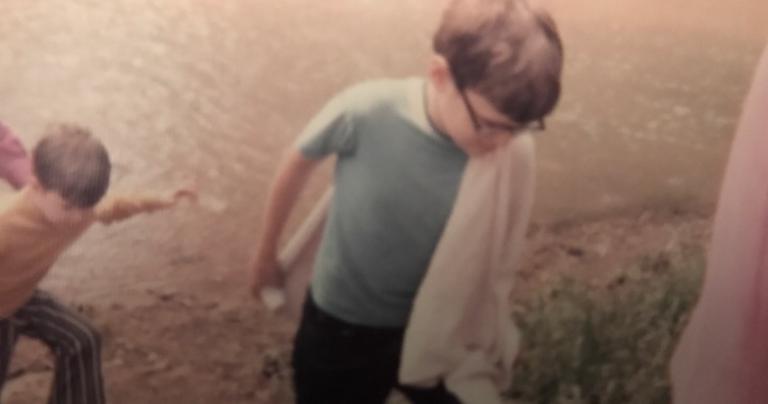
New glasses!
My parents got me glasses.
I recall the wonder of seeing the detail in the stained glass of Dad’s church for the first time. There was (I think) a lamb, a flag, and a crown. Glorious! Yet the other thing, the sadder thing, was that I could also see walls around me that needed painting. My room was much messier than I thought. In fact, all around were cracks, defects, and other issues that my near sightedness kept me from seeing.
The flaws were really there, so seeing them was not (in itself) bad, but good. The truth is. Yet sharp vision actually impeded my drawing right conclusions about what I was seeing. How could this be? Shouldn’t seeing better always help us? Ideally, but we are not ideal reasoners.
In a dialog, Plato has Socrates say
… men with duller vision have often, you know, seen things before those who see more sharply.*
There are two uses of “see” here: there is the report of our eyes (“I see you!”) and the conclusions draw from them (“I see that you are happy.”)
My experience of nearsightedness helps me see how this could be true. A boy (me!) with duller vision sees the whole, but few details. People looked more alike than not alike to me unless I knew them well enough (like my family) to have seen them up close. This made me less likely to draw the erroneous conclusion that people were “gross” based on so small a flaw. I could not see it (not good), but that duller vision meant that overfocus on a flaw was hard for me to do.
I have never forgotten that everyone looks more alike than not alike and that our distinctions, while important in many contexts, should never overcome our great general similarities. The boy with duller vision also thought his car was pretty cool looking, it was a red Pontiac, and he was right. That was a great car, but I lost track of how great it was when I could see all the dings. The boy with duller vision saw the good of the car (which was there) and missed the scratches (also there.) The boy with better vision lost the whole for the problems.
I did not have to do that: I could have seen both and that would have been best: good vision that does not overfocus.
Here’s a practical way, however, my experience with nearsightedness has helped me. Sometimes I will look at a room and “fuzz” my vision so I can see what it looks like generally before I take a look the flaws. Sometimes I intentionally look at the world without my contacts or glasses. This helps me see what is generally true and then I try to recall that truth when I focus.
The kid with duller vision can sometimes see things before those who see more sharply.
——————————
*Plato, Republic 596a (translation by Bloom)
Previous Post

September 30, 2018
Our Baby Born to God
Browse Our Archives
Select a Category Apologetics Art Culture Education On Books On Education Philosophy Politics Pop Culture Spiritual Reflections Uncategorized
Select a Month October 2026 September 2026 August 2026 July 2026 July 2025 June 2025 September 2024 July 2024 June 2024 December 2023 June 2023 September 2022 May 2022 April 2022 March 2022 February 2022 July 2021 June 2021 May 2021 April 2021 March 2021 February 2021 January 2021 December 2020 November 2020 October 2020 September 2020 August 2020 July 2020 June 2020 May 2020 April 2020 March 2020 February 2020 January 2020 December 2019 November 2019 October 2019 September 2019 August 2019 July 2019 June 2019 May 2019 April 2019 March 2019 February 2019 January 2019 December 2018 November 2018 October 2018 September 2018 August 2018 July 2018 June 2018 May 2018 April 2018 March 2018 February 2018 January 2018 December 2017 November 2017 October 2017 September 2017 August 2017 July 2017 June 2017 May 2017 April 2017 March 2017 February 2017 January 2017 December 2016 November 2016 October 2016 September 2016 August 2016 July 2016 June 2016 May 2016 April 2016 March 2016 February 2016 January 2016 December 2015 November 2015 October 2015 September 2015 August 2015 July 2015 June 2015 May 2015 April 2015 March 2015 February 2015 January 2015 November 2014 October 2014 September 2014 August 2014 July 2014 June 2014 May 2014 April 2014 March 2014 February 2014 January 2014 December 2013 November 2013 October 2013 September 2013 August 2013 July 2013 June 2013 May 2013 April 2013 March 2013 February 2013 January 2013 December 2012 November 2012 October 2012 September 2012 August 2012 July 2012 June 2012 May 2012
Follow Us!
TAKE THE
Religious Wisdom Quiz
According to 2 John, anyone who does not continue in the teaching of Christ does not have what?
Select your answer to see how you score.
The Holy Spirit Truth Salvation God
Books by This Author John Mark Reynolds
Related posts from Eidos

Classical Education Must Teach Us to Make the...

Classical Education and the Art of Dying Well

Golden, Golden, Golden: My Mother's Last Lesson

TRENDING AT PATHEOS Evangelical

The REST of Your Life: A Creative Wrestles...
This week I had a conversation with a good friend from church....

How the author of the world's best hymn...
I've been working with John Newton for a while now. This makes...

Long before this Lectio Divina, Psalm 130 - the song - started...

What About the Trees? Another Living Parable
After I finished writing the last article about falling leaves as a...

Why Classical Education Is a Conversation, Not a...
Come and Read: Joy in Classical Education When I was a little...

Cornell University has received a great deal of negative publicity and intense...
view all Evangelical blogs
Ad-Free & Subscriber Log-In Subscription Support
- About Us
- 2026 Calendar
- Videos
- Podcasts
- Library of World Religions
- Faith In Media Tracker
- Advertise With Us
- Write for Us
- Privacy Policy
- Terms of Service
- Do Not Sell My Data
- Contact Us
- Radiant Digital
- Manage Newsletter Subscriptions
- Unsubscribe From Notifications
- Sitemap
Copyright 2008-2026, Patheos. All rights reserved.
Subscription Support Ad-Free & Subscriber Log-In
Follow Patheos