
BuddhistCatholicContemplativeEvangelicalGeneral ChristianHinduJewishLatter-day SaintMuslimNew VisionsProgressive Christian
Beliefs
- Buddhist
- Catholic
- Contemplative
- Evangelical
- General Christian
- Hindu
- Jewish
- Latter-day Saint
- More Voices
- Muslim
- New Visions
- Pagan
- Progressive Christian
Topics
- Religion News
- Food and Religion
- Sports and Religion
- Religious Art
- Religious Music and Entertainment
- Religious Events
- History and Religion
- Style and Religion
- Politics and Religion
- Women in Religion
- Recreation Outdoors and Religion
- Business Finance and Religion
- Careers Workplace and Religion
- Education and Religion
- Family Parenting and Religion
- Health Fitness and Religion
- Home and Religion
- Relationships and Religion
- Technology and Religion
- Travel and Religion
Columnists
- Buddhist Columnists
- Business Finance and Religion Columnists
- Careers Workplace and Religion Columnists
- Catholic Columnists
- Contemplative Columnists
- Education and Religion Columnists
- Evangelists Columnists
- Family Parenting and Religion Columnists
- General Christian Columnists
- Health Fitness and Religion Columnists
- Hindu Columnists
- History and Religion Columnists
- Home and Religion Columnists
- Jewish Columnists
- More Voices Columnists
- Latter Day Columnists
- Muslim Columnists
- New Visions Columnists
- Nonreligious Columnists
- Pagan Columnists
- Politics and Religion Columnists
- Progressive Columnists
- Recreation Outdoors and Religion Columnists
- Relationships and Religion Columnists
- Religion News Columnists
- Religious Art Columnists
- Religious Events Columnists
- Religious Music and Entertainment Columnists
- Sports and Religion Columnists
- Style and Religion Columnists
- Technology and Religion Columnists
- Travel and Religion Columnists
- Women in Religion Columnists
Resource Library
- 2026 Calendar
- Library of World Religions
- The 100 Most Holy Places on Earth
- Patheos Answers
- Podcasts
- Videos
- Faith Leaders Database
- Anglican Episcopalian
- Bahai
- Baptist
- Buddhism
- Christianity
- Confucianism
- Eastern Orthodoxy
- Hinduism
- Holiness and Pentecostal
- ISKCON
- Islam
- Judaism
- Lutheran
- Methodist
- The Church of Jesus Christ of Latter-day Saints
- New Age
- Paganism
- Presbytarian and Reformed
- Protestantism
- Religion Behind the Scenes
- Roman Catholic
- Scientology
- Shia Islam
- Sikhism
- Sufism
- Sunni Islam
- Taoism
- Zen
- See all religions
Research Tools
 Ad-Free & Subscriber Log-In Subscription Support
Ad-Free & Subscriber Log-In Subscription Support
Follow Patheos 

- Trending:
- Forgiveness
- |
- Marriage
- |
- Consciousness
- |
- Death Penalty
- |
- Election
- |
- Halloween

- Home
- Evangelical
- Humility Just Now (Interactive Reading of Karen Swallow Prior 13/12 Because Miscounting)
Humility Just Now (Interactive Reading of Karen Swallow Prior 13/12 Because Miscounting)
Last updated on: September 20, 2018 at 7:54 am by John Mark N. Reynolds
Humility Just Now (Interactive Reading of Karen Swallow Prior 13/12 Because Miscounting) 2018-09-20T07:54:10-04:00 John Mark N. Reynolds
Patheos Explore the world's faith through different perspectives on religion and spirituality! Patheos has the views of the prevalent religions and spiritualities of the world.
The meek will inherit the Earth, even if they do not often get elected to Congress. 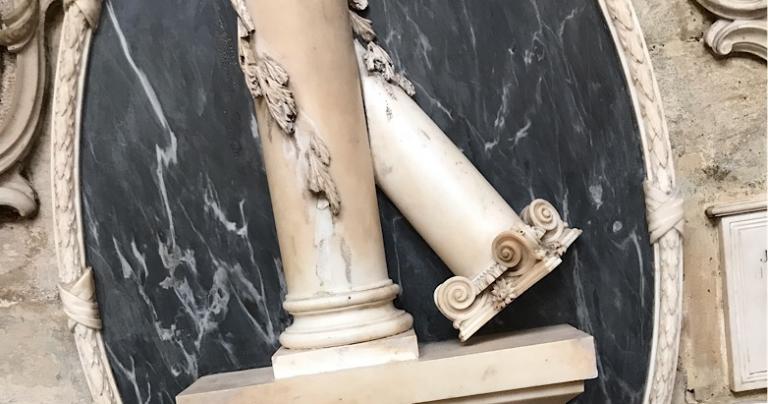
The humble triumph without triumphalism, win without creating losers, and inherit the Kingdom of Heaven without losing earthiness.
How to be humble?
Karen Swallow Prior (KSP) is here to help. First, she wants to teach us to read well. To read well is to grasp the book and in many works (almost all?) virtue is present. A great story is a virtual reality machine to allow us to practice virtue so we can be virtuous later in reality. To read a hard book well requires humility, except for a very rare few!
Humility comes last of all the virtues and Flannery O’Connor is KSP’s selection as our final teacher. This is meet and right.
O’Connor is the ultimate American short story writer and if one wishes the Kingdom of Heaven, humility is the ultimate virtue. O’Connor shows, KSP writes, “rather than tells” and O’Connor shows us pride and then humility in Revelation.
Ruby Turpin looks down on everyone. Proud? Lord, she’s proud of her humility and bless her heart she is rotten with pride. God help us all:
To be human is to struggle with pride. A few have too little of it; most, too much. There is a good sense of pride, of course, such as having pride in one’s work or one’s children. Aristotle means this sort of pride when he speaks of it as a virtue. In the Christian tradition, pride is understood as the excess of this good pride, what Aristotle terms vanity. Both the Aristotelian and the Christian tradition call for the proper proportion of esteem of oneself. Aquinas defines pride, simply, as “inordinate self-love.” He explains that “every man’s will should tend to that which is proportionate to him”; therefore, pride goes against right reason.
Just so.
Pride in O’Connor is often a misperception of self, cheap grace. I forgive myself (God save me!) easily and others hard. I know everything, I think, about myself and trust my carefully constructed motives, so I forgive everything. When looking at the “other,” also broken and mistaken, I pretend to know everything and forgive nothing.
This is pride in my generation, or at least in me, and O’Connor has no mercy on this vice.
Against pride is humility: not a lack of self-esteem, but a proper estimate of self. The Oracle of Delphi said “Know Thyself” as an order to humiliate self before the gods. Socrates transformed “Know Thyself” to knowing that before God we must be humble. We are in God’s Image, but not essentially divine. We are people of Middle Earth, not heavenly.
Humility is the virtue of philosophy. One cannot love wisdom without knowing self: I am not god, just a man. Alleluia!
But what is humility?
KSP is succinct:
. . . humility is the recognition that we are all human—another word that comes from the same root—and that none of us are God. Remembering our position as earthly creatures who are not gods is the essence of humility. The virtue of humility, most simply defined, is an accurate assessment of oneself. And, of course, it is impossible to assess oneself rightly apart from God.
Humility is knowing self rightly. Jesus meets Socrates and they both agree: we should be humble. *
KSP shows that O’Connor understands this basic truth: revelation reveals pride, experience hides it. How could this be? Revelation from God pierces our defenses with divine power. Experience begins in us and ends in us. . . If we are defective in our thinking then there is no escape from self. We need revelation to escape the constant feedback loop of experience.
Experience says: “You experience, therefore you know . . . .” Revelation says: “Look! New data! Consider and pray. . . “ Experience often humiliates, but rarely humbles. Most bad news can be dealt with in our life and terrible experience so bad as to break through our defenses. . . That wipes us out. There is no learning possible if we are so depressed that thinking is impossible.
Instead, in acts of Divine disruption, God gives us enough pain to jar us from complacency, but not so much as to innervate us. We stop. We look. We listen. Pain humbles us, if not too great, and God did not create a world with pain too great for us. That pain comes from devils and from us freely choosing badly.
Humility knows that God is in the Heavens, all is not right with the world, but justice will prevail. Humility works toward justice without ever, for one moment, thinking about rewards.
And Yet
Humility wins and that makes humility hard. I worry about winning when trying to be humble.
Of course, I do, because fake humility roots for losing in order to keep pride intact. “I lost, but it was for the virtue of humility.” Winning is much harder, so hard, that the humility must be real.
Humility is victory for the sake of virtue and not for the sake of winning or rewards. I cannot be truly humble for the sake of winning or prizes, so at my worst I want either to lose nobly (with my nobility marked by onlookers) or to win boldly (with the treats that come to the victor).
Humility is willing to lose now, knowing in eternity it cannot.
Still false humility lurks ready to imitate even around this truth. I am tempted to choose humility strategically, but real humility must be constant. I cannot be humble hoping my humility is a tool to make me a Winner in this life. Humility is a tool that would break with such usage.
Instead, I must embrace humility for the sake of virtue. Winning cannot be lurking in the basement of my heart as a goal for my actions even if I will in fact win. Instead, I accept that if I do just actions, then I will be rewarded now and in the days to come with justice. That is enough: I must be good for goodness sake.
Honest Humility Keeps Virtue from Odium
Here too insufferable vanity can crush humility and make virtue odious to all who see me. I can so elevate my virtue that as a result, and O’Connor shows this in painful detail, become insufferable in my own sense of having the proper attitudes. KSP points out the character Julian Chestny, woke in an unreconstructed world, superior to his benighted mother:
He is ashamed of her racism, her prejudice, her haughtiness, her backwardness, and her pride in their family’s lofty past that means nothing now.
Julian is so morally straight he leans a little. His mother is wrong, twisted by her upbringing and her limitations. He is odious and harms the cause of justice by his impiety and pride.
KSP, perhaps, could emphasize that in O’Connor, piety is also a virtue, the servant of humility. Piety is an inclination to proper feelings of reverence for parents and those in authority. O’Connor is not just an advocate of humility but of piety and it is the combination of the two, so rare in our “elite,” that saves. Salvation cannot begin without a knowledge that one must be saved:
Their collective vision shows that before there can be salvation, there must be recognition of guilt as well as sorrow for that guilt, which leads to humility or the “proper valuing of oneself in light of the real relationships one encounters.”
If there ever was a human being that was just so and yet not as her contemporary culture would have had her, that person was Flannery O’Conner. She was not what stupid contemporary culture demanded she should be, but was what we needed badly:
The awkward, pigeon-toed, sickly O’Connor beautifully demonstrated the exaltation of humility in her own life and work.
She knew she could write like an angel, but that she was human. When one has a touch of the divine, but is aware of the clay that is our base, then a person is like Mary, the mother of God. We begin in a choice, a choice to say “yes,” but only if we will, and then we incarnate humility. God comes and dwells within us.
We are, in one important metaphorical sense, Mary: birthing God within us. We are all humbled as God comes and exalts us.
KSP ends this phase of my education with wisdom:
The good life begins and ends with humility.
Amen.
Lord Jesus Christ, son of God, have mercy on me.
I love reading a good book, full of new ideas, that forces me to read or reread excellent works . . . Even ones like George Saunders I did not like. A great teacher makes us grow! Thank you KSP!
Buy the book.
————————————-
*KSP wrote a sentence so true that you should buy the whole book to read it in genuine ink on paper: “No pride could be more blinding than the kind that makes you think your pigs don’t stink.”
This will be a twelve part series: Introduction, Prudence, Temperance, Justice, Courage, Faith, Hope, Love, Chastity, Diligence, Patience, Kindness, AND Humility (because I miscounted by not including the Introduction originally).
Previous Post

September 18, 2018
E-Books, Excellent, but Why Paper Still Has More Uses
Browse Our Archives
Select a Category Apologetics Art Culture Education On Books On Education Philosophy Politics Pop Culture Spiritual Reflections Uncategorized
Select a Month October 2026 September 2026 August 2026 July 2026 July 2025 June 2025 September 2024 July 2024 June 2024 December 2023 June 2023 September 2022 May 2022 April 2022 March 2022 February 2022 July 2021 June 2021 May 2021 April 2021 March 2021 February 2021 January 2021 December 2020 November 2020 October 2020 September 2020 August 2020 July 2020 June 2020 May 2020 April 2020 March 2020 February 2020 January 2020 December 2019 November 2019 October 2019 September 2019 August 2019 July 2019 June 2019 May 2019 April 2019 March 2019 February 2019 January 2019 December 2018 November 2018 October 2018 September 2018 August 2018 July 2018 June 2018 May 2018 April 2018 March 2018 February 2018 January 2018 December 2017 November 2017 October 2017 September 2017 August 2017 July 2017 June 2017 May 2017 April 2017 March 2017 February 2017 January 2017 December 2016 November 2016 October 2016 September 2016 August 2016 July 2016 June 2016 May 2016 April 2016 March 2016 February 2016 January 2016 December 2015 November 2015 October 2015 September 2015 August 2015 July 2015 June 2015 May 2015 April 2015 March 2015 February 2015 January 2015 November 2014 October 2014 September 2014 August 2014 July 2014 June 2014 May 2014 April 2014 March 2014 February 2014 January 2014 December 2013 November 2013 October 2013 September 2013 August 2013 July 2013 June 2013 May 2013 April 2013 March 2013 February 2013 January 2013 December 2012 November 2012 October 2012 September 2012 August 2012 July 2012 June 2012 May 2012
Follow Us!
TAKE THE
Religious Wisdom Quiz
Who first witnessed the empty tomb after Jesus' resurrection?
Select your answer to see how you score.
John Andrew Mary Magdalene Nicodemus
Books by This Author John Mark Reynolds
Related posts from Eidos

Classical Education Must Teach Us to Make the...

Classical Education and the Art of Dying Well

Golden, Golden, Golden: My Mother's Last Lesson

TRENDING AT PATHEOS Evangelical

The REST of Your Life: A Creative Wrestles...
This week I had a conversation with a good friend from church....

How the author of the world's best hymn...
I've been working with John Newton for a while now. This makes...

Long before this Lectio Divina, Psalm 130 - the song - started...

What About the Trees? Another Living Parable
After I finished writing the last article about falling leaves as a...

Why Classical Education Is a Conversation, Not a...
Come and Read: Joy in Classical Education When I was a little...

Cornell University has received a great deal of negative publicity and intense...
view all Evangelical blogs
Ad-Free & Subscriber Log-In Subscription Support
- About Us
- 2026 Calendar
- Videos
- Podcasts
- Library of World Religions
- Faith In Media Tracker
- Advertise With Us
- Write for Us
- Privacy Policy
- Terms of Service
- Do Not Sell My Data
- Contact Us
- Radiant Digital
- Manage Newsletter Subscriptions
- Unsubscribe From Notifications
- Sitemap
Copyright 2008-2026, Patheos. All rights reserved.
Subscription Support Ad-Free & Subscriber Log-In
Follow Patheos