
BuddhistCatholicContemplativeEvangelicalGeneral ChristianHinduJewishLatter-day SaintMuslimNew VisionsProgressive Christian
Beliefs
- Buddhist
- Catholic
- Contemplative
- Evangelical
- General Christian
- Hindu
- Jewish
- Latter-day Saint
- More Voices
- Muslim
- New Visions
- Pagan
- Progressive Christian
Topics
- Religion News
- Food and Religion
- Sports and Religion
- Religious Art
- Religious Music and Entertainment
- Religious Events
- History and Religion
- Style and Religion
- Politics and Religion
- Women in Religion
- Recreation Outdoors and Religion
- Business Finance and Religion
- Careers Workplace and Religion
- Education and Religion
- Family Parenting and Religion
- Health Fitness and Religion
- Home and Religion
- Relationships and Religion
- Technology and Religion
- Travel and Religion
Columnists
- Buddhist Columnists
- Business Finance and Religion Columnists
- Careers Workplace and Religion Columnists
- Catholic Columnists
- Contemplative Columnists
- Education and Religion Columnists
- Evangelists Columnists
- Family Parenting and Religion Columnists
- General Christian Columnists
- Health Fitness and Religion Columnists
- Hindu Columnists
- History and Religion Columnists
- Home and Religion Columnists
- Jewish Columnists
- More Voices Columnists
- Latter Day Columnists
- Muslim Columnists
- New Visions Columnists
- Nonreligious Columnists
- Pagan Columnists
- Politics and Religion Columnists
- Progressive Columnists
- Recreation Outdoors and Religion Columnists
- Relationships and Religion Columnists
- Religion News Columnists
- Religious Art Columnists
- Religious Events Columnists
- Religious Music and Entertainment Columnists
- Sports and Religion Columnists
- Style and Religion Columnists
- Technology and Religion Columnists
- Travel and Religion Columnists
- Women in Religion Columnists
Resource Library
- 2026 Calendar
- Library of World Religions
- The 100 Most Holy Places on Earth
- Patheos Answers
- Podcasts
- Videos
- Faith Leaders Database
- Anglican Episcopalian
- Bahai
- Baptist
- Buddhism
- Christianity
- Confucianism
- Eastern Orthodoxy
- Hinduism
- Holiness and Pentecostal
- ISKCON
- Islam
- Judaism
- Lutheran
- Methodist
- The Church of Jesus Christ of Latter-day Saints
- New Age
- Paganism
- Presbytarian and Reformed
- Protestantism
- Religion Behind the Scenes
- Roman Catholic
- Scientology
- Shia Islam
- Sikhism
- Sufism
- Sunni Islam
- Taoism
- Zen
- See all religions
Research Tools
 Ad-Free & Subscriber Log-In Subscription Support
Follow Patheos 

- Trending:
- Advent
- |
- Forgiveness
- |
- Thanksgiving
- |
- Election
- |
- Seasonal Holidays
- |
- Marriage

- Home
- Evangelical
- The Better Road Not Taken (The Failures of the Seventeenth Century)
The Better Road Not Taken (The Failures of the Seventeenth Century)
Last updated on: August 27, 2018 at 9:05 pm by John Mark N. Reynolds
The Better Road Not Taken (The Failures of the Seventeenth Century) 2018-08-27T21:05:47-04:00 John Mark N. Reynolds
Patheos Explore the world's faith through different perspectives on religion and spirituality! Patheos has the views of the prevalent religions and spiritualities of the world.
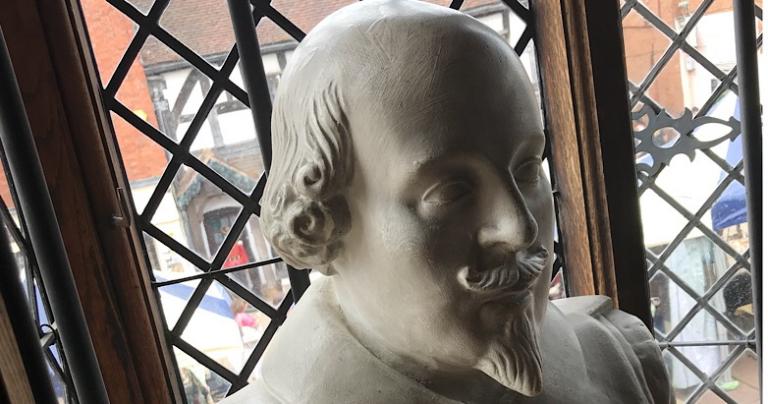 1616 came and Shakespeare and Cervantes died, but Bacon kept writing his way to a New Atlantis. Sadly, people with power ended up taking the New Atlantis more seriously in the short term than they did Shakespeare or Cervantes. Just like the old Atlantis, the new Atlantis would end up drowning in her pride and swamping much that had been good with it. A healthy dose of Shakespearean wit or Cervantes’ deft mockery might have left what was good in Bacon, such as ideas for organized scientific research, and finished off his misunderstandings such as bad philosophy of science.
Bacon was just one example of people with good or profound ideas that by the middle of the seventeenth century were setting up Western Europe, and the rest of the world influenced by that region, for problems. Descartes got much right, but like all profound thinkers, his errors were magnified in his students.
Sometimes a culture takes a right road, sometimes it passes the right way and ends up a bit lost. Western Europe had a chance at the start of seventeenth century to get a few things right, but by the eighteenth century most had taken a worse way: Enlightenment or reaction. Enlightenment lost the wisdom of the Middle Ages, creating the myth of a dark age, and the main enlightened nation, France, ended the seventeenth century in butchery and dictatorship. Instead of the development of an urbane Spain Cervantes might have prefigured, there was a mere reaction away from the new ideas, including the good ones.
Voices that might have stopped colonialism or at least made it profoundly better were ignored. Moral norms regressed or were not applied to “others” sometimes next-door, mostly overseas. Of course, the sixteenth century had already seen disasterous colonial adventures from Spain and to a lesser degree England and other European powers, but the worst had not yet hardened into attitudes beyond hope of change. By the end of the seventeenth century, ideas about warfare of a Medieval pope such as Innocent IV that could have developed into a better set of ideas about contact with other people had been rejected when not merely forgotten.
Why?
An error of those who came after Shakespeare or Cervantes was to cut themselves off from the ideas of the Middle Ages.
Partly this is because the lively intellectual culture of the Middle Ages that birthed the Scientific Revolution was ossified by the sixteenth century. The university curriculum had become overly rigid and other sources for ideas were springing up. Shakespeare, the working playwright, is an example of the new popular theater producing great work. Science was too often ignored in favor of rote “classical” learning. Yet Cambridge could still produce Edmund Spenser and the classics and theologians of the Middle Ages had the resources to change. University training in medicine was changing, if too slowly.
The Enlightment thinkers forgot Roger Bacon for Francis Bacon and this had consequences. The Middle Ages had one thousand years of intellectual resources that might have kept scientists from confusing Francis Bacon’s ideas about science (Baconism) with science.
Science was quickly solving many problems and falsifying old ideas about the world. This led to “scientism” and a dangerous “Utopianism.”
Christian colonialists in the sixteenth century proved that Christians who wanted to make money or get power can easily ignore the precepts of their own religion. Still Christianity, especially the Christianity of an international man such as Thomas Aquinas, was always going to be an uncomfortable fit with colonialism. There were always intellectual resources in a religion that began with the precept “love your neighbor as yourself” to challenge bad actions.
The only way around this was to pretend (monstrously) that the “they” were somehow not human or sub-human. If science, born out of the Middle Ages, had kept in contact with the best of Christian ethical thought (instead of rejecting the entire tradition as part of a Dark Age) proper science would have shown the belief that First Nations in the New World were “less than” was nonsense.
If like Shakespeare, seventeenth and eighteenth century thinkers had embraced the truth that science is not the only means to knowledge, Europeans might have been able to see the wisdom and cultural riches of First Nations. Instead, having “science” became the mark of real civilization and the errors of the early colonialists were doubled without even the hope of intellectual resource to challenge those errors.
If a missionary zeal to save souls could be corrupted, despite beginning (ostensibly) in love, scientism which began in a pride so great that practioners called themselves enlightened and their own intellectual parents dark was bound to lead to worse abuse. We needn’t guess: it did and does.
For the Baconians or Enlightenment types, “nature” was to be tamed and the attitudes of a play such as As You Like It toward the country (as opposed to the corrupt court) are gone. Scientific advance was and is doing great good, but the implementation of that good in areas such as medical care took a mechanistic turn that ignored humane wisdom from everyone, but especially from the barbarians.
Instead of creation care, loving the world God made, the Enlightenment made matter and even life merely chemistry. We reduced nature to parts and this eventually would apply to even humankind. This reduction gave unwarranted confidence that Enlightened Europeans could take the parts apart and make the world better.
Yet we must not simply demonize the Enlightenment or valorize the Middle Ages.
The bad ideas in the Enlightment were missed opportunities, but the good the Enlightenment did is also real. The emphasis on science has done great good. The refusal to just repeat old ideas as true merely because they are old was good. A genial skepticism about authority is always wise. Enlightment thinkers pretended they were making the world anew, but really built on ideas from the Middle Ages. The research university has problems, but has been (mostly) a great boon to human happiness.
The bad ideas of the Middle Ages they doubled down on (that led to early sixteenth century colonialism) were there to adopt. The inability of Christian thinkers to adapt scholastic ideas quickly enough was lazy and part of the problem. Merely rejecting Enlightenment ideas with obscurantism or the use of power was bad.
So we must not repeat the Enlightenment error of demonizing what came before us. Our world is better for the Enlightenment in many ways and we would not want to lose them, yet surely we are at the point where the moves of an “enlightened” ruler like Catherine the Great look not so great. An ocean filling up with plastic makes the gentle love of nature in the Britain of Shakespeare look more attractive than crude Baconism.
Let’s take a different road than rejecting the Enlightenment, let’s try to dig deep in many cultures and see if we can preserve the good without the bad. Shakespeare and Cervantes are not bad writers to start us off if like most Texans we speak either English or Spanish as our mother tongue.
——————————-
This is a short devotional version of a longer talk given at The College at The Saint Constantine School.
Previous Post

August 26, 2018
The “No” Vote: Why Trump Could Win or Be Impeached
Next Post

August 28, 2018 Inherited Friends: Find them!
Browse Our Archives
Select a Category Apologetics Art Culture Education On Books On Education Philosophy Politics Pop Culture Spiritual Reflections Uncategorized
Select a Month October 2026 September 2026 August 2026 July 2026 July 2025 June 2025 September 2024 July 2024 June 2024 December 2023 June 2023 September 2022 May 2022 April 2022 March 2022 February 2022 July 2021 June 2021 May 2021 April 2021 March 2021 February 2021 January 2021 December 2020 November 2020 October 2020 September 2020 August 2020 July 2020 June 2020 May 2020 April 2020 March 2020 February 2020 January 2020 December 2019 November 2019 October 2019 September 2019 August 2019 July 2019 June 2019 May 2019 April 2019 March 2019 February 2019 January 2019 December 2018 November 2018 October 2018 September 2018 August 2018 July 2018 June 2018 May 2018 April 2018 March 2018 February 2018 January 2018 December 2017 November 2017 October 2017 September 2017 August 2017 July 2017 June 2017 May 2017 April 2017 March 2017 February 2017 January 2017 December 2016 November 2016 October 2016 September 2016 August 2016 July 2016 June 2016 May 2016 April 2016 March 2016 February 2016 January 2016 December 2015 November 2015 October 2015 September 2015 August 2015 July 2015 June 2015 May 2015 April 2015 March 2015 February 2015 January 2015 November 2014 October 2014 September 2014 August 2014 July 2014 June 2014 May 2014 April 2014 March 2014 February 2014 January 2014 December 2013 November 2013 October 2013 September 2013 August 2013 July 2013 June 2013 May 2013 April 2013 March 2013 February 2013 January 2013 December 2012 November 2012 October 2012 September 2012 August 2012 July 2012 June 2012 May 2012
Follow Us!
TAKE THE
Religious Wisdom Quiz
Which king of Babylon saw the handwriting on the wall?
Select your answer to see how you score.
Darius Nebuchadnezzar Belshazzar Cyrus
Books by This Author John Mark Reynolds
Related posts from Eidos

Creation as Secondary to Judgment
Why Classical Education Is a Conversation, Not a...
Does Classical Education Belong Only to the West?

Classical Education Must Teach Us to Make the...
TRENDING AT PATHEOS Evangelical

Making Stones Into Bread: Choosing the “Right” Work
I was on my online arts ministry Zoom meeting with the International...

Ukraine’s exhausted Christians face fifth winter of war
By Julian Lukins The full-scale war in Ukraine is taking “a serious...

Russell Brand's Conviction is not anti-Christian Persecution
How do we shed the reputation that the Church is OK with...

Have you ever caught yourself saying, “I’ll do it tomorrow,” or “Now...

Write Your Story: A Great Way to Find...
A few month’s back, my son was scrolling around Facebook and saw...

Throughout history, people have pursued pleasure, possessions, relationships, and success in an...
view all Evangelical blogs
Ad-Free & Subscriber Log-In Subscription Support
- About Us
- 2026 Calendar
- Videos
- Podcasts
- Library of World Religions
- Faith In Media Tracker
- Advertise With Us
- Write for Us
- Privacy Policy
- Terms of Service
- Do Not Sell My Data
- Contact Us
- Radiant Digital
- Manage Newsletter Subscriptions
- Unsubscribe From Notifications
- Sitemap
Copyright 2008-2026, Patheos, part of the Radiant Digital network of media brands. All rights reserved.
Subscription Support Ad-Free & Subscriber Log-In
Follow Patheos