
BuddhistCatholicContemplativeEvangelicalGeneral ChristianHinduJewishLatter-day SaintMuslimNew VisionsProgressive Christian
Beliefs
- Buddhist
- Catholic
- Contemplative
- Evangelical
- General Christian
- Hindu
- Jewish
- Latter-day Saint
- More Voices
- Muslim
- New Visions
- Pagan
- Progressive Christian
Topics
- Religion News
- Food and Religion
- Sports and Religion
- Religious Art
- Religious Music and Entertainment
- Religious Events
- History and Religion
- Style and Religion
- Politics and Religion
- Women in Religion
- Recreation Outdoors and Religion
- Business Finance and Religion
- Careers Workplace and Religion
- Education and Religion
- Family Parenting and Religion
- Health Fitness and Religion
- Home and Religion
- Relationships and Religion
- Technology and Religion
- Travel and Religion
Columnists
- Buddhist Columnists
- Business Finance and Religion Columnists
- Careers Workplace and Religion Columnists
- Catholic Columnists
- Contemplative Columnists
- Education and Religion Columnists
- Evangelists Columnists
- Family Parenting and Religion Columnists
- General Christian Columnists
- Health Fitness and Religion Columnists
- Hindu Columnists
- History and Religion Columnists
- Home and Religion Columnists
- Jewish Columnists
- More Voices Columnists
- Latter Day Columnists
- Muslim Columnists
- New Visions Columnists
- Nonreligious Columnists
- Pagan Columnists
- Politics and Religion Columnists
- Progressive Columnists
- Recreation Outdoors and Religion Columnists
- Relationships and Religion Columnists
- Religion News Columnists
- Religious Art Columnists
- Religious Events Columnists
- Religious Music and Entertainment Columnists
- Sports and Religion Columnists
- Style and Religion Columnists
- Technology and Religion Columnists
- Travel and Religion Columnists
- Women in Religion Columnists
Resource Library
- 2026 Calendar
- Library of World Religions
- The 100 Most Holy Places on Earth
- Patheos Answers
- Podcasts
- Videos
- Faith Leaders Database
- Anglican Episcopalian
- Bahai
- Baptist
- Buddhism
- Christianity
- Confucianism
- Eastern Orthodoxy
- Hinduism
- Holiness and Pentecostal
- ISKCON
- Islam
- Judaism
- Lutheran
- Methodist
- The Church of Jesus Christ of Latter-day Saints
- New Age
- Paganism
- Presbytarian and Reformed
- Protestantism
- Religion Behind the Scenes
- Roman Catholic
- Scientology
- Shia Islam
- Sikhism
- Sufism
- Sunni Islam
- Taoism
- Zen
- See all religions
Research Tools
 Ad-Free & Subscriber Log-In Subscription Support
Ad-Free & Subscriber Log-In Subscription Support
Follow Patheos 

- Trending:
- Forgiveness
- |
- Marriage
- |
- Consciousness
- |
- Death Penalty
- |
- Election
- |
- Halloween

- Home
- Evangelical
- Dry Salvages: Plato, T.S. Eliot, A.E.Taylor Went to a Bar. . (Summer in the Republic 53)
Dry Salvages: Plato, T.S. Eliot, A.E.Taylor Went to a Bar. . (Summer in the Republic 53)
Last updated on: August 1, 2018 at 3:40 pm by John Mark N. Reynolds
Dry Salvages: Plato, T.S. Eliot, A.E.Taylor Went to a Bar. . (Summer in the Republic 53) 2018-08-01T15:40:27-04:00 John Mark N. Reynolds
Patheos Explore the world's faith through different perspectives on religion and spirituality! Patheos has the views of the prevalent religions and spiritualities of the world.
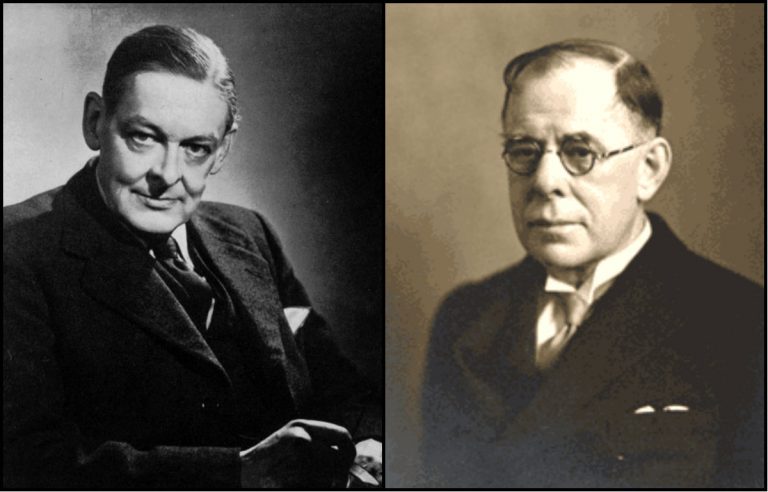 Read enough great books and you see connections. . . Plato, T.S. Eliot, and A.E. Taylor did not go to a bar together, Plato being dead for millennia before there were bars, Eliot, or Taylor, but Plato did influence both thinkers, the poet and the philosopher, and I suspect the least famous (Taylor) provided some intellectual help to the famous poet Eliot.
Recently at the College, we were working through “Dry Salvages” by T.S. Eliot and the (potential) connection was exciting: a great Christian philosopher and one of the greatest Christian poets sharing an alternative vision to British Christianity that was not taken, but still could be!
Jesus saved a hurting T.S. Eliot. And Eliot, the greatest poet of the twentieth century, thought Jesus could save us as well. A person can hate the conclusion, but if English is your mother tongue, then you cannot ignore Eliot or his ideas. He shaped the twentieth-century imagination through his poetry and use of language.
To ignore Eliot’s religion is to misunderstand his poetry and to misunderstand his poetry is to misunderstand our own minds. He wanted to turn our minds and our imaginations Godward. As part of a Christian artistic renaissance in Britain, Eliot can be misunderstood. His faith is not so much like that of his equally famous contemporaries, the Inklings. T.S. Eliot and C.S. Lewis, for example, were very different in terms of literary taste and how they expressed their Faith.
During a discussion session on the text of Four Quartets[1], I realized what may be an overlooked influence on Eliot’s religious work: the philosophy and arguments of classical scholar A.E. Taylor.[2]
While Eliot may not directly quote Taylor, the poet assumes a picture of the development of classical philosophy championed by the philosopher. Taylor had also described the work of the poet in a famous series of lectures and that “job description” resonates with the meaning and methods in Eliot’s Four Quartets. Taylor was an apologist[3], scholar, and Christian: Though he is not now on best seller lists like Lewis and Tolkien, his methods and style may live on in T.S. Eliot.
Read the rest here and learn how Britain might have chosen . . . wisely.
_____________________
1] I am thankful to Dr. Tim Bartel for leading the college seminar at the College at The Saint Constantine School that inspired this thought.
[2] Taylor has influenced my entire career. Letters from Taylor to a father regarding the need for a classical education for his son hang on the wall of my office at The Saint Constantine School.
———————————————-
*I begin an informal summer reading of Republic using Scott/Sterling (a new translation for me). Part 1. Part 2. Part 3. Part 4. Part 5. Part 6. Part 7. Part 8. Part 9. Part 10. Part 11. Part 12. Part 13. Part 14. Part 15. Part 16. Part 17. Part 18. Part 19. Part 20. Part 21. Part 22. Part 23. Part 24. Part 25. Part 26. Part 27. Part 28. Part 29. Part 30. Part 31. Part 32. Part 33. Part 34. Part 35. Part 36. Part 37. Part 38. Part 39. Part 40. Part 41. Part 42. Part 43. Part 44. Part 45. Part 45.5. Part 46. Part 47. Part 48. Part 49. Part 50. Part 51. Part 52. Part 52.5. Part 53.
Next Post
August 1, 2018 Finding a Menu for Our Intellectual Feast (Summer in the Republic 54)
Browse Our Archives
Select a Category Apologetics Art Culture Education On Books On Education Philosophy Politics Pop Culture Spiritual Reflections Uncategorized
Select a Month October 2026 September 2026 August 2026 July 2026 July 2025 June 2025 September 2024 July 2024 June 2024 December 2023 June 2023 September 2022 May 2022 April 2022 March 2022 February 2022 July 2021 June 2021 May 2021 April 2021 March 2021 February 2021 January 2021 December 2020 November 2020 October 2020 September 2020 August 2020 July 2020 June 2020 May 2020 April 2020 March 2020 February 2020 January 2020 December 2019 November 2019 October 2019 September 2019 August 2019 July 2019 June 2019 May 2019 April 2019 March 2019 February 2019 January 2019 December 2018 November 2018 October 2018 September 2018 August 2018 July 2018 June 2018 May 2018 April 2018 March 2018 February 2018 January 2018 December 2017 November 2017 October 2017 September 2017 August 2017 July 2017 June 2017 May 2017 April 2017 March 2017 February 2017 January 2017 December 2016 November 2016 October 2016 September 2016 August 2016 July 2016 June 2016 May 2016 April 2016 March 2016 February 2016 January 2016 December 2015 November 2015 October 2015 September 2015 August 2015 July 2015 June 2015 May 2015 April 2015 March 2015 February 2015 January 2015 November 2014 October 2014 September 2014 August 2014 July 2014 June 2014 May 2014 April 2014 March 2014 February 2014 January 2014 December 2013 November 2013 October 2013 September 2013 August 2013 July 2013 June 2013 May 2013 April 2013 March 2013 February 2013 January 2013 December 2012 November 2012 October 2012 September 2012 August 2012 July 2012 June 2012 May 2012
Follow Us!
TAKE THE
Religious Wisdom Quiz
How did God stop the people from building the Tower of Babel?
Select your answer to see how you score.
Struck them with blindness Sent a flood Destroyed the tower with fire Confused their language
Books by This Author John Mark Reynolds
Related posts from Eidos

Classical Education Must Teach Us to Make the...

Classical Education and the Art of Dying Well

Golden, Golden, Golden: My Mother's Last Lesson

TRENDING AT PATHEOS Evangelical

The REST of Your Life: A Creative Wrestles...
This week I had a conversation with a good friend from church....

How the author of the world's best hymn...
I've been working with John Newton for a while now. This makes...

Long before this Lectio Divina, Psalm 130 - the song - started...

What About the Trees? Another Living Parable
After I finished writing the last article about falling leaves as a...

Why Classical Education Is a Conversation, Not a...
Come and Read: Joy in Classical Education When I was a little...

Cornell University has received a great deal of negative publicity and intense...
view all Evangelical blogs
Ad-Free & Subscriber Log-In Subscription Support
- About Us
- 2026 Calendar
- Videos
- Podcasts
- Library of World Religions
- Faith In Media Tracker
- Advertise With Us
- Write for Us
- Privacy Policy
- Terms of Service
- Do Not Sell My Data
- Contact Us
- Radiant Digital
- Manage Newsletter Subscriptions
- Unsubscribe From Notifications
- Sitemap
Copyright 2008-2026, Patheos. All rights reserved.
Subscription Support Ad-Free & Subscriber Log-In
Follow Patheos