
BuddhistCatholicContemplativeEvangelicalGeneral ChristianHinduJewishLatter-day SaintMuslimNew VisionsProgressive Christian
Beliefs
- Buddhist
- Catholic
- Contemplative
- Evangelical
- General Christian
- Hindu
- Jewish
- Latter-day Saint
- More Voices
- Muslim
- New Visions
- Pagan
- Progressive Christian
Topics
- Religion News
- Food and Religion
- Sports and Religion
- Religious Art
- Religious Music and Entertainment
- Religious Events
- History and Religion
- Style and Religion
- Politics and Religion
- Women in Religion
- Recreation Outdoors and Religion
- Business Finance and Religion
- Careers Workplace and Religion
- Education and Religion
- Family Parenting and Religion
- Health Fitness and Religion
- Home and Religion
- Relationships and Religion
- Technology and Religion
- Travel and Religion
Columnists
- Buddhist Columnists
- Business Finance and Religion Columnists
- Careers Workplace and Religion Columnists
- Catholic Columnists
- Contemplative Columnists
- Education and Religion Columnists
- Evangelists Columnists
- Family Parenting and Religion Columnists
- General Christian Columnists
- Health Fitness and Religion Columnists
- Hindu Columnists
- History and Religion Columnists
- Home and Religion Columnists
- Jewish Columnists
- More Voices Columnists
- Latter Day Columnists
- Muslim Columnists
- New Visions Columnists
- Nonreligious Columnists
- Pagan Columnists
- Politics and Religion Columnists
- Progressive Columnists
- Recreation Outdoors and Religion Columnists
- Relationships and Religion Columnists
- Religion News Columnists
- Religious Art Columnists
- Religious Events Columnists
- Religious Music and Entertainment Columnists
- Sports and Religion Columnists
- Style and Religion Columnists
- Technology and Religion Columnists
- Travel and Religion Columnists
- Women in Religion Columnists
Resource Library
- 2026 Calendar
- Library of World Religions
- The 100 Most Holy Places on Earth
- Patheos Answers
- Podcasts
- Videos
- Faith Leaders Database
- Anglican Episcopalian
- Bahai
- Baptist
- Buddhism
- Christianity
- Confucianism
- Eastern Orthodoxy
- Hinduism
- Holiness and Pentecostal
- ISKCON
- Islam
- Judaism
- Lutheran
- Methodist
- The Church of Jesus Christ of Latter-day Saints
- New Age
- Paganism
- Presbytarian and Reformed
- Protestantism
- Religion Behind the Scenes
- Roman Catholic
- Scientology
- Shia Islam
- Sikhism
- Sufism
- Sunni Islam
- Taoism
- Zen
- See all religions
Research Tools
 Ad-Free & Subscriber Log-In Subscription Support
Ad-Free & Subscriber Log-In Subscription Support
Follow Patheos 

- Trending:
- Forgiveness
- |
- Marriage
- |
- Consciousness
- |
- Death Penalty
- |
- Election
- |
- Halloween

- Home
- Evangelical
- Avoiding Edutainment in a Classroom Built for Haste (Summer in the Republic 52.5)
Avoiding Edutainment in a Classroom Built for Haste (Summer in the Republic 52.5)
Last updated on: July 30, 2018 at 2:37 pm by John Mark N. Reynolds
Avoiding Edutainment in a Classroom Built for Haste (Summer in the Republic 52.5) 2018-07-30T14:37:21-04:00 John Mark N. Reynolds
Patheos Explore the world's faith through different perspectives on religion and spirituality! Patheos has the views of the prevalent religions and spiritualities of the world.
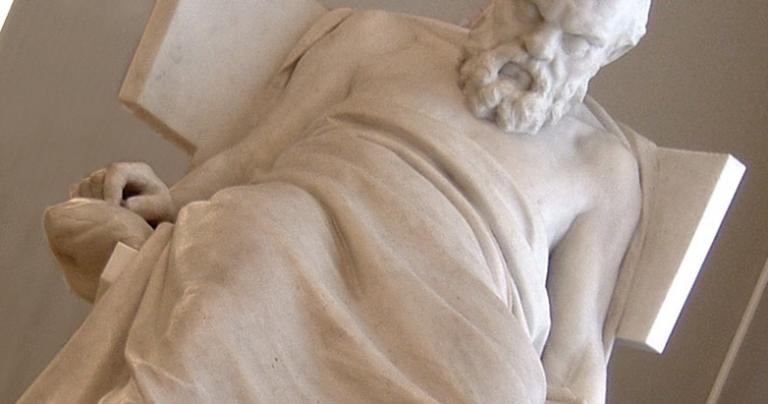 We are gluttons for edutainment, the thought- free substitute for education that gives us little of the hard reality of education while trying to provide the (genuine!) pleasures of a real education. The edutainment complex produces dilettantes, highly cultivated intellectual skills without the virtues of the mind that only painful, difficult, and time consuming work can produce. Edutainment is the equivalent of handing out jerseys and football helmets, filling a stadium, introducing the players, doing all the exciting rituals of the game, but skipping the workouts, preparation, and ultimately the game itself.
My original reflection on how edutainment can happen with an example, provoked a great set of concerns by a teacher:
For context, I’m a young, great books educated teacher at a classical Christian school, teaching literature and history to high schoolers, with an emphasis on big ideas. I never went through a credentialing process, but I love learning and love ordering things learned toward faithful Jesus-following, particularly as a community. So there’s a lot of work I have to do to grow in this vocation as a teacher; I’m still wet behind the ears.
You can do real classical education well. Do not fear, but also do not be fooled by “classical” labels. Much that we call classical is merely old or lacks all the aspects of the method of moving from questions, to hypothesis, to forming a worldview, and then joyfully returning to the beginning. Any educator also can learn from all we are learning about learning methods! For example, research shows that too many “screens” in the classroom may impress parents, but are not good for learning.
Make sure to keep up on researching educational methods.
Classical education by nature does not fear any idea and this includes (genuine) research about learning, teaching, and methods in the classroom. Sadly, much of the credentialing process in education departments is too much filler, too little help, but consider (if your career is teaching) either getting some education methods classes or starting a lifelong reading process. Find a senior teacher to mentor you.
To make things more difficult, we both agree that the dialectic as demonstrated by a Professor such as Al Geier is rare.
Colleges do not want to dedicate the resources to the full two years of training with specialized faculty and a coherent curriculum that are minimally required to begin to pass on the process. Such programs are always under fire, forced to cut the number of credits offered. Even then just observing teachers doing the craft is not enough.
Seek mentoring. If you are not close to a genuine program, then take that time to go and sit with someone and be mentored on breaks. Ask your school to get a great teacher, one thinks of Cate MacDonald, to help with how, especially in the non-college years. Sometimes the school will mean well, but undercut mission by means.
I took it that your post dealt mainly with vices in seeking knowledge and with pedagogy. On the pedagogy side, I felt quite impacted, because that’s something I have to figure out all the time, and didn’t have words for it. Not only does my lack of experience in teaching make it difficult at points to get students to dig down deep enough (though fortunately I do have will power for that at least), but there’s also an interest in my part to win students over to a kind of love for learning or truth or truth-seeking. At the same time, I’m supposed to be modeling a life of the mind, though in a way that’s accessible to the students. Among other things, such modeling demands that students get approximate visions of how hard it can be to know a thing.
Just so.
In a healthier educational time period, these goals would not contradict. They do.
If you cater to one element, developing a love of learning or a desire for truth seeking, your approval ratings from student surveys (so important to being retained!) will soar. Begin to force the hard, uncomfortable work of doing the job and some students will grow restive. In some classical schools that are not really classical, but doctrinaire, there is the temptation to develop a revolutionary cadre that loves being for ‘truth telling’ which all too conveniently attacks easy targets in administration and leaves our own failures alone.
Plato shows Socrates working with Cephalus, the School Head, in Republic and then (thank God) this horrible administrator leaving voluntarily and allowing genuine education. I have left places when I saw Cephalus was not leaving. A lesson of Republic is that piety is necessary: education requires order, moderation, harmony. Revolutionaries are too busy destroying to learn: impiety kills thought. The miracle of Republic is that a small community could be formed (without impiety) and sustain a discussion.
Discussion is long and hard and begins by focusing on content that wakes us up. Piety is one value of classical education, but evolutionary change stimulated by conversation is another.
Some schools celebrate piety, but stamp out the possibility of change. Other schools embrace change as if change were good in itself and are left rootless. Still other places will not give the time or liberty that is needed to get to where we must go.
To teach well we must find a space for all of these things. Make this community with piety and virtue or leave.
That is the easy job. The harder job is doing this ourselves. We must be engaged in discussion and hard readings (as you acknowledge). Are we reading hard books? Are we broadening our reading? (This last term was supposed to be Chinese classical readings for me, but much of it was spent in African texts. It’s a long story.) Are we reading each text again with fresh eyes before each class every year?
The answer must be “yes.”
I am happy to see you acknowledge all this . . . and the tension that our society creates. The bad news is that it is easy to hype up a love of truth seeking and hard to get a student to read a difficult text and persist. We must look to the examples of teachers like Plato and ultimately Jesus and keep encouraging our students with some of the more easily accessed benefits of education while refusing to do all the hard work for them. See Jesus in John 8. He will not just hand out the edutainment. Students must persist in following Him.
I began so badly (compared to you) that when I see all that real education demands I pray: Lord Jesus Christ, son of God, have mercy on me a sinner.
Pair that with a third problem, that the time constraints of 45-50 minutes per class period (which runs quite opposite to what (Professor) Johnson commends in this post.), I’m left with quite a puzzle about how well and often I can push our class to do questions well.
It is here that I will give a hard word: I think the 45-50 minute period for discussion lends itself to edutainment. One can hardly begin before one must end. Can you discuss at least a partial university model schedule with the leadership? (See TSCS.) However, if you fail, and still feel called to your school, I think there is a way
The three in brief again are (i) wanting students to like the learning process (ii) needing to model intellectual honesty and rigor in discipleship (iii) having remarkably brief class periods. So then there’s a real worry that I could propagate a love for edutainment at best and at worst just never give students a real glimpse of something worth aiming for, especially if, like most teachers, I want to be liked, at least a bit. So how then do I as a teacher help my students? I’m not sure. I want to make sure I at least plan on some days to teach such that we work as absolutely hard as we can at something really basic, worthwhile, and difficult. But how do I help the students see the fruit of their labor? I worry that without such visions, they will be discouraged and despair of the process, which can be exhausting. But trying to show fruit can risk edutaining big time, even more so if you try to connect the learning to real life like Johnson often did (I studied under Johnson at THI). I think that’s about as far as I’ve gotten. So then, am I headed in a right direction? It’s not lost on me that they are shaped by cultural liturgies (pace J.K.A. Smith) that teach them to want to be entertained, or at least edutained. What might it look like, if we took one book as an example, for me to teach my students honestly, not edutaining but educating, in a way that can sustain interest and hope while committing the groups’ effort to sincere striving for understanding and holiness? And all that given that I have to work with the 45min, 5 days/wk model?
You are blessed to have studied with an outstanding teacher/model in Professor Adam Johnson. That is one advantage. Build on it. Consider your classes. Examine your memories and your notes and consult with him if you can. For those who lack such a mentor, or access to one, bring in outside voices, but form a community of teachers that also read together for long periods of time. Learn by doing together.
You have asked all the right questions and there are only guidelines with any particular situation. You will constantly “fail,” yet also see more good come than you might expect. Students, even in Professor Johnson’s generation, were both eager to be edutained and thirsty for real learning. We cautioned them about both . . . Trying to provide them some easier wins while cautioning (ourselves!) about the potential problems. A few students hated any compromises with “entertainment,” but they were ignoring Socrates. Socrates was willing to digress and some of those digressions became the best part of the conversation . . . Some did not! A greater number of students liked the flash and skimmed the books . . . Annoyed with any hard, sustained challenge. That was not most students then and is not now.
Most students do what we do: try and God helps us. In fact, if you persist, prayerfully, more than one “make it harder” type will see the value of waiting for others to get “it” and many “edutainment junkies” will start wanting to go further up and further into the life of God.
Discussion in community is key. Do students see that hard discipleship is central? If administration will not give you the time needed, try to get it. Be patient, but if they keep cutting time for discussion, or edutainment events, even classical ones, become central, then it may be time to find a new home.
God have mercy for my failures and for the moments I too wish only to be edutained and not challenged.
———————————————-
*I begin an informal summer reading of Republic using Scott/Sterling (a new translation for me). Part 1. Part 2. Part 3. Part 4. Part 5. Part 6. Part 7. Part 8. Part 9. Part 10. Part 11. Part 12. Part 13. Part 14. Part 15. Part 16. Part 17. Part 18. Part 19. Part 20. Part 21. Part 22. Part 23. Part 24. Part 25. Part 26. Part 27. Part 28. Part 29. Part 30. Part 31. Part 32. Part 33. Part 34. Part 35. Part 36. Part 37. Part 38. Part 39. Part 40. Part 41. Part 42. Part 43. Part 44. Part 45. Part 45.5. Part 46. Part 47. Part 48. Part 49. Part 50. Part 51. Part 52. Part 52.5.
———————————————-
*I begin an informal summer reading of Republic using Scott/Sterling (a new translation for me). Part 1. Part 2. Part 3. Part 4. Part 5. Part 6. Part 7. Part 8. Part 9. Part 10. Part 11. Part 12. Part 13. Part 14. Part 15. Part 16. Part 17. Part 18. Part 19. Part 20. Part 21. Part 22. Part 23. Part 24. Part 25. Part 26. Part 27. Part 28. Part 29. Part 30. Part 31. Part 32. Part 33. Part 34. Part 35. Part 36. Part 37. Part 38. Part 39. Part 40. Part 41. Part 42. Part 43. Part 44. Part 45. Part 45.5. Part 46. Part 47. Part 48. Part 49. Part 50. Part 51. Part 52. Part 52.5.
Previous Post
July 29, 2018
Edutainment Microwaves Our Minds (Summer in the Republic 52)
Browse Our Archives
Select a Category Apologetics Art Culture Education On Books On Education Philosophy Politics Pop Culture Spiritual Reflections Uncategorized
Select a Month October 2026 September 2026 August 2026 July 2026 July 2025 June 2025 September 2024 July 2024 June 2024 December 2023 June 2023 September 2022 May 2022 April 2022 March 2022 February 2022 July 2021 June 2021 May 2021 April 2021 March 2021 February 2021 January 2021 December 2020 November 2020 October 2020 September 2020 August 2020 July 2020 June 2020 May 2020 April 2020 March 2020 February 2020 January 2020 December 2019 November 2019 October 2019 September 2019 August 2019 July 2019 June 2019 May 2019 April 2019 March 2019 February 2019 January 2019 December 2018 November 2018 October 2018 September 2018 August 2018 July 2018 June 2018 May 2018 April 2018 March 2018 February 2018 January 2018 December 2017 November 2017 October 2017 September 2017 August 2017 July 2017 June 2017 May 2017 April 2017 March 2017 February 2017 January 2017 December 2016 November 2016 October 2016 September 2016 August 2016 July 2016 June 2016 May 2016 April 2016 March 2016 February 2016 January 2016 December 2015 November 2015 October 2015 September 2015 August 2015 July 2015 June 2015 May 2015 April 2015 March 2015 February 2015 January 2015 November 2014 October 2014 September 2014 August 2014 July 2014 June 2014 May 2014 April 2014 March 2014 February 2014 January 2014 December 2013 November 2013 October 2013 September 2013 August 2013 July 2013 June 2013 May 2013 April 2013 March 2013 February 2013 January 2013 December 2012 November 2012 October 2012 September 2012 August 2012 July 2012 June 2012 May 2012
Follow Us!
TAKE THE
Religious Wisdom Quiz
How did Jeremiah's scribe escape death after Jehoiakim sought to arrest them?
Select your answer to see how you score.
They hid A prophet intervened They fled to Babylon They paid a bribe
Books by This Author John Mark Reynolds
Related posts from Eidos

Why Classical Education Is a Conversation, Not a...

Does Classical Education Belong Only to the West?

Classical Education Must Teach Us to Make the...

Rooted: Why Classical Education Needs Community
TRENDING AT PATHEOS Evangelical

The REST of Your Life: A Creative Wrestles...
This week I had a conversation with a good friend from church....

How the author of the world's best hymn...
I've been working with John Newton for a while now. This makes...

Long before this Lectio Divina, Psalm 130 - the song - started...

What About the Trees? Another Living Parable
After I finished writing the last article about falling leaves as a...

Why Classical Education Is a Conversation, Not a...
Come and Read: Joy in Classical Education When I was a little...

Cornell University has received a great deal of negative publicity and intense...
view all Evangelical blogs
Ad-Free & Subscriber Log-In Subscription Support
- About Us
- 2026 Calendar
- Videos
- Podcasts
- Library of World Religions
- Faith In Media Tracker
- Advertise With Us
- Write for Us
- Privacy Policy
- Terms of Service
- Do Not Sell My Data
- Contact Us
- Radiant Digital
- Manage Newsletter Subscriptions
- Unsubscribe From Notifications
- Sitemap
Copyright 2008-2026, Patheos. All rights reserved.
Subscription Support Ad-Free & Subscriber Log-In
Follow Patheos