
BuddhistCatholicContemplativeEvangelicalGeneral ChristianHinduJewishLatter-day SaintMuslimNew VisionsProgressive Christian
Beliefs
- Buddhist
- Catholic
- Contemplative
- Evangelical
- General Christian
- Hindu
- Jewish
- Latter-day Saint
- More Voices
- Muslim
- New Visions
- Pagan
- Progressive Christian
Topics
- Religion News
- Food and Religion
- Sports and Religion
- Religious Art
- Religious Music and Entertainment
- Religious Events
- History and Religion
- Style and Religion
- Politics and Religion
- Women in Religion
- Recreation Outdoors and Religion
- Business Finance and Religion
- Careers Workplace and Religion
- Education and Religion
- Family Parenting and Religion
- Health Fitness and Religion
- Home and Religion
- Relationships and Religion
- Technology and Religion
- Travel and Religion
Columnists
- Buddhist Columnists
- Business Finance and Religion Columnists
- Careers Workplace and Religion Columnists
- Catholic Columnists
- Contemplative Columnists
- Education and Religion Columnists
- Evangelists Columnists
- Family Parenting and Religion Columnists
- General Christian Columnists
- Health Fitness and Religion Columnists
- Hindu Columnists
- History and Religion Columnists
- Home and Religion Columnists
- Jewish Columnists
- More Voices Columnists
- Latter Day Columnists
- Muslim Columnists
- New Visions Columnists
- Nonreligious Columnists
- Pagan Columnists
- Politics and Religion Columnists
- Progressive Columnists
- Recreation Outdoors and Religion Columnists
- Relationships and Religion Columnists
- Religion News Columnists
- Religious Art Columnists
- Religious Events Columnists
- Religious Music and Entertainment Columnists
- Sports and Religion Columnists
- Style and Religion Columnists
- Technology and Religion Columnists
- Travel and Religion Columnists
- Women in Religion Columnists
Resource Library
- 2026 Calendar
- Library of World Religions
- The 100 Most Holy Places on Earth
- Patheos Answers
- Podcasts
- Videos
- Faith Leaders Database
- Anglican Episcopalian
- Bahai
- Baptist
- Buddhism
- Christianity
- Confucianism
- Eastern Orthodoxy
- Hinduism
- Holiness and Pentecostal
- ISKCON
- Islam
- Judaism
- Lutheran
- Methodist
- The Church of Jesus Christ of Latter-day Saints
- New Age
- Paganism
- Presbytarian and Reformed
- Protestantism
- Religion Behind the Scenes
- Roman Catholic
- Scientology
- Shia Islam
- Sikhism
- Sufism
- Sunni Islam
- Taoism
- Zen
- See all religions
Research Tools
 Ad-Free & Subscriber Log-In Subscription Support
Ad-Free & Subscriber Log-In Subscription Support
Follow Patheos 

- Trending:
- Forgiveness
- |
- Marriage
- |
- Consciousness
- |
- Death Penalty
- |
- Election
- |
- Halloween

- Home
- Evangelical
- Glutton for Learning: The Temptation of Edutainment with a Digression on American Racism (Summer in the Republic 51)
Glutton for Learning: The Temptation of Edutainment with a Digression on American Racism (Summer in the Republic 51)
Last updated on: July 30, 2018 at 10:19 am by John Mark N. Reynolds
Glutton for Learning: The Temptation of Edutainment with a Digression on American Racism (Summer in the Republic 51) 2018-07-30T10:19:23-04:00 John Mark N. Reynolds
Patheos Explore the world's faith through different perspectives on religion and spirituality! Patheos has the views of the prevalent religions and spiritualities of the world.
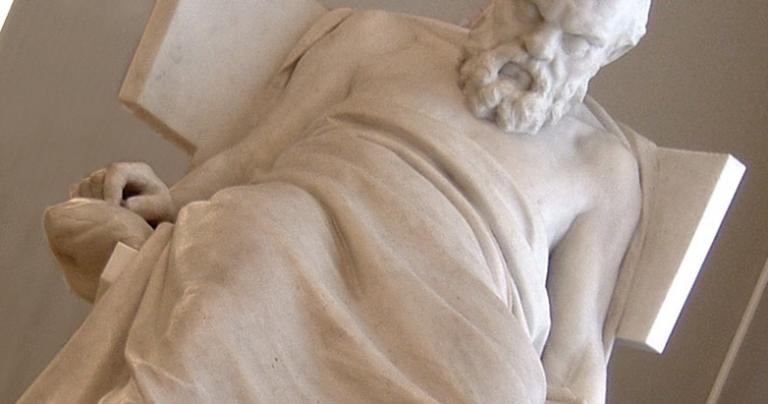 Asking a question begins a series of questions so endless that if it were not for the promise of Paradise where we can learn without end, a man might despair. There is glorious wonder in questions, but also a particular danger. To see the danger and the opportunity, I will outline how this Spring a question in a Saint Constantine college class led to a long discursive set of readings and what I learned, but also what I might not have learned.
An Example in Wondering, What Might Have Gone Wrong: Early American White Racist Film and Novels
One question so easily leads to another . . .
Get interested in understanding why the film Birth of a Nation is so wretched and you can end up reading horrible novels by Baptist preacher and white supremicist Thomas Dixon. Wonder about the response and you have the much more enjoyable experience of finding Sutton E. Griggs and his brilliant anti-Dixon novel The Hindered Hand. During this reading, you see references to John Wilkes Booth, and so read a few biographies about a beautiful man turned to wickedness. Before you are done, you will realize you have to reread Uncle Tom’s Cabin.
The problem is that if a reader is not disciplined he will never answer the first question with any precision. Why is the film Birth of a Nation so wretched?
How do I know?
This is a description of a chain of some of my free time reading this spring and what motivated the book choices.
There is good here: one needs to collect data to understand a situation.
Some Data Collected, but a Danger Arises
Booth, the handsome actor turned killer, was a hero to some in the South, a status hidden by too many official histories that point to those better Southern leaders who understood what a disaster the assasination of Lincoln was. By hastening over support for Booth, his grave was oft visited and decorated with flowers, we miss something important about our reconstruction.Booth’s vision of Lincoln as tyrant is still taught in some schools.
Was it an accident that Booth was an actor and that so much Northern popular entertaiment at the time had a soft spot for the cause of the Confederate and traded in racialism?
Dixon as a novelist condemned Booth’s actions, but only because they hurt the cause of white nationalism. Dixon cared about the cause of white nationalism and wanted to make Lincoln over as an ally. Dixon understood that education is hard while edutainment is easier. Entertain and the “education” that might lead to questions, goes down easily. Dixon wrote fluently and with popular appeal and his racism is ugly and direct. To give one example, the only one I am willing to repeat, “kink” in the hair of a neighbor was, in a Dixon novel, an infallible sign of trouble and danger for white people. That such vile trash inspired an epic is worth pondering and deep reflection.
Standing against Dixon and his enablers were African-American intellectuals and allies. Sutton E. Griggs, an African American Baptist minister, understood the deep dangers of Dixon’s disgusting work, but also why it worked. Griggs produced his own counter-edutainment. Both Dixon and Griggs harkened back to the most successful edutainment vehicle in American history: Uncle Tom’s Cabin. Harriet Beecher Stowe made a war through the power of her novel and white slavers hated her.
Dixon imitated her down to character names in his twisted history of the Republic. He was the anti-Stowe, just as Griggs attempted to be (with less commercial success) the anti-Dixon.
The danger here is that I might start to edutain myself and never get back to the original question. If you are given to thinking, then all of these books are interesting. Before bringing my original question into focus, I was tempted to study American Baptists. Both Dixon and Griggs were Baptist ministers!
Stop.
I had to stop. I had to go back to the original question. When I did I discovered that it was a shoddy question, too open ended. This had led to a “feast of words” that threatened to turn into eating at one of those wretched all-you-can-eat buffets: fattening, but incoherent as a meal.
Fortunately, good teachers drilled the habit of stopping and reflecting into me. Data collection, reading, watching film, talking, is good, but can be endless, turning important issues into a hobby. Edutainment is a very dangerous tool that a just person must use with care. Does it encourage or discourage thought?
Was there a problem even with Stowe? Is this why Dixon, with an inferior book and a terrible set of ideas, prevailed in educating so much of America? Is edutainment, any amusement, always easier for the unjust man to use leaving a better educator like Griggs always playing at a disadvantage? These are better questions.
My original question had a too easy answer: Birth of a Nation is wretched, because of the corrupting ideas of white nationalism. Booth and Dixon showed how deep those roots were in entertainment. A better question is this: will entertainment and edutainment always favor causes that indulge the comfort and desires of the audience?
Is “be better” harder to write as spectacle, than “your vice is really a virtue?”
I suspect “know yourself” and “repent and sin no more” are not great for box office, while “here is who you are” and “they are not ok, but you are” go down better. Maybe.
I realized that Republic had (as usual) much to say about this idea.
Plato on Edutainment and Intellectual Gluttony
Socrates loved truth so much it got him killed, but he was also interesting. As a result, until he started attacking the sexual morals of Athens, the decadence of the rulers effectively, he was viewed as a splendid edutainer. At the start of the Republic, young men force Socrates to come to their home and do his “Socrates thing” in the downtime between shows at a festival they are all attending.
Socrates does discuss the idea of justice and some progress is made. Sadly, every time he begins to learn something, he loses his discussion partner for someone new. Edutainment demands novelty and so instead of answering the opening question, or persisting with Socrates, we get something different. Cephalus goes off to do his old man duties. Polemarchus lacks stamina and courage. When he is confronted, he shuts down. Finally, Thrasymachus keeps confusing a discussion with a debate. When he starts to lose, he shuts down.
Edutainment happens and the results might have been entertaining to watch, but Socrates realizes as education it was a failure. Why? He says:
It strikes me that I have been like a glutton, snatching at one dish after another and eating in such haste that I had no time to savor the food. I am afraid this is the way I have gone about our inquiry. We had not finished defining justice before I was off to examine whether it was the same as wisdom and virtue or ignorance and vice. Then I was unable to resist pursuing another line of inquiry into the comparative profitability of justice and injustice. So I must confess that the outcome of the discussion is that I know nothing. After all, if justice still remains undefined, I can hardly know whether it is in fact a virtue or a vice. Nor can I know whether the just man is in fact happy or miserable.
I suspect that much of what we market as “college” today is edutainment and at best encourages us to be gluttons. Socrates has given us the signs of gluttony:
We move with no depth or reflection from one idea to another. We are hasty.
We eat an intellectual meal with no menu, no theme.
We forget what we started to do: we do not answer first questions.
We are bored by careful reflection and have an aversion to precision.
The result of too much entertainment in our education is mental bloat. We have thought a great deal, have many inchoate opinions, some very good, but cannot act on them. Over the next few posts in this series, I will reflect for myself on Socrate’s warning and examine each danger of edutainment.
Then I will return to my better question: is edutainment useful or is it always a better tool for tyrants to tell us that what we wish to be true is true?
Meanwhile, if I have learned about the deep rooted nature of white supremacy in early American entertainment, I must apply that learning to today. Learning must produce action.
———————————————-
*I begin an informal summer reading of Republic using Scott/Sterling (a new translation for me). Part 1. Part 2. Part 3. Part 4. Part 5. Part 6. Part 7. Part 8. Part 9. Part 10. Part 11. Part 12. Part 13. Part 14. Part 15. Part 16. Part 17. Part 18. Part 19. Part 20. Part 21. Part 22. Part 23. Part 24. Part 25. Part 26. Part 27. Part 28. Part 29. Part 30. Part 31. Part 32. Part 33. Part 34. Part 35. Part 36. Part 37. Part 38. Part 39. Part 40. Part 41. Part 42. Part 43. Part 44. Part 45. Part 45.5. Part 46. Part 47. Part 48. Part 49. Part 50. Part 51.
Previous Post

July 27, 2018
Finding Justice Where We Can (Summer in the Republic 50!!!)
Next Post
July 29, 2018 Edutainment Microwaves Our Minds (Summer in the Republic 52)
Browse Our Archives
Select a Category Apologetics Art Culture Education On Books On Education Philosophy Politics Pop Culture Spiritual Reflections Uncategorized
Select a Month October 2026 September 2026 August 2026 July 2026 July 2025 June 2025 September 2024 July 2024 June 2024 December 2023 June 2023 September 2022 May 2022 April 2022 March 2022 February 2022 July 2021 June 2021 May 2021 April 2021 March 2021 February 2021 January 2021 December 2020 November 2020 October 2020 September 2020 August 2020 July 2020 June 2020 May 2020 April 2020 March 2020 February 2020 January 2020 December 2019 November 2019 October 2019 September 2019 August 2019 July 2019 June 2019 May 2019 April 2019 March 2019 February 2019 January 2019 December 2018 November 2018 October 2018 September 2018 August 2018 July 2018 June 2018 May 2018 April 2018 March 2018 February 2018 January 2018 December 2017 November 2017 October 2017 September 2017 August 2017 July 2017 June 2017 May 2017 April 2017 March 2017 February 2017 January 2017 December 2016 November 2016 October 2016 September 2016 August 2016 July 2016 June 2016 May 2016 April 2016 March 2016 February 2016 January 2016 December 2015 November 2015 October 2015 September 2015 August 2015 July 2015 June 2015 May 2015 April 2015 March 2015 February 2015 January 2015 November 2014 October 2014 September 2014 August 2014 July 2014 June 2014 May 2014 April 2014 March 2014 February 2014 January 2014 December 2013 November 2013 October 2013 September 2013 August 2013 July 2013 June 2013 May 2013 April 2013 March 2013 February 2013 January 2013 December 2012 November 2012 October 2012 September 2012 August 2012 July 2012 June 2012 May 2012
Follow Us!
TAKE THE
Religious Wisdom Quiz
What religious movement emphasizes unity among all Christians globally?
Select your answer to see how you score.
Adventism Pietism Monasticism Ecumenism
Books by This Author John Mark Reynolds
Related posts from Eidos

Classical Education Must Teach Us to Make the...

Classical Education and the Art of Dying Well

Golden, Golden, Golden: My Mother's Last Lesson

TRENDING AT PATHEOS Evangelical

The REST of Your Life: A Creative Wrestles...
This week I had a conversation with a good friend from church....

How the author of the world's best hymn...
I've been working with John Newton for a while now. This makes...

Long before this Lectio Divina, Psalm 130 - the song - started...

What About the Trees? Another Living Parable
After I finished writing the last article about falling leaves as a...

Why Classical Education Is a Conversation, Not a...
Come and Read: Joy in Classical Education When I was a little...

Cornell University has received a great deal of negative publicity and intense...
view all Evangelical blogs
Ad-Free & Subscriber Log-In Subscription Support
- About Us
- 2026 Calendar
- Videos
- Podcasts
- Library of World Religions
- Faith In Media Tracker
- Advertise With Us
- Write for Us
- Privacy Policy
- Terms of Service
- Do Not Sell My Data
- Contact Us
- Radiant Digital
- Manage Newsletter Subscriptions
- Unsubscribe From Notifications
- Sitemap
Copyright 2008-2026, Patheos. All rights reserved.
Subscription Support Ad-Free & Subscriber Log-In
Follow Patheos