
BuddhistCatholicContemplativeEvangelicalGeneral ChristianHinduJewishLatter-day SaintMuslimNew VisionsProgressive Christian
Beliefs
- Buddhist
- Catholic
- Contemplative
- Evangelical
- General Christian
- Hindu
- Jewish
- Latter-day Saint
- More Voices
- Muslim
- New Visions
- Pagan
- Progressive Christian
Topics
- Religion News
- Food and Religion
- Sports and Religion
- Religious Art
- Religious Music and Entertainment
- Religious Events
- History and Religion
- Style and Religion
- Politics and Religion
- Women in Religion
- Recreation Outdoors and Religion
- Business Finance and Religion
- Careers Workplace and Religion
- Education and Religion
- Family Parenting and Religion
- Health Fitness and Religion
- Home and Religion
- Relationships and Religion
- Technology and Religion
- Travel and Religion
Columnists
- Buddhist Columnists
- Business Finance and Religion Columnists
- Careers Workplace and Religion Columnists
- Catholic Columnists
- Contemplative Columnists
- Education and Religion Columnists
- Evangelists Columnists
- Family Parenting and Religion Columnists
- General Christian Columnists
- Health Fitness and Religion Columnists
- Hindu Columnists
- History and Religion Columnists
- Home and Religion Columnists
- Jewish Columnists
- More Voices Columnists
- Latter Day Columnists
- Muslim Columnists
- New Visions Columnists
- Nonreligious Columnists
- Pagan Columnists
- Politics and Religion Columnists
- Progressive Columnists
- Recreation Outdoors and Religion Columnists
- Relationships and Religion Columnists
- Religion News Columnists
- Religious Art Columnists
- Religious Events Columnists
- Religious Music and Entertainment Columnists
- Sports and Religion Columnists
- Style and Religion Columnists
- Technology and Religion Columnists
- Travel and Religion Columnists
- Women in Religion Columnists
Resource Library
- 2026 Calendar
- Library of World Religions
- The 100 Most Holy Places on Earth
- Patheos Answers
- Podcasts
- Videos
- Faith Leaders Database
- Anglican Episcopalian
- Bahai
- Baptist
- Buddhism
- Christianity
- Confucianism
- Eastern Orthodoxy
- Hinduism
- Holiness and Pentecostal
- ISKCON
- Islam
- Judaism
- Lutheran
- Methodist
- The Church of Jesus Christ of Latter-day Saints
- New Age
- Paganism
- Presbytarian and Reformed
- Protestantism
- Religion Behind the Scenes
- Roman Catholic
- Scientology
- Shia Islam
- Sikhism
- Sufism
- Sunni Islam
- Taoism
- Zen
- See all religions
Research Tools
 Ad-Free & Subscriber Log-In Subscription Support
Ad-Free & Subscriber Log-In Subscription Support
Follow Patheos 

- Trending:
- Forgiveness
- |
- Marriage
- |
- Consciousness
- |
- Death Penalty
- |
- Election
- |
- Halloween

- Home
- Evangelical
- Work for the Good Done, but Take the Money! (With a Longfellow Bonus!) (Summer in the Republic 40)
Work for the Good Done, but Take the Money! (With a Longfellow Bonus!) (Summer in the Republic 40)
Last updated on: July 17, 2018 at 6:14 pm by John Mark N. Reynolds
Work for the Good Done, but Take the Money! (With a Longfellow Bonus!) (Summer in the Republic 40) 2018-07-17T18:14:05-04:00 John Mark N. Reynolds
Patheos Explore the world's faith through different perspectives on religion and spirituality! Patheos has the views of the prevalent religions and spiritualities of the world.
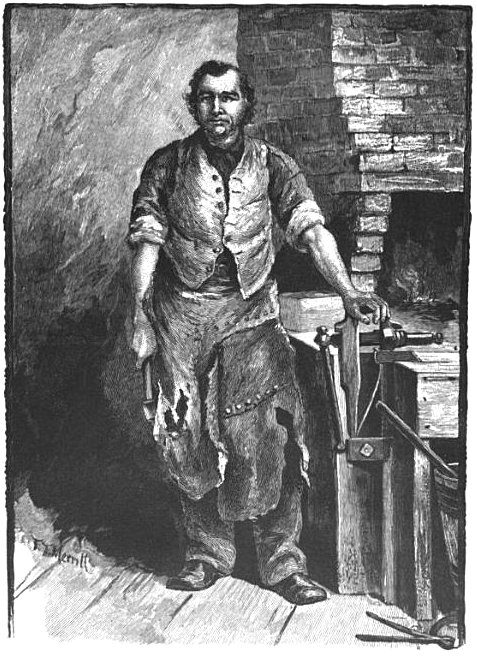 God bless the business leader who ends up wealthy, while benefiting our economy. God bless the village smithy who does his job joyfully. Both can be happy, both are people of accomplishment.
There is a question on my social media account that points out that a famous teen from a famous family is (almost) a billionaire.
“What have you done?” runs the question in the posts. I haven’t made much money and am not famous, but then those were never goals.
Should they be?
I once engaged in a exchange with a writer of pop-theology whose response to me was to laugh at my book sales. Safe to say, writing on Plato and philosophy is not profitable, but I (and my few thousand readers) have learned something I hope.
I do not want to write books like he writes and I am only assuming he has sold many books. Why? Selling would be great, but it did not occur to me to measure the worth of a book by copies sold. Bill Clinton just put his name on a best selling novel, but the book is still no good.
A real author writes a book, the hack churns out product.
Few want a doctor who does medicine for the money. To care for a person created in the image of God and to have money as a motivation is wrong and sad. What does a doctor miss when he sees a paycheck instead of patients? A pastor is called to serve and not be served, as is a politician or even a king in a Christian land.
Making Money
People need to be able to meet their needs and a free market will tend to reward hard, good work. Christian nations have regulated a pure free market since values can be skewed or harm done in the short term, but nobody minds people doing well by doing good.
Some Christians go further and embrace socialism in order to make the system even better. Bright people will make sure each worker gets what she or he deserves and no more. Most Christians have rejected socialism after centuries of experience with the system, because giving the government the power to decide what is fair pay turns out badly. Less overall services and wealth are produced and most people are worse off.
This is why Western Christian arguments about economics and government tend to be about how much liberty the market should have and how much the government, Church, and society should balance out the results to help those who are “losers.’
After all, money cannot buy happiness, but up to a point, having money helps a happy person thrive. Only a very great saint can flourish on a starvation diet.
Socrates and Money Making
Philosophers are often accused of being bad at money making and this is probably true if money making is the thing to do. If money making is a thing you hope to do while trying to become a better human, then philosophy might be a good way to go. I don’t know anyone who studies philosophy to make money, so failure at that task is not too serious. God bless the person who works a day job while reading carefully and considering ideas.
Philosophy is not special.The doctor heals us, teacher educates, the village smithy made our horses flourish and made implements for the town. Each job can lead to flourishing if the right person has the skill and grasps the purpose. When Longfellow praised the village smith, he had it right:
Toiling,–rejoicing,–sorrowing,
Onward through life he goes;
Each morning sees some task begin,
Each evening sees it close
Something attempted, something done,
Has earned a night’s repose.Thanks, thanks to thee, my worthy friend,
For the lesson thou hast taught!
Thus at the flaming forge of life
Our fortunes must be wrought;
Thus on its sounding anvil shaped
Each burning deed and thought.
Growing up in West Virginia, I knew many women and men who were lovers of wisdom and whose toil, done for love and not money, had taught them goodness, truth, and beauty. Many had two jobs, one that paid them, and another, like working as a Sunday School teacher that was their main role and what they were remembered for when they died. They had enough and I would rather be their grandchild than the famous teen.
Like most deep truth, many of God’s children have found this rule: work for love, earn money. In fact, some of the richest and most innovative people who have ever lived, men like JC Penney (there used to be a department store!) and Westinghouse did very, very well financially by doing great good for our nation.
The high pagan philosophers saw this as well, especially Plato. In Republic, Socrates has been pinned in an argument with the sophist (and friend of tyrants) Thrasymachus. Socrates wishes to heal Thrasymachus and learn the truth, so he persuades Thrasymachus to stay.
Thrasymachus, like the many college administrators, educates for money. He is better than we are, he drives no students into debt, but he does work for cash. He only agreed to start the conversation when he was promised pay. At this point, he could leave, but Socrates has intruiged him by asking how all of them might best live the good life.
Thrasymachus has argued that shepherds don’t care about sheep: just fleece and meat. They are in it for the money and not for the sheep, just as human rulers exploit those they rule. Socrates makes a good point; many professions make money, but the object of the profession itself is not money making. What makes medicine different from teaching? It is not that doctors often get paid, since teachers do too! In fact, a man might be a doctor without earning money, as the saints of the Church called the “holy unmercenaries” demonstrate. They practiced medicine for free and far from making them bad doctors, we honor them as doctors.
I have known shepherds. They did in the end sheer their sheep, an act that did not harm them, but none I knew had become shepherds for the cash. All could have made more money doing other things, but they loved tending sheep! There are people who invest in sheep (however unwisely), but these people need not even be shepherds!
All the shepherds I have met viewed their lives as shepherds as tending sheep.
Socrates sums up;
So wages benefit the wage earner’s account and do not derive directly from his art. In his professional role the doctor nurtures health; in his wage-earning role he collects his pay. The same with the architect who builds a house, and the same with all the others. Each art performs the functions proper to it and benefits its proper objects.
This is very useful. Money making (in certain societies) is a skill that is different than other skills. God bless schools that learn the difference, never put down any human skill done nobly, but do not confuse money making with other humane arts. If a student loves two jobs and can help people with both, then the fact that the market will pay him to do one is a good reason he might prefer that job, but it can never be final.
There are many goods!
———————————————-
*I begin an informal summer reading of Republic using Scott/Sterling (a new translation for me). Part 1. Part 2. Part 3. Part 4. Part 5. Part 6. Part 7. Part 8. Part 9. Part 10. Part 11. Part 12. Part 13. Part 14. Part 15. Part 16. Part 17. Part 18. Part 19. Part 20. Part 21. Part 22. Part 23. Part 24. Part 25. Part 26. Part 27. Part 28. Part 29. Part 30. Part 31. Part 32. Part 33. Part 34. Part 35. Part 36. Part 37. Part 38. Part 39. Part 40.
Previous Post

July 15, 2018
You Cannot Be Spoon Fed Reason (Summer in the Republic 39)
Next Post

July 17, 2018 Look for the Ruler Who Might Quit (Summer in the Republic 41)
Browse Our Archives
Select a Category Apologetics Art Culture Education On Books On Education Philosophy Politics Pop Culture Spiritual Reflections Uncategorized
Select a Month October 2026 September 2026 August 2026 July 2026 July 2025 June 2025 September 2024 July 2024 June 2024 December 2023 June 2023 September 2022 May 2022 April 2022 March 2022 February 2022 July 2021 June 2021 May 2021 April 2021 March 2021 February 2021 January 2021 December 2020 November 2020 October 2020 September 2020 August 2020 July 2020 June 2020 May 2020 April 2020 March 2020 February 2020 January 2020 December 2019 November 2019 October 2019 September 2019 August 2019 July 2019 June 2019 May 2019 April 2019 March 2019 February 2019 January 2019 December 2018 November 2018 October 2018 September 2018 August 2018 July 2018 June 2018 May 2018 April 2018 March 2018 February 2018 January 2018 December 2017 November 2017 October 2017 September 2017 August 2017 July 2017 June 2017 May 2017 April 2017 March 2017 February 2017 January 2017 December 2016 November 2016 October 2016 September 2016 August 2016 July 2016 June 2016 May 2016 April 2016 March 2016 February 2016 January 2016 December 2015 November 2015 October 2015 September 2015 August 2015 July 2015 June 2015 May 2015 April 2015 March 2015 February 2015 January 2015 November 2014 October 2014 September 2014 August 2014 July 2014 June 2014 May 2014 April 2014 March 2014 February 2014 January 2014 December 2013 November 2013 October 2013 September 2013 August 2013 July 2013 June 2013 May 2013 April 2013 March 2013 February 2013 January 2013 December 2012 November 2012 October 2012 September 2012 August 2012 July 2012 June 2012 May 2012
Follow Us!
TAKE THE
Religious Wisdom Quiz
Who was called by God to leave his home and go to a land God would show him?
Select your answer to see how you score.
Moses Abram Jacob Noah
Books by This Author John Mark Reynolds
Related posts from Eidos

Classical Education Must Teach Us to Make the...

Classical Education and the Art of Dying Well

Golden, Golden, Golden: My Mother's Last Lesson

TRENDING AT PATHEOS Evangelical

The REST of Your Life: A Creative Wrestles...
This week I had a conversation with a good friend from church....

How the author of the world's best hymn...
I've been working with John Newton for a while now. This makes...

Long before this Lectio Divina, Psalm 130 - the song - started...

What About the Trees? Another Living Parable
After I finished writing the last article about falling leaves as a...

Why Classical Education Is a Conversation, Not a...
Come and Read: Joy in Classical Education When I was a little...

Cornell University has received a great deal of negative publicity and intense...
view all Evangelical blogs
Ad-Free & Subscriber Log-In Subscription Support
- About Us
- 2026 Calendar
- Videos
- Podcasts
- Library of World Religions
- Faith In Media Tracker
- Advertise With Us
- Write for Us
- Privacy Policy
- Terms of Service
- Do Not Sell My Data
- Contact Us
- Radiant Digital
- Manage Newsletter Subscriptions
- Unsubscribe From Notifications
- Sitemap
Copyright 2008-2026, Patheos. All rights reserved.
Subscription Support Ad-Free & Subscriber Log-In
Follow Patheos