
BuddhistCatholicContemplativeEvangelicalGeneral ChristianHinduJewishLatter-day SaintMuslimNew VisionsProgressive Christian
Beliefs
- Buddhist
- Catholic
- Contemplative
- Evangelical
- General Christian
- Hindu
- Jewish
- Latter-day Saint
- More Voices
- Muslim
- New Visions
- Pagan
- Progressive Christian
Topics
- Religion News
- Food and Religion
- Sports and Religion
- Religious Art
- Religious Music and Entertainment
- Religious Events
- History and Religion
- Style and Religion
- Politics and Religion
- Women in Religion
- Recreation Outdoors and Religion
- Business Finance and Religion
- Careers Workplace and Religion
- Education and Religion
- Family Parenting and Religion
- Health Fitness and Religion
- Home and Religion
- Relationships and Religion
- Technology and Religion
- Travel and Religion
Columnists
- Buddhist Columnists
- Business Finance and Religion Columnists
- Careers Workplace and Religion Columnists
- Catholic Columnists
- Contemplative Columnists
- Education and Religion Columnists
- Evangelists Columnists
- Family Parenting and Religion Columnists
- General Christian Columnists
- Health Fitness and Religion Columnists
- Hindu Columnists
- History and Religion Columnists
- Home and Religion Columnists
- Jewish Columnists
- More Voices Columnists
- Latter Day Columnists
- Muslim Columnists
- New Visions Columnists
- Nonreligious Columnists
- Pagan Columnists
- Politics and Religion Columnists
- Progressive Columnists
- Recreation Outdoors and Religion Columnists
- Relationships and Religion Columnists
- Religion News Columnists
- Religious Art Columnists
- Religious Events Columnists
- Religious Music and Entertainment Columnists
- Sports and Religion Columnists
- Style and Religion Columnists
- Technology and Religion Columnists
- Travel and Religion Columnists
- Women in Religion Columnists
Resource Library
- 2026 Calendar
- Library of World Religions
- The 100 Most Holy Places on Earth
- Patheos Answers
- Podcasts
- Videos
- Faith Leaders Database
- Anglican Episcopalian
- Bahai
- Baptist
- Buddhism
- Christianity
- Confucianism
- Eastern Orthodoxy
- Hinduism
- Holiness and Pentecostal
- ISKCON
- Islam
- Judaism
- Lutheran
- Methodist
- The Church of Jesus Christ of Latter-day Saints
- New Age
- Paganism
- Presbytarian and Reformed
- Protestantism
- Religion Behind the Scenes
- Roman Catholic
- Scientology
- Shia Islam
- Sikhism
- Sufism
- Sunni Islam
- Taoism
- Zen
- See all religions
Research Tools
 Ad-Free & Subscriber Log-In Subscription Support
Ad-Free & Subscriber Log-In Subscription Support
Follow Patheos 

- Trending:
- Forgiveness
- |
- Marriage
- |
- Consciousness
- |
- Death Penalty
- |
- Election
- |
- Halloween

- Home
- Evangelical
- Socrates is not Enough: Why Orthodoxy Matters (Summer in the Republic! 30)
Socrates is not Enough: Why Orthodoxy Matters (Summer in the Republic! 30)
Last updated on: July 6, 2018 at 10:51 am by John Mark N. Reynolds
Socrates is not Enough: Why Orthodoxy Matters (Summer in the Republic! 30) 2018-07-06T10:51:53-04:00 John Mark N. Reynolds
Patheos Explore the world's faith through different perspectives on religion and spirituality! Patheos has the views of the prevalent religions and spiritualities of the world.
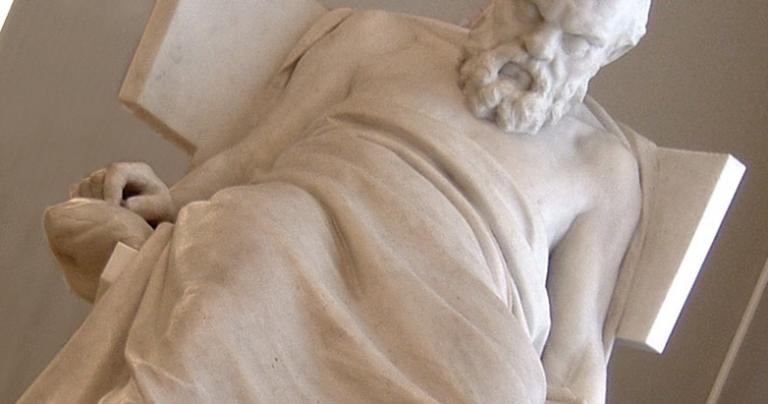 Socrates without the hope of orthodoxy leaves us at a loss. This is both frightening and challenging.
I love teaching Socratically. At a minimum this means starting each class open to anything. Thirty years of experience reading great texts tells me you cannot know a great book until you can know why great people have loved that book. I try (God helping me) to read every book as if it were true, good, and beautiful. Until I can get Nietzsche as someone who agrees with the atheist philosopher, then I will never understand him.
Socratic learning is dangerous the way life is dangerous: full of the possibilities of life and death. Yet if there was no Plato, we would not know Socrates who wrote nothing. Socrates is good, but not sufficient for the lover of wisdom. Plato loved his great teacher, immortalized him, but was not afraid to show his limits in the dialogs. Plato’s wisdom about his great teacher can help us as well.
In the Republic, a great many people have gathered at the house of Cephalus (the Big Head) to hear Socrates do his Socratic Show. There is, after all, edutainment to be had from a great thinker! Sadly, most of the people at the party are not students, just observers. Glaucon, the best of them, and his brother Adeimantus do most of the talking with Socrates, so it is significant when someone else speaks. One student, Cleitophon, speaks only briefly in Book I and is never heard from again, but his contribution is critical.
Cleitophon represents the first important critique of the Socratic method. At the start of Book II, Glaucon and Adeimantus will offer another. Both show that the Socratic method is necessary but not sufficient for a good education. Cleitophon was a student of Socrates, but has become a disciple of Thrasymachus. This is devastating news, because Thrasymachus is the educator of tyrants. This sophist reduces justice to the will of the ruler and the love of power will kill the love of wisdom.
You cannot end well if you follow Thrasymachus. Plato wrote a very brief dialogue named Cleitophon where the young man expresses what went wrong when he was a student of Socrates. Cleitophon tells Socrates a hard truth:
I came to the conclusion that while you’re better than anyone at turning a man towards the pursuit of virtue, one of two things must be the case: either this is all you can do, nothing more—as might happen with any other skill, for example, when someone who’s not a pilot rehearses a speech in praise of the pilot’s skill [c] as being something of great worth to men; the same could also be done for any other skill. And someone might accuse you of being in the same position with justice, that your ability to praise it so well does not make you any more knowledgeable about it. Now that’s not my own view, but there are only two possibilities: either you don’t know it, or you don’t wish to share it with me.
And this is why, I suppose, I go to Thrasymachus and to anyone else I can: I’m at a loss.
The teacher who will not try out answers, hold to a hypothesis, look for right opinions (orthodoxy), will never make progress. Cleitophon is right to want answers to try and Socrates is wrong not to help him by proposing tentative answers. Partly this is because it is attractive to hold no ideas passionately: it seems rational. Yet if the opinion is proposed in a manner too tentative, the idea, the orthodoxy, will not get a fair trial. It is easy to tear down an idea, especially one we wish not to be true, but hard for a Socratic man to defend an idea.
The Socratic man (rightly) fears clinging to false dogma, but may fail to ever find the truth by defending the truth against the critic.
Too many educators, God save me, want Socrates and are never willing to embrace and defend an orthodoxy. They will not look for right opinion, will not commit themselves, and so will never see. Yet a worse and more common religious or secular educator embraces an orthodoxy that he will never allow to be challenged.
We need hypothesis, fiercely held so the truth can be tested, but strongly, equally passionately, challenged so the truth can be made more firm and error, even beloved error, exposed and rejected.
Socrates needs orthodoxy and orthodoxy needs Socrates. We begin in wonder and end in truth.
———————————————-
*I begin an informal summer reading of Republic using Scott/Sterling (a new translation for me). Part 1. Part 2. Part 3. Part 4. Part 5. Part 6. Part 7. Part 8. Part 9. Part 10. Part 11. Part 12. Part 13. Part 14. Part 15. Part 16. Part 17. Part 18. Part 19. Part 20. Part 21. Part 22. Part 23. Part 24. Part 25. Part 26. Part 27. Part 28. Part 29. Part 30.
Previous Post

July 5, 2018
Just one hundred years ago: the death of the Romanov Family

Browse Our Archives
Select a Category Apologetics Art Culture Education On Books On Education Philosophy Politics Pop Culture Spiritual Reflections Uncategorized
Select a Month October 2026 September 2026 August 2026 July 2026 July 2025 June 2025 September 2024 July 2024 June 2024 December 2023 June 2023 September 2022 May 2022 April 2022 March 2022 February 2022 July 2021 June 2021 May 2021 April 2021 March 2021 February 2021 January 2021 December 2020 November 2020 October 2020 September 2020 August 2020 July 2020 June 2020 May 2020 April 2020 March 2020 February 2020 January 2020 December 2019 November 2019 October 2019 September 2019 August 2019 July 2019 June 2019 May 2019 April 2019 March 2019 February 2019 January 2019 December 2018 November 2018 October 2018 September 2018 August 2018 July 2018 June 2018 May 2018 April 2018 March 2018 February 2018 January 2018 December 2017 November 2017 October 2017 September 2017 August 2017 July 2017 June 2017 May 2017 April 2017 March 2017 February 2017 January 2017 December 2016 November 2016 October 2016 September 2016 August 2016 July 2016 June 2016 May 2016 April 2016 March 2016 February 2016 January 2016 December 2015 November 2015 October 2015 September 2015 August 2015 July 2015 June 2015 May 2015 April 2015 March 2015 February 2015 January 2015 November 2014 October 2014 September 2014 August 2014 July 2014 June 2014 May 2014 April 2014 March 2014 February 2014 January 2014 December 2013 November 2013 October 2013 September 2013 August 2013 July 2013 June 2013 May 2013 April 2013 March 2013 February 2013 January 2013 December 2012 November 2012 October 2012 September 2012 August 2012 July 2012 June 2012 May 2012
Follow Us!
TAKE THE
Religious Wisdom Quiz
How many musicians were used in Temple worship?
Select your answer to see how you score.
200 300 288 250
Books by This Author John Mark Reynolds
Related posts from Eidos

Why Classical Education Is a Conversation, Not a...

Does Classical Education Belong Only to the West?

Classical Education Must Teach Us to Make the...

Rooted: Why Classical Education Needs Community
TRENDING AT PATHEOS Evangelical

The REST of Your Life: A Creative Wrestles...
This week I had a conversation with a good friend from church....

How the author of the world's best hymn...
I've been working with John Newton for a while now. This makes...

Long before this Lectio Divina, Psalm 130 - the song - started...

What About the Trees? Another Living Parable
After I finished writing the last article about falling leaves as a...

Why Classical Education Is a Conversation, Not a...
Come and Read: Joy in Classical Education When I was a little...

Cornell University has received a great deal of negative publicity and intense...
view all Evangelical blogs
Ad-Free & Subscriber Log-In Subscription Support
- About Us
- 2026 Calendar
- Videos
- Podcasts
- Library of World Religions
- Faith In Media Tracker
- Advertise With Us
- Write for Us
- Privacy Policy
- Terms of Service
- Do Not Sell My Data
- Contact Us
- Radiant Digital
- Manage Newsletter Subscriptions
- Unsubscribe From Notifications
- Sitemap
Copyright 2008-2026, Patheos. All rights reserved.
Subscription Support Ad-Free & Subscriber Log-In
Follow Patheos