
BuddhistCatholicContemplativeEvangelicalGeneral ChristianHinduJewishLatter-day SaintMuslimNew VisionsProgressive Christian
Beliefs
- Buddhist
- Catholic
- Contemplative
- Evangelical
- General Christian
- Hindu
- Jewish
- Latter-day Saint
- More Voices
- Muslim
- New Visions
- Pagan
- Progressive Christian
Topics
- Religion News
- Food and Religion
- Sports and Religion
- Religious Art
- Religious Music and Entertainment
- Religious Events
- History and Religion
- Style and Religion
- Politics and Religion
- Women in Religion
- Recreation Outdoors and Religion
- Business Finance and Religion
- Careers Workplace and Religion
- Education and Religion
- Family Parenting and Religion
- Health Fitness and Religion
- Home and Religion
- Relationships and Religion
- Technology and Religion
- Travel and Religion
Columnists
- Buddhist Columnists
- Business Finance and Religion Columnists
- Careers Workplace and Religion Columnists
- Catholic Columnists
- Contemplative Columnists
- Education and Religion Columnists
- Evangelists Columnists
- Family Parenting and Religion Columnists
- General Christian Columnists
- Health Fitness and Religion Columnists
- Hindu Columnists
- History and Religion Columnists
- Home and Religion Columnists
- Jewish Columnists
- More Voices Columnists
- Latter Day Columnists
- Muslim Columnists
- New Visions Columnists
- Nonreligious Columnists
- Pagan Columnists
- Politics and Religion Columnists
- Progressive Columnists
- Recreation Outdoors and Religion Columnists
- Relationships and Religion Columnists
- Religion News Columnists
- Religious Art Columnists
- Religious Events Columnists
- Religious Music and Entertainment Columnists
- Sports and Religion Columnists
- Style and Religion Columnists
- Technology and Religion Columnists
- Travel and Religion Columnists
- Women in Religion Columnists
Resource Library
- 2026 Calendar
- Library of World Religions
- The 100 Most Holy Places on Earth
- Patheos Answers
- Podcasts
- Videos
- Faith Leaders Database
- Anglican Episcopalian
- Bahai
- Baptist
- Buddhism
- Christianity
- Confucianism
- Eastern Orthodoxy
- Hinduism
- Holiness and Pentecostal
- ISKCON
- Islam
- Judaism
- Lutheran
- Methodist
- The Church of Jesus Christ of Latter-day Saints
- New Age
- Paganism
- Presbytarian and Reformed
- Protestantism
- Religion Behind the Scenes
- Roman Catholic
- Scientology
- Shia Islam
- Sikhism
- Sufism
- Sunni Islam
- Taoism
- Zen
- See all religions
Research Tools
 Ad-Free & Subscriber Log-In Subscription Support
Ad-Free & Subscriber Log-In Subscription Support
Follow Patheos 

- Trending:
- Forgiveness
- |
- Marriage
- |
- Consciousness
- |
- Death Penalty
- |
- Election
- |
- Halloween

- Home
- Evangelical
- Our Rulers, Like Our Doctors, Never Make Mistakes (Summer in the Republic 31!)
Our Rulers, Like Our Doctors, Never Make Mistakes (Summer in the Republic 31!)
Last updated on: July 8, 2018 at 5:38 pm by John Mark N. Reynolds
Our Rulers, Like Our Doctors, Never Make Mistakes (Summer in the Republic 31!) 2018-07-08T17:38:18-04:00 John Mark N. Reynolds
Patheos Explore the world's faith through different perspectives on religion and spirituality! Patheos has the views of the prevalent religions and spiritualities of the world.
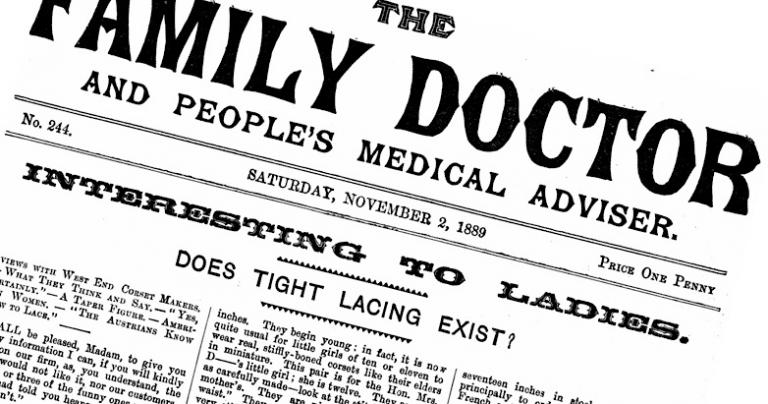 My dear mom liked to collect very old books that were splendidly, terribly bad. She has a wonderful reading voice with great books, but she came into glory when she read bad literature. Mom once read a Christian novel from the Edwardian era that had gangsters saying gangster-things like “Fork over your cabbage.” People had eyes that were “twin pools.” We laughed . . . Hard.
Perhaps the most endless entertainment came from books of “science” from by-gone days. Mothers were chastised from not using “certified milk” when they resorted to the crudity of breast feeding. The causes and (often) cures of most diseases could be found in the best of these guides. One of my favorites had instructions on how to keep bees, cure cancer, and practice practical dentistry.
All funny, but only because we knew the science was wrong and the advice lunatic. Yet the men (they were always men) had the proper impressive credentials. They could endlessly cite just why government approved milk was better than the mother’s and if they were wrong, they were at least confident. People bought the books and did what they said, often to real harm.
Mom made the point, every so often, that experts are valuable, but that they are not always right. When pastors she knew warned against smoking by blowing cigarette smoke through a hankie and showing young people what was left on the cloth, they were mocked by doctors. “Napkins are not like lungs! Smoking helps keep weight in check!”
Yet here is the problem. Rational people must give special weight to experts. Someone who has gained the best knowledge humankind has on a topic is not just guessing. He or she is giving the best information we have. Yet people err, even scientists! The scientists took money from Big Tobacco to find what Big Tobacco wanted them to find. Were they scientists when they scammed? Or just scam artists?
Not every error made by experts is caused by corruption. Sometimes experts have good intentions, do their best and are wildly wrong. What if a local general practitioner, the expert in his small town, read the “bought” studies on tobacco and passed on the best advice he had to his patients? “Smoke moderately to help control weight.” Wasn’t he still a doctor when he gave this wrong advice? What about someone who pulled one of the books off the shelf my mom liked to quote? Did the doctor stop being a doctor the moment he read from such a text?
This matters, because syncopatic people will tell a ruler (say Stalin) that he can do no wrong. This happens even in some Christian institutions where promotion is based on who can most effusively flatter the boss. The boss can never be wrong, so even when he is, blame is shifted or in extreme cases, the error is pushed off to the boss acting privately. The leader cannot be wrong as leader, because when he is wrong, then it is just a personal fault.
In Republic this argument is advanced by the educator of tyrants, Thrasymachus:
Would you call a man a doctor at the very moment he errs in diagnosing his patient? Does his error confirm his status as a doctor? Do we apply the same measure to mathematicians or grammarians, calling them by these names even when they make mistakes? True, it is customary to say that the doctor or mathematician or grammarian makes a mistake. But this is a loose way of speaking. I contend that none of these ever makes a mistake so long as his conduct accords with professional standards. When he does err, his skill has deserted him, and his professional status is in default. To be precise, then-and and I know you are a great lover of precision-any craftsman ceases to be a craftsman when he makes mistakes. Just so with rulers. The moment the ruler makes a mistake, he nullifies his status as a ruler. But so long as he is a proper ruler he never makes mistakes and always decrees what is in his own interest, and his subjects are always required to obey. Thus we return to what I said at the outset: justice is the interest of the stronger.
Thrasymachus wants the tyrant to be obeyed always and so postulates “professional standards” that make him above reproach. But who sets the professional standards of the ruler if not rulers? A ruler cannot develop a Human Resource Manuel for himself and so justify himself by following his own rules. The tyrant in any sphere of human activity will always justify his tyranny by following policies and procedures. He will complain mightily when the rules he has made are broken while ethics are made relative.
In the hand of a tyrant, the procedures manual makes him infallible.
Against this was the old Christian view of the leader: the King had two bodies. The monarch was the nation (say England) and would only die if the nation died. There was, of course, a man, but only the man who held the job. He acted as the incarnation of the nation as head of state, even in lands where local lords had great power in governance.
This Christian notion was the reverse of Thrasymachus, because the Christian King was subject to external standards he did not control. God Almighty has no Human Resources manual, only justice with mercy. The Christian King must be Christian in his behavior to be King. When the man who was King failed the Kingship, then he fell from office. He could be judged (as Saul, David, Hezekiah and other Biblical monarchs), but the High King of Heaven and the eternal, unchanging ethics of that King. When the temporal ruler failed as temporal ruler, he was unfit for office and could be disobeyed. The office was not stained, he was.
The truth contains no errors, but no body of human knowledge is without error even in professional standards. The doctor will make mistakes as a doctor even if he follows all professional guidelines. She will err, as doctors do, but a merciful society will be gracious. Knowing this, no expert can ever demand absolute respect or obedience.
Children think that adults are expert, adults learn that experts are flawed. We put our faith in them, but never a blind faith. We look in hope and if their aid is substantial, then our hope becomes faith. Faith can be lost if the expert turns out to be a poseur, grifter, or simply wrong.
Through it all we should realize that (almost surely) much of what our experts say today will be humorous to some future mother reading our expert absurdities one hundred years from now.
———————————————-
*I begin an informal summer reading of Republic using Scott/Sterling (a new translation for me). Part 1. Part 2. Part 3. Part 4. Part 5. Part 6. Part 7. Part 8. Part 9. Part 10. Part 11. Part 12. Part 13. Part 14. Part 15. Part 16. Part 17. Part 18. Part 19. Part 20. Part 21. Part 22. Part 23. Part 24. Part 25. Part 26. Part 27. Part 28. Part 29. Part 30. Part 31.
Browse Our Archives
Select a Category Apologetics Art Culture Education On Books On Education Philosophy Politics Pop Culture Spiritual Reflections Uncategorized
Select a Month October 2026 September 2026 August 2026 July 2026 July 2025 June 2025 September 2024 July 2024 June 2024 December 2023 June 2023 September 2022 May 2022 April 2022 March 2022 February 2022 July 2021 June 2021 May 2021 April 2021 March 2021 February 2021 January 2021 December 2020 November 2020 October 2020 September 2020 August 2020 July 2020 June 2020 May 2020 April 2020 March 2020 February 2020 January 2020 December 2019 November 2019 October 2019 September 2019 August 2019 July 2019 June 2019 May 2019 April 2019 March 2019 February 2019 January 2019 December 2018 November 2018 October 2018 September 2018 August 2018 July 2018 June 2018 May 2018 April 2018 March 2018 February 2018 January 2018 December 2017 November 2017 October 2017 September 2017 August 2017 July 2017 June 2017 May 2017 April 2017 March 2017 February 2017 January 2017 December 2016 November 2016 October 2016 September 2016 August 2016 July 2016 June 2016 May 2016 April 2016 March 2016 February 2016 January 2016 December 2015 November 2015 October 2015 September 2015 August 2015 July 2015 June 2015 May 2015 April 2015 March 2015 February 2015 January 2015 November 2014 October 2014 September 2014 August 2014 July 2014 June 2014 May 2014 April 2014 March 2014 February 2014 January 2014 December 2013 November 2013 October 2013 September 2013 August 2013 July 2013 June 2013 May 2013 April 2013 March 2013 February 2013 January 2013 December 2012 November 2012 October 2012 September 2012 August 2012 July 2012 June 2012 May 2012
Follow Us!
TAKE THE
Religious Wisdom Quiz
What Christian tradition has a worldwide leader known as the Ecumenical Patriarch?
Select your answer to see how you score.
Eastern Orthodox Anglican Lutheran Catholic
Books by This Author John Mark Reynolds
Related posts from Eidos

Why Classical Education Is a Conversation, Not a...

Classical Education Must Teach Us to Make the...

Rooted: Why Classical Education Needs Community

Classical Education: Discussion for Everyone
TRENDING AT PATHEOS Evangelical

The REST of Your Life: A Creative Wrestles...
This week I had a conversation with a good friend from church....

How the author of the world's best hymn...
I've been working with John Newton for a while now. This makes...

Long before this Lectio Divina, Psalm 130 - the song - started...

What About the Trees? Another Living Parable
After I finished writing the last article about falling leaves as a...

Why Classical Education Is a Conversation, Not a...
Come and Read: Joy in Classical Education When I was a little...

Cornell University has received a great deal of negative publicity and intense...
view all Evangelical blogs
Ad-Free & Subscriber Log-In Subscription Support
- About Us
- 2026 Calendar
- Videos
- Podcasts
- Library of World Religions
- Faith In Media Tracker
- Advertise With Us
- Write for Us
- Privacy Policy
- Terms of Service
- Do Not Sell My Data
- Contact Us
- Radiant Digital
- Manage Newsletter Subscriptions
- Unsubscribe From Notifications
- Sitemap
Copyright 2008-2026, Patheos. All rights reserved.
Subscription Support Ad-Free & Subscriber Log-In
Follow Patheos