
BuddhistCatholicContemplativeEvangelicalGeneral ChristianHinduJewishLatter-day SaintMuslimNew VisionsProgressive Christian
Beliefs
- Buddhist
- Catholic
- Contemplative
- Evangelical
- General Christian
- Hindu
- Jewish
- Latter-day Saint
- More Voices
- Muslim
- New Visions
- Pagan
- Progressive Christian
Topics
- Religion News
- Food and Religion
- Sports and Religion
- Religious Art
- Religious Music and Entertainment
- Religious Events
- History and Religion
- Style and Religion
- Politics and Religion
- Women in Religion
- Recreation Outdoors and Religion
- Business Finance and Religion
- Careers Workplace and Religion
- Education and Religion
- Family Parenting and Religion
- Health Fitness and Religion
- Home and Religion
- Relationships and Religion
- Technology and Religion
- Travel and Religion
Columnists
- Buddhist Columnists
- Business Finance and Religion Columnists
- Careers Workplace and Religion Columnists
- Catholic Columnists
- Contemplative Columnists
- Education and Religion Columnists
- Evangelists Columnists
- Family Parenting and Religion Columnists
- General Christian Columnists
- Health Fitness and Religion Columnists
- Hindu Columnists
- History and Religion Columnists
- Home and Religion Columnists
- Jewish Columnists
- More Voices Columnists
- Latter Day Columnists
- Muslim Columnists
- New Visions Columnists
- Nonreligious Columnists
- Pagan Columnists
- Politics and Religion Columnists
- Progressive Columnists
- Recreation Outdoors and Religion Columnists
- Relationships and Religion Columnists
- Religion News Columnists
- Religious Art Columnists
- Religious Events Columnists
- Religious Music and Entertainment Columnists
- Sports and Religion Columnists
- Style and Religion Columnists
- Technology and Religion Columnists
- Travel and Religion Columnists
- Women in Religion Columnists
Resource Library
- 2026 Calendar
- Library of World Religions
- The 100 Most Holy Places on Earth
- Patheos Answers
- Podcasts
- Videos
- Faith Leaders Database
- Anglican Episcopalian
- Bahai
- Baptist
- Buddhism
- Christianity
- Confucianism
- Eastern Orthodoxy
- Hinduism
- Holiness and Pentecostal
- ISKCON
- Islam
- Judaism
- Lutheran
- Methodist
- The Church of Jesus Christ of Latter-day Saints
- New Age
- Paganism
- Presbytarian and Reformed
- Protestantism
- Religion Behind the Scenes
- Roman Catholic
- Scientology
- Shia Islam
- Sikhism
- Sufism
- Sunni Islam
- Taoism
- Zen
- See all religions
Research Tools
 Ad-Free & Subscriber Log-In Subscription Support
Ad-Free & Subscriber Log-In Subscription Support
Follow Patheos 

- Trending:
- Forgiveness
- |
- Marriage
- |
- Consciousness
- |
- Death Penalty
- |
- Election
- |
- Halloween

- Home
- Evangelical
- Bellowing is not Good (Summer in the Republic 21)
Bellowing is not Good (Summer in the Republic 21)
Last updated on: June 25, 2018 at 10:14 am by John Mark N. Reynolds
Bellowing is not Good (Summer in the Republic 21) 2018-06-25T10:14:29-04:00 John Mark N. Reynolds
Patheos Explore the world's faith through different perspectives on religion and spirituality! Patheos has the views of the prevalent religions and spiritualities of the world.
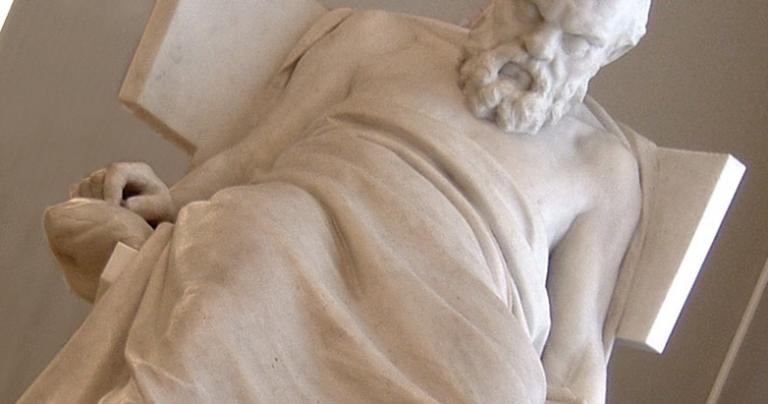 Don’t bellow. Do discuss, argue, be passionate. Unleash bellowing and you have let slip the dogs of war. If that happens, and it often does, then discussion ends, wisdom is lost, and only the strong will win.
Yet the strong without the rest of us are lost. . . Ending up alone, rambling about in decaying palaces, a civilization that is an incarnation of Miss Havisham’s cake.
I worked with a person who would get power by suddenly seeming to snap, bellowing to bully the group into compliance. This worked because decent people are shocked and by the time they recover, the bully has gained his point. He would laugh about it later, he had ‘won’.
If you love wisdom, you cannot deploy this strategy. Wisdom wants everyone in the discussion. Folly wishes to win by cutting people with good ideas out of the discussion.
I, of all men, need to hear this truth. I am so loud by nature that my mom could stand outside my college cafeteria and tell if I was in the room by listening. Teachers in grammar school could hear my very whisper. I bellow when I mean to be still. Quiet is better than bellowing unless one is loading lifeboats on Titanic. So far the truth is obvious (if hard to do): listen, do not use volume to muscle someone else. Yet a great thinker, try Plato, knew that even this loud, bullying man had something to say.
The lesson that we should not bully is important, but obvious. The truth that even a very bad man may have seen an error in our culture (and gone down a bad road nonetheless) is divine. Plato pictures Socrates (his master) as talking to bright young men when a very bad teacher, a tyrant interrupts:
Then he bellowed at us and the whole company.
What idiocy is this, Socrates? Why do the two of you behave like dolts, solemnly deferring to each other’s vacuous notions? If you really want to know what justice is, you should be able not only to ask the question but also to answer it. You should not try to score points simply by refuting your opponent’s efforts; you ought to provide your own definition. After all, there are many who ask but cannot answer. So now say what you think justice is. Say it at last with clarity and precision, and spare us your ponderous analogies with duty or interest or profit or advantage. They produce only nonsense, and I don’t put up with nonsense.
Thrasymachus is wrong to bellow, but Socrates should listen to what he says. That is very hard. Thrasymachus is wrong, obviously wrong, but now he will say the truth.
Socrates is a better man, but has fallen into bad habits. If you work in tyranny, you can forget faults other than those of the tyrant.
Thrasymachus sees genuine problems in education.
“Smart folk” defer too easily.
Thrasymachus bellows, so academics hide behind a passive aggressive attitude. They bellow in the footnotes. The intellectual “elite’” can end up being tyrants by being oppressive without being loud, bullying quietly.
“Smart folk” hide ignorance behind “Socratic” methods.
If you want to bluff, then “asking questions” is a great way to hide ignorance. You may not understand much, but you can question what you have not understood.
“Smart folk” can be ‘talkie-men’ who say a great many words, but express little.
Here is a shocking fact: Thrasymachus is correct. Socrates has fallen into some bad habits. We must oppose the bully as a bully, but then stop, think about what he is saying, and learn the truth he is expressing.
Perhaps the hardest truth of just now is this: the ass is bad, but the ass may bray some truth we need to hear.
Lord Jesus Christ, son of God, have mercy on me a sinner
———————————————-
*I begin an informal summer reading of Republic using Scott/Sterling (a new translation for me). Part 1. Part 2. Part 3. Part 4. Part 5. Part 6. Part 7. Part 8. Part 9. Part 10. Part 11. Part 12. Part 13. Part 14. Part 15. Part 16. Part 17. Part 18. Part 19. Part 20. Part 21.
Previous Post

June 24, 2018
How to Deal with the Tyrannical Teacher (Summer in the Republic 20)
Next Post

June 26, 2018 Searching without Knowing (Summer in the Republic 22)
Browse Our Archives
Select a Category Apologetics Art Culture Education On Books On Education Philosophy Politics Pop Culture Spiritual Reflections Uncategorized
Select a Month October 2026 September 2026 August 2026 July 2026 July 2025 June 2025 September 2024 July 2024 June 2024 December 2023 June 2023 September 2022 May 2022 April 2022 March 2022 February 2022 July 2021 June 2021 May 2021 April 2021 March 2021 February 2021 January 2021 December 2020 November 2020 October 2020 September 2020 August 2020 July 2020 June 2020 May 2020 April 2020 March 2020 February 2020 January 2020 December 2019 November 2019 October 2019 September 2019 August 2019 July 2019 June 2019 May 2019 April 2019 March 2019 February 2019 January 2019 December 2018 November 2018 October 2018 September 2018 August 2018 July 2018 June 2018 May 2018 April 2018 March 2018 February 2018 January 2018 December 2017 November 2017 October 2017 September 2017 August 2017 July 2017 June 2017 May 2017 April 2017 March 2017 February 2017 January 2017 December 2016 November 2016 October 2016 September 2016 August 2016 July 2016 June 2016 May 2016 April 2016 March 2016 February 2016 January 2016 December 2015 November 2015 October 2015 September 2015 August 2015 July 2015 June 2015 May 2015 April 2015 March 2015 February 2015 January 2015 November 2014 October 2014 September 2014 August 2014 July 2014 June 2014 May 2014 April 2014 March 2014 February 2014 January 2014 December 2013 November 2013 October 2013 September 2013 August 2013 July 2013 June 2013 May 2013 April 2013 March 2013 February 2013 January 2013 December 2012 November 2012 October 2012 September 2012 August 2012 July 2012 June 2012 May 2012
Follow Us!
TAKE THE
Religious Wisdom Quiz
Which book of the Bible is known as the 'Book of Wisdom'?
Select your answer to see how you score.
Ecclesiastes Proverbs Psalms Job
Books by This Author John Mark Reynolds
Related posts from Eidos

Classical Education Must Teach Us to Make the...

The Iceberg is There: Verbosity Cannot Defeat Reality

One Weeping Icon at Christmas is Enough

The Power of Dissenting Societies: A Thought
TRENDING AT PATHEOS Evangelical

The REST of Your Life: A Creative Wrestles...
This week I had a conversation with a good friend from church....

How the author of the world's best hymn...
I've been working with John Newton for a while now. This makes...

Long before this Lectio Divina, Psalm 130 - the song - started...

What About the Trees? Another Living Parable
After I finished writing the last article about falling leaves as a...

Why Classical Education Is a Conversation, Not a...
Come and Read: Joy in Classical Education When I was a little...

Cornell University has received a great deal of negative publicity and intense...
view all Evangelical blogs
Ad-Free & Subscriber Log-In Subscription Support
- About Us
- 2026 Calendar
- Videos
- Podcasts
- Library of World Religions
- Faith In Media Tracker
- Advertise With Us
- Write for Us
- Privacy Policy
- Terms of Service
- Do Not Sell My Data
- Contact Us
- Radiant Digital
- Manage Newsletter Subscriptions
- Unsubscribe From Notifications
- Sitemap
Copyright 2008-2026, Patheos. All rights reserved.
Subscription Support Ad-Free & Subscriber Log-In
Follow Patheos