
BuddhistCatholicContemplativeEvangelicalGeneral ChristianHinduJewishLatter-day SaintMuslimNew VisionsProgressive Christian
Beliefs
- Buddhist
- Catholic
- Contemplative
- Evangelical
- General Christian
- Hindu
- Jewish
- Latter-day Saint
- More Voices
- Muslim
- New Visions
- Pagan
- Progressive Christian
Topics
- Religion News
- Food and Religion
- Sports and Religion
- Religious Art
- Religious Music and Entertainment
- Religious Events
- History and Religion
- Style and Religion
- Politics and Religion
- Women in Religion
- Recreation Outdoors and Religion
- Business Finance and Religion
- Careers Workplace and Religion
- Education and Religion
- Family Parenting and Religion
- Health Fitness and Religion
- Home and Religion
- Relationships and Religion
- Technology and Religion
- Travel and Religion
Columnists
- Buddhist Columnists
- Business Finance and Religion Columnists
- Careers Workplace and Religion Columnists
- Catholic Columnists
- Contemplative Columnists
- Education and Religion Columnists
- Evangelists Columnists
- Family Parenting and Religion Columnists
- General Christian Columnists
- Health Fitness and Religion Columnists
- Hindu Columnists
- History and Religion Columnists
- Home and Religion Columnists
- Jewish Columnists
- More Voices Columnists
- Latter Day Columnists
- Muslim Columnists
- New Visions Columnists
- Nonreligious Columnists
- Pagan Columnists
- Politics and Religion Columnists
- Progressive Columnists
- Recreation Outdoors and Religion Columnists
- Relationships and Religion Columnists
- Religion News Columnists
- Religious Art Columnists
- Religious Events Columnists
- Religious Music and Entertainment Columnists
- Sports and Religion Columnists
- Style and Religion Columnists
- Technology and Religion Columnists
- Travel and Religion Columnists
- Women in Religion Columnists
Resource Library
- 2026 Calendar
- Library of World Religions
- The 100 Most Holy Places on Earth
- Patheos Answers
- Podcasts
- Videos
- Faith Leaders Database
- Anglican Episcopalian
- Bahai
- Baptist
- Buddhism
- Christianity
- Confucianism
- Eastern Orthodoxy
- Hinduism
- Holiness and Pentecostal
- ISKCON
- Islam
- Judaism
- Lutheran
- Methodist
- The Church of Jesus Christ of Latter-day Saints
- New Age
- Paganism
- Presbytarian and Reformed
- Protestantism
- Religion Behind the Scenes
- Roman Catholic
- Scientology
- Shia Islam
- Sikhism
- Sufism
- Sunni Islam
- Taoism
- Zen
- See all religions
Research Tools
 Ad-Free & Subscriber Log-In Subscription Support
Ad-Free & Subscriber Log-In Subscription Support
Follow Patheos 

- Trending:
- Forgiveness
- |
- Marriage
- |
- Consciousness
- |
- Death Penalty
- |
- Election
- |
- Halloween

- Home
- Evangelical
- Pachinko: Min Jin Lee’s Sprawling, Brilliant Novel
Pachinko: Min Jin Lee’s Sprawling, Brilliant Novel
Last updated on: April 2, 2018 at 8:07 am by John Mark N. Reynolds
Pachinko: Min Jin Lee’s Sprawling, Brilliant Novel 2018-04-02T08:07:44-04:00 John Mark N. Reynolds
Patheos Explore the world's faith through different perspectives on religion and spirituality! Patheos has the views of the prevalent religions and spiritualities of the world.
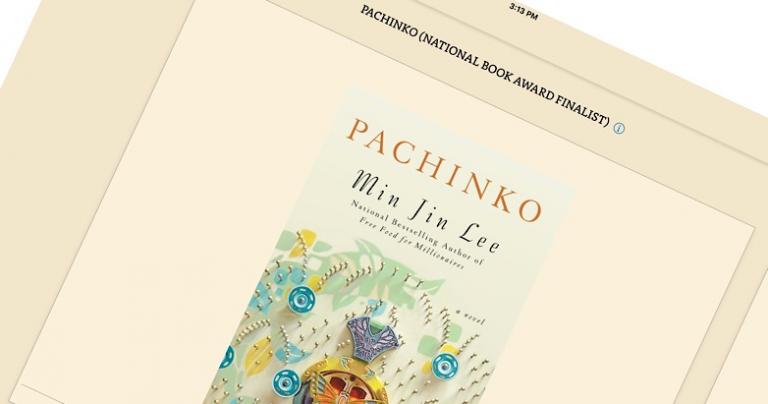 If you have a taste for Victorian novels, and you should, then Pachinko shows that the form is still alive. Forget curmudgeons: not only do “they” still write them like they used to do, but modern authors could teach some of the lesser Victorian lights a thing or two. If he could, even Dickens would learn something from Min Jin Lee’s multi-generational story of a family of Koreans and their complex twentieth century relationship with Japan. This is not Tolstoy, nobody is, but this book is a good bit more readable and easier to follow. Min Jin Lee can plot, create characters, and does dialog splendidly. This is a rare combination. Sometimes a book that covers decades can sprawl (think Michener) and gather strength from being big. Write enough words well about interesting times and the sheer size of the book will get you to the beach. Pachinko is better, because it is not long,
Pachinko follows family and friends of an uncommon common woman: Sunja. Anyone from the lower classes, as I am, should celebrate her story, because her importance, her story as a soul created in the image of God, is made obvious. Her values, including external stolidity and hard work, carry her far. She is described as plain looking, especially at the end of her life, but in a miracle in modern literature, she is allowed sensuality to the end of her life. Sunja has an inner life that most people ignore and that characters in the novel miss to their loss.
She suffers and her family suffers at the hands of the Japanese Empire. Korea is conquered and then Japan loses her war for empire. Japan suffers the only two atomic attacks in human history and occupation by the United States. Meanwhile, the Koreans trudge along trying to survive.
It is not easy.
Japan is not a nation of immigrants, but a nation that has immigrants. During the years of Empire, Japan received a substantial number of Korean immigrants and in the novel this includes much of Sunja’s family. Relationships between “guests” (the Koreans) who have lived in Japan for generations and the Japanese are complicated. Ethnocentrism keeps Koreans in their place and has delayed their becoming part of mainstream Japanese society into the twenty-first century. Pachinko shows that people deal with the society they have. Second class status did not keep some Koreans in Japan from getting rich and one means of doing so, the game pachinko, gives the book a title.
Because this is a book about Koreans, Christianity is present in all the religion’s complexities. Baek Isak, who marries Sunja, is portrayed as a real Christian: a genuine saint. The other Christian characters are just like people in any church: a blend of characteristics as they strive to follow the hard teachings of Jesus as Koreans. Nobody is simple and an irreligious character like Koh Hansu, Suja’s first love, is not just a cad, though he is a cad.
This is one of the best books of the year, but it just misses being a potential “great book.” That’s high praise, but the beautiful writing justifies the compliment. More controversial is why the book is not quite a canonical novel. One way to achieve such status (great text in a great text program) is to create a genre. This novel does not even try this feat. Instead, the book is a product of stupendous research that is the great weakness of the text. A great historical novel (Tolstoy’s War and Peace) is told by someone from outside the cultures described. She is eager to be respectful, good, but that allows too much moral ambiguity.
By the end of the book, you can see the author trying to be fair to Japan. This might be good in friendship and politics, but weakens the novel. The Japanese treat the Koreans horribly and the moral equivalency introduced toward the end rings false, as if the author wanted to honor her Japanese friends. That is laudable in a guest, but too complex for a book already short for the theme. The virtue of the book is that it covers much ground in little space (this is a quick read), but the vice is the “on the one hand” and “on the other hand” voice that intrudes towards the end.
This is a book so good that nobody will call it a Christian novel, a class of books that seems defined as: bad books written by Christians with Christian themes. By this definition, Pachinko is not a Christian novel and no author should wish to be. This is a very good book by a Presbyterian with Christians as characters. If that makes you want to read it, good. If it makes you wish not to read it, too bad, because this book is not propaganda at all. This is a work of almost art, near great.
The book has candid descriptions of horrible events. Be warned, but read this beautiful book if you can stomach a cheerful Calvinist portrayal of man’s depravity to mostly women.
Previous Post

April 1, 2018
Palm Sunday Donkey on Easter Day
Browse Our Archives
Select a Category Apologetics Art Culture Education On Books On Education Philosophy Politics Pop Culture Spiritual Reflections Uncategorized
Select a Month October 2026 September 2026 August 2026 July 2026 July 2025 June 2025 September 2024 July 2024 June 2024 December 2023 June 2023 September 2022 May 2022 April 2022 March 2022 February 2022 July 2021 June 2021 May 2021 April 2021 March 2021 February 2021 January 2021 December 2020 November 2020 October 2020 September 2020 August 2020 July 2020 June 2020 May 2020 April 2020 March 2020 February 2020 January 2020 December 2019 November 2019 October 2019 September 2019 August 2019 July 2019 June 2019 May 2019 April 2019 March 2019 February 2019 January 2019 December 2018 November 2018 October 2018 September 2018 August 2018 July 2018 June 2018 May 2018 April 2018 March 2018 February 2018 January 2018 December 2017 November 2017 October 2017 September 2017 August 2017 July 2017 June 2017 May 2017 April 2017 March 2017 February 2017 January 2017 December 2016 November 2016 October 2016 September 2016 August 2016 July 2016 June 2016 May 2016 April 2016 March 2016 February 2016 January 2016 December 2015 November 2015 October 2015 September 2015 August 2015 July 2015 June 2015 May 2015 April 2015 March 2015 February 2015 January 2015 November 2014 October 2014 September 2014 August 2014 July 2014 June 2014 May 2014 April 2014 March 2014 February 2014 January 2014 December 2013 November 2013 October 2013 September 2013 August 2013 July 2013 June 2013 May 2013 April 2013 March 2013 February 2013 January 2013 December 2012 November 2012 October 2012 September 2012 August 2012 July 2012 June 2012 May 2012
Follow Us!
TAKE THE
Religious Wisdom Quiz
What does 1 John say the world and its desires are doing?
Select your answer to see how you score.
Passing away Being judged Growing darker Coming to an end
Books by This Author John Mark Reynolds
Related posts from Eidos

Classical Education Must Teach Us to Make the...


The Man of All Talents: the Extraordinary Life...

TRENDING AT PATHEOS Evangelical

The REST of Your Life: A Creative Wrestles...
This week I had a conversation with a good friend from church....

How the author of the world's best hymn...
I've been working with John Newton for a while now. This makes...

Long before this Lectio Divina, Psalm 130 - the song - started...

What About the Trees? Another Living Parable
After I finished writing the last article about falling leaves as a...

Why Classical Education Is a Conversation, Not a...
Come and Read: Joy in Classical Education When I was a little...

Cornell University has received a great deal of negative publicity and intense...
view all Evangelical blogs
Ad-Free & Subscriber Log-In Subscription Support
- About Us
- 2026 Calendar
- Videos
- Podcasts
- Library of World Religions
- Faith In Media Tracker
- Advertise With Us
- Write for Us
- Privacy Policy
- Terms of Service
- Do Not Sell My Data
- Contact Us
- Radiant Digital
- Manage Newsletter Subscriptions
- Unsubscribe From Notifications
- Sitemap
Copyright 2008-2026, Patheos. All rights reserved.
Subscription Support Ad-Free & Subscriber Log-In
Follow Patheos