
BuddhistCatholicContemplativeEvangelicalGeneral ChristianHinduJewishLatter-day SaintMuslimNew VisionsProgressive Christian
Beliefs
- Buddhist
- Catholic
- Contemplative
- Evangelical
- General Christian
- Hindu
- Jewish
- Latter-day Saint
- More Voices
- Muslim
- New Visions
- Pagan
- Progressive Christian
Topics
- Religion News
- Food and Religion
- Sports and Religion
- Religious Art
- Religious Music and Entertainment
- Religious Events
- History and Religion
- Style and Religion
- Politics and Religion
- Women in Religion
- Recreation Outdoors and Religion
- Business Finance and Religion
- Careers Workplace and Religion
- Education and Religion
- Family Parenting and Religion
- Health Fitness and Religion
- Home and Religion
- Relationships and Religion
- Technology and Religion
- Travel and Religion
Columnists
- Buddhist Columnists
- Business Finance and Religion Columnists
- Careers Workplace and Religion Columnists
- Catholic Columnists
- Contemplative Columnists
- Education and Religion Columnists
- Evangelists Columnists
- Family Parenting and Religion Columnists
- General Christian Columnists
- Health Fitness and Religion Columnists
- Hindu Columnists
- History and Religion Columnists
- Home and Religion Columnists
- Jewish Columnists
- More Voices Columnists
- Latter Day Columnists
- Muslim Columnists
- New Visions Columnists
- Nonreligious Columnists
- Pagan Columnists
- Politics and Religion Columnists
- Progressive Columnists
- Recreation Outdoors and Religion Columnists
- Relationships and Religion Columnists
- Religion News Columnists
- Religious Art Columnists
- Religious Events Columnists
- Religious Music and Entertainment Columnists
- Sports and Religion Columnists
- Style and Religion Columnists
- Technology and Religion Columnists
- Travel and Religion Columnists
- Women in Religion Columnists
Resource Library
- 2026 Calendar
- Library of World Religions
- The 100 Most Holy Places on Earth
- Patheos Answers
- Podcasts
- Videos
- Faith Leaders Database
- Anglican Episcopalian
- Bahai
- Baptist
- Buddhism
- Christianity
- Confucianism
- Eastern Orthodoxy
- Hinduism
- Holiness and Pentecostal
- ISKCON
- Islam
- Judaism
- Lutheran
- Methodist
- The Church of Jesus Christ of Latter-day Saints
- New Age
- Paganism
- Presbytarian and Reformed
- Protestantism
- Religion Behind the Scenes
- Roman Catholic
- Scientology
- Shia Islam
- Sikhism
- Sufism
- Sunni Islam
- Taoism
- Zen
- See all religions
Research Tools
 Ad-Free & Subscriber Log-In Subscription Support
Ad-Free & Subscriber Log-In Subscription Support
Follow Patheos 

- Trending:
- Forgiveness
- |
- Marriage
- |
- Consciousness
- |
- Death Penalty
- |
- Election
- |
- Halloween

- Home
- Evangelical
- No, She chose beauty.
No, She chose beauty.
Last updated on: April 27, 2018 at 8:14 am by John Mark N. Reynolds
No, She chose beauty. 2018-04-27T08:14:21-04:00 John Mark N. Reynolds
Patheos Explore the world's faith through different perspectives on religion and spirituality! Patheos has the views of the prevalent religions and spiritualities of the world.
 “No.”
“No.”
This is a powerful statement, particularly when said to what everyone is doing or at least to most people who matter most. Marketing hates “no,” because “no” means no sale.
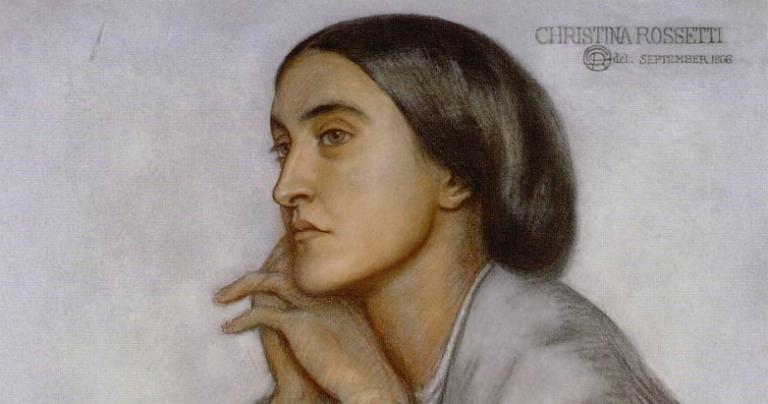
Christina Rossetti was born in an age where “no” was a necessity. Judas had always sold Jesus for cash, but now Judas was a corporation selling Jesus for big money. The devils and the devilish in us always peddle “cool” over beauty, because “cool” can get us to beclown ourselves and pay for the privilege.
Beauty does not change, so it is hard to resell or even sell at all. The Church keeps giving it away for free. We can go to the beautiful cathedral, listen to Handel, and gaze at the art of Dante Rossetti for free. Trendiness costs, big league. Against the love of money, marketed as a Protestant ethic, Rossetti said “no.”
That is hard enough, but she endured and created an alternative reality. Home-schooled, she knew that the home could be an alternative that was better, truer, and more beautiful than the “real” world outside. She was right. Her poetry has endured, she gave us In the Bleak Midwinter at Christmas and Goblin Market for All Hallows. She understood that a life dedicated to beauty was better than a life spent in skepticism.
Being skeptical?
That’s a good life skill. Skepticism? The non-religious of her time are like the non-religious now: sure they are just about to win, to usher in a great millennium, but with nothing to say but continuous, repetitive criticism of the Church. Atheism could not produce a culture in the Victorian era, only snark and Rossetti had no interest in criticism that only led to more criticism.
Instead, she wrote and lived beautifully and that has endured. How could she do this?
Rossetti understood that everything is good. She had no time for the puritanical anymore than skepticism: atheism is just Puritanism without God: censorious, crabbed, and full of anger. Puritanism is just atheism with the god of the atheists: angry, arbitrary, and abominable. Rossetti worshiped the God at war with injustice, but full of love for the weak. She was catholic, full of universality. There was nothing in the cosmos she had to reject fully, so she could say “no” those aspects of her society that were illusions, the false that was sure to fade away and fail over time. The illusionist could be saved and even good found in him for he was made in God’s image. The illusions had to be named illusions in the name of Truth!
Let her speak:
“Behold, it was very good.”
All things are fair, if we had eyes to see
How first God made them goodly everywhere:
And goodly still in Paradise they be,— All things are fair.
O Lord, the solemn heavens Thy praise declare;
The multi-fashioned saints bring praise to Thee,
As doves fly home and cast away their care.
As doves on divers branches of their tree,
Perched high or low, sit all contented there Not mourning any more; in each degree
All things are fair.
The mistake is to think that the shadow world, the changing, is the only reality when it is derivative: dependent on a deeper truth. There exists another world. This is the world where numbers, shapes, and ideas exist. This is the eternal that gives the temporal what reality it has. In reality, hard reality, as unshakeable as one and one is two, beauty endures. One woman in one room writing one poem is mighty, because it is real as beauty.
Christina Rossetti said, “Yes” to beauty and her world endures.
Previous Post

April 26, 2018
In which I hymn Athena
Next Post
April 28, 2018 Let’s Not Cry Havoc and Let’s Chain the Dogs of War
Browse Our Archives
Select a Category Apologetics Art Culture Education On Books On Education Philosophy Politics Pop Culture Spiritual Reflections Uncategorized
Select a Month October 2026 September 2026 August 2026 July 2026 July 2025 June 2025 September 2024 July 2024 June 2024 December 2023 June 2023 September 2022 May 2022 April 2022 March 2022 February 2022 July 2021 June 2021 May 2021 April 2021 March 2021 February 2021 January 2021 December 2020 November 2020 October 2020 September 2020 August 2020 July 2020 June 2020 May 2020 April 2020 March 2020 February 2020 January 2020 December 2019 November 2019 October 2019 September 2019 August 2019 July 2019 June 2019 May 2019 April 2019 March 2019 February 2019 January 2019 December 2018 November 2018 October 2018 September 2018 August 2018 July 2018 June 2018 May 2018 April 2018 March 2018 February 2018 January 2018 December 2017 November 2017 October 2017 September 2017 August 2017 July 2017 June 2017 May 2017 April 2017 March 2017 February 2017 January 2017 December 2016 November 2016 October 2016 September 2016 August 2016 July 2016 June 2016 May 2016 April 2016 March 2016 February 2016 January 2016 December 2015 November 2015 October 2015 September 2015 August 2015 July 2015 June 2015 May 2015 April 2015 March 2015 February 2015 January 2015 November 2014 October 2014 September 2014 August 2014 July 2014 June 2014 May 2014 April 2014 March 2014 February 2014 January 2014 December 2013 November 2013 October 2013 September 2013 August 2013 July 2013 June 2013 May 2013 April 2013 March 2013 February 2013 January 2013 December 2012 November 2012 October 2012 September 2012 August 2012 July 2012 June 2012 May 2012
Follow Us!
TAKE THE
Religious Wisdom Quiz
In 2 Timothy, what did Paul leave with Carpus at Troas?
Select your answer to see how you score.
His letters His money His cloak and scrolls His tent-making tools
Books by This Author John Mark Reynolds
Related posts from Eidos

Classical Education Must Teach Us to Make the...


The Man of All Talents: the Extraordinary Life...

TRENDING AT PATHEOS Evangelical

The REST of Your Life: A Creative Wrestles...
This week I had a conversation with a good friend from church....

How the author of the world's best hymn...
I've been working with John Newton for a while now. This makes...

Long before this Lectio Divina, Psalm 130 - the song - started...

What About the Trees? Another Living Parable
After I finished writing the last article about falling leaves as a...

Why Classical Education Is a Conversation, Not a...
Come and Read: Joy in Classical Education When I was a little...

Cornell University has received a great deal of negative publicity and intense...
view all Evangelical blogs
Ad-Free & Subscriber Log-In Subscription Support
- About Us
- 2026 Calendar
- Videos
- Podcasts
- Library of World Religions
- Faith In Media Tracker
- Advertise With Us
- Write for Us
- Privacy Policy
- Terms of Service
- Do Not Sell My Data
- Contact Us
- Radiant Digital
- Manage Newsletter Subscriptions
- Unsubscribe From Notifications
- Sitemap
Copyright 2008-2026, Patheos. All rights reserved.
Subscription Support Ad-Free & Subscriber Log-In
Follow Patheos