
BuddhistCatholicContemplativeEvangelicalGeneral ChristianHinduJewishLatter-day SaintMuslimNew VisionsProgressive Christian
Beliefs
- Buddhist
- Catholic
- Contemplative
- Evangelical
- General Christian
- Hindu
- Jewish
- Latter-day Saint
- More Voices
- Muslim
- New Visions
- Pagan
- Progressive Christian
Topics
- Religion News
- Food and Religion
- Sports and Religion
- Religious Art
- Religious Music and Entertainment
- Religious Events
- History and Religion
- Style and Religion
- Politics and Religion
- Women in Religion
- Recreation Outdoors and Religion
- Business Finance and Religion
- Careers Workplace and Religion
- Education and Religion
- Family Parenting and Religion
- Health Fitness and Religion
- Home and Religion
- Relationships and Religion
- Technology and Religion
- Travel and Religion
Columnists
- Buddhist Columnists
- Business Finance and Religion Columnists
- Careers Workplace and Religion Columnists
- Catholic Columnists
- Contemplative Columnists
- Education and Religion Columnists
- Evangelists Columnists
- Family Parenting and Religion Columnists
- General Christian Columnists
- Health Fitness and Religion Columnists
- Hindu Columnists
- History and Religion Columnists
- Home and Religion Columnists
- Jewish Columnists
- More Voices Columnists
- Latter Day Columnists
- Muslim Columnists
- New Visions Columnists
- Nonreligious Columnists
- Pagan Columnists
- Politics and Religion Columnists
- Progressive Columnists
- Recreation Outdoors and Religion Columnists
- Relationships and Religion Columnists
- Religion News Columnists
- Religious Art Columnists
- Religious Events Columnists
- Religious Music and Entertainment Columnists
- Sports and Religion Columnists
- Style and Religion Columnists
- Technology and Religion Columnists
- Travel and Religion Columnists
- Women in Religion Columnists
Resource Library
- 2026 Calendar
- Library of World Religions
- The 100 Most Holy Places on Earth
- Patheos Answers
- Podcasts
- Videos
- Faith Leaders Database
- Anglican Episcopalian
- Bahai
- Baptist
- Buddhism
- Christianity
- Confucianism
- Eastern Orthodoxy
- Hinduism
- Holiness and Pentecostal
- ISKCON
- Islam
- Judaism
- Lutheran
- Methodist
- The Church of Jesus Christ of Latter-day Saints
- New Age
- Paganism
- Presbytarian and Reformed
- Protestantism
- Religion Behind the Scenes
- Roman Catholic
- Scientology
- Shia Islam
- Sikhism
- Sufism
- Sunni Islam
- Taoism
- Zen
- See all religions
Research Tools
 Ad-Free & Subscriber Log-In Subscription Support
Ad-Free & Subscriber Log-In Subscription Support
Follow Patheos 

- Trending:
- Forgiveness
- |
- Marriage
- |
- Consciousness
- |
- Death Penalty
- |
- Election
- |
- Halloween

- Home
- Evangelical
- Bad Lincoln: the Deep Reach of White Supremacy
Bad Lincoln: the Deep Reach of White Supremacy
Last updated on: April 4, 2018 at 10:27 am by John Mark N. Reynolds
Bad Lincoln: the Deep Reach of White Supremacy 2018-04-04T10:27:11-04:00 John Mark N. Reynolds
Patheos Explore the world's faith through different perspectives on religion and spirituality! Patheos has the views of the prevalent religions and spiritualities of the world.
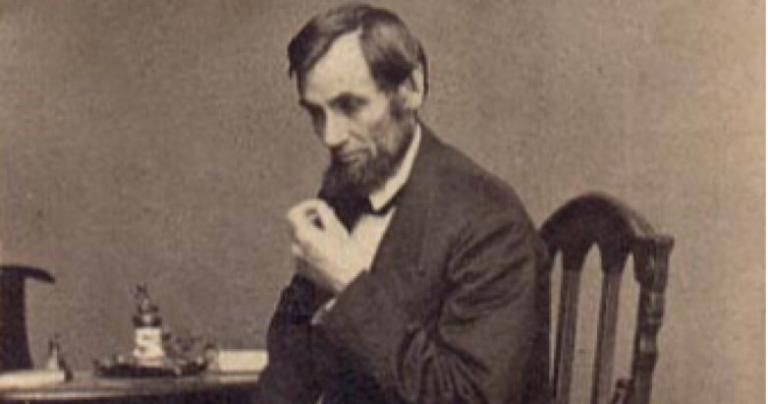 Children should be taught the virtues of good people and as they grow, learn that, like all of us, nobody this side of Jesus was perfect. Even great saints had foibles. We all pray for mercy. Yet some people get “the big thing right” in their time and so transcend their errors. They grow over the course of their life and become better than they were. Abraham Lincoln was such a man. He never became perfect and even as President he did bad things, as leaders in hard times do. His treatment of First Nations, his carelessness with civil rights, and his selection of Andrew Johnson as his running mate range from inexcusable to great errors. Yet if we judge as we wish to be judged, then Abraham Lincoln was a great man.
To understand how good Lincoln was relative to his time, go read his opponent in the Lincoln-Douglas debates. Recall that Douglas was, by his own times, viewed as a moderate on race. Stephen Douglas makes a central part of every debate his claim that Abraham Lincoln is a “Black Republican.” Douglas plays to racism and does not just assert segregation of the races, but white supremacy. He denies all human rights to persons of African-descent.
To his discredit, Lincoln goes along with much of Douglas’ vile spew, but his heart is not in it. Despite the risk in racist Illinois, he refuses to deny the common humanity of Europeans and Africans. This was brave, but then Lincoln falls short. White supremacy infected his heart too. He avows the humanity of the African-Americans while leaving open the door to white supremacy. He is sure that “they” are different in “color” and asserts that if there is a difference in aptitude or intelligence, then “they” need not be treated equally. He may have used the “n-word” in the Lincoln-Douglass debates, though scholars debate this. This is Lincoln the sinner.
Over the course of his life, Lincoln moves from overt white supremacy to less racist views, but sadly he never goes the entire way. He learns from men like Frederick Douglass, who were his moral superiors on this topic, but never enough. We do not know how his thinking would have evolved as he grew older, because white supremacists conspired to murder him. They knew the arc of his history and that he would never be a friend of groups like the Klan. In the end, Lincoln was “guilty” as Stephen Douglas charged: he was always a “Black Republican” in his heart. Thank God.
There are two reasons for this forward moral motion in Lincoln’s life. Abraham Lincoln was super-saturated in the Bible. Early in his life, he certainly was a skeptic, but the Bible had been one of the only books this first rate intellectual had been given. He read the Scriptures so deeply that one cannot make any sense of his speeches or debates without a working knowledge of the King James Bible. Slave owners knew that taken as a whole, the Bible was death to race based slavery. This is one reason they tried to keep slaves illiterate and published a Bible with all the good bits about liberty, equality, and freedom cut out. Lincoln read the whole Bible and whatever his personal beliefs (and he was at least a theist by the end of his life), he became filled with the charity of Scripture. He was a wartime President who grasped a central message of Scripture: no human “side” is fully righteous. Lincoln does not put God on the side of the North, but on the side of justice and the enslaved. One of his last speeches (Second Inaugural) is a profound work of Christian thought:
Each looked for an easier triumph, and a result less fundamental and astounding. Both read the same Bible and pray to the same God, and each invokes His aid against the other. It may seem strange that any men should dare to ask a just God’s assistance in wringing their bread from the sweat of other men’s faces, but let us judge not, that we be not judged. The prayers of both could not be answered. That of neither has been answered fully. The Almighty has His own purposes. “Woe unto the world because of offenses; for it must needs be that offenses come, but woe to that man by whom the offense cometh.” If we shall suppose that American slavery is one of those offenses which, in the providence of God, must needs come, but which, having continued through His appointed time, He now wills to remove, and that He gives to both North and South this terrible war as the woe due to those by whom the offense came, shall we discern therein any departure from those divine attributes which the believers in a living God always ascribe to Him?
This is a great aspiration and Lincoln did not live up to it, yet these words are graven in stone in his monument. They are the measure by which we can condemn where Lincoln, or any of his predecessors or successors fell short.
Lincoln was even more a man of the Declaration of Independence than the Bible. This document was his Holy Writ for his whole life. He viewed the Declaration as we now view his Second Inaugural: the aspirations of great men who could not do, did not do, all they should have done. Lincoln consistently argued that slavery was a compromise that was tolerable only because the Founders thought that slavery was dying out. They took (for good and evil) the best they could get to secure a Union where slavery would pass away. Economics and growing white supremacy had changed circumstances by Lincoln’s time. Men were now defending slavery, urging that the slave trade with Africa be restarted, and hoping to spread slavery.
Morally, movement was backwards from the best of the Founders as expressed in the key line (for Lincoln) of the Declaration: We hold these truths to be self-evident, that all men are created equal, that they are endowed by their Creator with certain unalienable Rights, that among these are Life, Liberty and the pursuit of Happiness. Lincoln consistently argued all people had basic human rights, because they were God given. He knew the Declaration was not “Constitutional,” but he thought it was a deeper charter for the nation. The self-evident truth that all men were created equal was our charter and our virtue.
He would not let Stephen Douglas take the nation backwards.
Human history can move backwards. The Grant administration, God bless it, tried for better views of First Nations and African-Americans. Racism took over both parties by 1876 fully and America lost much of the good that might have come from the horror of the Civil War. Woodrow Wilson had less progressive views and policies on race than US Grant!
Yet President Obama was right that God’s justice does not change, but endures. Racism is a great evil and nothing built on such a denial of God’s truth can long endure. The rot will show. No human party or ideology can ever express the truth perfectly: Lincoln was right. Things proclaimed scientific and done in the name of progress by Progressives such as eugenics unleash moral horror on the world. Meanwhile, many conservatives seek to retain what must die, clinging to old evils too long.
There is great good in being an American. As Lincoln pointed out, the creeds of the Declaration of Independence were open to every person, not just the original colonists or the Europeans. Stephen Douglas tried to limit human rights to whites. Lincoln saw that if you denied the right to life, liberty, and the pursuit of happiness to one class of people, then no person was safe. Douglas was worse, but Lincoln was not perfect.
There is a humbling lesson for all of us in every party, in every nation, in that truth.
May I hear God’s voice, embrace the deep truth of the Gospel, losing the blinders of time, place, and people, and so love God. May I live:
With malice toward none, with charity for all, with firmness in the right as God gives us to see the right, let us strive on to finish the work we are in, to bind up the nation’s wounds, to care for him who shall have borne the battle and for his widow and his orphan, to do all which may achieve and cherish a just and lasting peace among ourselves and with all nations.
Next Post

April 5, 2018 The Prophet Did Not Know
Browse Our Archives
Select a Category Apologetics Art Culture Education On Books On Education Philosophy Politics Pop Culture Spiritual Reflections Uncategorized
Select a Month October 2026 September 2026 August 2026 July 2026 July 2025 June 2025 September 2024 July 2024 June 2024 December 2023 June 2023 September 2022 May 2022 April 2022 March 2022 February 2022 July 2021 June 2021 May 2021 April 2021 March 2021 February 2021 January 2021 December 2020 November 2020 October 2020 September 2020 August 2020 July 2020 June 2020 May 2020 April 2020 March 2020 February 2020 January 2020 December 2019 November 2019 October 2019 September 2019 August 2019 July 2019 June 2019 May 2019 April 2019 March 2019 February 2019 January 2019 December 2018 November 2018 October 2018 September 2018 August 2018 July 2018 June 2018 May 2018 April 2018 March 2018 February 2018 January 2018 December 2017 November 2017 October 2017 September 2017 August 2017 July 2017 June 2017 May 2017 April 2017 March 2017 February 2017 January 2017 December 2016 November 2016 October 2016 September 2016 August 2016 July 2016 June 2016 May 2016 April 2016 March 2016 February 2016 January 2016 December 2015 November 2015 October 2015 September 2015 August 2015 July 2015 June 2015 May 2015 April 2015 March 2015 February 2015 January 2015 November 2014 October 2014 September 2014 August 2014 July 2014 June 2014 May 2014 April 2014 March 2014 February 2014 January 2014 December 2013 November 2013 October 2013 September 2013 August 2013 July 2013 June 2013 May 2013 April 2013 March 2013 February 2013 January 2013 December 2012 November 2012 October 2012 September 2012 August 2012 July 2012 June 2012 May 2012
Follow Us!
TAKE THE
Religious Wisdom Quiz
Who was the first Christian martyr?
Select your answer to see how you score.
Stephen James Paul Peter
Books by This Author John Mark Reynolds
Related posts from Eidos

Classical Education Must Teach Us to Make the...

Yet I Love Her: History and the Church
He Thought He was Right: Liberality Must Kiss...

TRENDING AT PATHEOS Evangelical

The REST of Your Life: A Creative Wrestles...
This week I had a conversation with a good friend from church....

How the author of the world's best hymn...
I've been working with John Newton for a while now. This makes...

Long before this Lectio Divina, Psalm 130 - the song - started...

What About the Trees? Another Living Parable
After I finished writing the last article about falling leaves as a...

Why Classical Education Is a Conversation, Not a...
Come and Read: Joy in Classical Education When I was a little...

Cornell University has received a great deal of negative publicity and intense...
view all Evangelical blogs
Ad-Free & Subscriber Log-In Subscription Support
- About Us
- 2026 Calendar
- Videos
- Podcasts
- Library of World Religions
- Faith In Media Tracker
- Advertise With Us
- Write for Us
- Privacy Policy
- Terms of Service
- Do Not Sell My Data
- Contact Us
- Radiant Digital
- Manage Newsletter Subscriptions
- Unsubscribe From Notifications
- Sitemap
Copyright 2008-2026, Patheos. All rights reserved.
Subscription Support Ad-Free & Subscriber Log-In
Follow Patheos