
BuddhistCatholicContemplativeEvangelicalGeneral ChristianHinduJewishLatter-day SaintMuslimNew VisionsProgressive Christian
Beliefs
- Buddhist
- Catholic
- Contemplative
- Evangelical
- General Christian
- Hindu
- Jewish
- Latter-day Saint
- More Voices
- Muslim
- New Visions
- Pagan
- Progressive Christian
Topics
- Religion News
- Food and Religion
- Sports and Religion
- Religious Art
- Religious Music and Entertainment
- Religious Events
- History and Religion
- Style and Religion
- Politics and Religion
- Women in Religion
- Recreation Outdoors and Religion
- Business Finance and Religion
- Careers Workplace and Religion
- Education and Religion
- Family Parenting and Religion
- Health Fitness and Religion
- Home and Religion
- Relationships and Religion
- Technology and Religion
- Travel and Religion
Columnists
- Buddhist Columnists
- Business Finance and Religion Columnists
- Careers Workplace and Religion Columnists
- Catholic Columnists
- Contemplative Columnists
- Education and Religion Columnists
- Evangelists Columnists
- Family Parenting and Religion Columnists
- General Christian Columnists
- Health Fitness and Religion Columnists
- Hindu Columnists
- History and Religion Columnists
- Home and Religion Columnists
- Jewish Columnists
- More Voices Columnists
- Latter Day Columnists
- Muslim Columnists
- New Visions Columnists
- Nonreligious Columnists
- Pagan Columnists
- Politics and Religion Columnists
- Progressive Columnists
- Recreation Outdoors and Religion Columnists
- Relationships and Religion Columnists
- Religion News Columnists
- Religious Art Columnists
- Religious Events Columnists
- Religious Music and Entertainment Columnists
- Sports and Religion Columnists
- Style and Religion Columnists
- Technology and Religion Columnists
- Travel and Religion Columnists
- Women in Religion Columnists
Resource Library
- 2026 Calendar
- Library of World Religions
- The 100 Most Holy Places on Earth
- Patheos Answers
- Podcasts
- Videos
- Faith Leaders Database
- Anglican Episcopalian
- Bahai
- Baptist
- Buddhism
- Christianity
- Confucianism
- Eastern Orthodoxy
- Hinduism
- Holiness and Pentecostal
- ISKCON
- Islam
- Judaism
- Lutheran
- Methodist
- The Church of Jesus Christ of Latter-day Saints
- New Age
- Paganism
- Presbytarian and Reformed
- Protestantism
- Religion Behind the Scenes
- Roman Catholic
- Scientology
- Shia Islam
- Sikhism
- Sufism
- Sunni Islam
- Taoism
- Zen
- See all religions
Research Tools
 Ad-Free & Subscriber Log-In Subscription Support
Ad-Free & Subscriber Log-In Subscription Support
Follow Patheos 

- Trending:
- Forgiveness
- |
- Marriage
- |
- Consciousness
- |
- Death Penalty
- |
- Election
- |
- Halloween

- Home
- Evangelical
- A Great Stream of Truth: Reading Great Texts
A Great Stream of Truth: Reading Great Texts
Last updated on: March 2, 2018 at 11:03 am by John Mark N. Reynolds
A Great Stream of Truth: Reading Great Texts 2018-03-02T11:03:37-04:00 John Mark N. Reynolds
Patheos Explore the world's faith through different perspectives on religion and spirituality! Patheos has the views of the prevalent religions and spiritualities of the world.
Great books, ones that have inspired all kinds of people over a long period of time, often give a reader a good bit on the first reading, but cannot be exhausted.
“Don’t tell me. I read the Bible all the way through and I get it.” The man slammed the door of my Dad’s office and stormed off. Safe to say, he did not get it. Since then that moment has stood as an intellectual warning: if a text has inspired first-rate intellects for centuries to reflect and write, do not think you “get it” on the first read.
That does not mean great books are merely intellectual puzzles where a person cannot get anything on the first read. Even as a kid I could get an essential message from a text like III John (God is love), but knew that any great book had depth or got something right I was missing.
You can read Tale of Two Cities for the story, but there is more to the book than the plot. If you know how it ends, you can still enjoy a very great novel. In fact, in a very great book like the books of the Bible, there cannot be any spoilers, because there is always more there. I experimented with the Book of Obadiah (my favorite candidate to not be a great book in the Bible) to see if this is true and there was a good bit of “there there.” In fact, I ended up shamed at my shallow understanding of this short text!
The older I have gotten and the more great books I have read (and taught) the less patience I have with people who opine that the “Greek of the Book of Romans is poor” or that “this is a letter, stop looking for grammatical depth or structure.” How do they know this? What does it mean? Is Shakespeare using poor English when he breaks the “rules” of English grammar or follows his own poetic muse? Who wrote the Greek grammar that Paul should be using and why should a first-rate thinker follow those rules?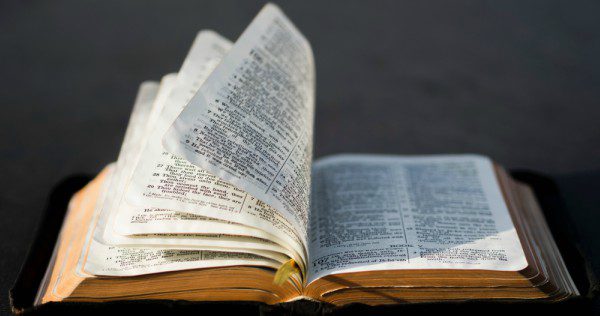
Plato is by any measure a first-rate Greek stylist and a very careful writer. The structure of his text is very complex and plausibly the first sentence of a masterwork such as Republic reflects on the themes of the entire book. This can be taken too far and one can see things that are not in the text. Yet perhaps this is an odd worry: a mark of a great text is that it is early enough in a train of thought that it includes a basic concept that lesser minds than those of the author can use to inspire many variations on the theme.
I always try to find out what Augustine, Plato, Paul, Austin, Douglass, or Lincoln meant at the time, though this is very hard to know. I am also interested in what good, true, and beautiful things undergird the immediate thought or can be inspired by the text.
The intellectually lazy, even those with credentials, grab their favorite view of the text and quit. “I know what it means.” Why not? A shallow text capable of only one meaning is the sort of book they write which is why their books will not inspire billions over centuries.
Instead, imagine expressing an idea for the first time in human history (the theory of Forms, a Christian view of salvation). A great writer creates a new vocabulary or uses old terms in new ways to express ideas using his training and background. If he is inspired, then like many artists, he might not even “know” all he means. Listen to a great filmmaker discuss his films! If he is divinely inspired, then he might be writing on two levels: one for the simple, pious person and the other for the spiritually mature.
You do not have to be Paul to write this way. I have written plays that intentionally work on three different levels and have entire lines where the very syllable count of a series of lines contains a joke. Why? I had to hear the text many times in rehearsal and enjoyed actors “getting it” over time. It kept the play fresh for all of us. In fact, all good teachers speak so both poor and advanced students can get something from the lecture, so we can assume that someone with Plato or Paul’s intellect is more than capable of doing so! Assume that if out of everything a person said, or out of all the people of the time who wrote, that this text and this writer was lovingly preserved and spawned centuries of comment that there is some “there there” that we might not get on a first read or even a lifetime of reading as less subtle minds.
From childhood my parents, then my teachers in later life, left me with three rules for reading great books. First, do not begin in a position of judgement over the text. Imagine the kid who gets nothing from Huck Finn, but worries about Twain’s language. Second, as my skills grow with the language or text do not assume the author has “made a mistake” that is so obvious I can see it. We should read a text charitably and great thinkers humbly. Third, always look for the author’s intent, but do not be afraid of being inspired by the text. Sometimes we get done with class on a book like Parmenides and we are not sure we “get” what Plato meant, but we have seen some good and true things.
Augustine is a good guide in Confessions when he discusses Genesis and different ways of reading the text*:*
So when one says, “Moses meant as I do”; and another, “Nay, but as I do,” I suppose that I speak more reverently, “Why not rather as both, if both be true?” And if there be a third, or a fourth, yea if any other seeth any other truth in those words, why may not he be believed to have seen all these, through whom the One God hath tempered the holy Scriptures to the senses of many, who should see therein things true but divers? For I certainly (and fearlessly I speak it from my heart), that were I to indite any thing to have supreme authority, I should prefer so to write, that whatever truth any could apprehend on those matters, might he conveyed in my words, rather than set down my own meaning so clearly as to exclude the rest, which not being false, could not offend me. I will not therefore, O my God, be so rash, as not to believe, that Thou vouchsafedst as much to that great man. He without doubt, when he wrote those words, perceived and thought on what truth soever we have been able to find, yea and whatsoever we have not been able, nor yet are, but which may be found in them.
Previous Post

February 28, 2018
The Need for “The Elders” (a poem by Mari Evans)
Next Post
March 2, 2018 Clarity Counts
Browse Our Archives
Select a Category Apologetics Art Culture Education On Books On Education Philosophy Politics Pop Culture Spiritual Reflections Uncategorized
Select a Month October 2026 September 2026 August 2026 July 2026 July 2025 June 2025 September 2024 July 2024 June 2024 December 2023 June 2023 September 2022 May 2022 April 2022 March 2022 February 2022 July 2021 June 2021 May 2021 April 2021 March 2021 February 2021 January 2021 December 2020 November 2020 October 2020 September 2020 August 2020 July 2020 June 2020 May 2020 April 2020 March 2020 February 2020 January 2020 December 2019 November 2019 October 2019 September 2019 August 2019 July 2019 June 2019 May 2019 April 2019 March 2019 February 2019 January 2019 December 2018 November 2018 October 2018 September 2018 August 2018 July 2018 June 2018 May 2018 April 2018 March 2018 February 2018 January 2018 December 2017 November 2017 October 2017 September 2017 August 2017 July 2017 June 2017 May 2017 April 2017 March 2017 February 2017 January 2017 December 2016 November 2016 October 2016 September 2016 August 2016 July 2016 June 2016 May 2016 April 2016 March 2016 February 2016 January 2016 December 2015 November 2015 October 2015 September 2015 August 2015 July 2015 June 2015 May 2015 April 2015 March 2015 February 2015 January 2015 November 2014 October 2014 September 2014 August 2014 July 2014 June 2014 May 2014 April 2014 March 2014 February 2014 January 2014 December 2013 November 2013 October 2013 September 2013 August 2013 July 2013 June 2013 May 2013 April 2013 March 2013 February 2013 January 2013 December 2012 November 2012 October 2012 September 2012 August 2012 July 2012 June 2012 May 2012
Follow Us!
TAKE THE
Religious Wisdom Quiz
What caused the sailors to throw Jonah overboard?
Select your answer to see how you score.
A prophecy A violent storm A mutiny A vision
Books by This Author John Mark Reynolds
Related posts from Eidos

Why Classical Education Is a Conversation, Not a...

Does Classical Education Belong Only to the West?

Classical Education Must Teach Us to Make the...

Rooted: Why Classical Education Needs Community
TRENDING AT PATHEOS Evangelical

The REST of Your Life: A Creative Wrestles...
This week I had a conversation with a good friend from church....

How the author of the world's best hymn...
I've been working with John Newton for a while now. This makes...

Long before this Lectio Divina, Psalm 130 - the song - started...

What About the Trees? Another Living Parable
After I finished writing the last article about falling leaves as a...

Why Classical Education Is a Conversation, Not a...
Come and Read: Joy in Classical Education When I was a little...

Cornell University has received a great deal of negative publicity and intense...
view all Evangelical blogs
Ad-Free & Subscriber Log-In Subscription Support
- About Us
- 2026 Calendar
- Videos
- Podcasts
- Library of World Religions
- Faith In Media Tracker
- Advertise With Us
- Write for Us
- Privacy Policy
- Terms of Service
- Do Not Sell My Data
- Contact Us
- Radiant Digital
- Manage Newsletter Subscriptions
- Unsubscribe From Notifications
- Sitemap
Copyright 2008-2026, Patheos. All rights reserved.
Subscription Support Ad-Free & Subscriber Log-In
Follow Patheos