
BuddhistCatholicContemplativeEvangelicalGeneral ChristianHinduJewishLatter-day SaintMuslimNew VisionsProgressive Christian
Beliefs
- Buddhist
- Catholic
- Contemplative
- Evangelical
- General Christian
- Hindu
- Jewish
- Latter-day Saint
- More Voices
- Muslim
- New Visions
- Pagan
- Progressive Christian
Topics
- Religion News
- Food and Religion
- Sports and Religion
- Religious Art
- Religious Music and Entertainment
- Religious Events
- History and Religion
- Style and Religion
- Politics and Religion
- Women in Religion
- Recreation Outdoors and Religion
- Business Finance and Religion
- Careers Workplace and Religion
- Education and Religion
- Family Parenting and Religion
- Health Fitness and Religion
- Home and Religion
- Relationships and Religion
- Technology and Religion
- Travel and Religion
Columnists
- Buddhist Columnists
- Business Finance and Religion Columnists
- Careers Workplace and Religion Columnists
- Catholic Columnists
- Contemplative Columnists
- Education and Religion Columnists
- Evangelists Columnists
- Family Parenting and Religion Columnists
- General Christian Columnists
- Health Fitness and Religion Columnists
- Hindu Columnists
- History and Religion Columnists
- Home and Religion Columnists
- Jewish Columnists
- More Voices Columnists
- Latter Day Columnists
- Muslim Columnists
- New Visions Columnists
- Nonreligious Columnists
- Pagan Columnists
- Politics and Religion Columnists
- Progressive Columnists
- Recreation Outdoors and Religion Columnists
- Relationships and Religion Columnists
- Religion News Columnists
- Religious Art Columnists
- Religious Events Columnists
- Religious Music and Entertainment Columnists
- Sports and Religion Columnists
- Style and Religion Columnists
- Technology and Religion Columnists
- Travel and Religion Columnists
- Women in Religion Columnists
Resource Library
- 2026 Calendar
- Library of World Religions
- The 100 Most Holy Places on Earth
- Patheos Answers
- Podcasts
- Videos
- Faith Leaders Database
- Anglican Episcopalian
- Bahai
- Baptist
- Buddhism
- Christianity
- Confucianism
- Eastern Orthodoxy
- Hinduism
- Holiness and Pentecostal
- ISKCON
- Islam
- Judaism
- Lutheran
- Methodist
- The Church of Jesus Christ of Latter-day Saints
- New Age
- Paganism
- Presbytarian and Reformed
- Protestantism
- Religion Behind the Scenes
- Roman Catholic
- Scientology
- Shia Islam
- Sikhism
- Sufism
- Sunni Islam
- Taoism
- Zen
- See all religions
Research Tools
 Ad-Free & Subscriber Log-In Subscription Support
Ad-Free & Subscriber Log-In Subscription Support
Follow Patheos 

- Trending:
- Forgiveness
- |
- Marriage
- |
- Consciousness
- |
- Death Penalty
- |
- Election
- |
- Halloween

- Home
- Evangelical
- Knowing without Fully Knowing
Knowing without Fully Knowing
Last updated on: February 16, 2018 at 9:04 pm by John Mark N. Reynolds
Knowing without Fully Knowing 2018-02-16T21:04:27-04:00 John Mark N. Reynolds
Patheos Explore the world's faith through different perspectives on religion and spirituality! Patheos has the views of the prevalent religions and spiritualities of the world.
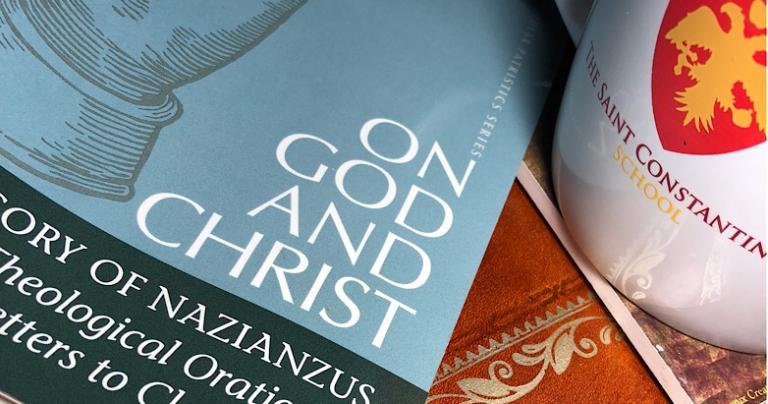 Gregory of Nazianzus wrote,
Conviction you see of a thing’s existence is quite different from knowledge of what it is.*
A child can ask for candy without understanding what candy is. She can even love candy, have a favorite candy, and still have only the subjective notion that “candy is the sweet food I like.” As she grows older, she will want to learn what candy is so she can predict what she might like in the store. A jar of honey is sweet, and she might even like a spoonful, but it is not candy.
Getting a good definition of candy can help but is not necessary for her to believe in the existence of candy. She knows that candy exists long before becoming a nutritional scientist!
It takes more than just a verbal definition to know what a thing is. For example, a full understanding of a thing might include knowing what makes it up. Mathematicians can use software to solve complex problems, knowing that those solutions are accurate even if they cannot check the work. They know that a thing may be proved without being able to do the proof. Evidence of existence for a proof need not include the proof itself!
So it is with God. Our experience of God and the arguments for His existence give us reason to know He exists, but that does not mean we have exhaustive knowledge of Him. These proofs do not even mean that such knowledge is possible. When we point to a “mystery” in theology, we do not mean something irrational, but something we do not understand—and may not even be able to understand. We use these truths, revealed to us by God, as axioms and see what happens.**
Word and Image, Reason and Revelation
We are limited by the words and images we have. When we say God is like something, this image may be accurate, but not complete. No being is able to capture the ground of being. Gregory warns that these images themselves can turn into substitutes for God: idols.
An idol is absurd because it is less than even the one worshiping the idol: a god made by something more godlike. The beauty of the creation and the cosmos, especially the beauty of humans, is a safer road to knowledge of God, so long as we recall that we are seeing shadows of His beauty.
He is, as Plato would say, known, but unknown. We know that God exists, we know some characteristics of His nature, and we know much of what God is not. We have nothing like exhaustive knowledge. Even the dialectic, properly used, can never give us such completion.
The subject is bigger than the one studying, the Word too difficult for our words to express, and the One impossible to fully see.
Christians honor those who saw and spoke with Jesus because He is God in human flesh. In His case words cooperated fully with the Word. His human nature expressed His divine nature to the very limits of Aramaic. His students, true disciples, received the Holy Spirit and described what they saw and heard as well as could be done within the limits of their language and understanding.
This revelation is enough to make us hungry for more experience. We ask God to send the Holy Spirit to come from the Father and show us the only begotten Son. We use the tools we have and find what we can, but humility must mark our intellectual journey. Christians have revelation, experience, the wisdom of the community over time, and our reason. We do the best we can!
Questions Upon Questions, Joys Upon Joys
The questions are endless as ancient writers like the author of Job and Gregory of Nazianzus liked to remind the reader. Today we can answer many of their questions about nature, but this does not end our study: we have simply gained more questions. Our understanding of reality is greater than theirs, but the questions never grow less.
This is fearsome to the guru or the one who confuses the life of faith with certainty, but it is joy-filled truth to the Christian.
The just live by faith and faith begins and ends in wonder. There are things we know, some right beliefs that are well tested and many right behaviors that have been confirmed over time, but even these must be applied. Even what God has surely revealed is not the end of our questioning, but a basis for new questions!
This is why many of us think it dull when some insist on returning to first things. They have a right to ask, again, if we have understood God correctly, but most of us have moved to more interesting questions. The new morality looks much like the old decadence and the new theology like yesterday’s heresy.
Instead, we wish to apply deep truths to new issues and create new possibilities. If we cannot do one thing, then we turn instead to look for something better.
“All truth, all philosophy, to be sure, is obscure, hard to trace out. It is like employing a small tool on big contractions, if we use wisdom in the hunt for knowledge of reality.”
———————-
*Gregory of Nazianzus Oration 28 translated by Lionel Wickham for Saint Vladimir’s Seminary Press.
**Of course, one can challenge those axioms or challenge the existence of God, but this is not a post dealing with those issues. Reasonable religious believers are happy to discuss both issues, but need not do so all the time!
Rachel Motte edited this essay and added the sub-headings.
Previous Post

February 15, 2018
Gregory of Nazianzus and the Serious Business of Education
Browse Our Archives
Select a Category Apologetics Art Culture Education On Books On Education Philosophy Politics Pop Culture Spiritual Reflections Uncategorized
Select a Month October 2026 September 2026 August 2026 July 2026 July 2025 June 2025 September 2024 July 2024 June 2024 December 2023 June 2023 September 2022 May 2022 April 2022 March 2022 February 2022 July 2021 June 2021 May 2021 April 2021 March 2021 February 2021 January 2021 December 2020 November 2020 October 2020 September 2020 August 2020 July 2020 June 2020 May 2020 April 2020 March 2020 February 2020 January 2020 December 2019 November 2019 October 2019 September 2019 August 2019 July 2019 June 2019 May 2019 April 2019 March 2019 February 2019 January 2019 December 2018 November 2018 October 2018 September 2018 August 2018 July 2018 June 2018 May 2018 April 2018 March 2018 February 2018 January 2018 December 2017 November 2017 October 2017 September 2017 August 2017 July 2017 June 2017 May 2017 April 2017 March 2017 February 2017 January 2017 December 2016 November 2016 October 2016 September 2016 August 2016 July 2016 June 2016 May 2016 April 2016 March 2016 February 2016 January 2016 December 2015 November 2015 October 2015 September 2015 August 2015 July 2015 June 2015 May 2015 April 2015 March 2015 February 2015 January 2015 November 2014 October 2014 September 2014 August 2014 July 2014 June 2014 May 2014 April 2014 March 2014 February 2014 January 2014 December 2013 November 2013 October 2013 September 2013 August 2013 July 2013 June 2013 May 2013 April 2013 March 2013 February 2013 January 2013 December 2012 November 2012 October 2012 September 2012 August 2012 July 2012 June 2012 May 2012
Follow Us!
TAKE THE
Religious Wisdom Quiz
What is the name for Christian monastic orders that focus on community life and prayer?
Select your answer to see how you score.
Waldensians Pentecostals Benedictines Franciscans
Books by This Author John Mark Reynolds
Related posts from Eidos

Why Classical Education Is a Conversation, Not a...

Classical Education Must Teach Us to Make the...

Rooted: Why Classical Education Needs Community

Classical Education: Discussion for Everyone
TRENDING AT PATHEOS Evangelical

The REST of Your Life: A Creative Wrestles...
This week I had a conversation with a good friend from church....

How the author of the world's best hymn...
I've been working with John Newton for a while now. This makes...

Long before this Lectio Divina, Psalm 130 - the song - started...

What About the Trees? Another Living Parable
After I finished writing the last article about falling leaves as a...

Why Classical Education Is a Conversation, Not a...
Come and Read: Joy in Classical Education When I was a little...

Cornell University has received a great deal of negative publicity and intense...
view all Evangelical blogs
Ad-Free & Subscriber Log-In Subscription Support
- About Us
- 2026 Calendar
- Videos
- Podcasts
- Library of World Religions
- Faith In Media Tracker
- Advertise With Us
- Write for Us
- Privacy Policy
- Terms of Service
- Do Not Sell My Data
- Contact Us
- Radiant Digital
- Manage Newsletter Subscriptions
- Unsubscribe From Notifications
- Sitemap
Copyright 2008-2026, Patheos. All rights reserved.
Subscription Support Ad-Free & Subscriber Log-In
Follow Patheos