
BuddhistCatholicContemplativeEvangelicalGeneral ChristianHinduJewishLatter-day SaintMuslimNew VisionsProgressive Christian
Beliefs
- Buddhist
- Catholic
- Contemplative
- Evangelical
- General Christian
- Hindu
- Jewish
- Latter-day Saint
- More Voices
- Muslim
- New Visions
- Pagan
- Progressive Christian
Topics
- Religion News
- Food and Religion
- Sports and Religion
- Religious Art
- Religious Music and Entertainment
- Religious Events
- History and Religion
- Style and Religion
- Politics and Religion
- Women in Religion
- Recreation Outdoors and Religion
- Business Finance and Religion
- Careers Workplace and Religion
- Education and Religion
- Family Parenting and Religion
- Health Fitness and Religion
- Home and Religion
- Relationships and Religion
- Technology and Religion
- Travel and Religion
Columnists
- Buddhist Columnists
- Business Finance and Religion Columnists
- Careers Workplace and Religion Columnists
- Catholic Columnists
- Contemplative Columnists
- Education and Religion Columnists
- Evangelists Columnists
- Family Parenting and Religion Columnists
- General Christian Columnists
- Health Fitness and Religion Columnists
- Hindu Columnists
- History and Religion Columnists
- Home and Religion Columnists
- Jewish Columnists
- More Voices Columnists
- Latter Day Columnists
- Muslim Columnists
- New Visions Columnists
- Nonreligious Columnists
- Pagan Columnists
- Politics and Religion Columnists
- Progressive Columnists
- Recreation Outdoors and Religion Columnists
- Relationships and Religion Columnists
- Religion News Columnists
- Religious Art Columnists
- Religious Events Columnists
- Religious Music and Entertainment Columnists
- Sports and Religion Columnists
- Style and Religion Columnists
- Technology and Religion Columnists
- Travel and Religion Columnists
- Women in Religion Columnists
Resource Library
- 2026 Calendar
- Library of World Religions
- The 100 Most Holy Places on Earth
- Patheos Answers
- Podcasts
- Videos
- Faith Leaders Database
- Anglican Episcopalian
- Bahai
- Baptist
- Buddhism
- Christianity
- Confucianism
- Eastern Orthodoxy
- Hinduism
- Holiness and Pentecostal
- ISKCON
- Islam
- Judaism
- Lutheran
- Methodist
- The Church of Jesus Christ of Latter-day Saints
- New Age
- Paganism
- Presbytarian and Reformed
- Protestantism
- Religion Behind the Scenes
- Roman Catholic
- Scientology
- Shia Islam
- Sikhism
- Sufism
- Sunni Islam
- Taoism
- Zen
- See all religions
Research Tools
 Ad-Free & Subscriber Log-In Subscription Support
Ad-Free & Subscriber Log-In Subscription Support
Follow Patheos 

- Trending:
- Forgiveness
- |
- Marriage
- |
- Consciousness
- |
- Death Penalty
- |
- Election
- |
- Halloween

- Home
- Evangelical
- Eclipse: a Philosopher Annotates “Total Eclipse of the Heart” using Republic
Eclipse: a Philosopher Annotates “Total Eclipse of the Heart” using Republic
Last updated on: August 20, 2017 at 6:38 pm by John Mark N. Reynolds
Eclipse: a Philosopher Annotates “Total Eclipse of the Heart” using Republic 2017-08-20T18:38:32-04:00 John Mark N. Reynolds
Patheos Explore the world's faith through different perspectives on religion and spirituality! Patheos has the views of the prevalent religions and spiritualities of the world.
 Life passes and makes what once was good, a shame. My love, still difficult to overcome, for the song Total Eclipse of the Heart is one of those shames. Once it was acceptable to love this song, then it was a guilty pleasure, and now people just look at you with pity.
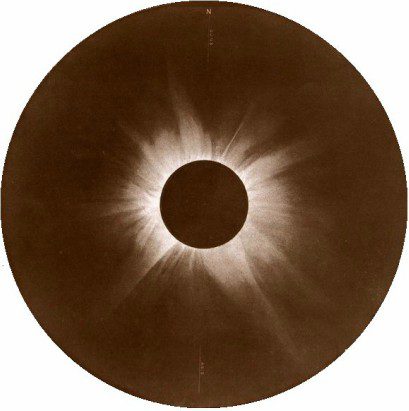
A song is in trouble when the parody is better than the music video. In honor of tomorrow’s eclipse, I have decided to face my fears and exegete the words of Total Eclipse of the Heart. In doing so, I discovered that the song is actually a commentary on Plato’s Republic.
You are welcome:
Turnaround, every now and then I get a little bit lonely
We are reminded of the moment in Republic Book I when Socrates turns around to see Polemarchus. He has come down to Piraeus with Glaucon, but Socrates is actually alone in his love of philosophy. Glaucon will side with Polemarchus and force Socrates back down to the port.
And you’re never coming round
This is the complaint that the older man Cephalus makes to Socrates when he comes back down to the Piraeus.
Turnaround, every now and then I get a little bit tired
Cephalus is tired and can no longer go up to Athens. The song is now voicing his complaint.
Of listening to the sound of my tears
The old man faces death. He is sanguine, but also knows what he has lost. He tries to be brave, but death is coming.
Turnaround, every now and then I get a little bit nervous
That the best of all the years have gone by
Here we see Cephalus admitting, as he does to Socrates, that he no longer finds pleasure in love. He has grown old, but he tries to put a brave face on it. Passion is gone, but he hopes it is for the best.
Turnaround, every now and then I get a little bit terrified
And then I see the look in your eyes
The conversation shifts to Thrasymachus, the angry man, who believes only in power. Socrates at the end of Book I is afraid of him and afraid for the young men who listen to this beastial philosopher.
Turnaround bright eyes, but every now and then I fall apart
Turnaround bright eyes, every now and then I fall apart
Socrates fears for the young Glaucon, whose name means “bright eyes,” and so quashes Thrasymachus using bad argumentation. Socrates has ceased to love or follow the dialectic in fear. Fortunately for Socrates at the start of Book II, Glaucon (Bright Eyes) encourages Socrates to continue.
And I need you now tonight
And I need you more than ever
And if you only hold me tight
We’ll be holding on forever
And we’ll only be making it right
This is the key moment in Book II where Bright Eyes has saved Socrates and they both agree to pursue the argument to the end. This will enable them to defend justice correctly (“make it right”) as they persist through difficulties.
‘Cause we’ll never be wrong together
We can take it to the end of the line
We now see a reference to the divided line of Plato (509d) which is the path to knowledge. We end in a philosophical vision where the visionary can never be wrong. This is done in community.
Your love is like a shadow on me all of the time (all of the time)
I don’t know what to do and I’m always in the dark
We’re living in a powder keg and giving off sparks
The song has a false culmination in the Cave Analogy of Book VII where Socrates and Bright Eyes (Glaucon) look at the nature of education. We start in the dark looking at flickering images, but we are captive and must be free.
I really need you tonight
Forever’s gonna start tonight
Forever’s gonna start tonight
And here we get to the end of the the philosopher’s quest (as summarized in the divided line, the Cave analogy, and the image of the three fingers) in a vision of the good as driven by love of wisdom. Once we see the Good, then we know and enter into an eternal rest. Yet as we see in the Republic, this theoretical ideal is far from our experience. We face within ourselves the democratic impulse: the desire for many pleasures instead of the finest pleasures. The very love that should lead us out of the Cave brings us back to darkness as we succumb to the low instead of taking the upperward way.
Once upon a time I was falling in love
But now I’m only falling apart
At this point in the song, we have reached the picture of Glaucon, Bright Eyes, transformed to Glaucus: the sea beast. Love has driven him down and not up and so he becomes a creature of darkness and of the depths. Glaucus has become so covered in sea trash, barnacles have pierced his skin, that he is hardly recognizably human. The song has gotten us to this depth.
And there’s nothing I can do
A total eclipse of the heart
Once upon a time there was light in my life
But now there’s only love in the dark
Nothing I can say
A total eclipse of the heart
We are now at the nadir of the Republic (Book IX) when love has ceased to lead us to the good, but instead become a tyrant. The sun of Book VI and VII has gone into total eclipse and our spirited nature (the heart) is darkened. We cease to discuss (“nothing I can say) and only obey the dictates of desire.
Turnaround bright eyes, every now and then I fall apart
Turnaround bright eyes, every now and then I fall apartAnd I need you now tonight (and I need you now)
And I need you more than ever
And if you only hold me tight (and if you only)
We’ll be holding on forever
And we’ll only be making it right (’cause we’ll never be wrong)
‘Cause we’ll never be wrong together
We can take it to the end of the line
Your love is like a shadow on me all of the time (all of the time)
I don’t know what to do and I’m always in the dark
We’re living in a powder keg and giving off sparks
I really need you tonight
Forever’s gonna start tonight
Forever’s gonna start tonightOnce upon a time I was falling in love
But now I’m only falling apart
And there’s nothing I can say
This important reprise marks Book X and the introduction of a myth that might save us if we will only believe it. The great hope of Book IX is our ability to recognize our own darkness and destruction. If we can cling to each other in discussion, in the love of wisdom, the real lover of this dialog and of the song, then there is hope for us.
A total eclipse of the heart
A total eclipse of the heart
A total eclipse of the heart
Turn around bright eyes
“And thus, Glaucon, the tale has been saved and has not perished, and will save us if we are obedient to the word spoken; and we shall pass safely over the river of Forgetfulness and our soul will not be defiled. Wherefore my counsel is that we hold fast ever to the heavenly way and follow after justice and virtue always, considering that the soul is immortal and able to endure every sort of good and every sort of evil. Thus shall we live dear to one another and to the gods, both while remaining here and when, like conquerors in the games who go round to gather gifts, we receive our reward. And it shall be well with us both in this life and in the pilgrimage of a thousand years which we have been describing.”
I hope this brief introduction to the song and to Plato has fused together the ridiculous and the sublime.
Previous Post

August 19, 2017
Beauty and the Bestial School
Next Post
August 21, 2017 Getting Schooled . . .
Browse Our Archives
Select a Category Apologetics Art Culture Education On Books On Education Philosophy Politics Pop Culture Spiritual Reflections Uncategorized
Select a Month October 2026 September 2026 August 2026 July 2026 July 2025 June 2025 September 2024 July 2024 June 2024 December 2023 June 2023 September 2022 May 2022 April 2022 March 2022 February 2022 July 2021 June 2021 May 2021 April 2021 March 2021 February 2021 January 2021 December 2020 November 2020 October 2020 September 2020 August 2020 July 2020 June 2020 May 2020 April 2020 March 2020 February 2020 January 2020 December 2019 November 2019 October 2019 September 2019 August 2019 July 2019 June 2019 May 2019 April 2019 March 2019 February 2019 January 2019 December 2018 November 2018 October 2018 September 2018 August 2018 July 2018 June 2018 May 2018 April 2018 March 2018 February 2018 January 2018 December 2017 November 2017 October 2017 September 2017 August 2017 July 2017 June 2017 May 2017 April 2017 March 2017 February 2017 January 2017 December 2016 November 2016 October 2016 September 2016 August 2016 July 2016 June 2016 May 2016 April 2016 March 2016 February 2016 January 2016 December 2015 November 2015 October 2015 September 2015 August 2015 July 2015 June 2015 May 2015 April 2015 March 2015 February 2015 January 2015 November 2014 October 2014 September 2014 August 2014 July 2014 June 2014 May 2014 April 2014 March 2014 February 2014 January 2014 December 2013 November 2013 October 2013 September 2013 August 2013 July 2013 June 2013 May 2013 April 2013 March 2013 February 2013 January 2013 December 2012 November 2012 October 2012 September 2012 August 2012 July 2012 June 2012 May 2012
Follow Us!
TAKE THE
Religious Wisdom Quiz
What book has the most references to the word "love" in the New Testament?
Select your answer to see how you score.
John Romans Matthew 1 John
Books by This Author John Mark Reynolds
Related posts from Eidos

Classical Education Must Teach Us to Make the...

Yet I Love Her: History and the Church


The Iceberg is There: Verbosity Cannot Defeat Reality
TRENDING AT PATHEOS Evangelical

The REST of Your Life: A Creative Wrestles...
This week I had a conversation with a good friend from church....

How the author of the world's best hymn...
I've been working with John Newton for a while now. This makes...

Long before this Lectio Divina, Psalm 130 - the song - started...

What About the Trees? Another Living Parable
After I finished writing the last article about falling leaves as a...

Why Classical Education Is a Conversation, Not a...
Come and Read: Joy in Classical Education When I was a little...

Cornell University has received a great deal of negative publicity and intense...
view all Evangelical blogs
Ad-Free & Subscriber Log-In Subscription Support
- About Us
- 2026 Calendar
- Videos
- Podcasts
- Library of World Religions
- Faith In Media Tracker
- Advertise With Us
- Write for Us
- Privacy Policy
- Terms of Service
- Do Not Sell My Data
- Contact Us
- Radiant Digital
- Manage Newsletter Subscriptions
- Unsubscribe From Notifications
- Sitemap
Copyright 2008-2026, Patheos. All rights reserved.
Subscription Support Ad-Free & Subscriber Log-In
Follow Patheos