
BuddhistCatholicContemplativeEvangelicalGeneral ChristianHinduJewishLatter-day SaintMuslimNew VisionsProgressive Christian
Beliefs
- Buddhist
- Catholic
- Contemplative
- Evangelical
- General Christian
- Hindu
- Jewish
- Latter-day Saint
- More Voices
- Muslim
- New Visions
- Pagan
- Progressive Christian
Topics
- Religion News
- Food and Religion
- Sports and Religion
- Religious Art
- Religious Music and Entertainment
- Religious Events
- History and Religion
- Style and Religion
- Politics and Religion
- Women in Religion
- Recreation Outdoors and Religion
- Business Finance and Religion
- Careers Workplace and Religion
- Education and Religion
- Family Parenting and Religion
- Health Fitness and Religion
- Home and Religion
- Relationships and Religion
- Technology and Religion
- Travel and Religion
Columnists
- Buddhist Columnists
- Business Finance and Religion Columnists
- Careers Workplace and Religion Columnists
- Catholic Columnists
- Contemplative Columnists
- Education and Religion Columnists
- Evangelists Columnists
- Family Parenting and Religion Columnists
- General Christian Columnists
- Health Fitness and Religion Columnists
- Hindu Columnists
- History and Religion Columnists
- Home and Religion Columnists
- Jewish Columnists
- More Voices Columnists
- Latter Day Columnists
- Muslim Columnists
- New Visions Columnists
- Nonreligious Columnists
- Pagan Columnists
- Politics and Religion Columnists
- Progressive Columnists
- Recreation Outdoors and Religion Columnists
- Relationships and Religion Columnists
- Religion News Columnists
- Religious Art Columnists
- Religious Events Columnists
- Religious Music and Entertainment Columnists
- Sports and Religion Columnists
- Style and Religion Columnists
- Technology and Religion Columnists
- Travel and Religion Columnists
- Women in Religion Columnists
Resource Library
- 2026 Calendar
- Library of World Religions
- The 100 Most Holy Places on Earth
- Patheos Answers
- Podcasts
- Videos
- Faith Leaders Database
- Anglican Episcopalian
- Bahai
- Baptist
- Buddhism
- Christianity
- Confucianism
- Eastern Orthodoxy
- Hinduism
- Holiness and Pentecostal
- ISKCON
- Islam
- Judaism
- Lutheran
- Methodist
- The Church of Jesus Christ of Latter-day Saints
- New Age
- Paganism
- Presbytarian and Reformed
- Protestantism
- Religion Behind the Scenes
- Roman Catholic
- Scientology
- Shia Islam
- Sikhism
- Sufism
- Sunni Islam
- Taoism
- Zen
- See all religions
Research Tools
 Ad-Free & Subscriber Log-In Subscription Support
Ad-Free & Subscriber Log-In Subscription Support
Follow Patheos 

- Trending:
- Forgiveness
- |
- Marriage
- |
- Consciousness
- |
- Death Penalty
- |
- Election
- |
- Halloween

- Home
- Evangelical
- How Love Covers a Multitude of Sins — Questions from M
How Love Covers a Multitude of Sins — Questions from M
Last updated on: July 5, 2017 at 4:54 pm by John Mark N. Reynolds
How Love Covers a Multitude of Sins — Questions from M 2017-07-05T16:54:17-04:00 John Mark N. Reynolds
Patheos Explore the world's faith through different perspectives on religion and spirituality! Patheos has the views of the prevalent religions and spiritualities of the world.
Plato loved a good time. If he made a mistake in his writing, it was assuming all men are too concerned with physical pleasures. Many are, but some are not and those who were not used his prophetic extremes to reject all physical pleasures. It’s impossible to imagine Plato, a man of his world, going that far, but bad students will always take hyperbole as commandment.
This is sad.
No statement is so clear that people will not pervert it.
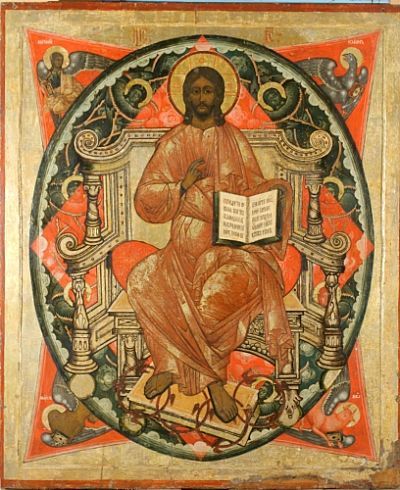
Jesus said, “love your enemies,” but Christians add “except . . . ”
How could Jesus have been plainer? We are to love everyone. We are to do to others as we would have them do to us. He was so plain, so in favor of the weak and the powerless, that the powerful killed him.
Let’s repeat what Jesus said:
But I tell you love your enemies.
Do unto others as you would have others do unto you.
This eliminates a multitude of vices and should undermine social sins, some of which we cannot even imagine. This is a good approach since nobody could make an exhaustive list of the injustices people will imagine.
If you suggest people should not kill other people for fun, they will think you want them to kill people for other reasons. Jesus’ statements echo the teachings of Moses and the prophets of the Old Testament and no culture that takes them seriously can rest with injustice.
Some future civilization of Christians will imagine a new way to oppress the poor and not do their duty to them, but the words of Jesus will haunt them. Are you doing unto the poor what you would have done to you in their position?
Jesus has in two statements eliminated all loopholes, all the new variations on old cruelties.
That is why I am (a bit) confused by this question from M*:
- Can you think of any good reason that God never commands people: 1) not to own other human beings permanently and 2) not to have sex with someone against their will?
Didn’t Jesus do that?
Let’s look at slavery. I hate slavery. We should all hate slavery, but a fact should bring sorrow to every human: slavery is not the worst thing people have dreamed up to do to each other. In fact, in many cultures, a “freeman” could easily be worse off than a slave. Slavery was very evil, but society was so decadent, so unjust, that immediate emancipation would be have been worse!
Imagine a slave owner told he must emancipate his slaves. You know how people are: he would begin with the old, those whose work was worth less than their care. He would send them off to the provinces to work the land, though they had been raised to live in cities and do non-physical work.
Immediate emancipation of economic slavery was best done gradually and in better social circumstances. The Words of Jesus (and Paul’s later directive to treat a slave as a sibling) undercut the economics of slavery. In every Christian land, slavery died away. If it lingered in a new evil form in the American South, this was because 1/3 of the white Christian population developed a weird and peculiar set of ideas about African people. Two-thirds of Christians in America saw His Truth was marching on and ended the practice with the help of the millions of enslaved Christian African Americans.
Race-based slavery did not exist in the ancient world, so it would have been odd for the Bible to address it directly. Instead, the ethics of Jesus (based on the Old Testament) undercut the very possibility, as most Christians saw. There was a reason the South could find no European allies in our Civil War. No Christian nation wanted to send men to die for race-based slavery: it was our peculiar sin.
The ethic of Jesus—love—makes ethical forced sex impossible.
As for having sex with someone against their will, the sexual ethic of the Jewish faith was (as Jesus pointed out) based in a man and woman leaving their parents and eternally cleaving to one other. Sex was reserved for this union. In fact, the movement of all Christian ethics has been toward the gift of chastity, a channeling of sexual desire in other directions for the good of humankind. Sex is not evil in itself, but rape always has been condemned and it is the work of the church to help restrain desire.
People, particularly men, keep coming up with new ways to transgress this obvious ethic.
Men, stronger physically, hated the truth and it took centuries to apply the general teachings of Genesis: women and men are equally human, both part of the image of God. After all, humankind thought might meant right—the “winning” god was the best god. God took centuries to help people learn that short-term winning was not the basis of right. Right must produce might!
No matter how often the Jewish leaders and later the church tried to stop this rathole the powerful still tried to find ways to justify sex without consent. It always failed, because rape has always been condemned and chastity, even in marriage, has always been the goal.
It seems to me that Jesus eliminated every evil as dead by His two commands. A longer list would not have helped us.
——————
*M is a non-Christian that sent me 55 questions earlier this year. He has asked that I not reveal his or her name. I will write as if “he” is a male, but this is for convenience. I do not know if I will get to all his questions. I try to limit my answers to hundreds and not thousands of words. Here are questions 1, 2, 3, 4, 6, 7, 8, 10, 12, 13, 14, 16, 17, 19, 20, 23, 24, 26, 27, 28, 33, 34, 35, 36, 37, 38, 39, 40, 44, 46, 47, 49, 51, 53, 54, and 55.
This post was edited by Rachel Motte.
Previous Post

July 4, 2017
The Bible Isn't About That -- Questions from M
Next Post
July 6, 2017 The Problem of Animal Pain --- Questions from M
Browse Our Archives
Select a Category Apologetics Art Culture Education On Books On Education Philosophy Politics Pop Culture Spiritual Reflections Uncategorized
Select a Month October 2026 September 2026 August 2026 July 2026 July 2025 June 2025 September 2024 July 2024 June 2024 December 2023 June 2023 September 2022 May 2022 April 2022 March 2022 February 2022 July 2021 June 2021 May 2021 April 2021 March 2021 February 2021 January 2021 December 2020 November 2020 October 2020 September 2020 August 2020 July 2020 June 2020 May 2020 April 2020 March 2020 February 2020 January 2020 December 2019 November 2019 October 2019 September 2019 August 2019 July 2019 June 2019 May 2019 April 2019 March 2019 February 2019 January 2019 December 2018 November 2018 October 2018 September 2018 August 2018 July 2018 June 2018 May 2018 April 2018 March 2018 February 2018 January 2018 December 2017 November 2017 October 2017 September 2017 August 2017 July 2017 June 2017 May 2017 April 2017 March 2017 February 2017 January 2017 December 2016 November 2016 October 2016 September 2016 August 2016 July 2016 June 2016 May 2016 April 2016 March 2016 February 2016 January 2016 December 2015 November 2015 October 2015 September 2015 August 2015 July 2015 June 2015 May 2015 April 2015 March 2015 February 2015 January 2015 November 2014 October 2014 September 2014 August 2014 July 2014 June 2014 May 2014 April 2014 March 2014 February 2014 January 2014 December 2013 November 2013 October 2013 September 2013 August 2013 July 2013 June 2013 May 2013 April 2013 March 2013 February 2013 January 2013 December 2012 November 2012 October 2012 September 2012 August 2012 July 2012 June 2012 May 2012
Follow Us!
TAKE THE
Religious Wisdom Quiz
Who was David's oldest brother, critical of him at the battlefield?
Select your answer to see how you score.
Abinadab Shammah Jesse Eliab
Books by This Author John Mark Reynolds
Related posts from Eidos

Why Music Is the Heart of a Classical...

Classical Education and the Art of Dying Well

Golden, Golden, Golden: My Mother's Last Lesson

TRENDING AT PATHEOS Evangelical

The REST of Your Life: A Creative Wrestles...
This week I had a conversation with a good friend from church....

How the author of the world's best hymn...
I've been working with John Newton for a while now. This makes...

Long before this Lectio Divina, Psalm 130 - the song - started...

What About the Trees? Another Living Parable
After I finished writing the last article about falling leaves as a...

Why Classical Education Is a Conversation, Not a...
Come and Read: Joy in Classical Education When I was a little...

Cornell University has received a great deal of negative publicity and intense...
view all Evangelical blogs
Ad-Free & Subscriber Log-In Subscription Support
- About Us
- 2026 Calendar
- Videos
- Podcasts
- Library of World Religions
- Faith In Media Tracker
- Advertise With Us
- Write for Us
- Privacy Policy
- Terms of Service
- Do Not Sell My Data
- Contact Us
- Radiant Digital
- Manage Newsletter Subscriptions
- Unsubscribe From Notifications
- Sitemap
Copyright 2008-2026, Patheos. All rights reserved.
Subscription Support Ad-Free & Subscriber Log-In
Follow Patheos