
BuddhistCatholicContemplativeEvangelicalGeneral ChristianHinduJewishLatter-day SaintMuslimNew VisionsProgressive Christian
Beliefs
- Buddhist
- Catholic
- Contemplative
- Evangelical
- General Christian
- Hindu
- Jewish
- Latter-day Saint
- More Voices
- Muslim
- New Visions
- Pagan
- Progressive Christian
Topics
- Religion News
- Food and Religion
- Sports and Religion
- Religious Art
- Religious Music and Entertainment
- Religious Events
- History and Religion
- Style and Religion
- Politics and Religion
- Women in Religion
- Recreation Outdoors and Religion
- Business Finance and Religion
- Careers Workplace and Religion
- Education and Religion
- Family Parenting and Religion
- Health Fitness and Religion
- Home and Religion
- Relationships and Religion
- Technology and Religion
- Travel and Religion
Columnists
- Buddhist Columnists
- Business Finance and Religion Columnists
- Careers Workplace and Religion Columnists
- Catholic Columnists
- Contemplative Columnists
- Education and Religion Columnists
- Evangelists Columnists
- Family Parenting and Religion Columnists
- General Christian Columnists
- Health Fitness and Religion Columnists
- Hindu Columnists
- History and Religion Columnists
- Home and Religion Columnists
- Jewish Columnists
- More Voices Columnists
- Latter Day Columnists
- Muslim Columnists
- New Visions Columnists
- Nonreligious Columnists
- Pagan Columnists
- Politics and Religion Columnists
- Progressive Columnists
- Recreation Outdoors and Religion Columnists
- Relationships and Religion Columnists
- Religion News Columnists
- Religious Art Columnists
- Religious Events Columnists
- Religious Music and Entertainment Columnists
- Sports and Religion Columnists
- Style and Religion Columnists
- Technology and Religion Columnists
- Travel and Religion Columnists
- Women in Religion Columnists
Resource Library
- 2026 Calendar
- Library of World Religions
- The 100 Most Holy Places on Earth
- Patheos Answers
- Podcasts
- Videos
- Faith Leaders Database
- Anglican Episcopalian
- Bahai
- Baptist
- Buddhism
- Christianity
- Confucianism
- Eastern Orthodoxy
- Hinduism
- Holiness and Pentecostal
- ISKCON
- Islam
- Judaism
- Lutheran
- Methodist
- The Church of Jesus Christ of Latter-day Saints
- New Age
- Paganism
- Presbytarian and Reformed
- Protestantism
- Religion Behind the Scenes
- Roman Catholic
- Scientology
- Shia Islam
- Sikhism
- Sufism
- Sunni Islam
- Taoism
- Zen
- See all religions
Research Tools
 Ad-Free & Subscriber Log-In Subscription Support
Ad-Free & Subscriber Log-In Subscription Support
Follow Patheos 

- Trending:
- Forgiveness
- |
- Marriage
- |
- Consciousness
- |
- Death Penalty
- |
- Election
- |
- Halloween

- Home
- Evangelical
- Why Seeing is not always Believing –Questions from M
Why Seeing is not always Believing –Questions from M
Last updated on: June 19, 2017 at 9:43 pm by John Mark N. Reynolds
Why Seeing is not always Believing –Questions from M 2017-06-19T21:43:34-04:00 John Mark N. Reynolds
Patheos Explore the world's faith through different perspectives on religion and spirituality! Patheos has the views of the prevalent religions and spiritualities of the world.
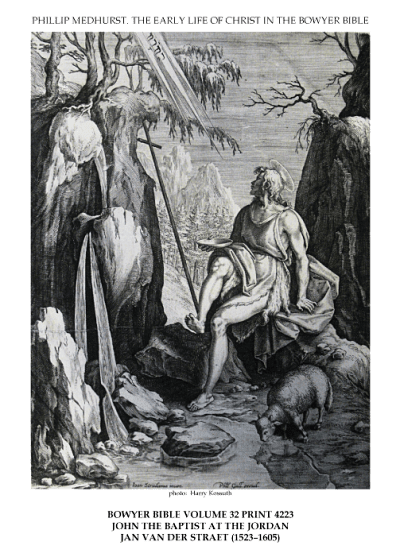
“Show me God!” used to be a demand from the reality challenged. This is rather like saying: “Please point out the number one” or “Draw a picture of love.” We can represent immaterial objects, but we cannot show their essence materially. Given infinite red Lego building blocks over infinite time, you will never build a blue number one.
Fortunately, most secularists have a better handle on reality and do not ask for material proof for an immaterial object. They also know that seeing is not believing.
If post-modernism has done no other good (and it may not have), then it has at least impressed on many people how theory-laden our interpretation of our experiences are. We all know now that our assumptions, our predispositions, shape what we see. A racist sees a threat in a lad walking down the street where a mother sees her child.
The raw data that comes to our minds in an experience too often gets squeezed into our categories, ideas, and presuppositions distorting reality into fantasy or worse. Atheists do this daily when they deny metaphysical reality, but theists make the mistake just as often when our favorite metaphysical theories do not fit our actual experience or agree with what reason is demonstrating to us.
That is bad. A report of “seeing” is not always so simple. I once was on a jury where numerous eyewitnesses to a carjacking told demonstrably incompatible stories. You only need to have that experience once to know the limits of eyewitness testimony.
Don’t confuse seeing with interpreting.
With those mistakes in mind, my summertime interlocutor M* asks:
- Eyewitness testimony is also notoriously unreliable. In fact, there are many cases that have gotten overturned on appeal through DNA evidence, even though there was eyewitness testimony in the case. Assuming for the sake of argument that the Bible (particularly the gospels) were actually based on eyewitness testimony—why would you find that eyewitness testimony compelling?
As usual, I shan’t mostly quibble with M*’s question, though there is a major problem. M* has (like many people) conflated a problem with the interpretation of what an eyewitness sees with the seeing.
My carjacking witnesses were a good example. They had “filled in” details, made assumptions, fit what they had seen to a different narrative. As a jury foreman, I came to distrust them on the details, but this much was true: they saw a man take a car from another man with a gun.
What man? Exactly when? How long did it take? What was the color of the t-shirt the man was wearing? I wasn’t sure, though I thought I could guess. What was not disputed was that that there was a carjacking.
This simple point matters and got me into trouble at an academic conference. A post-modern speaker at Cornell University was using two different books on World War I to demonstrate how perspective could skew an account. The German writer told a different story from the Brit writer.
Fair enough.
However, I caused anger when in the question and answer I asked: “Who won the War in both books?”
My point, which the anger did not let me finish, was that perspective counts, but not entirely. Both the British and the German author agree that there was a War, the Allies won, and the Germans lost. In fact, there were hundreds of facts and outcomes about which almost every author agreed.
I am sure the Germans lost World War I, relatively sure they have a lion’s share of guilt for the start of the War, and not sure at all that the Kaiser was the villain British propaganda made him.
Being in the War gives one an important perspective, but not the only one.
Eyewitnesses can make mistakes. That’s OK.
This is vital in dealing with the Gospels. Assuming they were eyewitnesses, let me assume no divine intervention to correct their memories. Let us assume they are like the eyewitnesses in most trials: biased, faulty, and imperfect.
Here is the bottom line: Jesus appeared to them and they saw Jesus alive. I have no problem with assuming they could misremember the date, the time, or the color of the robe Peter was wearing. However, if a large group of individuals witnesses an event, the burden of proof is on the person who denies the event took place.
“The tomb is empty.”
“Jesus is talking to us.”
These are not complex accounts subject to bias or interpretation. These men and women knew Jesus and were satisfied Jesus was risen. They saw Jesus’ body go into the tomb and saw an empty tomb.
That is all I need. Maybe, perhaps, it could be that what they made of that experience was wrong. They misheard in their shock the exact words, they saw only one angel instead of both, they got the dates confused.
He is risen. That much an eyewitness can be counted on to know.
——————
*M is a non-Christian that sent me 55 questions earlier this year. He has asked that I not reveal his or her name. I will write as if “he” is a male, but this is for convenience. I do not know if I will get to all his questions. I try to limit my answers to hundreds and not thousands of words. Here are questions 1, 2, 3, 6, 7, 8, 10, 12, 14, 16, 17, 19, 20, 23, 26, 27, 28, 33, 34, 35, 36, 37, 38, 39, 40, 44, 47, 54 , and 55.
This post was edited by Rachel Motte.
Previous Post

June 18, 2017
Fight Like a Gentleman: Wisdom from Dad
Next Post
June 20, 2017 Therefore Let Us Keep the Feast --Questions from M
Browse Our Archives
Select a Category Apologetics Art Culture Education On Books On Education Philosophy Politics Pop Culture Spiritual Reflections Uncategorized
Select a Month October 2026 September 2026 August 2026 July 2026 July 2025 June 2025 September 2024 July 2024 June 2024 December 2023 June 2023 September 2022 May 2022 April 2022 March 2022 February 2022 July 2021 June 2021 May 2021 April 2021 March 2021 February 2021 January 2021 December 2020 November 2020 October 2020 September 2020 August 2020 July 2020 June 2020 May 2020 April 2020 March 2020 February 2020 January 2020 December 2019 November 2019 October 2019 September 2019 August 2019 July 2019 June 2019 May 2019 April 2019 March 2019 February 2019 January 2019 December 2018 November 2018 October 2018 September 2018 August 2018 July 2018 June 2018 May 2018 April 2018 March 2018 February 2018 January 2018 December 2017 November 2017 October 2017 September 2017 August 2017 July 2017 June 2017 May 2017 April 2017 March 2017 February 2017 January 2017 December 2016 November 2016 October 2016 September 2016 August 2016 July 2016 June 2016 May 2016 April 2016 March 2016 February 2016 January 2016 December 2015 November 2015 October 2015 September 2015 August 2015 July 2015 June 2015 May 2015 April 2015 March 2015 February 2015 January 2015 November 2014 October 2014 September 2014 August 2014 July 2014 June 2014 May 2014 April 2014 March 2014 February 2014 January 2014 December 2013 November 2013 October 2013 September 2013 August 2013 July 2013 June 2013 May 2013 April 2013 March 2013 February 2013 January 2013 December 2012 November 2012 October 2012 September 2012 August 2012 July 2012 June 2012 May 2012
Follow Us!
TAKE THE
Religious Wisdom Quiz
True or False: John's Gospel does not record any parables.
Select your answer to see how you score.
FALSE TRUE
Books by This Author John Mark Reynolds
Related posts from Eidos

Classical Education and the Art of Dying Well

Golden, Golden, Golden: My Mother's Last Lesson


When the Center Holds: A Tribute to My...
TRENDING AT PATHEOS Evangelical

The REST of Your Life: A Creative Wrestles...
This week I had a conversation with a good friend from church....

How the author of the world's best hymn...
I've been working with John Newton for a while now. This makes...

Long before this Lectio Divina, Psalm 130 - the song - started...

What About the Trees? Another Living Parable
After I finished writing the last article about falling leaves as a...

Why Classical Education Is a Conversation, Not a...
Come and Read: Joy in Classical Education When I was a little...

Cornell University has received a great deal of negative publicity and intense...
view all Evangelical blogs
Ad-Free & Subscriber Log-In Subscription Support
- About Us
- 2026 Calendar
- Videos
- Podcasts
- Library of World Religions
- Faith In Media Tracker
- Advertise With Us
- Write for Us
- Privacy Policy
- Terms of Service
- Do Not Sell My Data
- Contact Us
- Radiant Digital
- Manage Newsletter Subscriptions
- Unsubscribe From Notifications
- Sitemap
Copyright 2008-2026, Patheos. All rights reserved.
Subscription Support Ad-Free & Subscriber Log-In
Follow Patheos