
BuddhistCatholicContemplativeEvangelicalGeneral ChristianHinduJewishLatter-day SaintMuslimNew VisionsProgressive Christian
Beliefs
- Buddhist
- Catholic
- Contemplative
- Evangelical
- General Christian
- Hindu
- Jewish
- Latter-day Saint
- More Voices
- Muslim
- New Visions
- Pagan
- Progressive Christian
Topics
- Religion News
- Food and Religion
- Sports and Religion
- Religious Art
- Religious Music and Entertainment
- Religious Events
- History and Religion
- Style and Religion
- Politics and Religion
- Women in Religion
- Recreation Outdoors and Religion
- Business Finance and Religion
- Careers Workplace and Religion
- Education and Religion
- Family Parenting and Religion
- Health Fitness and Religion
- Home and Religion
- Relationships and Religion
- Technology and Religion
- Travel and Religion
Columnists
- Buddhist Columnists
- Business Finance and Religion Columnists
- Careers Workplace and Religion Columnists
- Catholic Columnists
- Contemplative Columnists
- Education and Religion Columnists
- Evangelists Columnists
- Family Parenting and Religion Columnists
- General Christian Columnists
- Health Fitness and Religion Columnists
- Hindu Columnists
- History and Religion Columnists
- Home and Religion Columnists
- Jewish Columnists
- More Voices Columnists
- Latter Day Columnists
- Muslim Columnists
- New Visions Columnists
- Nonreligious Columnists
- Pagan Columnists
- Politics and Religion Columnists
- Progressive Columnists
- Recreation Outdoors and Religion Columnists
- Relationships and Religion Columnists
- Religion News Columnists
- Religious Art Columnists
- Religious Events Columnists
- Religious Music and Entertainment Columnists
- Sports and Religion Columnists
- Style and Religion Columnists
- Technology and Religion Columnists
- Travel and Religion Columnists
- Women in Religion Columnists
Resource Library
- 2026 Calendar
- Library of World Religions
- The 100 Most Holy Places on Earth
- Patheos Answers
- Podcasts
- Videos
- Faith Leaders Database
- Anglican Episcopalian
- Bahai
- Baptist
- Buddhism
- Christianity
- Confucianism
- Eastern Orthodoxy
- Hinduism
- Holiness and Pentecostal
- ISKCON
- Islam
- Judaism
- Lutheran
- Methodist
- The Church of Jesus Christ of Latter-day Saints
- New Age
- Paganism
- Presbytarian and Reformed
- Protestantism
- Religion Behind the Scenes
- Roman Catholic
- Scientology
- Shia Islam
- Sikhism
- Sufism
- Sunni Islam
- Taoism
- Zen
- See all religions
Research Tools
 Ad-Free & Subscriber Log-In Subscription Support
Ad-Free & Subscriber Log-In Subscription Support
Follow Patheos 

- Trending:
- Forgiveness
- |
- Marriage
- |
- Consciousness
- |
- Death Penalty
- |
- Election
- |
- Halloween

- Home
- Evangelical
- Going to Bed With Tacitus —Questions from M
Going to Bed With Tacitus —Questions from M
Last updated on: June 13, 2017 at 10:04 pm by John Mark N. Reynolds
Going to Bed With Tacitus —Questions from M 2017-06-13T22:04:23-04:00 John Mark N. Reynolds
Patheos Explore the world's faith through different perspectives on religion and spirituality! Patheos has the views of the prevalent religions and spiritualities of the world.
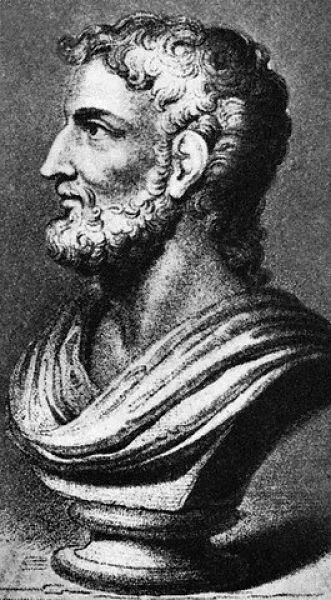 My mind churns away and keeps me awake as I think about what needs to be done at The Saint Constantine School and College and so a good audiobook helps me relax. My favorites are That Hideous Strength, A Child’s History of England, and The Complete Stories of Sherlock Holmes. It was while listening to Holmes that I heard the best audiobook reader now alive (Alexander Scourby, RIP): Charlton Griffin.
My goal, and a man must have goals, is to listen to every book he records. That led me to go to bed with Tacitus as read by Charlton Griffin. This is a new way to experience this Roman historian who stood at the end of a good time and saw doom coming. If anyone wrote well about coming doom, Tacitus was that author.
Anytime someone complains about the lack of historical evidence of anything in the ancient world, I think of Tacitus. He is one of the few surviving ancient historians. The last time I checked, some of what we have of Tacitus, and we are missing much, is based on two partial Medieval manuscripts!
Tacitus is interesting in what he writes and does not write. Here is one scholarly opinion on his interests:
Few Christian moralists deal much in eulogy, and Tacitus’ diatribes are the more frequent and the more fierce because his was the morality not of Christ but of Rome. ‘The Poor’ are as dirt to him: he can stoop to immortalize some gleam of goodness in low life, but even then his main object is by scorn of contrast to galvanize the aristocracy into better ways. Only in them can true virtus grow. Their degradation seems the death of goodness. Tacitus had little sympathy with the social revolution that was rapidly completing itself, not so much because those who rose from the masses lacked ‘blood’, but because they had not been trained in the right traditions. In the decay of Education he finds a prime cause of evil. And being a Roman–wherever he may have been born–he inevitably feels that the decay of Roman life must rot the world. His eyes are not really open to the Empire.**
What Rome Thought of Itself
Power writes the history, ask the victims of colonialism, and Rome was the power in the world of Jesus. Romans were, by ancient standards, record keepers, but their records were of the Empire and the focus of written history was Rome. Never forget: Rome was not for these men an Empire,—that was the benefit of greatness—or an idea, but a City.
In an Empire of sixty-million, at least one million lived in the great city of Rome and to historians like Tacitus, those people were the ones that mattered. Everyone else counted as they impacted the City. Of course, of the million, the elite were what mattered, the decadent failing elite, and they were the subject of Tacitus’ history.
When anyone else was mentioned, they were brought into the story as they impacted the City. The poor in the City mattered insomuch as they were part of the lives of the Great, and the Great were judged by Tacitus with a strict pagan judgment. He weighed them in the balance of his classical education and they were found wicked.
Little the Romans wrote survived the fall of the Empire. Christians saved what they could in Roman Constantinople, but much was lost that should never have been forgotten. Still. If we had everything the Romans recorded, the story would be of Great Men (and a few Women) and of Rome. The view would be of the City and only dimly of the rest of the world.
We know so little of Rome really and the few fragments we have concern one class, one city, and the concerns of the few. Christianity made people care about the stories of the poor, the meek, and those who now have inherited the Earth.
This fact reminded me of a question that M* sent:
38.If Jesus did as Christians claim, namely, came back to life after getting executed by the Romans, and then going around preaching for 40 days or so, having had 500+ people witness his appearances, etc., isn’t it odd that there are no Roman records of such events? If the Romans, a brutal occupying power, executed someone for treason/sedition, and that person came back to life and went around teaching and preaching, wouldn’t you suppose the Roman governor or leadership would launch a massive investigation and one that they would have recorded well?
Why Would Rome Care About Jesus?
Five hundred Jews saw Jesus alive. The Empire was sixty-million and Jews were not the focus of the Empire, except when they were being killed. Pilate knew some Jews were claiming Jesus rose from the dead, but also that the sycophantic Jewish leadership was trying to hush the story up.
Why would he have investigated? As an educated Roman, the “doings” of those poor offensive Jews, with their monotheism and demands for purity, were offensive. If the Jewish leaders were happy to hush things up, why would Pilate have roused the populace by dashing about doing an investigation?
What would he have investigated? Can anyone point me to a pagan ruler who cared what the poor colonials believed?
We know little enough from the Romans about the Jewish elite, let alone the folkways of the Jewish lower classes. Women were not important to history except as they impacted the ruling men.
Ask if the British would have done a major investigation in India if a group of five hundred Indians in one city had claimed a man they hanged had risen from the dead and you will know the answer. Simla would have had a G and T and laughed at the silly natives. Keep the peace, let those people believe what they wish.
Imagine a better Pilate and you still would not have records. If Pilate did investigate, one can be sure that the records would not have survived the revolt of the Jewish people and the destruction of Jerusalem in AD 70.
Tacitus and The Doomed Elite
By the way, we know that Tacitus knew of Christians being murdered in Rome at the time of Nero (ruled AD 54-68), so if Jesus was a “myth,” the myth got to Rome in time for people to be killed for it thirty years after Christ’s death. You had to get to Rome and die to get a Roman historian’s attention.
The good news is that God came to up-end this social order: women like Mary would soon be more important than most of the people whose history Tacitus so carefully chronicled.
Sexual immorality, overspending, and a love of pleasure would doom the Roman elite. Peter and Paul came to Rome and wrote their own history and the world has not been the same since that day! Tacitus puts me to sleep and I wake up in a world that the Christ made better.
——————
*M is a non-Christian that sent me 55 questions earlier this year. He has asked that I not reveal his or her name. I will write as if “he” is a male, but this is for convenience. I do not know if I will get to all his questions. I try to limit my answers to hundreds and not thousands of words. Here are questions 1, 2, 3, 6, 7, 8, 17, 19, 23, 26, 27, 28, 33, 34, 35, 37, 38, 39, 40, 44, 47, 54 , and 55.
**Tacitus, Caius Cornelius (2005-10-23). Tacitus: The Histories, Volumes I and II (Kindle Locations 51-57). Public Domain Books. Kindle Edition.
This post was edited by Rachel Motte.
Previous Post

June 11, 2017
They Moved to a Heavenly City and Understood --Questions from M
Next Post
June 13, 2017 God is so Good ---Questions from M
Browse Our Archives
Select a Category Apologetics Art Culture Education On Books On Education Philosophy Politics Pop Culture Spiritual Reflections Uncategorized
Select a Month October 2026 September 2026 August 2026 July 2026 July 2025 June 2025 September 2024 July 2024 June 2024 December 2023 June 2023 September 2022 May 2022 April 2022 March 2022 February 2022 July 2021 June 2021 May 2021 April 2021 March 2021 February 2021 January 2021 December 2020 November 2020 October 2020 September 2020 August 2020 July 2020 June 2020 May 2020 April 2020 March 2020 February 2020 January 2020 December 2019 November 2019 October 2019 September 2019 August 2019 July 2019 June 2019 May 2019 April 2019 March 2019 February 2019 January 2019 December 2018 November 2018 October 2018 September 2018 August 2018 July 2018 June 2018 May 2018 April 2018 March 2018 February 2018 January 2018 December 2017 November 2017 October 2017 September 2017 August 2017 July 2017 June 2017 May 2017 April 2017 March 2017 February 2017 January 2017 December 2016 November 2016 October 2016 September 2016 August 2016 July 2016 June 2016 May 2016 April 2016 March 2016 February 2016 January 2016 December 2015 November 2015 October 2015 September 2015 August 2015 July 2015 June 2015 May 2015 April 2015 March 2015 February 2015 January 2015 November 2014 October 2014 September 2014 August 2014 July 2014 June 2014 May 2014 April 2014 March 2014 February 2014 January 2014 December 2013 November 2013 October 2013 September 2013 August 2013 July 2013 June 2013 May 2013 April 2013 March 2013 February 2013 January 2013 December 2012 November 2012 October 2012 September 2012 August 2012 July 2012 June 2012 May 2012
Follow Us!
TAKE THE
Religious Wisdom Quiz
What nature miracle did Jesus perform during a storm on the sea?
Select your answer to see how you score.
Turned water to oil Calmed the wind and waves Fed the crew Walked on water
Books by This Author John Mark Reynolds
Related posts from Eidos

Classical Education Must Teach Us to Make the...

The Iceberg is There: Verbosity Cannot Defeat Reality

One Weeping Icon at Christmas is Enough

The Power of Dissenting Societies: A Thought
TRENDING AT PATHEOS Evangelical

How the author of the world's best hymn...
I've been working with John Newton for a while now. This makes...

Long before this Lectio Divina, Psalm 130 - the song - started...

What About the Trees? Another Living Parable
After I finished writing the last article about falling leaves as a...

Why Classical Education Is a Conversation, Not a...
Come and Read: Joy in Classical Education When I was a little...

Falling Leaves: A Living Parable on Letting Go
I’ve spent the vast majority of my life in the southeast corner...

Cornell University has received a great deal of negative publicity and intense...
view all Evangelical blogs
Ad-Free & Subscriber Log-In Subscription Support
- About Us
- 2026 Calendar
- Videos
- Podcasts
- Library of World Religions
- Faith In Media Tracker
- Advertise With Us
- Write for Us
- Privacy Policy
- Terms of Service
- Do Not Sell My Data
- Contact Us
- Radiant Digital
- Manage Newsletter Subscriptions
- Unsubscribe From Notifications
- Sitemap
Copyright 2008-2026, Patheos. All rights reserved.
Subscription Support Ad-Free & Subscriber Log-In
Follow Patheos