
BuddhistCatholicContemplativeEvangelicalGeneral ChristianHinduJewishLatter-day SaintMuslimNew VisionsProgressive Christian
Beliefs
- Buddhist
- Catholic
- Contemplative
- Evangelical
- General Christian
- Hindu
- Jewish
- Latter-day Saint
- More Voices
- Muslim
- New Visions
- Pagan
- Progressive Christian
Topics
- Religion News
- Food and Religion
- Sports and Religion
- Religious Art
- Religious Music and Entertainment
- Religious Events
- History and Religion
- Style and Religion
- Politics and Religion
- Women in Religion
- Recreation Outdoors and Religion
- Business Finance and Religion
- Careers Workplace and Religion
- Education and Religion
- Family Parenting and Religion
- Health Fitness and Religion
- Home and Religion
- Relationships and Religion
- Technology and Religion
- Travel and Religion
Columnists
- Buddhist Columnists
- Business Finance and Religion Columnists
- Careers Workplace and Religion Columnists
- Catholic Columnists
- Contemplative Columnists
- Education and Religion Columnists
- Evangelists Columnists
- Family Parenting and Religion Columnists
- General Christian Columnists
- Health Fitness and Religion Columnists
- Hindu Columnists
- History and Religion Columnists
- Home and Religion Columnists
- Jewish Columnists
- More Voices Columnists
- Latter Day Columnists
- Muslim Columnists
- New Visions Columnists
- Nonreligious Columnists
- Pagan Columnists
- Politics and Religion Columnists
- Progressive Columnists
- Recreation Outdoors and Religion Columnists
- Relationships and Religion Columnists
- Religion News Columnists
- Religious Art Columnists
- Religious Events Columnists
- Religious Music and Entertainment Columnists
- Sports and Religion Columnists
- Style and Religion Columnists
- Technology and Religion Columnists
- Travel and Religion Columnists
- Women in Religion Columnists
Resource Library
- 2026 Calendar
- Library of World Religions
- The 100 Most Holy Places on Earth
- Patheos Answers
- Podcasts
- Videos
- Faith Leaders Database
- Anglican Episcopalian
- Bahai
- Baptist
- Buddhism
- Christianity
- Confucianism
- Eastern Orthodoxy
- Hinduism
- Holiness and Pentecostal
- ISKCON
- Islam
- Judaism
- Lutheran
- Methodist
- The Church of Jesus Christ of Latter-day Saints
- New Age
- Paganism
- Presbytarian and Reformed
- Protestantism
- Religion Behind the Scenes
- Roman Catholic
- Scientology
- Shia Islam
- Sikhism
- Sufism
- Sunni Islam
- Taoism
- Zen
- See all religions
Research Tools
 Ad-Free & Subscriber Log-In Subscription Support
Ad-Free & Subscriber Log-In Subscription Support
Follow Patheos 

- Trending:
- Forgiveness
- |
- Marriage
- |
- Consciousness
- |
- Death Penalty
- |
- Election
- |
- Halloween

- Home
- Evangelical
- Does the Bible Contradict Itself? Who Cares? — Questions from M
Does the Bible Contradict Itself? Who Cares? — Questions from M
Last updated on: June 15, 2017 at 12:45 pm by John Mark N. Reynolds
Does the Bible Contradict Itself? Who Cares? — Questions from M 2017-06-15T12:45:07-04:00 John Mark N. Reynolds
Patheos Explore the world's faith through different perspectives on religion and spirituality! Patheos has the views of the prevalent religions and spiritualities of the world.
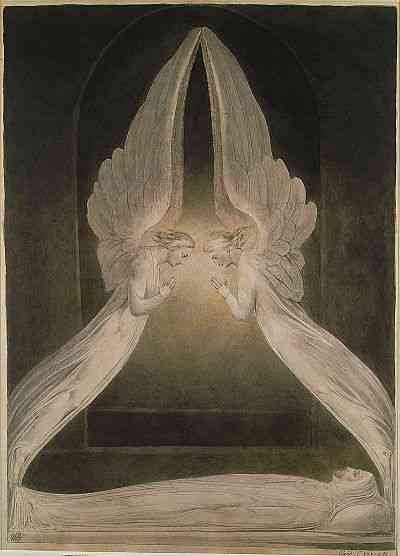
Whenever I talk about the Bible, I am asked about the contradictions**. Aren’t there lots of them?
Maybe, but probably not.
Let’s assume there are.
Does that count against divine inspiration?
I am not sure why it would. We have many books in the collection called the Bible with the same essential message. The books were written over centuries in different languages by many different authors. God breathed on the authors and inspired them. Do they have to be perfect (as I think they are in fact) to be inspired?
I do not think so.
Thanks, Mom.
When I was a boy, I decided to drive our car. The first step was to move levers, that’s what Mom did, and so I moved the car out of park. Because West Virginia has no flat land, any car in neutral goes down. If left to go down, one ends up in Ohio and that can be fatal.
In any case, the car was heading towards a cliff. Thankfully my Mom was very brave and grabbed the side of the car and whilst being dragged down the hill, moved the car into park again.
We were saved.
Did Mom do the perfect thing? I doubt it. Did she stop the car? She did. I am thankful. Whatever her errors before or during the scary ride, she saved my friend and me. Thanks, Mom.
So it is with Scripture: if I assume every error in the skeptic list of problems, I still understand the gist of Scripture. Humankind is separated from God. We do what is wrong, misusing our free will. God loves us, but God is also just and hates the evil we do to the poor and the weak. God is unhappy with our destructive misuse of His gifts to us in nature and cannot ignore our self-destructive hedonism.
God Knows We Make Mistakes.
God loves us, but God isn’t senile. He knows we blow it. As a result, God provided the solution to reunite us to Himself in Jesus. Good news! If the human authors in their humanity got other things wrong, that is the right that I need.
Why wouldn’t God produce a “perfect book?” One reason would be working with human authors. Even if God could produce a perfect collection of Books (as I think God did in fact), we would not know it for sure. The skeptic would always find seeming problems. Harmonization requires knowing things we have forgotten, and some people demand ancient texts read like modern ones!
We need the main thing to be clear, and it is. No less a figure than C.S. Lewis adopted this approach to the Bible. I think Lewis was wrong, but I also think nobody should leave the faith over Bible harmonization or contradictions.
Let’s turn to my summer gadfly (in the jolly Socratic sense) M* to see what he thinks:
16. Assuming for the sake of argument that the Bible contains no contradictions either within the same book or between books—what if anything does that actually prove?
I had much to say about contradictions and the Bible to M* earlier, but let’s try something new.
Bible Contradictions, or Amazing Harmonizations?
If we assume no contradictions in sixty-six books produced over a long period of time in many languages by a diverse group of authors, then “no contradictions” would be interesting, to say the least. One could (as I point out in the answer to question 17) assume editing or harmonization over time, but it would still be interesting.
To a good reader interesting is enough. Why are difficult passages still there if heavy editing took place? Why do very old manuscripts line up so well with relatively recent manuscripts? We do not have to assume the answer is “God did it, ” but maybe He did.
If I read the collection charitably as if it harmonizes, what happens?
I discover many interesting ideas and a powerful theology.
This is not always true when one sets to work harmonizing an author. Mark Twain seems like an arch-skeptic until one reads his book on Joan of Arc. What is happening? First, it shows Twain is a complex thinker, but it also seems to show an odd soft-spot in a fairly ugly man. Samuel Clemens was a cad, as his recently released autobiography demonstrates, but he had a soft spot for the Saint.
He was inconsistent and his better self wrote on Joan.
When I work on the text of Scripture, despite dealing with different authors, I find no such inconsistencies. The tensions in the texts produce new ideas!
So it goes. The Bible does not have to be free from contradictions to illuminate us. However, when I look at lists of contradictions and set to work, I mostly find illuminating harmonizations instead of intellectual dead ends. I take as my working hypothesis, as a result, that the Bible perfectly harmonizes.
Try it, M*.
——————
*M is a non-Christian that sent me 55 questions earlier this year. He has asked that I not reveal his or her name. I will write as if “he” is a male, but this is for convenience. I do not know if I will get to all his questions. I try to limit my answers to hundreds and not thousands of words. Here are questions 1, 2, 3, 6, 7, 8, 12, 14, 16, 17, 19, 23, 26, 27, 28, 33, 34, 35, 37, 38, 39, 40, 44, 47, 54 , and 55.
** A logical contradiction is rare: x versus not x. Instead, I assume we are talking about ideas in the Bible that are difficult (or even very difficult) to harmonize.
I am now halfway through M’s questions. I don’t know if I will be able to finish, but I have enjoyed the dialog. Thank you M.
This post was edited by Rachel Motte.
Previous Post

June 14, 2017
How to Find God in Every Book---Questions from M
Next Post
June 16, 2017 Why Jesus Came Before the Internet --Questions From M
Browse Our Archives
Select a Category Apologetics Art Culture Education On Books On Education Philosophy Politics Pop Culture Spiritual Reflections Uncategorized
Select a Month October 2026 September 2026 August 2026 July 2026 July 2025 June 2025 September 2024 July 2024 June 2024 December 2023 June 2023 September 2022 May 2022 April 2022 March 2022 February 2022 July 2021 June 2021 May 2021 April 2021 March 2021 February 2021 January 2021 December 2020 November 2020 October 2020 September 2020 August 2020 July 2020 June 2020 May 2020 April 2020 March 2020 February 2020 January 2020 December 2019 November 2019 October 2019 September 2019 August 2019 July 2019 June 2019 May 2019 April 2019 March 2019 February 2019 January 2019 December 2018 November 2018 October 2018 September 2018 August 2018 July 2018 June 2018 May 2018 April 2018 March 2018 February 2018 January 2018 December 2017 November 2017 October 2017 September 2017 August 2017 July 2017 June 2017 May 2017 April 2017 March 2017 February 2017 January 2017 December 2016 November 2016 October 2016 September 2016 August 2016 July 2016 June 2016 May 2016 April 2016 March 2016 February 2016 January 2016 December 2015 November 2015 October 2015 September 2015 August 2015 July 2015 June 2015 May 2015 April 2015 March 2015 February 2015 January 2015 November 2014 October 2014 September 2014 August 2014 July 2014 June 2014 May 2014 April 2014 March 2014 February 2014 January 2014 December 2013 November 2013 October 2013 September 2013 August 2013 July 2013 June 2013 May 2013 April 2013 March 2013 February 2013 January 2013 December 2012 November 2012 October 2012 September 2012 August 2012 July 2012 June 2012 May 2012
Follow Us!
TAKE THE
Religious Wisdom Quiz
Who was the first king anointed by Samuel?
Select your answer to see how you score.
Saul David Solomon Jonathan
Books by This Author John Mark Reynolds
Related posts from Eidos

Classical Education and the Art of Dying Well

Golden, Golden, Golden: My Mother's Last Lesson


When the Center Holds: A Tribute to My...
TRENDING AT PATHEOS Evangelical

The REST of Your Life: A Creative Wrestles...
This week I had a conversation with a good friend from church....

How the author of the world's best hymn...
I've been working with John Newton for a while now. This makes...

Long before this Lectio Divina, Psalm 130 - the song - started...

What About the Trees? Another Living Parable
After I finished writing the last article about falling leaves as a...

Why Classical Education Is a Conversation, Not a...
Come and Read: Joy in Classical Education When I was a little...

Cornell University has received a great deal of negative publicity and intense...
view all Evangelical blogs
Ad-Free & Subscriber Log-In Subscription Support
- About Us
- 2026 Calendar
- Videos
- Podcasts
- Library of World Religions
- Faith In Media Tracker
- Advertise With Us
- Write for Us
- Privacy Policy
- Terms of Service
- Do Not Sell My Data
- Contact Us
- Radiant Digital
- Manage Newsletter Subscriptions
- Unsubscribe From Notifications
- Sitemap
Copyright 2008-2026, Patheos. All rights reserved.
Subscription Support Ad-Free & Subscriber Log-In
Follow Patheos