
BuddhistCatholicContemplativeEvangelicalGeneral ChristianHinduJewishLatter-day SaintMuslimNew VisionsProgressive Christian
Beliefs
- Buddhist
- Catholic
- Contemplative
- Evangelical
- General Christian
- Hindu
- Jewish
- Latter-day Saint
- More Voices
- Muslim
- New Visions
- Pagan
- Progressive Christian
Topics
- Religion News
- Food and Religion
- Sports and Religion
- Religious Art
- Religious Music and Entertainment
- Religious Events
- History and Religion
- Style and Religion
- Politics and Religion
- Women in Religion
- Recreation Outdoors and Religion
- Business Finance and Religion
- Careers Workplace and Religion
- Education and Religion
- Family Parenting and Religion
- Health Fitness and Religion
- Home and Religion
- Relationships and Religion
- Technology and Religion
- Travel and Religion
Columnists
- Buddhist Columnists
- Business Finance and Religion Columnists
- Careers Workplace and Religion Columnists
- Catholic Columnists
- Contemplative Columnists
- Education and Religion Columnists
- Evangelists Columnists
- Family Parenting and Religion Columnists
- General Christian Columnists
- Health Fitness and Religion Columnists
- Hindu Columnists
- History and Religion Columnists
- Home and Religion Columnists
- Jewish Columnists
- More Voices Columnists
- Latter Day Columnists
- Muslim Columnists
- New Visions Columnists
- Nonreligious Columnists
- Pagan Columnists
- Politics and Religion Columnists
- Progressive Columnists
- Recreation Outdoors and Religion Columnists
- Relationships and Religion Columnists
- Religion News Columnists
- Religious Art Columnists
- Religious Events Columnists
- Religious Music and Entertainment Columnists
- Sports and Religion Columnists
- Style and Religion Columnists
- Technology and Religion Columnists
- Travel and Religion Columnists
- Women in Religion Columnists
Resource Library
- 2026 Calendar
- Library of World Religions
- The 100 Most Holy Places on Earth
- Patheos Answers
- Podcasts
- Videos
- Faith Leaders Database
- Anglican Episcopalian
- Bahai
- Baptist
- Buddhism
- Christianity
- Confucianism
- Eastern Orthodoxy
- Hinduism
- Holiness and Pentecostal
- ISKCON
- Islam
- Judaism
- Lutheran
- Methodist
- The Church of Jesus Christ of Latter-day Saints
- New Age
- Paganism
- Presbytarian and Reformed
- Protestantism
- Religion Behind the Scenes
- Roman Catholic
- Scientology
- Shia Islam
- Sikhism
- Sufism
- Sunni Islam
- Taoism
- Zen
- See all religions
Research Tools
 Ad-Free & Subscriber Log-In Subscription Support
Ad-Free & Subscriber Log-In Subscription Support
Follow Patheos 

- Trending:
- Forgiveness
- |
- Marriage
- |
- Consciousness
- |
- Death Penalty
- |
- Election
- |
- Halloween

- Home
- Evangelical
- Questions from M: Illiterate Disciples, Written Gospels
Questions from M: Illiterate Disciples, Written Gospels
Last updated on: May 11, 2017 at 10:06 am by John Mark N. Reynolds
Questions from M: Illiterate Disciples, Written Gospels 2017-05-11T10:06:18-04:00 John Mark N. Reynolds
Patheos Explore the world's faith through different perspectives on religion and spirituality! Patheos has the views of the prevalent religions and spiritualities of the world.
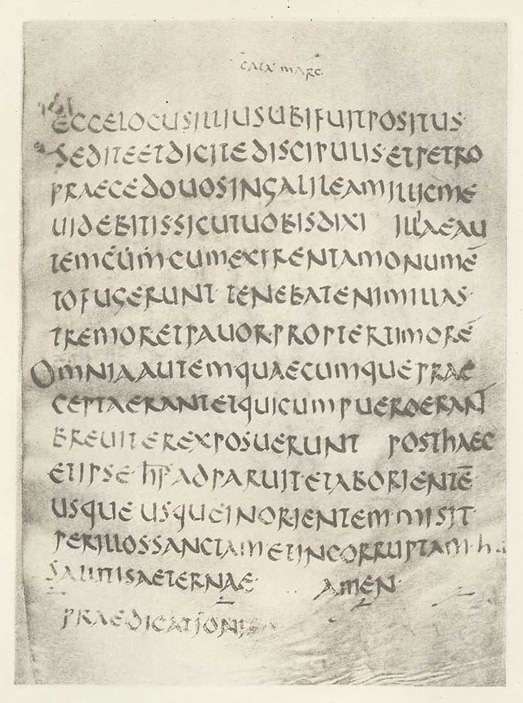 M* asks: “How do you explain how any of Jesus’ disciples, who were most likely illiterate, as most simple people were back then, would have learned how to write in Koine Greek?”
There are two ways to respond to any challenging question: one is to refute it by denying the premises in the question and the other is to concede the premises of the question and the truth of the conclusion, but show that the alleged problem still does not exist.
Here is the informal argument behind the question:
- To write a book in a language one must be literate in that language.
- It is implausible that the disciples were literate in Greek given the educational levels in the area and the language usage in Galilee.
- The Gospels are written in Greek.
- Conclusion: The disciples probably did not write the Gospels.
- Secondary conclusion: 4 is important to either inspiration or historicity of the Jesus story.
A normal response is to show that it is possible that the disciples were literate (in Greek) and that some of the disciples almost certainly were literate: Luke as a physician, Matthew as a tax collector. Most simple people don’t or can’t follow a preacher about the countryside. The disciples were able and willing to do something unusual. Premise 2 is not definitive.
Second, scribes were used in the ancient world and were easily available. Premise 1 is false. One could write a book and be illiterate in the language in which the book is first published. For example, I could dictate a book to a Russian in English and the Russian could take my English sentences and translate them into Russian. Of course, this means that the scribe would be part of the composition team, but we have always known that about Paul’s letters.
One can look at the Greek in the Gospel of John and in Revelation and account for (at least some) of the linguistic differences by postulating that John had different scribes in both cases. The Gospel is a more polished work, while Revelation, written in exile on an island, is very rough.
One could also challenge the idea that the Gospels in original form were written in Greek. There is an ancient tradition that Matthew was first written in Aramaic (or perhaps Hebrew) that still has some support. If so, then 3 is at least partially false.
However, suppose a skeptic really likes this argument and so insists by counter-arguments that premises 1, 2, 3 are almost surely true. Discussions of this sort can go on for a long time. Sadly for the skeptic, the strong conclusion 5 does not follow from conclusion 4. As a result, discussing the plausibility of the premises is not even necessary for the Gospels to be interesting sources of history.
The disciples could have not written the Gospels (either by dictating to a scribe or with their own hand) and this would not impact the historicity or inspiration of the accounts in a sense meaningful to orthodox Christians.
How is this possible?
The gospels are attributed to a particular disciple (follower of Jesus): Matthew, Mark, Luke, John. Most traditional Christians have held that each disciple had sources such as the apostle Peter for Mark. Christians have always believed the younger man, Mark, was speaking what he had heard from other witnesses and had seen himself. In other words, Mark worked with at least some other people.
Given that Mark appears to have been from a wealthier, more urban background, many arguments for the general illiteracy of the disciples do not apply to him. However, assume Mark is illiterate. Assume Mark did not dictate the Gospel to a scribe.
He still could have produced a Gospel according to Mark. We need merely assume a church community (say Alexandria) where Mark came to work gathered Mark’s sermons and teachings into a corpus. As the apostles and eye witnesses to Jesus grew older, this would have been a natural process. For example, I have seen this in my own career. As the founding generation of an institution ages, the younger members of the group become eager to record “oral history.” Scholars are deployed to take down their words. A city like Alexandria (where Mark traditionally spent much of his life) was full of literate scholars.
The Gospel according to Mark would then be the product of a community of scholar and scribes according to the teachings of the eye witnesses. While Mark was alive, that community could check the text with the person who inspired the collection. The product would be a Gospel according to Mark. Even leaving aside the idea of the Holy Spirit guiding the work of this community and of Mark himself, this strikes me as a great way to get a trustworthy account. The community would keep working on the Gospel and Mark could check with his sources and memory to make sure the account was right. Finally, either the work would be deemed good enough or the book of Mark would die.
I am not asserting that this is actually what happened, just that it is a plausible account of how an illiterate person could be responsible for the content of a text (in terms of history and ideas) without writing it himself or even dictating the text. In fact, the church to this day has collected sermons preached by leaders and published them and translated them. We would then think of a Mark-community and not a single author.
The literacy of the speaker is inconsequential and the community produced text would still be valuable as history. Translations may have peril when it comes to nuance and deep ideas, but seem less troublesome when it comes to historical facts. If Mark asserts, “Jesus did X,” in Aramaic, a translation in any language could get the fact of what Mark said right especially if an entire community and Mark were working with the translator.
As a result, if 4 is true, 5 does not follow and even if all the disciples were illiterate (dubious) and had no scribes (very dubious), their eye witness accounts could have been faithfully preserved.
————————-
*M has asked that I not reveal his or her name. I will write as if “he” is a male, but this is for convenience in the future. Here question 37.
Previous Post

May 10, 2017
Don't Be Pumaman
Next Post
May 12, 2017 A Great Change, a Graduation
Browse Our Archives
Select a Category Apologetics Art Culture Education On Books On Education Philosophy Politics Pop Culture Spiritual Reflections Uncategorized
Select a Month October 2026 September 2026 August 2026 July 2026 July 2025 June 2025 September 2024 July 2024 June 2024 December 2023 June 2023 September 2022 May 2022 April 2022 March 2022 February 2022 July 2021 June 2021 May 2021 April 2021 March 2021 February 2021 January 2021 December 2020 November 2020 October 2020 September 2020 August 2020 July 2020 June 2020 May 2020 April 2020 March 2020 February 2020 January 2020 December 2019 November 2019 October 2019 September 2019 August 2019 July 2019 June 2019 May 2019 April 2019 March 2019 February 2019 January 2019 December 2018 November 2018 October 2018 September 2018 August 2018 July 2018 June 2018 May 2018 April 2018 March 2018 February 2018 January 2018 December 2017 November 2017 October 2017 September 2017 August 2017 July 2017 June 2017 May 2017 April 2017 March 2017 February 2017 January 2017 December 2016 November 2016 October 2016 September 2016 August 2016 July 2016 June 2016 May 2016 April 2016 March 2016 February 2016 January 2016 December 2015 November 2015 October 2015 September 2015 August 2015 July 2015 June 2015 May 2015 April 2015 March 2015 February 2015 January 2015 November 2014 October 2014 September 2014 August 2014 July 2014 June 2014 May 2014 April 2014 March 2014 February 2014 January 2014 December 2013 November 2013 October 2013 September 2013 August 2013 July 2013 June 2013 May 2013 April 2013 March 2013 February 2013 January 2013 December 2012 November 2012 October 2012 September 2012 August 2012 July 2012 June 2012 May 2012
Follow Us!
TAKE THE
Religious Wisdom Quiz
What was the portable place of worship called that God commanded Israel to build?
Select your answer to see how you score.
The Synagogue The Ark The Temple The Tabernacle
Books by This Author John Mark Reynolds
Related posts from Eidos

The Iceberg is There: Verbosity Cannot Defeat Reality

One Weeping Icon at Christmas is Enough

The Power of Dissenting Societies: A Thought

TRENDING AT PATHEOS Evangelical

The REST of Your Life: A Creative Wrestles...
This week I had a conversation with a good friend from church....

How the author of the world's best hymn...
I've been working with John Newton for a while now. This makes...

Long before this Lectio Divina, Psalm 130 - the song - started...

What About the Trees? Another Living Parable
After I finished writing the last article about falling leaves as a...

Why Classical Education Is a Conversation, Not a...
Come and Read: Joy in Classical Education When I was a little...

Cornell University has received a great deal of negative publicity and intense...
view all Evangelical blogs
Ad-Free & Subscriber Log-In Subscription Support
- About Us
- 2026 Calendar
- Videos
- Podcasts
- Library of World Religions
- Faith In Media Tracker
- Advertise With Us
- Write for Us
- Privacy Policy
- Terms of Service
- Do Not Sell My Data
- Contact Us
- Radiant Digital
- Manage Newsletter Subscriptions
- Unsubscribe From Notifications
- Sitemap
Copyright 2008-2026, Patheos. All rights reserved.
Subscription Support Ad-Free & Subscriber Log-In
Follow Patheos