
BuddhistCatholicContemplativeEvangelicalGeneral ChristianHinduJewishLatter-day SaintMuslimNew VisionsProgressive Christian
Beliefs
- Buddhist
- Catholic
- Contemplative
- Evangelical
- General Christian
- Hindu
- Jewish
- Latter-day Saint
- More Voices
- Muslim
- New Visions
- Pagan
- Progressive Christian
Topics
- Religion News
- Food and Religion
- Sports and Religion
- Religious Art
- Religious Music and Entertainment
- Religious Events
- History and Religion
- Style and Religion
- Politics and Religion
- Women in Religion
- Recreation Outdoors and Religion
- Business Finance and Religion
- Careers Workplace and Religion
- Education and Religion
- Family Parenting and Religion
- Health Fitness and Religion
- Home and Religion
- Relationships and Religion
- Technology and Religion
- Travel and Religion
Columnists
- Buddhist Columnists
- Business Finance and Religion Columnists
- Careers Workplace and Religion Columnists
- Catholic Columnists
- Contemplative Columnists
- Education and Religion Columnists
- Evangelists Columnists
- Family Parenting and Religion Columnists
- General Christian Columnists
- Health Fitness and Religion Columnists
- Hindu Columnists
- History and Religion Columnists
- Home and Religion Columnists
- Jewish Columnists
- More Voices Columnists
- Latter Day Columnists
- Muslim Columnists
- New Visions Columnists
- Nonreligious Columnists
- Pagan Columnists
- Politics and Religion Columnists
- Progressive Columnists
- Recreation Outdoors and Religion Columnists
- Relationships and Religion Columnists
- Religion News Columnists
- Religious Art Columnists
- Religious Events Columnists
- Religious Music and Entertainment Columnists
- Sports and Religion Columnists
- Style and Religion Columnists
- Technology and Religion Columnists
- Travel and Religion Columnists
- Women in Religion Columnists
Resource Library
- 2026 Calendar
- Library of World Religions
- The 100 Most Holy Places on Earth
- Patheos Answers
- Podcasts
- Videos
- Faith Leaders Database
- Anglican Episcopalian
- Bahai
- Baptist
- Buddhism
- Christianity
- Confucianism
- Eastern Orthodoxy
- Hinduism
- Holiness and Pentecostal
- ISKCON
- Islam
- Judaism
- Lutheran
- Methodist
- The Church of Jesus Christ of Latter-day Saints
- New Age
- Paganism
- Presbytarian and Reformed
- Protestantism
- Religion Behind the Scenes
- Roman Catholic
- Scientology
- Shia Islam
- Sikhism
- Sufism
- Sunni Islam
- Taoism
- Zen
- See all religions
Research Tools
 Ad-Free & Subscriber Log-In Subscription Support
Ad-Free & Subscriber Log-In Subscription Support
Follow Patheos 

- Trending:
- Forgiveness
- |
- Marriage
- |
- Consciousness
- |
- Death Penalty
- |
- Election
- |
- Halloween

- Home
- Evangelical
- To See God: I Believe in Order to Understand
To See God: I Believe in Order to Understand
Last updated on: April 8, 2017 at 7:52 am by John Mark N. Reynolds
To See God: I Believe in Order to Understand 2017-04-07T19:48:29-04:00 John Mark N. Reynolds
Patheos Explore the world's faith through different perspectives on religion and spirituality! Patheos has the views of the prevalent religions and spiritualities of the world.
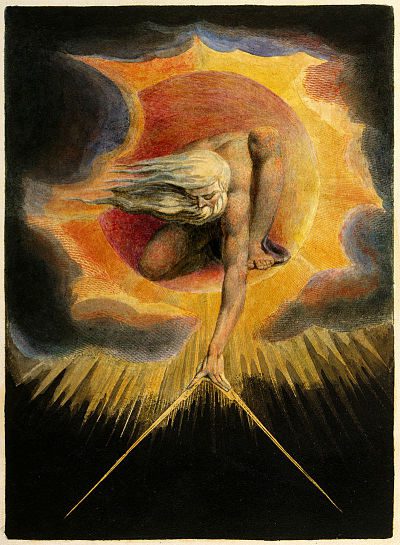 People know there is a Divine so deeply that it frustrates us. God is so obvious that if you try denying the truth, you end up spending all your energy fighting Him. Check any secular website and you will find content that is God obsessed. Yet one need not be in the tiny, fading minority that denies the Divine to long to see and know more about God.
God is. God is good and even the hint that this much goodness is out there fills us with desire. Goodness is beautiful and beauty stirs love. Imagine perfect goodness and beauty and then realize that we could experience piercing joy.
If God is, then the mere hint means that any romantic cannot rest until he sees this Beloved: this known Unknown. Anselm says:
I have never seen thee, O Lord, my God; I do not know thy form. What, O most high Lord, shall this man do, an exile far from thee? What shall thy servant do, anxious in his love of thee, and cast out afar from thy face? He pants to see thee, and thy face is too far from him. He longs to come to thee, and thy dwelling-place is inaccessible. He is eager to find thee, and knows not thy place. He desires to seek thee, and does not know thy face. Lord, thou art my God, and thou art my Lord, and never have I seen thee. It is thou that hast made me, and hast made me anew, and hast bestowed upon me all the blessing I enjoy; and not yet do I know thee. Finally, I was created to see thee, and not yet have I done that for which I was made.*
We need more romance in our lives, but we do not really do what it would take. We settle for small loves, petty pleasures, even religious ones. We are content with “fellowship” when called to communion. This makes sense, because we are not as romantic as we think we are nor do we love wisdom as much as we claim.
Socrates (as pictured by Plato) loved wisdom, yet wisdom is very, very great, mighty, and hard to grasp. Socrates and his student often became bewildered, a bit lost in the discussion. Sadly, that is where so many of us quit. We can be Christians and love God, but seeking God can still be confusing. Why? Just as in the pursuit of wisdom, this is a test for our souls . . . love’s test . . . to see if we really want what we say we want. Anselm says:
I sought blessings, and lo! confusion. I strove toward God, and I stumbled on myself. I sought calm in privacy, and I found tribulation and grief, in my inmost thoughts. I wished to smile in the joy of my mind, and I am compelled to frown by the sorrow of my heart. Gladness was hoped for, and lo! a source of frequent sighs! (Kindle Locations 551-553).
I find this hopeful. If Anselm, a bishop and sage, could be lost, then my being lost may be a stage and not a permanent condition! Anselm persists through confusion:
Thou dost invite us; do thou help us. I beseech thee, O Lord, that I may not lose hope in sighs, but may breathe anew in hope. (Kindle Locations 557-558).
If the greatest of the virtues is love, then (perhaps) the least is hope, yet hope is also foundational. Hope persists in seeking wisdom or God, not because hope is irrational, but because hope is willing to take a chance. Faith needs probability, but hope needs only possibility and desire. The hopeful person persists despite disappointment, because what else can she do? She has seen hints of God and the very hope of God is enough motivation to persist.
We look for roadmaps or images to help us see God. Nature is one such icon, because God made nature. Still nature is not God, so the image is imperfect. Nothing in nature is eternal. We look to ideas or numbers, because they too exist and like God are eternal, but ideas like numbers are impersonal. They are like God, but not God. I should be able to know myself and see the clearest image of God, humankind being created in His image, but sadly:
Lord, I acknowledge and I thank thee that thou hast created me in this thine image, in order that I may be mindful of thee, may conceive of thee, and love thee; but that image has been so consumed and wasted away by vices, and obscured by the smoke of wrong-doing, that it cannot achieve that for which it was made, except thou renew it, and create it anew. (Kindle Locations 565-568).
We are broken and so our broken souls prevent a clear vision of God. We need grace and mercy from God. In fact, we need God to come and become a man so that we can see the image of God unbroken. We cannot see God as God, that is too grand. In our present state, we would burn up from the pleasure! The good news is this . . . we are not called to be irrational, but we are called to believe in order to understand. We do not have belief in order to call up more belief: that would be irrational. We do not have belief in order to stop thinking: that would be unloving. Love never stops wanting to know about the beloved Instead, we believer in order to understand. Again Anselm:
For I do not seek to understand that I may believe, but I believe in order to understand. For this also I believe,—that unless I believed, I should not understand. (Kindle Locations 569-570).
We commit ourselves to love, persist, and then we see.
——————————-
*Saint Anselm (2009-06-09). Proslogium; Monologium; An Appendix in Behalf of the Fool by Gaunilon; and Cur Deus Homo – Enhanced Version (Kindle Locations 534-539). Christian Classics Ethereal Library. Kindle Edition.
This is based on a devotional at The College at The Saint Constantine School
Previous Post

April 7, 2017
A Prayer, A Meditation, a Discourse
Next Post
April 9, 2017 God: Think Great
Browse Our Archives
Select a Category Apologetics Art Culture Education On Books On Education Philosophy Politics Pop Culture Spiritual Reflections Uncategorized
Select a Month October 2026 September 2026 August 2026 July 2026 July 2025 June 2025 September 2024 July 2024 June 2024 December 2023 June 2023 September 2022 May 2022 April 2022 March 2022 February 2022 July 2021 June 2021 May 2021 April 2021 March 2021 February 2021 January 2021 December 2020 November 2020 October 2020 September 2020 August 2020 July 2020 June 2020 May 2020 April 2020 March 2020 February 2020 January 2020 December 2019 November 2019 October 2019 September 2019 August 2019 July 2019 June 2019 May 2019 April 2019 March 2019 February 2019 January 2019 December 2018 November 2018 October 2018 September 2018 August 2018 July 2018 June 2018 May 2018 April 2018 March 2018 February 2018 January 2018 December 2017 November 2017 October 2017 September 2017 August 2017 July 2017 June 2017 May 2017 April 2017 March 2017 February 2017 January 2017 December 2016 November 2016 October 2016 September 2016 August 2016 July 2016 June 2016 May 2016 April 2016 March 2016 February 2016 January 2016 December 2015 November 2015 October 2015 September 2015 August 2015 July 2015 June 2015 May 2015 April 2015 March 2015 February 2015 January 2015 November 2014 October 2014 September 2014 August 2014 July 2014 June 2014 May 2014 April 2014 March 2014 February 2014 January 2014 December 2013 November 2013 October 2013 September 2013 August 2013 July 2013 June 2013 May 2013 April 2013 March 2013 February 2013 January 2013 December 2012 November 2012 October 2012 September 2012 August 2012 July 2012 June 2012 May 2012
Follow Us!
TAKE THE
Religious Wisdom Quiz
What is Christian stewardship?
Select your answer to see how you score.
Ignoring others Caring for God's gifts Taking from the poor Hiding talents
Books by This Author John Mark Reynolds
Related posts from Eidos

Classical Education Must Teach Us to Make the...

The Iceberg is There: Verbosity Cannot Defeat Reality

One Weeping Icon at Christmas is Enough

The Power of Dissenting Societies: A Thought
TRENDING AT PATHEOS Evangelical

The REST of Your Life: A Creative Wrestles...
This week I had a conversation with a good friend from church....

How the author of the world's best hymn...
I've been working with John Newton for a while now. This makes...

Long before this Lectio Divina, Psalm 130 - the song - started...

What About the Trees? Another Living Parable
After I finished writing the last article about falling leaves as a...

Why Classical Education Is a Conversation, Not a...
Come and Read: Joy in Classical Education When I was a little...

Cornell University has received a great deal of negative publicity and intense...
view all Evangelical blogs
Ad-Free & Subscriber Log-In Subscription Support
- About Us
- 2026 Calendar
- Videos
- Podcasts
- Library of World Religions
- Faith In Media Tracker
- Advertise With Us
- Write for Us
- Privacy Policy
- Terms of Service
- Do Not Sell My Data
- Contact Us
- Radiant Digital
- Manage Newsletter Subscriptions
- Unsubscribe From Notifications
- Sitemap
Copyright 2008-2026, Patheos. All rights reserved.
Subscription Support Ad-Free & Subscriber Log-In
Follow Patheos