
BuddhistCatholicContemplativeEvangelicalGeneral ChristianHinduJewishLatter-day SaintMuslimNew VisionsProgressive Christian
Beliefs
- Buddhist
- Catholic
- Contemplative
- Evangelical
- General Christian
- Hindu
- Jewish
- Latter-day Saint
- More Voices
- Muslim
- New Visions
- Pagan
- Progressive Christian
Topics
- Religion News
- Food and Religion
- Sports and Religion
- Religious Art
- Religious Music and Entertainment
- Religious Events
- History and Religion
- Style and Religion
- Politics and Religion
- Women in Religion
- Recreation Outdoors and Religion
- Business Finance and Religion
- Careers Workplace and Religion
- Education and Religion
- Family Parenting and Religion
- Health Fitness and Religion
- Home and Religion
- Relationships and Religion
- Technology and Religion
- Travel and Religion
Columnists
- Buddhist Columnists
- Business Finance and Religion Columnists
- Careers Workplace and Religion Columnists
- Catholic Columnists
- Contemplative Columnists
- Education and Religion Columnists
- Evangelists Columnists
- Family Parenting and Religion Columnists
- General Christian Columnists
- Health Fitness and Religion Columnists
- Hindu Columnists
- History and Religion Columnists
- Home and Religion Columnists
- Jewish Columnists
- More Voices Columnists
- Latter Day Columnists
- Muslim Columnists
- New Visions Columnists
- Nonreligious Columnists
- Pagan Columnists
- Politics and Religion Columnists
- Progressive Columnists
- Recreation Outdoors and Religion Columnists
- Relationships and Religion Columnists
- Religion News Columnists
- Religious Art Columnists
- Religious Events Columnists
- Religious Music and Entertainment Columnists
- Sports and Religion Columnists
- Style and Religion Columnists
- Technology and Religion Columnists
- Travel and Religion Columnists
- Women in Religion Columnists
Resource Library
- 2026 Calendar
- Library of World Religions
- The 100 Most Holy Places on Earth
- Patheos Answers
- Podcasts
- Videos
- Faith Leaders Database
- Anglican Episcopalian
- Bahai
- Baptist
- Buddhism
- Christianity
- Confucianism
- Eastern Orthodoxy
- Hinduism
- Holiness and Pentecostal
- ISKCON
- Islam
- Judaism
- Lutheran
- Methodist
- The Church of Jesus Christ of Latter-day Saints
- New Age
- Paganism
- Presbytarian and Reformed
- Protestantism
- Religion Behind the Scenes
- Roman Catholic
- Scientology
- Shia Islam
- Sikhism
- Sufism
- Sunni Islam
- Taoism
- Zen
- See all religions
Research Tools
 Ad-Free & Subscriber Log-In Subscription Support
Ad-Free & Subscriber Log-In Subscription Support
Follow Patheos 

- Trending:
- Forgiveness
- |
- Marriage
- |
- Consciousness
- |
- Death Penalty
- |
- Election
- |
- Halloween

- Home
- Evangelical
- On An Opening Assumption
On An Opening Assumption
Last updated on: April 29, 2017 at 11:05 pm by John Mark N. Reynolds
On An Opening Assumption 2017-04-29T23:05:48-04:00 John Mark N. Reynolds
Patheos Explore the world's faith through different perspectives on religion and spirituality! Patheos has the views of the prevalent religions and spiritualities of the world.
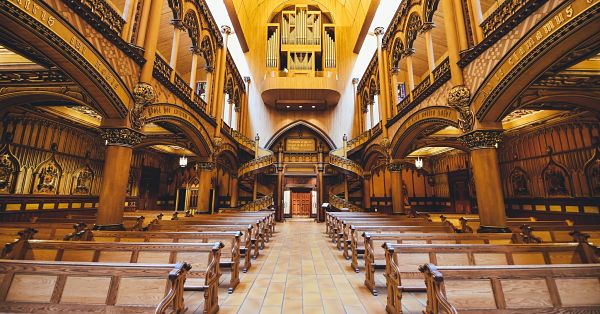 Is matter or ideas the stuff of reality? Or are both equally basic? Since all our experiences are “in our heads,” some thinkers believe mind and ideas must come first. Let’s call this “idealism.”*
Still stuff, matter and energy, seem to be out there and capable of being studied by multiple minds. Maybe our experiences and the stuff in us (mostly our brains) produce mind. Let’s use the term “materialism” for the idea that matter and energy are the basic substance of the universe.
Of course, ideas and especially numbers do not seem reducible to matter and energy. They don’t seem likely to spring forth from matter like Athena from the head of Zeus, since ideas (unlike Athena) aren’t made of stuff like Zeus. If ideas exist, then reducing them to matter seems impossible. On the other hand, stuff happens and that stuff seems real! As a result, some people think both matter and ideas exist as basic substances: “dualism.”
All three views have problems. Materialism has a hard time accounting for mind and consciousness. Idealism defies our immediate common sense intuition about the world outside our minds. Dualism struggles with how mind/ideas and matter interact if they are fundamentally different.
There are Christian thinkers who are idealists, dualists, and even materialists. Christianity, by itself, cannot settle the question, though most Christians have been dualists.
Some might think that science can settle the problem, but it cannot. If idealism is true, then science could proceed just as it does. The world need not be random or irregular if within Mind and, in fact, if both Western theism and idealism are true, there would be a reason to think regularity (“natural” laws) would be expected. God is wise and not crazy. He is just and good and not merely whimsical. Science obviously could also proceed on dualist or materialist assumptions.
All this makes a very simple point: prior philosophy and philosophical assumptions about reality cannot be settled by mere science. We cannot say: “Science works, so materialism is true.” since all these basic assumptions about reality would allow for science to be done. In the case of dualism, science (if limited to matter and energy) would deal with parts of reality. Within idealism, science would explain how things work up to a point, though not deal with the fundamental nature of reality.
This is not radical skepticism about reality or science, nor is it (by itself) an argument for theism. The philosophical arguments about all three ideas (or other concepts) are ongoing and views change and evolve. Science and Christian theology may make one option seem more plausible than the others. I think dualism is the best way to go, but most philosophers disagree.
Work keeps being done! So what has been settled? There is work to do!
Philosophy and science must work together. Science will not be able to dismiss philosophy. Philosophy should not (of course) ignore what science is saying at present. However, the nature of nature is not a question for science alone, because even the assumption that it is would be a philosophical assumption that is not part of science.
Naturally, this is a very simple overview of many complicated ideas and there is much more to be said, clarified, and decided before we could build a cathedral or suggest emptying one! However, this much must be said: those that do not understand the limits of science have fallen into a gross error.
———————–
*All the terms used here can have different (and more technical) meanings.
Previous Post

April 28, 2017
Learning from Old Elizabeth: to New Orleans
Next Post
April 30, 2017 Because It Is True . . .
Browse Our Archives
Select a Category Apologetics Art Culture Education On Books On Education Philosophy Politics Pop Culture Spiritual Reflections Uncategorized
Select a Month October 2026 September 2026 August 2026 July 2026 July 2025 June 2025 September 2024 July 2024 June 2024 December 2023 June 2023 September 2022 May 2022 April 2022 March 2022 February 2022 July 2021 June 2021 May 2021 April 2021 March 2021 February 2021 January 2021 December 2020 November 2020 October 2020 September 2020 August 2020 July 2020 June 2020 May 2020 April 2020 March 2020 February 2020 January 2020 December 2019 November 2019 October 2019 September 2019 August 2019 July 2019 June 2019 May 2019 April 2019 March 2019 February 2019 January 2019 December 2018 November 2018 October 2018 September 2018 August 2018 July 2018 June 2018 May 2018 April 2018 March 2018 February 2018 January 2018 December 2017 November 2017 October 2017 September 2017 August 2017 July 2017 June 2017 May 2017 April 2017 March 2017 February 2017 January 2017 December 2016 November 2016 October 2016 September 2016 August 2016 July 2016 June 2016 May 2016 April 2016 March 2016 February 2016 January 2016 December 2015 November 2015 October 2015 September 2015 August 2015 July 2015 June 2015 May 2015 April 2015 March 2015 February 2015 January 2015 November 2014 October 2014 September 2014 August 2014 July 2014 June 2014 May 2014 April 2014 March 2014 February 2014 January 2014 December 2013 November 2013 October 2013 September 2013 August 2013 July 2013 June 2013 May 2013 April 2013 March 2013 February 2013 January 2013 December 2012 November 2012 October 2012 September 2012 August 2012 July 2012 June 2012 May 2012
Follow Us!
TAKE THE
Religious Wisdom Quiz
Who was the major prophet during King Hezekiah's reign in Judah?
Select your answer to see how you score.
Jeremiah Daniel Isaiah Ezekiel
Books by This Author John Mark Reynolds
Related posts from Eidos

The Iceberg is There: Verbosity Cannot Defeat Reality

One Weeping Icon at Christmas is Enough

The Power of Dissenting Societies: A Thought

TRENDING AT PATHEOS Evangelical

The REST of Your Life: A Creative Wrestles...
This week I had a conversation with a good friend from church....

How the author of the world's best hymn...
I've been working with John Newton for a while now. This makes...

Long before this Lectio Divina, Psalm 130 - the song - started...

What About the Trees? Another Living Parable
After I finished writing the last article about falling leaves as a...

Why Classical Education Is a Conversation, Not a...
Come and Read: Joy in Classical Education When I was a little...

Cornell University has received a great deal of negative publicity and intense...
view all Evangelical blogs
Ad-Free & Subscriber Log-In Subscription Support
- About Us
- 2026 Calendar
- Videos
- Podcasts
- Library of World Religions
- Faith In Media Tracker
- Advertise With Us
- Write for Us
- Privacy Policy
- Terms of Service
- Do Not Sell My Data
- Contact Us
- Radiant Digital
- Manage Newsletter Subscriptions
- Unsubscribe From Notifications
- Sitemap
Copyright 2008-2026, Patheos. All rights reserved.
Subscription Support Ad-Free & Subscriber Log-In
Follow Patheos