
BuddhistCatholicContemplativeEvangelicalGeneral ChristianHinduJewishLatter-day SaintMuslimNew VisionsProgressive Christian
Beliefs
- Buddhist
- Catholic
- Contemplative
- Evangelical
- General Christian
- Hindu
- Jewish
- Latter-day Saint
- More Voices
- Muslim
- New Visions
- Pagan
- Progressive Christian
Topics
- Religion News
- Food and Religion
- Sports and Religion
- Religious Art
- Religious Music and Entertainment
- Religious Events
- History and Religion
- Style and Religion
- Politics and Religion
- Women in Religion
- Recreation Outdoors and Religion
- Business Finance and Religion
- Careers Workplace and Religion
- Education and Religion
- Family Parenting and Religion
- Health Fitness and Religion
- Home and Religion
- Relationships and Religion
- Technology and Religion
- Travel and Religion
Columnists
- Buddhist Columnists
- Business Finance and Religion Columnists
- Careers Workplace and Religion Columnists
- Catholic Columnists
- Contemplative Columnists
- Education and Religion Columnists
- Evangelists Columnists
- Family Parenting and Religion Columnists
- General Christian Columnists
- Health Fitness and Religion Columnists
- Hindu Columnists
- History and Religion Columnists
- Home and Religion Columnists
- Jewish Columnists
- More Voices Columnists
- Latter Day Columnists
- Muslim Columnists
- New Visions Columnists
- Nonreligious Columnists
- Pagan Columnists
- Politics and Religion Columnists
- Progressive Columnists
- Recreation Outdoors and Religion Columnists
- Relationships and Religion Columnists
- Religion News Columnists
- Religious Art Columnists
- Religious Events Columnists
- Religious Music and Entertainment Columnists
- Sports and Religion Columnists
- Style and Religion Columnists
- Technology and Religion Columnists
- Travel and Religion Columnists
- Women in Religion Columnists
Resource Library
- 2026 Calendar
- Library of World Religions
- The 100 Most Holy Places on Earth
- Patheos Answers
- Podcasts
- Videos
- Faith Leaders Database
- Anglican Episcopalian
- Bahai
- Baptist
- Buddhism
- Christianity
- Confucianism
- Eastern Orthodoxy
- Hinduism
- Holiness and Pentecostal
- ISKCON
- Islam
- Judaism
- Lutheran
- Methodist
- The Church of Jesus Christ of Latter-day Saints
- New Age
- Paganism
- Presbytarian and Reformed
- Protestantism
- Religion Behind the Scenes
- Roman Catholic
- Scientology
- Shia Islam
- Sikhism
- Sufism
- Sunni Islam
- Taoism
- Zen
- See all religions
Research Tools
 Ad-Free & Subscriber Log-In Subscription Support
Ad-Free & Subscriber Log-In Subscription Support
Follow Patheos 

- Trending:
- Forgiveness
- |
- Marriage
- |
- Consciousness
- |
- Death Penalty
- |
- Election
- |
- Halloween

- Home
- Evangelical
- God: Think Great
God: Think Great
Last updated on: April 9, 2017 at 10:12 am by John Mark N. Reynolds
God: Think Great 2017-04-09T10:12:32-04:00 John Mark N. Reynolds
Patheos Explore the world's faith through different perspectives on religion and spirituality! Patheos has the views of the prevalent religions and spiritualities of the world.
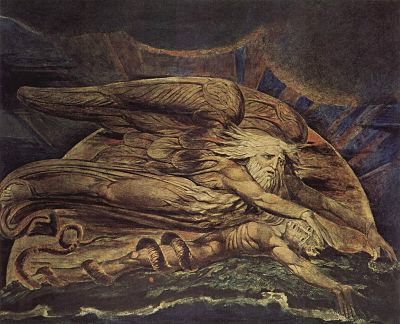 God is great. How great? Think great and then imagine greater. There is no possible world where God does not exist and no human that God does not love.
You and I might not have been born, but now that we are born, we exist. Nothing can change that. There was a time when it was possible that we would not be and then we were conceived. From that moment forward, our being was necessary. God who can do everything that can be done would not undo our existence, because this cannot be done. Once we were, then we cannot not be. God is different, because He was, is, and will be. He must be.
God is the one being who not only exists, but necessarily exists . . . at least if Saint Anselm is right. During his prayers, the saint developed, in a few lines, an argument for the necessary existence of God so powerful that some of the best philosophers in history (see Kant) have argued about it. Very good contemporary philosophers like my Biola colleague William Lane Craig and philosopher Alvin Plantinga have defended the ontological argument for God’s existence, though the majority of the profession is still not persuaded. Whatever one thinks of the argument, God is and God’s being, even the possibility of such a being, is awesome.
Most humankind (outside a globally declining group of secularists) know the Divine exists from experience and through other arguments. Once you know God exists, the ramifications are awe inspiring. First, you know that you might (just might!) be able to find total goodness. How good is that? Totally good and saints, sages, and sinners have been happy about this news ever since. The philosopher Anselm says, “Now, this is that single, necessary Being, in which is every good; nay, which is every good, and a single entire good, and the only good.”* (Kindle Locations 860-861).
Absolute beauty also exists if God exists. If Plato is right (and he usually is) and beauty inspires love, then God is a source of absolute romance. This is all very good news. We may be broken, but God is omni-competent. God has chosen to save, everybody gets mercy if we wish mercy:
O compassion, from what abundant sweetness and what sweet abundance dost thou well forth to us! O boundless goodness of God how passionately should sinners love thee! For thou savest the just, because justice goeth with them; but sinners thou dost free by the authority of justice. Those by the help of their deserts; these, although their deserts oppose. Those by acknowledging the goods thou hast granted; these by pardoning the evils thou hatest. O boundless goodness, which dost so exceed all understanding, let that compassion come upon me, which proceeds from thy so great abundance! Let it flow upon me, for it wells forth from thee. Spare, in mercy; avenge not, in justice.* (Kindle Locations 682-686).
God does not save us a little bit or so that we can suffer. Our suffering in this life is what God is saving us from so that we can delight in God’s goodness. Everything good will be redeemed, every pleasure find the proper place in God’s economy, and nothing will be lost or forgotten that should be found or remembered.
Finally, if there are many great delights in delectable things, what and how great is the delight in him who has made these delectable things.* (Kindle Locations 868-869).
How happy can we be? We will be as happy as we can be and, sadly, at the moment, we are too slight, too weak, for the strong joys of Heaven. We must love more, grow up in this life, redeem the time to get ready for joy. That joy is coming and it will be strong pleasure, great delight. If humankind is warned by God to turn from tainted pleasures, then it is so we can enjoy those pleasures when they are pure and undefiled. There is a great joy coming.
But if they shall so love God with all their heart, and all their mind, and all their soul, that still all the heart, and all the mind, and all the soul shall not suffice for the worthiness of this love; doubtless they will so rejoice with all their heart, and all their mind, and all their soul, that all the heart, and all the mind, and all the soul shall not suffice for the fulness of their joy. (Kindle Locations 912-914).
Anselm ends his prayer having seen at least one big idea (the ontological argument) and many theological truths. He starts broken and ends anticipating joy. Is he still broken? Surely, he is. We all are, but with the hope of a joy to come, faith in God that exists, and a love that drives us forward to Paradise.
I pray, O God, to know thee, to love thee, that I may rejoice in thee. And if I cannot attain to full joy in this life may I at least advance from day to day, until that joy shall come to the full. Let the knowledge of thee advance in me here, and there be made full. Let the love of thee increase, and there let it be full, that here my joy may be great in hope, and there full in truth. (Kindle Locations 929-931).
———————-
Based on class discussion at The College at The Saint Constantine School.
*Saint Anselm (2009-06-09). Proslogium; Monologium; An Appendix in Behalf of the Fool by Gaunilon; and Cur Deus Homo – Enhanced Version. Christian Classics Ethereal Library. Kindle Edition.
Previous Post

April 8, 2017
To See God: I Believe in Order to Understand
Next Post
April 10, 2017 Sweet Protestant Poetry
Browse Our Archives
Select a Category Apologetics Art Culture Education On Books On Education Philosophy Politics Pop Culture Spiritual Reflections Uncategorized
Select a Month October 2026 September 2026 August 2026 July 2026 July 2025 June 2025 September 2024 July 2024 June 2024 December 2023 June 2023 September 2022 May 2022 April 2022 March 2022 February 2022 July 2021 June 2021 May 2021 April 2021 March 2021 February 2021 January 2021 December 2020 November 2020 October 2020 September 2020 August 2020 July 2020 June 2020 May 2020 April 2020 March 2020 February 2020 January 2020 December 2019 November 2019 October 2019 September 2019 August 2019 July 2019 June 2019 May 2019 April 2019 March 2019 February 2019 January 2019 December 2018 November 2018 October 2018 September 2018 August 2018 July 2018 June 2018 May 2018 April 2018 March 2018 February 2018 January 2018 December 2017 November 2017 October 2017 September 2017 August 2017 July 2017 June 2017 May 2017 April 2017 March 2017 February 2017 January 2017 December 2016 November 2016 October 2016 September 2016 August 2016 July 2016 June 2016 May 2016 April 2016 March 2016 February 2016 January 2016 December 2015 November 2015 October 2015 September 2015 August 2015 July 2015 June 2015 May 2015 April 2015 March 2015 February 2015 January 2015 November 2014 October 2014 September 2014 August 2014 July 2014 June 2014 May 2014 April 2014 March 2014 February 2014 January 2014 December 2013 November 2013 October 2013 September 2013 August 2013 July 2013 June 2013 May 2013 April 2013 March 2013 February 2013 January 2013 December 2012 November 2012 October 2012 September 2012 August 2012 July 2012 June 2012 May 2012
Follow Us!
TAKE THE
Religious Wisdom Quiz
Who prepared Jesus' body for burial?
Select your answer to see how you score.
Roman Centurions Joseph of Arimathea Mary the Mother of Jesus Peter, James, and John
Books by This Author John Mark Reynolds
Related posts from Eidos

Classical Education Must Teach Us to Make the...

Classical Education and the Art of Dying Well

Golden, Golden, Golden: My Mother's Last Lesson

TRENDING AT PATHEOS Evangelical

The REST of Your Life: A Creative Wrestles...
This week I had a conversation with a good friend from church....

How the author of the world's best hymn...
I've been working with John Newton for a while now. This makes...

Long before this Lectio Divina, Psalm 130 - the song - started...

What About the Trees? Another Living Parable
After I finished writing the last article about falling leaves as a...

Why Classical Education Is a Conversation, Not a...
Come and Read: Joy in Classical Education When I was a little...

Cornell University has received a great deal of negative publicity and intense...
view all Evangelical blogs
Ad-Free & Subscriber Log-In Subscription Support
- About Us
- 2026 Calendar
- Videos
- Podcasts
- Library of World Religions
- Faith In Media Tracker
- Advertise With Us
- Write for Us
- Privacy Policy
- Terms of Service
- Do Not Sell My Data
- Contact Us
- Radiant Digital
- Manage Newsletter Subscriptions
- Unsubscribe From Notifications
- Sitemap
Copyright 2008-2026, Patheos. All rights reserved.
Subscription Support Ad-Free & Subscriber Log-In
Follow Patheos