
BuddhistCatholicContemplativeEvangelicalGeneral ChristianHinduJewishLatter-day SaintMuslimNew VisionsProgressive Christian
Beliefs
- Buddhist
- Catholic
- Contemplative
- Evangelical
- General Christian
- Hindu
- Jewish
- Latter-day Saint
- More Voices
- Muslim
- New Visions
- Pagan
- Progressive Christian
Topics
- Religion News
- Food and Religion
- Sports and Religion
- Religious Art
- Religious Music and Entertainment
- Religious Events
- History and Religion
- Style and Religion
- Politics and Religion
- Women in Religion
- Recreation Outdoors and Religion
- Business Finance and Religion
- Careers Workplace and Religion
- Education and Religion
- Family Parenting and Religion
- Health Fitness and Religion
- Home and Religion
- Relationships and Religion
- Technology and Religion
- Travel and Religion
Columnists
- Buddhist Columnists
- Business Finance and Religion Columnists
- Careers Workplace and Religion Columnists
- Catholic Columnists
- Contemplative Columnists
- Education and Religion Columnists
- Evangelists Columnists
- Family Parenting and Religion Columnists
- General Christian Columnists
- Health Fitness and Religion Columnists
- Hindu Columnists
- History and Religion Columnists
- Home and Religion Columnists
- Jewish Columnists
- More Voices Columnists
- Latter Day Columnists
- Muslim Columnists
- New Visions Columnists
- Nonreligious Columnists
- Pagan Columnists
- Politics and Religion Columnists
- Progressive Columnists
- Recreation Outdoors and Religion Columnists
- Relationships and Religion Columnists
- Religion News Columnists
- Religious Art Columnists
- Religious Events Columnists
- Religious Music and Entertainment Columnists
- Sports and Religion Columnists
- Style and Religion Columnists
- Technology and Religion Columnists
- Travel and Religion Columnists
- Women in Religion Columnists
Resource Library
- 2026 Calendar
- Library of World Religions
- The 100 Most Holy Places on Earth
- Patheos Answers
- Podcasts
- Videos
- Faith Leaders Database
- Anglican Episcopalian
- Bahai
- Baptist
- Buddhism
- Christianity
- Confucianism
- Eastern Orthodoxy
- Hinduism
- Holiness and Pentecostal
- ISKCON
- Islam
- Judaism
- Lutheran
- Methodist
- The Church of Jesus Christ of Latter-day Saints
- New Age
- Paganism
- Presbytarian and Reformed
- Protestantism
- Religion Behind the Scenes
- Roman Catholic
- Scientology
- Shia Islam
- Sikhism
- Sufism
- Sunni Islam
- Taoism
- Zen
- See all religions
Research Tools
 Ad-Free & Subscriber Log-In Subscription Support
Ad-Free & Subscriber Log-In Subscription Support
Follow Patheos 

- Trending:
- Forgiveness
- |
- Marriage
- |
- Consciousness
- |
- Death Penalty
- |
- Election
- |
- Halloween

- Home
- Evangelical
- Today I Go to the Circus
Today I Go to the Circus
Last updated on: March 24, 2017 at 7:40 am by John Mark N. Reynolds
Today I Go to the Circus 2017-03-24T07:40:41-04:00 John Mark N. Reynolds
Patheos Explore the world's faith through different perspectives on religion and spirituality! Patheos has the views of the prevalent religions and spiritualities of the world.
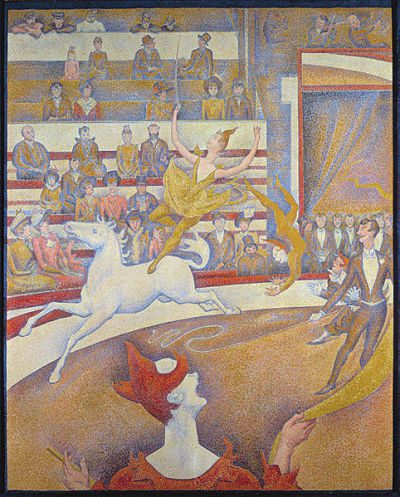 Right after I write this, I will go the circus and I hope to learn something from the experience of the Big Top while I still can.
I have been to Ringling Brothers and Barnum Bailey Circus twice, once as a child and once as a parent of children. I have also been to a few smaller circuses and to carnivals with circus-like features. I cannot say that I enjoyed the circus at any age, though I was one of the last generations to be told that kids love the circus. I did not even like the circus, at least the way I was told I would. Kids were supposed to love clowns, and with the exception of Bozo (cartoons and stories by Dad), I did not. Too many shows were making clowns scary on television, though perhaps the image that sealed the deal was from The Blue Angel. Somehow I bumped into this film as a kid and clowns were never funny again.
I am not the kid who dreamed of running away with the circus, but I am the kid who heard people say I should dream of running away with the circus! (Not my parents . . . who shared my “meh” attitude, I think.) Fundamentally, the circus interested me because it was full of things that were supposed to be full of wonder, but never seemed that wonderful. I have never actually seen a seal with a ball on his nose at any circus, but from my father to my children, people have shown us such images. The circus is a failed promise.
So why then am I going to the circus?
Oddly, I am going because it is dying, at least as Americans have known it. The circus is a very old form of entertainment and millions of people still go, but the circuses as great spectacle and not just nostalgia are nearly gone. FDR kept the circus trains running for morale in World War II, a future President might stop them for the same reason.
Perhaps, the death of the circus may be overstated. Perhaps the “greatest show on earth” can no longer make it, but even with declining ticket sales many people still go, just not enough to justify a huge arena size event. Will the circus return to the roots of a spectacle for small towns that bring live entertainment, three-dimensional (!) fun, to people who tire of screens?
I don’t know, I cannot be sure, but this much is true: great fiction used the circus as an image and I intend to see why. Tonight when I step into a great canvas tent, I will do what Mark Twain could do. I will see animals, acrobats, and clowns and wonder. I can also watch people and see what works there and what does not.
If not now, then maybe never. Educators take note: at least one great mind thought we could use some circus in our pedagogy. Charles Dickens used the Mr. Slearly’s circus to stand in opposition to Gradgrind’s evil “fact” based school in Dickens’ novel Hard Times. The circus was the world of dreams, imagination, and hope, though nobody could, quite, live there as a person was meant to live. The tinsel was not real and Dickens knew it. The performers were often frauds and a bit roguish, but Dickens liked them anyway. He thought they served as a rebuke to the practical men of affairs who were choking the life out childhood even then and who have commodified everything down to our very dreams since then.
If Dickens could see something in the circus, perhaps I can too while it is still possible to do so outside archival material.
And here I have a bit of advice from an older man to the young men out there . . . when just a boy, it occurred to me that the World War I generation was dying and that soon . . . very soon . . . I would not be able to talk to those who knew Russia before Communism or America before the Great War. If I waited until I was a grownup, it would too late and so it would have been.
I am glad for the few letters written, for talking to those older folk who were around, and doing what could be done to experience the world of Titanic and Teddy Roosevelt from people who saw it all with their own eyes. Now it is too late. There is no man alive who stood in the trenches of World War I.
There are now few who had CS Lewis in class (died 1963) and every day more of the Greatest Generation slips away. If you can speak to them, learn from them, be still and see the world through eyes that were young when Franklin Roosevelt America to war.
When you can, do what they did as they did it. Fly in a biplane, watch film that uses film, and dress up to go to a ballgame. If nothing else, turn the television off, if you can, “a traveling circus may pass your way . . . make the best of them, not the worst.”
Next Post

March 25, 2017 Yesterday I Went to the Circus and Here is What I Learned
Browse Our Archives
Select a Category Apologetics Art Culture Education On Books On Education Philosophy Politics Pop Culture Spiritual Reflections Uncategorized
Select a Month October 2026 September 2026 August 2026 July 2026 July 2025 June 2025 September 2024 July 2024 June 2024 December 2023 June 2023 September 2022 May 2022 April 2022 March 2022 February 2022 July 2021 June 2021 May 2021 April 2021 March 2021 February 2021 January 2021 December 2020 November 2020 October 2020 September 2020 August 2020 July 2020 June 2020 May 2020 April 2020 March 2020 February 2020 January 2020 December 2019 November 2019 October 2019 September 2019 August 2019 July 2019 June 2019 May 2019 April 2019 March 2019 February 2019 January 2019 December 2018 November 2018 October 2018 September 2018 August 2018 July 2018 June 2018 May 2018 April 2018 March 2018 February 2018 January 2018 December 2017 November 2017 October 2017 September 2017 August 2017 July 2017 June 2017 May 2017 April 2017 March 2017 February 2017 January 2017 December 2016 November 2016 October 2016 September 2016 August 2016 July 2016 June 2016 May 2016 April 2016 March 2016 February 2016 January 2016 December 2015 November 2015 October 2015 September 2015 August 2015 July 2015 June 2015 May 2015 April 2015 March 2015 February 2015 January 2015 November 2014 October 2014 September 2014 August 2014 July 2014 June 2014 May 2014 April 2014 March 2014 February 2014 January 2014 December 2013 November 2013 October 2013 September 2013 August 2013 July 2013 June 2013 May 2013 April 2013 March 2013 February 2013 January 2013 December 2012 November 2012 October 2012 September 2012 August 2012 July 2012 June 2012 May 2012
Follow Us!
TAKE THE
Religious Wisdom Quiz
Multitudes of locusts came in waves—the cutting, swarming, hopping, and destroying locusts. What did this plague foreshadow?
Select your answer to see how you score.
God's wrath A famine The day of the Lord An invasion
Books by This Author John Mark Reynolds
Related posts from Eidos

Why Classical Education Is a Conversation, Not a...

Does Classical Education Belong Only to the West?

Classical Education Must Teach Us to Make the...

Rooted: Why Classical Education Needs Community
TRENDING AT PATHEOS Evangelical

The REST of Your Life: A Creative Wrestles...
This week I had a conversation with a good friend from church....

How the author of the world's best hymn...
I've been working with John Newton for a while now. This makes...

Long before this Lectio Divina, Psalm 130 - the song - started...

What About the Trees? Another Living Parable
After I finished writing the last article about falling leaves as a...

Why Classical Education Is a Conversation, Not a...
Come and Read: Joy in Classical Education When I was a little...

Cornell University has received a great deal of negative publicity and intense...
view all Evangelical blogs
Ad-Free & Subscriber Log-In Subscription Support
- About Us
- 2026 Calendar
- Videos
- Podcasts
- Library of World Religions
- Faith In Media Tracker
- Advertise With Us
- Write for Us
- Privacy Policy
- Terms of Service
- Do Not Sell My Data
- Contact Us
- Radiant Digital
- Manage Newsletter Subscriptions
- Unsubscribe From Notifications
- Sitemap
Copyright 2008-2026, Patheos. All rights reserved.
Subscription Support Ad-Free & Subscriber Log-In
Follow Patheos