
BuddhistCatholicContemplativeEvangelicalGeneral ChristianHinduJewishLatter-day SaintMuslimNew VisionsProgressive Christian
Beliefs
- Buddhist
- Catholic
- Contemplative
- Evangelical
- General Christian
- Hindu
- Jewish
- Latter-day Saint
- More Voices
- Muslim
- New Visions
- Pagan
- Progressive Christian
Topics
- Religion News
- Food and Religion
- Sports and Religion
- Religious Art
- Religious Music and Entertainment
- Religious Events
- History and Religion
- Style and Religion
- Politics and Religion
- Women in Religion
- Recreation Outdoors and Religion
- Business Finance and Religion
- Careers Workplace and Religion
- Education and Religion
- Family Parenting and Religion
- Health Fitness and Religion
- Home and Religion
- Relationships and Religion
- Technology and Religion
- Travel and Religion
Columnists
- Buddhist Columnists
- Business Finance and Religion Columnists
- Careers Workplace and Religion Columnists
- Catholic Columnists
- Contemplative Columnists
- Education and Religion Columnists
- Evangelists Columnists
- Family Parenting and Religion Columnists
- General Christian Columnists
- Health Fitness and Religion Columnists
- Hindu Columnists
- History and Religion Columnists
- Home and Religion Columnists
- Jewish Columnists
- More Voices Columnists
- Latter Day Columnists
- Muslim Columnists
- New Visions Columnists
- Nonreligious Columnists
- Pagan Columnists
- Politics and Religion Columnists
- Progressive Columnists
- Recreation Outdoors and Religion Columnists
- Relationships and Religion Columnists
- Religion News Columnists
- Religious Art Columnists
- Religious Events Columnists
- Religious Music and Entertainment Columnists
- Sports and Religion Columnists
- Style and Religion Columnists
- Technology and Religion Columnists
- Travel and Religion Columnists
- Women in Religion Columnists
Resource Library
- 2026 Calendar
- Library of World Religions
- The 100 Most Holy Places on Earth
- Patheos Answers
- Podcasts
- Videos
- Faith Leaders Database
- Anglican Episcopalian
- Bahai
- Baptist
- Buddhism
- Christianity
- Confucianism
- Eastern Orthodoxy
- Hinduism
- Holiness and Pentecostal
- ISKCON
- Islam
- Judaism
- Lutheran
- Methodist
- The Church of Jesus Christ of Latter-day Saints
- New Age
- Paganism
- Presbytarian and Reformed
- Protestantism
- Religion Behind the Scenes
- Roman Catholic
- Scientology
- Shia Islam
- Sikhism
- Sufism
- Sunni Islam
- Taoism
- Zen
- See all religions
Research Tools
 Ad-Free & Subscriber Log-In Subscription Support
Ad-Free & Subscriber Log-In Subscription Support
Follow Patheos 

- Trending:
- Forgiveness
- |
- Marriage
- |
- Consciousness
- |
- Death Penalty
- |
- Election
- |
- Halloween

- Home
- Evangelical
- Learning to Love a Book: What I Learned from the Loathsome Moby Dick (1/3)
Learning to Love a Book: What I Learned from the Loathsome Moby Dick (1/3)
Last updated on: March 29, 2017 at 11:18 am by John Mark N. Reynolds
Learning to Love a Book: What I Learned from the Loathsome Moby Dick (1/3) 2017-03-29T11:18:52-04:00 John Mark N. Reynolds
Patheos Explore the world's faith through different perspectives on religion and spirituality! Patheos has the views of the prevalent religions and spiritualities of the world.
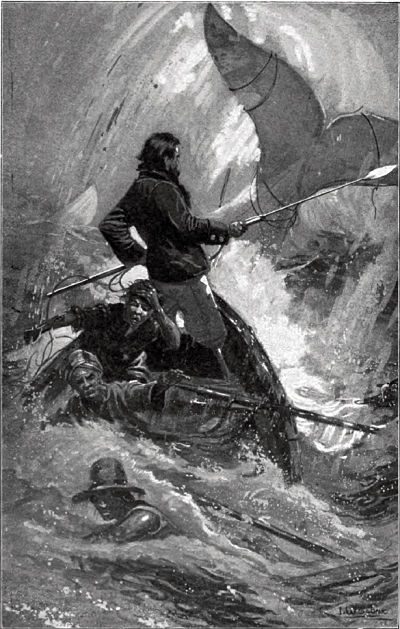
Moby Dick is one of the best books for just this moment in American history. Herman Melville makes mistakes about race, while trying to fight racism. He faces a broken political establishment and what seems to be a morally bankrupt set of Christians. The times were hostile to manual workers and republican virtues.
The book anticipates some of the lies we now believe. It even advocates for some of them! Melville’s masterpiece also balances those errors with a brilliant defense of republican values and the dignity of manual labor.
If our intellectual elites share his errors, perhaps they can learn from his virtues! Moby Dick has big, important things to say and does so wonderfully well, yet I hesitated to join a discussion on the book. My difficulty was simple, before I could learn, I had to read Moby Dick.
A stubborn student faces a great text he loathes.
Star Trek II: the Wrath of Khan is as close as I have gotten to loving Moby Dick. I may have been too young when I read it the first time, but I did not like it, not one bit. This does not shake Melville’s place in any literary canon, of course. He is immune to my petty preferences, yet the book seemed overly long (and I love Dickens!) and full of endless, obvious symbolism about God, man, and human fate, not to mention falsehoods about whales. Perhaps, it was partly that Melville reminded me of a super talented version of the kids I grew up with dealing with sorrow over a missing Daddy and an angry Calvinist God. Does one need this in novel length?
I don’t know, but so many people whose opinions about literature are first rate love the book that here I am having volunteered to teach the text. This is a test case. Can this book, next only to James Fenimore Cooper’s The Spy in my pantheon of loathed great books, overcome my foolishness? Or is there truth (as the devil on my left shoulder whispers) that Melville is second-rate, famous only because America is powerful and we need some great, older authors?
Surely not and yet . . .
Now to practice what I preach and learn. After years of reading a book, can one let go of everything and read simply?
Call me Ishmael, friend of the noble savage.
A long book begins with a very short, effective first sentence. We can call him Ishmael, but that brings us to the question of family names and true identity. Is he Ishmael? What is the relationship of the character to the rejected oldest son of Abraham?
What’s all this fuss I have been making about, thought I to myself—the man’s a human being just as I am: he has just as much reason to fear me, as I have to be afraid of him. Better sleep with a sober cannibal than a drunken Christian.
Melville, Herman (2009-10-04). Moby Dick, or, the whale (p. 24). Public Domain Books. Kindle Edition.
The book is full of Biblical names, the one area where Melville’s mother made sure he was deeply grounded in text. The rest of his education was spotty, but like the genius he was, Melville got more out of his few years of formal education than the rest of us get in decades.
It is also easy to forget the word play and the humor in a book that is full of death, revenge, and murderous imprecations on a whale. Whoever he is, Ishmael doesn’t always take himself seriously.
Melville the person is hard to like: authoritarian, tough on his wife and kids, very sure of his own importance. Yet this book is not an autobiography, a great genius, and Melville was obviously that, is able to transcend his own limitations (at least for a time!) and give us something more. Ishmael is escaping land to go to sea where he will be educated. Whaling will be (he says) his Harvard and Yale.
Ishmael is likable and unsure. At one time he is in a chapel listening to a fine sermon. We are given the entire text and yet a bit later he is sacrificing to his friend Queequeg’s idol. Ishmael has some sense of “niceness” or decency that he takes for granted. He inherited his moral structure from Christians in America, but Ishmael finds the pagan “islanders” decent.
There is a serious problem here.
The novel (like Melville) loathes racism on one level . . . all people are human regardless of color. Those whites who look down on Queequeg are absurd or evil, but the “natives” and their culture seem contrived. They have more in common with Enlightenment images of those who are in a state of nature than they do with real Pacific islanders. Oddly, this has the result of reducing their actual voices, a kind of moral colonialism that sees what it wishes to see, and is unfair to Christianity.
Is this book one in a long line of American intellectual products that looks abroad for answers? Some Americans would go to Paris or London, but others would look to people unspoiled by our “Babbittry.” Having created a civilization and soon to give the lives of a generation to free Southern slaves, the Christians in *Moby Dick (*1851) seem morally exhausted even before the Civil War. Is this book in a tradition that is clear on the mistakes of the Northern White, Anglo-Saxon, Protestant establishment and is simply exhausted with them?
Ishmael has to leave to be educated. If Melville forgets what he owes the Christian North, Christians must take a hard look at what went wrong. Abolition was good, building schools like Harvard was great, and creating the basis for a Republic was even better, but progress was slow. In 1851 emancipation was a decade away and too many Christians were doing too little to bring liberty or head off a coming blood bath.
Christendom has let Melville down, just like it has let the “nones” down.
Whatever was true in fact, the book reads like a man gagging on the Christian people around him in the United States: a Republic built on slave labor. He finds some good people, but prefers pagans. He knows what a Christian should believe, but does not see Christians believing it. In a crisis, or when it comes to making money, we are too often hypocrites or worse, our beliefs are inadequate to the reality. The simple idol worshiper has a better perspective.
. . . how it is that we still refuse to be comforted for those who we nevertheless maintain are dwelling in unspeakable bliss; why all the living so strive to hush all the dead; wherefore but the rumor of a knocking in a tomb will terrify a whole city. All these things are not without their meanings. (p. 35).
We also hear a very contemporary cry for the self for identity:
And if we obey God, we must disobey ourselves; and it is in this disobeying ourselves, wherein the hardness of obeying God consists. (p. 40).
Yet Ishmael has some hope in the eternal. He longs to believe. In fact, this was not irrational. There was still hope for better times.
If 1851 was a time when American political leadership seemed useless, compromised, and corrupt, then Lincoln was coming. If slavery seemed forever, the will to destroy it was growing in the Evangelical North. Too many people were religious until the bottom line was questioned:
…. very probably he had long since come to the sage and sensible conclusion that a man’s religion is one thing, and this practical world quite another. This world pays dividends. (p. 72).
This was true . . . far too true. Yet within a decade of this novel, the Northern seamen would fight for union and emancipation. For every hypocritical Quaker whaler, more interested in profits than souls, it would turn out there was a West Virginian farm boy who would march off to save the union and free the slaves in 1861. Melville is missing something.
He leaves land too quickly!
The growing industrialization and mechanization of the North must have made it seem as if we were all clockwork men. We were cogs in the new machines that were starting to take over from the highly skilled crafts.
Ishmael starts the book with hope for something more:
Methinks my body is but the lees of my better being. In fact take my body who will, take it I say, it is not me. And therefore three cheers for Nantucket; and come a stove boat and stove body when they will, for stave my soul, Jove himself cannot. (p. 35).
He hears some of what he needs in the chapel for seamen and their families, but those untainted by land, civilization, the islanders who make up the whale boats are better:
I’ll try a pagan friend, thought I, since Christian kindness has proved but hollow courtesy. (p. 49).
Sadly, the book falls into the trap, one still too common, of thinking a place that is known and mapped has become inauthentic:
Queequeg was a native of Rokovoko, an island far away to the West and South. It is not down in any map; true places never are. (p. 52).
From the person who hates a band the minute it becomes popular, to the man who cannot love any place for vacation that is popular, we keep this prejudice. Yet to map a place, think of the walking maps of Tolkien’s England, may be to love it and know it. Still Ishmael rejects this, because a map brings constraints, unlike the boundless and featureless ocean. Queequeg may be a cannibal who has eaten his enemies bodies in feasts, but he has been “defiled” by Christians. He cannot go home until the ocean has washed away the sins of the nineteenth century American society:
He answered no, not yet; and added that he was fearful Christianity, or rather Christians, had unfitted him for ascending the pure and undefiled throne of thirty pagan Kings before him. But by and by, he said, he would return,—as soon as he felt himself baptized again. For the nonce, however, he proposed to sail about, and sow his wild oats in all four oceans. They had made a harpooneer of him, and that barbed iron was in lieu of a sceptre now. (p. 54).
Paganism was not the answer, of course. Ishmael doesn’t love cannibalism, but then he doesn’t love Napoleon either. He thinks we are all ill:
Heaven have mercy on us all—Presbyterians and Pagans alike—for we are all somehow dreadfully cracked about the head, and sadly need mending. (p. 80). Public
For Ishmael, and one suspects Melville, religion should be natural and not torment.
Now, as I before hinted, I have no objection to any person’s religion, be it what it may, so long as that person does not kill or insult any other person, because that other person don’t believe it also. But when a man’s religion becomes really frantic; when it is a positive torment to him; and, in fine, makes this earth of ours an uncomfortable inn to lodge in; then I think it high time to take that individual aside and argue the point with him. (p. 84).
Ishmael speaks sense about hatred done in God’s name. However, he moves quickly from this sensible moral opinion to the idea that when religion makes us uncomfortable, then it is a problem. Fasting (Lent explicitly) is useless and harmful!
This undercuts morality altogether, of course. Morals are most useful when they make us uncomfortable, helping us do what we would not otherwise do. Fasting teaches us to constrain ourselves and civilization is built on saying “no” to individual desires. In fact, if there is divine revelation to Presbyterians or to pagans, then it would contain constraints that would help us say “no” to desire.
Ishmael is more optimistic about our situation. We may not need revelation, because left to themselves, everyone is a member of the same church:
Finding myself thus hard pushed, I replied. “I mean, sir, the same ancient Catholic Church to which you and I, and Captain Peleg there, and Queequeg here, and all of us, and every mother’s son and soul of us belong; the great and everlasting First Congregation of this whole worshipping world; we all belong to that; only some of us cherish some queer crotchets no ways touching the grand belief; in THAT we all join hands.” (p. 87).
There is value in hard work and equality in all laboring people.
The themes of the novel have been anti-racism, while falling for the “noble savage” myth. Ishmael rejects an exhausted Christendom, but a decade later that same group will bleed to free the slaves. He cares too much about his own identity, at least early in the book, and authenticity and too little about community.
The mistakes of the text look just like the mistakes of modern, lightly educated intellectualists. Moby Dick is not, however, merely modern. Melville refuses to glorify so-called intellectuals over manual workers:
Thou shalt see it shining in the arm that wields a pick or drives a spike; that democratic dignity which, on all hands, radiates without end from God; Himself! The great God absolute! The centre and circumference of all democracy! His omnipresence, our divine equality! (pp. 113-114).
Ishmael is dubious about the value of many so-called “philosophers” and he is right! Sometimes we do sit “thinking,” when we should be looking for whales:
Very often do the captains of such ships take those absent-minded young philosophers to task, upbraiding them with not feeling sufficient “interest” in the voyage; half-hinting that they are so hopelessly lost to all honourable ambition, as that in their secret souls they would rather not see whales than otherwise. But all in vain; those young Platonists have a notion that their vision is imperfect; they are short-sighted; what use, then, to strain the visual nerve? They have left their opera-glasses at home. (p. 155).
One must say the very thought of the philosopher whaler is worth the book! Ishmael puts a premium on doing and not just talking about doing things. He enjoys and is sensitive to beauty, but also wants to get fed and paid for his work! Such practicality is a very good thing!
But of course, as Star Trek II knew, one cannot read Moby Dick without eventually considering the toxic impact of obsession, the desire for vengeance, and hate.
Oh, obsession and hatred are also bad for a person.
This Khan is named Captain Ahab:
Then tossing both arms, with measureless imprecations he shouted out: “Aye, aye! and I’ll chase him round Good Hope, and round the Horn, and round the Norway Maelstrom, and round perdition’s flames before I give him up. And this is what ye have shipped for, men! to chase that white whale on both sides of land, and over all sides of earth, till he spouts black blood and rolls fin out. What say ye, men, will ye splice hands on it, now? I think ye do look brave.” (pp. 159-160).
There is more of that coming in the next two thirds of the book. The results for the ship and the people on that ship are not pretty.
“God keep me!—keep us all!” murmured Starbuck, lowly. (p. 161).
Amen.
—————————–
*A draft for a devotional for the college and high school at The Saint Constantine School.
Previous Post

March 28, 2017
Challenges, not Suffering
Next Post
March 30, 2017 Bomfoggery : White, Angry, and Dying: What I learned from Moby Dick 2/3
Browse Our Archives
Select a Category Apologetics Art Culture Education On Books On Education Philosophy Politics Pop Culture Spiritual Reflections Uncategorized
Select a Month October 2026 September 2026 August 2026 July 2026 July 2025 June 2025 September 2024 July 2024 June 2024 December 2023 June 2023 September 2022 May 2022 April 2022 March 2022 February 2022 July 2021 June 2021 May 2021 April 2021 March 2021 February 2021 January 2021 December 2020 November 2020 October 2020 September 2020 August 2020 July 2020 June 2020 May 2020 April 2020 March 2020 February 2020 January 2020 December 2019 November 2019 October 2019 September 2019 August 2019 July 2019 June 2019 May 2019 April 2019 March 2019 February 2019 January 2019 December 2018 November 2018 October 2018 September 2018 August 2018 July 2018 June 2018 May 2018 April 2018 March 2018 February 2018 January 2018 December 2017 November 2017 October 2017 September 2017 August 2017 July 2017 June 2017 May 2017 April 2017 March 2017 February 2017 January 2017 December 2016 November 2016 October 2016 September 2016 August 2016 July 2016 June 2016 May 2016 April 2016 March 2016 February 2016 January 2016 December 2015 November 2015 October 2015 September 2015 August 2015 July 2015 June 2015 May 2015 April 2015 March 2015 February 2015 January 2015 November 2014 October 2014 September 2014 August 2014 July 2014 June 2014 May 2014 April 2014 March 2014 February 2014 January 2014 December 2013 November 2013 October 2013 September 2013 August 2013 July 2013 June 2013 May 2013 April 2013 March 2013 February 2013 January 2013 December 2012 November 2012 October 2012 September 2012 August 2012 July 2012 June 2012 May 2012
Follow Us!
TAKE THE
Religious Wisdom Quiz
How many people did Jesus feed with five loaves and two fish?
Select your answer to see how you score.
About 100 About 12 About 7000 About 5000 men
Books by This Author John Mark Reynolds
Related posts from Eidos

Classical Education Must Teach Us to Make the...


The Man of All Talents: the Extraordinary Life...

TRENDING AT PATHEOS Evangelical

The REST of Your Life: A Creative Wrestles...
This week I had a conversation with a good friend from church....

How the author of the world's best hymn...
I've been working with John Newton for a while now. This makes...

Long before this Lectio Divina, Psalm 130 - the song - started...

What About the Trees? Another Living Parable
After I finished writing the last article about falling leaves as a...

Why Classical Education Is a Conversation, Not a...
Come and Read: Joy in Classical Education When I was a little...

Cornell University has received a great deal of negative publicity and intense...
view all Evangelical blogs
Ad-Free & Subscriber Log-In Subscription Support
- About Us
- 2026 Calendar
- Videos
- Podcasts
- Library of World Religions
- Faith In Media Tracker
- Advertise With Us
- Write for Us
- Privacy Policy
- Terms of Service
- Do Not Sell My Data
- Contact Us
- Radiant Digital
- Manage Newsletter Subscriptions
- Unsubscribe From Notifications
- Sitemap
Copyright 2008-2026, Patheos. All rights reserved.
Subscription Support Ad-Free & Subscriber Log-In
Follow Patheos