
BuddhistCatholicContemplativeEvangelicalGeneral ChristianHinduJewishLatter-day SaintMuslimNew VisionsProgressive Christian
Beliefs
- Buddhist
- Catholic
- Contemplative
- Evangelical
- General Christian
- Hindu
- Jewish
- Latter-day Saint
- More Voices
- Muslim
- New Visions
- Pagan
- Progressive Christian
Topics
- Religion News
- Food and Religion
- Sports and Religion
- Religious Art
- Religious Music and Entertainment
- Religious Events
- History and Religion
- Style and Religion
- Politics and Religion
- Women in Religion
- Recreation Outdoors and Religion
- Business Finance and Religion
- Careers Workplace and Religion
- Education and Religion
- Family Parenting and Religion
- Health Fitness and Religion
- Home and Religion
- Relationships and Religion
- Technology and Religion
- Travel and Religion
Columnists
- Buddhist Columnists
- Business Finance and Religion Columnists
- Careers Workplace and Religion Columnists
- Catholic Columnists
- Contemplative Columnists
- Education and Religion Columnists
- Evangelists Columnists
- Family Parenting and Religion Columnists
- General Christian Columnists
- Health Fitness and Religion Columnists
- Hindu Columnists
- History and Religion Columnists
- Home and Religion Columnists
- Jewish Columnists
- More Voices Columnists
- Latter Day Columnists
- Muslim Columnists
- New Visions Columnists
- Nonreligious Columnists
- Pagan Columnists
- Politics and Religion Columnists
- Progressive Columnists
- Recreation Outdoors and Religion Columnists
- Relationships and Religion Columnists
- Religion News Columnists
- Religious Art Columnists
- Religious Events Columnists
- Religious Music and Entertainment Columnists
- Sports and Religion Columnists
- Style and Religion Columnists
- Technology and Religion Columnists
- Travel and Religion Columnists
- Women in Religion Columnists
Resource Library
- 2026 Calendar
- Library of World Religions
- The 100 Most Holy Places on Earth
- Patheos Answers
- Podcasts
- Videos
- Faith Leaders Database
- Anglican Episcopalian
- Bahai
- Baptist
- Buddhism
- Christianity
- Confucianism
- Eastern Orthodoxy
- Hinduism
- Holiness and Pentecostal
- ISKCON
- Islam
- Judaism
- Lutheran
- Methodist
- The Church of Jesus Christ of Latter-day Saints
- New Age
- Paganism
- Presbytarian and Reformed
- Protestantism
- Religion Behind the Scenes
- Roman Catholic
- Scientology
- Shia Islam
- Sikhism
- Sufism
- Sunni Islam
- Taoism
- Zen
- See all religions
Research Tools
 Ad-Free & Subscriber Log-In Subscription Support
Ad-Free & Subscriber Log-In Subscription Support
Follow Patheos 

- Trending:
- Forgiveness
- |
- Marriage
- |
- Consciousness
- |
- Death Penalty
- |
- Election
- |
- Halloween

- Home
- Evangelical
- American Slavery Was Particularly Bad: We Should Have Known Better
American Slavery Was Particularly Bad: We Should Have Known Better
Last updated on: February 26, 2017 at 6:07 pm by John Mark N. Reynolds
American Slavery Was Particularly Bad: We Should Have Known Better 2017-02-26T18:07:56-04:00 John Mark N. Reynolds
Patheos Explore the world's faith through different perspectives on religion and spirituality! Patheos has the views of the prevalent religions and spiritualities of the world.
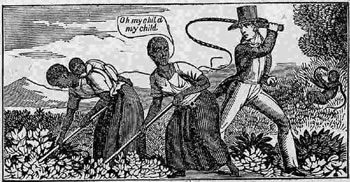 Change that comes too quickly can do more harm than good. Ask the Russians of 1917. Sadly, this general truth can be used by bad men to justify no change. Washington knew slavery must go, but he chased his runaways and lacked the moral courage to free his slaves in his lifetime. In an otherwise great man, this is a sickening sin.
Why are we so hard on Southern American Christians and their sin of race based slavery? Over time, the Christian community mostly had done the hard work of ending slavery. Serfdom still existed, but it was on its way out. The Tsar freed the serfs before Lincoln freed the slaves and serfs had more rights than American slaves.
Southern Christians knew better and their slowness in doing the right thing was a matter of economics and moral compromise. The rotten nature of the Confederate States of America, home to this peculiarly vile institution, is shown when autocratic Russia had more virtue. Pushkin had an easier time of it than Frederick Douglass . . . though in 2017, President Trump has given Frederick Doug Douglass a shout out, but the truth is, that his life as a slave was an inditement of much of the American church.
We had slaves not because we were Christian, the global church had learned this lesson long ago, but because we were American. This is a twist on American exceptionalism: we were exceptionally morally backwards on slavery.
Doubt it?
Read John Chrysostom (AD 349-407):
“Ah! How mighty a Master does he hint at 159 here! How startling the suggestion! It is this. “With what measure thou metest, it shall be measured unto thee again” (Matt. vii. 2.); lest thou hear the sentence, “Thou wicked servant. I forgave thee all that debt.” (Matt. xviii. 32.)
“And there is no respect of persons,” he saith, “with Him.”
Think not, he would say, that what is done towards a servant, He will therefore forgive, because done to a servant. Heathen laws indeed ads being the laws of men, recognize a difference between these kinds of offenses. But the law of the common Lord and Master of all, as doing good to all alike, and dispensing the same rights to all, knows no such difference.
But should any one ask, whence is slavery, and why it has found entrance into human life, (and many I know are both glad to ask such questions, and desirous to be informed of them,) I will tell you. Slavery is the fruit of covetousness, of degradation, of savagery; since Noah, we know, had no servant, nor had Abel, nor Seth, no, nor they who came after them. The thing was the fruit of sin, of rebellion against parents. Let children hearken to this, that whenever they are undutiful to their parents, they deserve to be servants. Such a child strips himself of his nobility of birth; for he who rebels against his father is no longer a son; and if he who rebels against his father is not a son, how shall he be a son who rebels against our true Father? He has departed from his nobility of birth, he has done outrage to nature. Then come also wars, and battles, and take their prisoners.459 Well, but Abraham, you will say, had servants. Yes, but he used them not as servants.”
Homily 22. http://www.ccel.org/ccel/schaff/npnf113.iii.iv.xxiii.html
Read this carefully. Imperial Rome might have justified slavery, but the minute Christianity became dominant, the leading prelate of the Empire, the man who preached in the Imperial City to the Emperor said that slavery was the “fruit of sin.” Every Eastern Church uses the service based on this man’s work. There was no turning back: all people were created equal and no laws could long keep them unequal.
Abraham Lincoln knew what George Whitfield did not: slavery was an abomination centuries after Chrysostom.
Slavery was, is, and always will be deeply incompatible with Christendom. Of course, abolition had to proceed slowly. Many slaves had better social status (in the system of economic slavery) than many freemen. This did not justify slavery, but it meant that emancipation had to be done with care. If it went too slowly, still it happened, and no part of the world where Christianity is in the majority knows slavery today.
It is the burning shame of the American South that some justified this treatment and blasphemous that some still soften the evil.
——————
I am thankful to Father Symeon Kees for this passage and a discussion at The Saint Constantine School that led to this post.
Previous Post

February 24, 2017
Getting Better Words
Next Post
February 26, 2017 Forgiveness is Not Cheap
Browse Our Archives
Select a Category Apologetics Art Culture Education On Books On Education Philosophy Politics Pop Culture Spiritual Reflections Uncategorized
Select a Month October 2026 September 2026 August 2026 July 2026 July 2025 June 2025 September 2024 July 2024 June 2024 December 2023 June 2023 September 2022 May 2022 April 2022 March 2022 February 2022 July 2021 June 2021 May 2021 April 2021 March 2021 February 2021 January 2021 December 2020 November 2020 October 2020 September 2020 August 2020 July 2020 June 2020 May 2020 April 2020 March 2020 February 2020 January 2020 December 2019 November 2019 October 2019 September 2019 August 2019 July 2019 June 2019 May 2019 April 2019 March 2019 February 2019 January 2019 December 2018 November 2018 October 2018 September 2018 August 2018 July 2018 June 2018 May 2018 April 2018 March 2018 February 2018 January 2018 December 2017 November 2017 October 2017 September 2017 August 2017 July 2017 June 2017 May 2017 April 2017 March 2017 February 2017 January 2017 December 2016 November 2016 October 2016 September 2016 August 2016 July 2016 June 2016 May 2016 April 2016 March 2016 February 2016 January 2016 December 2015 November 2015 October 2015 September 2015 August 2015 July 2015 June 2015 May 2015 April 2015 March 2015 February 2015 January 2015 November 2014 October 2014 September 2014 August 2014 July 2014 June 2014 May 2014 April 2014 March 2014 February 2014 January 2014 December 2013 November 2013 October 2013 September 2013 August 2013 July 2013 June 2013 May 2013 April 2013 March 2013 February 2013 January 2013 December 2012 November 2012 October 2012 September 2012 August 2012 July 2012 June 2012 May 2012
Follow Us!
TAKE THE
Religious Wisdom Quiz
I prayed that God would bless me and enlarge my territory, and He granted my request. Who am I?
Select your answer to see how you score.
Jabez David Solomon Hezekiah
Books by This Author John Mark Reynolds
Related posts from Eidos

Classical Education and the Art of Dying Well

Golden, Golden, Golden: My Mother's Last Lesson


When the Center Holds: A Tribute to My...
TRENDING AT PATHEOS Evangelical

The REST of Your Life: A Creative Wrestles...
This week I had a conversation with a good friend from church....

How the author of the world's best hymn...
I've been working with John Newton for a while now. This makes...

Long before this Lectio Divina, Psalm 130 - the song - started...

What About the Trees? Another Living Parable
After I finished writing the last article about falling leaves as a...

Why Classical Education Is a Conversation, Not a...
Come and Read: Joy in Classical Education When I was a little...

Cornell University has received a great deal of negative publicity and intense...
view all Evangelical blogs
Ad-Free & Subscriber Log-In Subscription Support
- About Us
- 2026 Calendar
- Videos
- Podcasts
- Library of World Religions
- Faith In Media Tracker
- Advertise With Us
- Write for Us
- Privacy Policy
- Terms of Service
- Do Not Sell My Data
- Contact Us
- Radiant Digital
- Manage Newsletter Subscriptions
- Unsubscribe From Notifications
- Sitemap
Copyright 2008-2026, Patheos. All rights reserved.
Subscription Support Ad-Free & Subscriber Log-In
Follow Patheos