
BuddhistCatholicContemplativeEvangelicalGeneral ChristianHinduJewishLatter-day SaintMuslimNew VisionsProgressive Christian
Beliefs
- Buddhist
- Catholic
- Contemplative
- Evangelical
- General Christian
- Hindu
- Jewish
- Latter-day Saint
- More Voices
- Muslim
- New Visions
- Pagan
- Progressive Christian
Topics
- Religion News
- Food and Religion
- Sports and Religion
- Religious Art
- Religious Music and Entertainment
- Religious Events
- History and Religion
- Style and Religion
- Politics and Religion
- Women in Religion
- Recreation Outdoors and Religion
- Business Finance and Religion
- Careers Workplace and Religion
- Education and Religion
- Family Parenting and Religion
- Health Fitness and Religion
- Home and Religion
- Relationships and Religion
- Technology and Religion
- Travel and Religion
Columnists
- Buddhist Columnists
- Business Finance and Religion Columnists
- Careers Workplace and Religion Columnists
- Catholic Columnists
- Contemplative Columnists
- Education and Religion Columnists
- Evangelists Columnists
- Family Parenting and Religion Columnists
- General Christian Columnists
- Health Fitness and Religion Columnists
- Hindu Columnists
- History and Religion Columnists
- Home and Religion Columnists
- Jewish Columnists
- More Voices Columnists
- Latter Day Columnists
- Muslim Columnists
- New Visions Columnists
- Nonreligious Columnists
- Pagan Columnists
- Politics and Religion Columnists
- Progressive Columnists
- Recreation Outdoors and Religion Columnists
- Relationships and Religion Columnists
- Religion News Columnists
- Religious Art Columnists
- Religious Events Columnists
- Religious Music and Entertainment Columnists
- Sports and Religion Columnists
- Style and Religion Columnists
- Technology and Religion Columnists
- Travel and Religion Columnists
- Women in Religion Columnists
Resource Library
- 2026 Calendar
- Library of World Religions
- The 100 Most Holy Places on Earth
- Patheos Answers
- Podcasts
- Videos
- Faith Leaders Database
- Anglican Episcopalian
- Bahai
- Baptist
- Buddhism
- Christianity
- Confucianism
- Eastern Orthodoxy
- Hinduism
- Holiness and Pentecostal
- ISKCON
- Islam
- Judaism
- Lutheran
- Methodist
- The Church of Jesus Christ of Latter-day Saints
- New Age
- Paganism
- Presbytarian and Reformed
- Protestantism
- Religion Behind the Scenes
- Roman Catholic
- Scientology
- Shia Islam
- Sikhism
- Sufism
- Sunni Islam
- Taoism
- Zen
- See all religions
Research Tools
 Ad-Free & Subscriber Log-In Subscription Support
Ad-Free & Subscriber Log-In Subscription Support
Follow Patheos 

- Trending:
- Forgiveness
- |
- Marriage
- |
- Consciousness
- |
- Death Penalty
- |
- Election
- |
- Halloween

- Home
- Evangelical
- Exegesis of “A Visit from St. Nicholas” or Why Santa is a Spelling Error for Satan
Exegesis of “A Visit from St. Nicholas” or Why Santa is a Spelling Error for Satan
Last updated on: November 30, 2016 at 8:45 am by John Mark N. Reynolds
Exegesis of “A Visit from St. Nicholas” or Why Santa is a Spelling Error for Satan 2016-11-30T08:45:55-04:00 John Mark N. Reynolds
Patheos Explore the world's faith through different perspectives on religion and spirituality! Patheos has the views of the prevalent religions and spiritualities of the world.
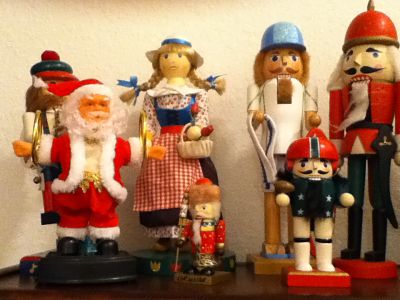
Can you find Satan Claws? He does not fit. Does he?
If you have never sent a text to the Boss and had autocorrect change a perfectly normal word to a very bad word, you have not yet known terror. When first it happens, you hope the Boss knows you do not speak that way and that autocorrect does funny things. Imagine the horror, however, if the Boss read your autocorrected post and liked it.
It is little known, very little known in fact, that the origins of Santa is an autocorrect error for Satan. Of course, the nineteenth century American origins of Santa could not be pure “autocorrect,” but the mistake was similar. Newspapers and books in the nineteenth century were set by hand using “type,” small pieces of lead that would print on the paper, and while the process was somewhat mechanized, much type was still set by hand. A piece of journalism could arrive letter perfect, but a bad typesetter could reduce it to rubble.
It happened, but first the backstory.
And so it was with the famous poem Twas the Night Before Christmas, which some have suggested*, is the first example of the modern “Santa” Claus. The actual title of the poem is “A Visit from St. Nicholas” and herein lies the problem. The typesetter did not know, as my own research has discovered that author “Clement Moore” had cribbed the poem from another now unknown author and the writings of Henry Livingston. The success of Dutch tales like The Legend of Sleepy Hollow had created a strong market for ghosts stories with ties to upstate New York and the poem aimed to fill the bill.
Here was the first bit and title as originally written*:
A Visit from Satan Nicholas
Twas the night before Christmas, when all thro’ the house
Not a creature was stirring, not even a mouse;
The stockings were hung by the chimney with care,
In hopes that Satan Nicholas soon would be there;
The children were nestled all snug in their beds,
While visions of sugar plums danc’d in their heads,
The poem was based on the popular description of the Devil as Old Nick. There was (apparently) a folk belief in New Amsterdam that “socks” would ward off Old Nick and so they would be placed near the chimney (the place of the infernal fire in the house) in hopes that when Old Nick came he would be warded off. Socks were used to symbolize the household being “shod in the gospel of peace.”
While folk tales leave little trace, the poem itself makes perfect sense if this interpretation is adopted universally. The rather sinister quiet that has descended on the house now makes sense, as does the aggressive and stealthy manner that Satan Nicholas comes to steal, rob, and destroy.
Sadly for the history of American horror, the type setter was from a liturgical church and nearsighted (of such coincidences history is made) and so mistook “Santa Nicholas” for “St. Nicholas.” St. Nicholas was, of course, the bishop of Myra and long associated with early December. Sadly for the organic unity of the poem, “St. Nicholas” has none of the characteristics of the historic Saint Nicholas. We have no reason to think the austere Bishop was fat, Lent gets rid of a jelly belly. He had no association with horned beasts like reindeer.
Now let yourself think of him as the Satan Nicholas:
- Satan Nicholas is associated with “clatter” just as Satan is in Milton’s Paradise Lost (see Pandemonium).
- Satan Nicholas brings a “wandering eye.” QED.
- Satan Nicholas rides a sleigh with reindeer. He is associated with cold as Satan is in Dante’s Inferno. This surprises many people who only think of Hell as fire. The ultimate level of Hell in Dante is frozen.
- Satan Nicholas lists his “familiars” including the Greek devil “Cupid.”
- He has a sleigh full of “toys.” Note the older definition of “toy:” a person treated by another as a source of pleasure or amusement rather than with due seriousness.
- He smokes.
- He is over weight (gluttony).
- He is dirty, not clean, as he is covered in “soot” (representing sin).
- He is inhuman (an “elf”). See Spencer for use of elf as a source of danger.
- He had a “broad face.”
- He is given to winking the eye.
- He gets no further than the “stockings” thus confirming the power of feet shod with peace.
- He wishes us a “happy” Christmas, not a joyful, blessed, or merry Christmas. He is the original Starbucks red cup.
Read the whole thing with the proper exegetical method and it will all be obvious to you. Santa Claus just is Satan’s claws in our holy day.
The mistake grew and any attempts to fix the original error only led to more as “Santa” was easily read as Satan by people who were preconditioned to see what they expected and not what was there.
What is the harm of “Santa” Claus story?
People came to believe that Satan was harmless imagination and play like Narnia, Oz, or Middle Earth.
Imagination, the act of sub-creation, is for beings created in the image of God. It is distinctly not for computers made out of meat who need proper programming to live well. We must pound the truth home . . . never allowing any use of figure, metaphors, or parable just like Jesus did.
People do not realize the danger of children associating good behavior with good outcomes.
What would happen if American youth came to associate being “nice” with good outcomes? We would get more nice people! This superficial niceness cannot save you, by grace you are saved, and a behavior has no value if it does not deal with eternal salvation. Why would we want neighbors who do not kill, just so they could get treats?
People do not realize that the grace Santa shows undermines our faith in a monetized world.
The world is tough and then you die. “Santa” is always giving gifts that are greater than those merited. No child has earned the sugar plums he receives and so indolence is inculcated.
People are incapable of separating imaginative play with reality . . .ever.
If you teach people to dream, then the dreams will win. Ask Joseph.
If you ever seen a dancing Santa, then you will know that this is really a dancing Satan. There is no doubt.
A century and one half later, Satan Claus is mainstream and the harm is done. The result of one typographical error, an autocorrect based on a misidentification of the character, has been the infiltration of evil into even the most innocent of homes.
Or maybe not.
———————-
*See The Origins of “Santa” Claus: An American Mythic Narrative from Moore to Barton. Peter R. Alexis (Alcinous Press, 1998)
———————-
This is, of course, a parody with a point.
Next Post

December 1, 2016 Communism: Always Evil, Defenders, Decent Dupes
Browse Our Archives
Select a Category Apologetics Art Culture Education On Books On Education Philosophy Politics Pop Culture Spiritual Reflections Uncategorized
Select a Month October 2026 September 2026 August 2026 July 2026 July 2025 June 2025 September 2024 July 2024 June 2024 December 2023 June 2023 September 2022 May 2022 April 2022 March 2022 February 2022 July 2021 June 2021 May 2021 April 2021 March 2021 February 2021 January 2021 December 2020 November 2020 October 2020 September 2020 August 2020 July 2020 June 2020 May 2020 April 2020 March 2020 February 2020 January 2020 December 2019 November 2019 October 2019 September 2019 August 2019 July 2019 June 2019 May 2019 April 2019 March 2019 February 2019 January 2019 December 2018 November 2018 October 2018 September 2018 August 2018 July 2018 June 2018 May 2018 April 2018 March 2018 February 2018 January 2018 December 2017 November 2017 October 2017 September 2017 August 2017 July 2017 June 2017 May 2017 April 2017 March 2017 February 2017 January 2017 December 2016 November 2016 October 2016 September 2016 August 2016 July 2016 June 2016 May 2016 April 2016 March 2016 February 2016 January 2016 December 2015 November 2015 October 2015 September 2015 August 2015 July 2015 June 2015 May 2015 April 2015 March 2015 February 2015 January 2015 November 2014 October 2014 September 2014 August 2014 July 2014 June 2014 May 2014 April 2014 March 2014 February 2014 January 2014 December 2013 November 2013 October 2013 September 2013 August 2013 July 2013 June 2013 May 2013 April 2013 March 2013 February 2013 January 2013 December 2012 November 2012 October 2012 September 2012 August 2012 July 2012 June 2012 May 2012
Follow Us!
TAKE THE
Religious Wisdom Quiz
What book tells about the beginning of the world?
Select your answer to see how you score.
Matthew Genesis Acts Psalms
Books by This Author John Mark Reynolds
Related posts from Eidos

Classical Education Must Teach Us to Make the...


The Man of All Talents: the Extraordinary Life...

TRENDING AT PATHEOS Evangelical

The REST of Your Life: A Creative Wrestles...
This week I had a conversation with a good friend from church....

How the author of the world's best hymn...
I've been working with John Newton for a while now. This makes...

Long before this Lectio Divina, Psalm 130 - the song - started...

What About the Trees? Another Living Parable
After I finished writing the last article about falling leaves as a...

Why Classical Education Is a Conversation, Not a...
Come and Read: Joy in Classical Education When I was a little...

Cornell University has received a great deal of negative publicity and intense...
view all Evangelical blogs
Ad-Free & Subscriber Log-In Subscription Support
- About Us
- 2026 Calendar
- Videos
- Podcasts
- Library of World Religions
- Faith In Media Tracker
- Advertise With Us
- Write for Us
- Privacy Policy
- Terms of Service
- Do Not Sell My Data
- Contact Us
- Radiant Digital
- Manage Newsletter Subscriptions
- Unsubscribe From Notifications
- Sitemap
Copyright 2008-2026, Patheos. All rights reserved.
Subscription Support Ad-Free & Subscriber Log-In
Follow Patheos