
BuddhistCatholicContemplativeEvangelicalGeneral ChristianHinduJewishLatter-day SaintMuslimNew VisionsProgressive Christian
Beliefs
- Buddhist
- Catholic
- Contemplative
- Evangelical
- General Christian
- Hindu
- Jewish
- Latter-day Saint
- More Voices
- Muslim
- New Visions
- Pagan
- Progressive Christian
Topics
- Religion News
- Food and Religion
- Sports and Religion
- Religious Art
- Religious Music and Entertainment
- Religious Events
- History and Religion
- Style and Religion
- Politics and Religion
- Women in Religion
- Recreation Outdoors and Religion
- Business Finance and Religion
- Careers Workplace and Religion
- Education and Religion
- Family Parenting and Religion
- Health Fitness and Religion
- Home and Religion
- Relationships and Religion
- Technology and Religion
- Travel and Religion
Columnists
- Buddhist Columnists
- Business Finance and Religion Columnists
- Careers Workplace and Religion Columnists
- Catholic Columnists
- Contemplative Columnists
- Education and Religion Columnists
- Evangelists Columnists
- Family Parenting and Religion Columnists
- General Christian Columnists
- Health Fitness and Religion Columnists
- Hindu Columnists
- History and Religion Columnists
- Home and Religion Columnists
- Jewish Columnists
- More Voices Columnists
- Latter Day Columnists
- Muslim Columnists
- New Visions Columnists
- Nonreligious Columnists
- Pagan Columnists
- Politics and Religion Columnists
- Progressive Columnists
- Recreation Outdoors and Religion Columnists
- Relationships and Religion Columnists
- Religion News Columnists
- Religious Art Columnists
- Religious Events Columnists
- Religious Music and Entertainment Columnists
- Sports and Religion Columnists
- Style and Religion Columnists
- Technology and Religion Columnists
- Travel and Religion Columnists
- Women in Religion Columnists
Resource Library
- 2026 Calendar
- Library of World Religions
- The 100 Most Holy Places on Earth
- Patheos Answers
- Podcasts
- Videos
- Faith Leaders Database
- Anglican Episcopalian
- Bahai
- Baptist
- Buddhism
- Christianity
- Confucianism
- Eastern Orthodoxy
- Hinduism
- Holiness and Pentecostal
- ISKCON
- Islam
- Judaism
- Lutheran
- Methodist
- The Church of Jesus Christ of Latter-day Saints
- New Age
- Paganism
- Presbytarian and Reformed
- Protestantism
- Religion Behind the Scenes
- Roman Catholic
- Scientology
- Shia Islam
- Sikhism
- Sufism
- Sunni Islam
- Taoism
- Zen
- See all religions
Research Tools
 Ad-Free & Subscriber Log-In Subscription Support
Ad-Free & Subscriber Log-In Subscription Support
Follow Patheos 

- Trending:
- Forgiveness
- |
- Marriage
- |
- Consciousness
- |
- Death Penalty
- |
- Election
- |
- Halloween

- Home
- Evangelical
- What I learned from “The Adventures of Reddy Fox”
What I learned from “The Adventures of Reddy Fox”
Last updated on: October 21, 2016 at 7:43 am by John Mark N. Reynolds
What I learned from “The Adventures of Reddy Fox” 2016-10-21T07:43:57-04:00 John Mark N. Reynolds
Patheos Explore the world's faith through different perspectives on religion and spirituality! Patheos has the views of the prevalent religions and spiritualities of the world.
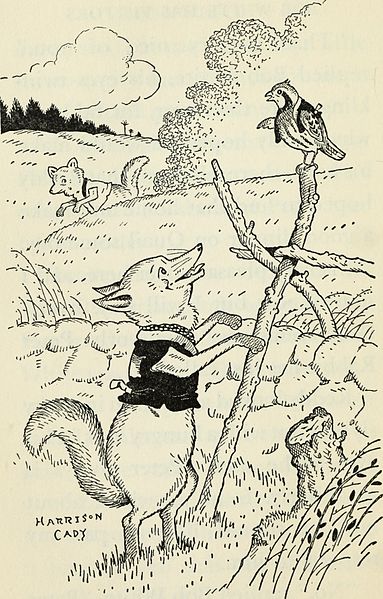 When I was a little boy, a go-to author was Thornton W. Burgess, because he simply was happy, kind, and gentle. There is nothing complicated about a Burgess book which creates an animal civilization that may never have existed in this actual world, but does exist in the mind of every child.
This is nature as it-sort-of-is if most animals were jolly misters and misses and even the bad ones are not so bad. These are not great books, but good books and if you can stand wholesome entertainment (much has made us unfit for it just now), then you are in for treat, because Burgess wrote piles of stories and books.
Burgess wrote from the Edwardian period to the early 1960’s. He started before World War I had destroyed hopes for a better Christian Century and outlived JFK and Camelot. He did not change, at least very much, but the world did. His love of nature was acceptable and so he has a sort-of-second life, but his values and his gentleness did not survive World War I and the memory of gentility kept fading until he died.
Of course, the world was not gentle for most people in 1905, where “Jim Crow” was not a character in a children’s book. Yet there was hope amongst good people that what they were getting right, increased education and opportunity, would keep spreading. We would all gentle our condition. But instead of the civility, manners, and love of Nature spreading, as so many Edwardians assumed they would, the gentility died. Perhaps, it had to do so as it was alive at the same time as colonialism, scientific racism, and the growth of the ideas of Freud, Darwin, Nietzsche, and Marx.
The sins of his era turned out to be more potent than the virtues, many of the hearts in the era were very dark indeed, as Joseph Conrad knew, but the virtues were there. Perhaps, just now, we might recall the virtues. We need them.
Getting ready to teach tomorrow, I turned to Burgess for hope and he gave it to me. What did I learn from The Adventures of Reddy Fox?
You should listen to your grandparents. This is very good advice generally. Sure some people have rotten grandparents, but for the rest of us we know this much: whatever mistakes our grandparents make (or made!), they have a different perspective.
Don’t boast.
The boaster is obnoxious and he prevents people from seeing his good qualities by exaggerating or drawing attention to self. He does not give credit to the community or those who have helped him get to where he is going. Cultures that encourage boasters, or reward boasting, end up narcissistic leaders.
Reddy Fox lost friends over his boasting:
Reddy Fox had been taught so much by Granny Fox that he began to feel very wise and very important. Reddy is naturally smart and he had been very quick to learn the tricks that old Granny Fox had taught him. But Reddy Fox is a boaster. Every day he swaggered about on the Green Meadows and bragged how smart he was. Blacky the Crow grew tired of Reddy’s boasting.
Burgess, Thornton W. (Thornton Waldo) (2009-10-04). Adventures of Reddy Fox (p. 9). Public Domain Books. Kindle Edition.
A humble attitude, God help me, is attractive and makes people wish to help. Real humility is not “poor mouthing,” pretending you are no good when you have done something well, but is the desire to let your deeds speak for you. Self-promotion consumes self until nothing authentic is left. I don’t know for sure how to escape it (is writing this post a case?), but we must.
It is dangerous to get too cocky:
Now it is one of the worst habits in the world to think too much of one’s self. And Reddy Fox had the habit. Oh, my, yes! Reddy Fox certainly did have the habit! When anyone mentioned Bowser the Hound, Reddy would turn up his nose and say: “Pooh! It’s the easiest thing in the world to fool him.”
Burgess, Thornton W. (Thornton Waldo) (2009-10-04). Adventures of Reddy Fox (p. 13). Public Domain Books. Kindle Edition.
As Han Solo warned Luke Skywalker “Don’t get cocky, kid.” Some success or learning can make us think we have arrived when the journey has just started! Cocky people are in more danger, because they rely on their little knowledge or few skills more than than they should. This puts them in danger, because they often overreach their talents.
Nobody likes a braggart and they are happy if he fails. Braggarts often are bullies.
Now people who brag and boast and who like to show off are almost sure to come to grief. And when they do, very few people are sorry for them.
Burgess, Thornton W. (Thornton Waldo) (2009-10-04). Adventures of Reddy Fox (p. 17). Public Domain Books. Kindle Edition.
Bullying is physical bragging. Just as boasts take up too much airtime, so bullying takes up too much space or power. Sometimes bullying is obvious: the kid pushing in line today, but sometimes it is sly. The sneaky bully will use religious language to get his way. He might say: “We should honor God’s leaders” when he just happens to be the leader.
This kind of bully is harder to spot, but falls just as hard.
Finally, if you are naughty, then bad things often happen, but the people who love you will stick with you.
Reddy Fox is not reformed at the end of the book, but he has learned to listen to his Granny. She sticks with him, even though he has much to learn and his naughtiness has made her life harder. This is great news and gives hope. If we change and do not just say we are sorry, then we make moral progress.
The good news, as Thornton Burgess shows, is that the decent, humble animals are happy, because they get to frolic in all the good things God gives us for free in nature: wind, sun, rain, and grass!
Just now, I wish I could get our leaders to sit down and read some Thornton Burgess.
—————-
*Caution: some of the “dialect” in the books may be meant to represent African-American or Southern dialect.
Previous Post

October 19, 2016
Conservatives, Race, and a New Party?
Next Post
October 21, 2016 DuBois was Right, but Washington Had a Point
Browse Our Archives
Select a Category Apologetics Art Culture Education On Books On Education Philosophy Politics Pop Culture Spiritual Reflections Uncategorized
Select a Month October 2026 September 2026 August 2026 July 2026 July 2025 June 2025 September 2024 July 2024 June 2024 December 2023 June 2023 September 2022 May 2022 April 2022 March 2022 February 2022 July 2021 June 2021 May 2021 April 2021 March 2021 February 2021 January 2021 December 2020 November 2020 October 2020 September 2020 August 2020 July 2020 June 2020 May 2020 April 2020 March 2020 February 2020 January 2020 December 2019 November 2019 October 2019 September 2019 August 2019 July 2019 June 2019 May 2019 April 2019 March 2019 February 2019 January 2019 December 2018 November 2018 October 2018 September 2018 August 2018 July 2018 June 2018 May 2018 April 2018 March 2018 February 2018 January 2018 December 2017 November 2017 October 2017 September 2017 August 2017 July 2017 June 2017 May 2017 April 2017 March 2017 February 2017 January 2017 December 2016 November 2016 October 2016 September 2016 August 2016 July 2016 June 2016 May 2016 April 2016 March 2016 February 2016 January 2016 December 2015 November 2015 October 2015 September 2015 August 2015 July 2015 June 2015 May 2015 April 2015 March 2015 February 2015 January 2015 November 2014 October 2014 September 2014 August 2014 July 2014 June 2014 May 2014 April 2014 March 2014 February 2014 January 2014 December 2013 November 2013 October 2013 September 2013 August 2013 July 2013 June 2013 May 2013 April 2013 March 2013 February 2013 January 2013 December 2012 November 2012 October 2012 September 2012 August 2012 July 2012 June 2012 May 2012
Follow Us!
TAKE THE
Religious Wisdom Quiz
What was primary method of debt resolution in Biblical times?
Select your answer to see how you score.
Slavery Fine payment Community service Public trial
Books by This Author John Mark Reynolds
Related posts from Eidos

Yet I Love Her: History and the Church


The Iceberg is There: Verbosity Cannot Defeat Reality

TRENDING AT PATHEOS Evangelical

The REST of Your Life: A Creative Wrestles...
This week I had a conversation with a good friend from church....

How the author of the world's best hymn...
I've been working with John Newton for a while now. This makes...

Long before this Lectio Divina, Psalm 130 - the song - started...

What About the Trees? Another Living Parable
After I finished writing the last article about falling leaves as a...

Why Classical Education Is a Conversation, Not a...
Come and Read: Joy in Classical Education When I was a little...

Cornell University has received a great deal of negative publicity and intense...
view all Evangelical blogs
Ad-Free & Subscriber Log-In Subscription Support
- About Us
- 2026 Calendar
- Videos
- Podcasts
- Library of World Religions
- Faith In Media Tracker
- Advertise With Us
- Write for Us
- Privacy Policy
- Terms of Service
- Do Not Sell My Data
- Contact Us
- Radiant Digital
- Manage Newsletter Subscriptions
- Unsubscribe From Notifications
- Sitemap
Copyright 2008-2026, Patheos. All rights reserved.
Subscription Support Ad-Free & Subscriber Log-In
Follow Patheos