
BuddhistCatholicContemplativeEvangelicalGeneral ChristianHinduJewishLatter-day SaintMuslimNew VisionsProgressive Christian
Beliefs
- Buddhist
- Catholic
- Contemplative
- Evangelical
- General Christian
- Hindu
- Jewish
- Latter-day Saint
- More Voices
- Muslim
- New Visions
- Pagan
- Progressive Christian
Topics
- Religion News
- Food and Religion
- Sports and Religion
- Religious Art
- Religious Music and Entertainment
- Religious Events
- History and Religion
- Style and Religion
- Politics and Religion
- Women in Religion
- Recreation Outdoors and Religion
- Business Finance and Religion
- Careers Workplace and Religion
- Education and Religion
- Family Parenting and Religion
- Health Fitness and Religion
- Home and Religion
- Relationships and Religion
- Technology and Religion
- Travel and Religion
Columnists
- Buddhist Columnists
- Business Finance and Religion Columnists
- Careers Workplace and Religion Columnists
- Catholic Columnists
- Contemplative Columnists
- Education and Religion Columnists
- Evangelists Columnists
- Family Parenting and Religion Columnists
- General Christian Columnists
- Health Fitness and Religion Columnists
- Hindu Columnists
- History and Religion Columnists
- Home and Religion Columnists
- Jewish Columnists
- More Voices Columnists
- Latter Day Columnists
- Muslim Columnists
- New Visions Columnists
- Nonreligious Columnists
- Pagan Columnists
- Politics and Religion Columnists
- Progressive Columnists
- Recreation Outdoors and Religion Columnists
- Relationships and Religion Columnists
- Religion News Columnists
- Religious Art Columnists
- Religious Events Columnists
- Religious Music and Entertainment Columnists
- Sports and Religion Columnists
- Style and Religion Columnists
- Technology and Religion Columnists
- Travel and Religion Columnists
- Women in Religion Columnists
Resource Library
- 2026 Calendar
- Library of World Religions
- The 100 Most Holy Places on Earth
- Patheos Answers
- Podcasts
- Videos
- Faith Leaders Database
- Anglican Episcopalian
- Bahai
- Baptist
- Buddhism
- Christianity
- Confucianism
- Eastern Orthodoxy
- Hinduism
- Holiness and Pentecostal
- ISKCON
- Islam
- Judaism
- Lutheran
- Methodist
- The Church of Jesus Christ of Latter-day Saints
- New Age
- Paganism
- Presbytarian and Reformed
- Protestantism
- Religion Behind the Scenes
- Roman Catholic
- Scientology
- Shia Islam
- Sikhism
- Sufism
- Sunni Islam
- Taoism
- Zen
- See all religions
Research Tools
 Ad-Free & Subscriber Log-In Subscription Support
Ad-Free & Subscriber Log-In Subscription Support
Follow Patheos 

- Trending:
- Forgiveness
- |
- Marriage
- |
- Consciousness
- |
- Death Penalty
- |
- Election
- |
- Halloween

- Home
- Evangelical
- The Matter of Britain: Cheer Up, We are Doomed
The Matter of Britain: Cheer Up, We are Doomed
Last updated on: October 22, 2016 at 9:21 am by John Mark N. Reynolds
The Matter of Britain: Cheer Up, We are Doomed 2016-10-22T09:21:47-04:00 John Mark N. Reynolds
Patheos Explore the world's faith through different perspectives on religion and spirituality! Patheos has the views of the prevalent religions and spiritualities of the world.
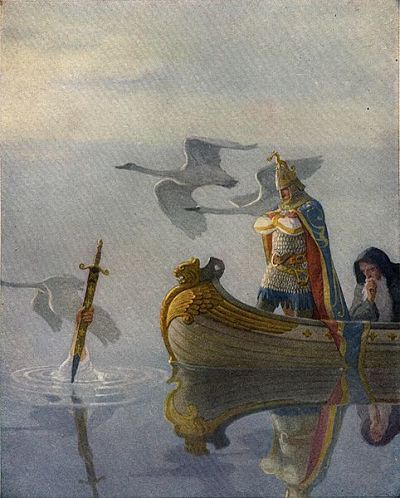 The Matter of Britain, the story of King Arthur, has defied great story telling. There are good books about Arthur, Once and Future King is the best, and even a classic, L’Morte d’Arthur, but the story is better than any of the books. Of films and television we should not speak given the generally horrible quality of the product except to say that The Sword in the Stone is a pleasant little film made while Walt Disney was dying, Search for the Holy Grail is funny, and Excalibur nearly (but not quite!) unwatchable. The rest of filmed Arthur ranges from fun schlock through mere schlock to offensive schlock. Given that Parsifal is the last opera Wagner finished before dying, one could conclude that dealing with Arthur is fatal. Correlation in two cases is not causation, however! The classic comic strip Prince Valiant has good moments and is lovely to look at, but the need to keep the series going caused story telling quality to decline over time. When Tolkien decided to create an English epic, he wisely avoided the story of Arthur and created his own world.
The story is magnetic, but like Atlantis, best told in few words. There is a reason that the images from the childhood books of King Arthur are better (always) than the prose. The story is an image: an icon of a King.
At heart, the story of Arthur is about the last chance of civilization and how that chance failed. In its oldest form, Arthur is a war leader or king who leads Roman Britain in one last stand against barbarian invasion. This moment of peace fails and a British dark age begins. All else, including the tales of chivalry and the love triangle introduced later between Arthur, Guinevere, and Lancelot, fall into this story of hope crushed.
Like a tale set on RMS Titanic, another story better than any rendition in existence, nothing can go right in the days of Arthur. The ache of hope that is doomed is the chief feeling of Arthur and a wish that somehow the story might end differently. Any attempt to make it end differently, to introduce some false note of cheer as the near-miss musical Camelot does, is to betray the story.
The story is hard, cruel, and utterly unsentimental. The best perish and worst win. Nothing human can endure and even the greatest victory like that Arthur won on Mount Badon will not produce immortal change. This doom grinds up any other story inserted into Arthur’s struggle: there is no romance here, just a flower that blooms when summer is over and just before bitter winter comes.
The Matter of Britain in its oldest form is an icon story: a picture that can lead us to heaven. It is an icon in words, but like a painted (or as the Orthodox sometimes say “written”) icon, there are few distracting details. In the best icons, we see what must be seen and then the image is silent.
Anything added to that outline will be deformed by it into a mere repetition of the deeper image. So it is with the Matter of Britain: Roman Britain was falling to barbarians, Arthur came and won a great victory, but hope was lost in the end.
Plato was one great Western writer capable of creating such icon stories. Tolkien was inspired to create by the image of a great wave sweeping away a powerful land. Plato invented the Atlantis myth in his Timaeus and elaborated on it in the “unfinished” Critias, but the details are not what captures, not what makes Atlantis a true story. Swollen pride, hubris, is laid low in a single day when Zeus speaks the word of doom. That is the story of Atlantis, the rest is incidental. These single image stories are so powerful that it is nearly impossible to do anything with them.
The difference between Atlantis and Arthur is instructive. The moral of the Atlantis story has been told in many cultures: the proud are cast down quickly, but great works go down with them.
The Matter of Britain is different, because Arthur fails precisely because he is good. Every elaboration on the Matter of Britain attempts to soften this blow, tries to add a sin to Camelot . . . to cheat the story by showing why Arthur had to fail, but the icon story is harder than any attempt to placate us. Arthur’s story is more deadly than Plato dared to tell. Arthur failed, because Arthur was good and this side of Heaven the good will always fail. Time is God’s severe mercy on our flawed works.
This is very Christian and only Christians can tell this truth, because the good news of Jesus makes the truth bearable. Arthur must fail, but Jesus will not fail. The Once and Future King is Jesus and any image of Jesus in this life must die in order to live. We are always losing, goodness fails, beauty is marred, and truth is twisted, but His Kingdom was, is, and is coming. We are losing, but not lost.
On the other side of a dark age, there is a rebirth. That rebirth will also be corrupted and great victories will be (seemingly) for nothing, but in the context of Christendom . . . all is well. The fundamental truth is that if we side with the good, we will be martyrs. Our hope can never be in short-term victory, because our hope will cheat us.
Win at Badon and sweep the Saxons to the sea and the Saxons will return tenfold when you are gone. There is no longterm victory against the shadow of that Hideous Strength until Jesus comes.
So is this despairing? It is joyful. We know, in our hearts, that our victories are partial and our best is not good enough if we are all there is, was, or ever will be. The good news is that in God nothing good is ever forgotten, lost, or unimportant. The victory of Arthur over barbarism lives even if it comes to be forgotten (like so many human deeds have been), because God knows.
The story of Arthur is a tragedy like every human life, but a tragedy set in a divine comedy. As a result of this freeing truth, we can be happy with our modest progress, with muddling through, and take the pressure off ourselves. We are not grand, victorious, or doers of immortal acts ourselves, but God makes it so. History vindicates nothing, because history has no soul, but God is a person and God saves the just.
Thank God.
Recently people have been telling me “we are doomed” and my thought has been: “What is new?” Of course, we are. Do they think our present leaders (even in the Church?) are greater than Arthur? Arthur could not do more than hold off the night in his time, but if Clinton or Trump or some other leader wins, then all will be well?
Badon’s victory will end in Britain’s defeat. The greater Arthur is, the harder will be his loss and we will lose him. So cry if you wish, but I intend to look to Heaven, do my duty, trust God, and tell the truth. I will build what I can because it is jolly and will help for now, not because evil will be defeated for all time. Let’s have a party and light a torch against the night, because the news is bad but the truth is good. We are not in it to win it in this life: we all end dead. Yet the old rogue Malory gets one thing right, his great icon story: Hic iacet Arthurus rex quondam rexque futurus,
Previous Post

October 21, 2016
DuBois was Right, but Washington Had a Point
Next Post
October 23, 2016 Hume Reminds Me: Take Me as I Am
Browse Our Archives
Select a Category Apologetics Art Culture Education On Books On Education Philosophy Politics Pop Culture Spiritual Reflections Uncategorized
Select a Month October 2026 September 2026 August 2026 July 2026 July 2025 June 2025 September 2024 July 2024 June 2024 December 2023 June 2023 September 2022 May 2022 April 2022 March 2022 February 2022 July 2021 June 2021 May 2021 April 2021 March 2021 February 2021 January 2021 December 2020 November 2020 October 2020 September 2020 August 2020 July 2020 June 2020 May 2020 April 2020 March 2020 February 2020 January 2020 December 2019 November 2019 October 2019 September 2019 August 2019 July 2019 June 2019 May 2019 April 2019 March 2019 February 2019 January 2019 December 2018 November 2018 October 2018 September 2018 August 2018 July 2018 June 2018 May 2018 April 2018 March 2018 February 2018 January 2018 December 2017 November 2017 October 2017 September 2017 August 2017 July 2017 June 2017 May 2017 April 2017 March 2017 February 2017 January 2017 December 2016 November 2016 October 2016 September 2016 August 2016 July 2016 June 2016 May 2016 April 2016 March 2016 February 2016 January 2016 December 2015 November 2015 October 2015 September 2015 August 2015 July 2015 June 2015 May 2015 April 2015 March 2015 February 2015 January 2015 November 2014 October 2014 September 2014 August 2014 July 2014 June 2014 May 2014 April 2014 March 2014 February 2014 January 2014 December 2013 November 2013 October 2013 September 2013 August 2013 July 2013 June 2013 May 2013 April 2013 March 2013 February 2013 January 2013 December 2012 November 2012 October 2012 September 2012 August 2012 July 2012 June 2012 May 2012
Follow Us!
TAKE THE
Religious Wisdom Quiz
Who prophesied the fall of Babylon?
Select your answer to see how you score.
Ezekiel Isaiah Jeremiah Daniel
Books by This Author John Mark Reynolds
Related posts from Eidos

Classical Education Must Teach Us to Make the...

Yet I Love Her: History and the Church


The Iceberg is There: Verbosity Cannot Defeat Reality
TRENDING AT PATHEOS Evangelical

The REST of Your Life: A Creative Wrestles...
This week I had a conversation with a good friend from church....

How the author of the world's best hymn...
I've been working with John Newton for a while now. This makes...

Long before this Lectio Divina, Psalm 130 - the song - started...

What About the Trees? Another Living Parable
After I finished writing the last article about falling leaves as a...

Why Classical Education Is a Conversation, Not a...
Come and Read: Joy in Classical Education When I was a little...

Cornell University has received a great deal of negative publicity and intense...
view all Evangelical blogs
Ad-Free & Subscriber Log-In Subscription Support
- About Us
- 2026 Calendar
- Videos
- Podcasts
- Library of World Religions
- Faith In Media Tracker
- Advertise With Us
- Write for Us
- Privacy Policy
- Terms of Service
- Do Not Sell My Data
- Contact Us
- Radiant Digital
- Manage Newsletter Subscriptions
- Unsubscribe From Notifications
- Sitemap
Copyright 2008-2026, Patheos. All rights reserved.
Subscription Support Ad-Free & Subscriber Log-In
Follow Patheos