
BuddhistCatholicContemplativeEvangelicalGeneral ChristianHinduJewishLatter-day SaintMuslimNew VisionsProgressive Christian
Beliefs
- Buddhist
- Catholic
- Contemplative
- Evangelical
- General Christian
- Hindu
- Jewish
- Latter-day Saint
- More Voices
- Muslim
- New Visions
- Pagan
- Progressive Christian
Topics
- Religion News
- Food and Religion
- Sports and Religion
- Religious Art
- Religious Music and Entertainment
- Religious Events
- History and Religion
- Style and Religion
- Politics and Religion
- Women in Religion
- Recreation Outdoors and Religion
- Business Finance and Religion
- Careers Workplace and Religion
- Education and Religion
- Family Parenting and Religion
- Health Fitness and Religion
- Home and Religion
- Relationships and Religion
- Technology and Religion
- Travel and Religion
Columnists
- Buddhist Columnists
- Business Finance and Religion Columnists
- Careers Workplace and Religion Columnists
- Catholic Columnists
- Contemplative Columnists
- Education and Religion Columnists
- Evangelists Columnists
- Family Parenting and Religion Columnists
- General Christian Columnists
- Health Fitness and Religion Columnists
- Hindu Columnists
- History and Religion Columnists
- Home and Religion Columnists
- Jewish Columnists
- More Voices Columnists
- Latter Day Columnists
- Muslim Columnists
- New Visions Columnists
- Nonreligious Columnists
- Pagan Columnists
- Politics and Religion Columnists
- Progressive Columnists
- Recreation Outdoors and Religion Columnists
- Relationships and Religion Columnists
- Religion News Columnists
- Religious Art Columnists
- Religious Events Columnists
- Religious Music and Entertainment Columnists
- Sports and Religion Columnists
- Style and Religion Columnists
- Technology and Religion Columnists
- Travel and Religion Columnists
- Women in Religion Columnists
Resource Library
- 2026 Calendar
- Library of World Religions
- The 100 Most Holy Places on Earth
- Patheos Answers
- Podcasts
- Videos
- Faith Leaders Database
- Anglican Episcopalian
- Bahai
- Baptist
- Buddhism
- Christianity
- Confucianism
- Eastern Orthodoxy
- Hinduism
- Holiness and Pentecostal
- ISKCON
- Islam
- Judaism
- Lutheran
- Methodist
- The Church of Jesus Christ of Latter-day Saints
- New Age
- Paganism
- Presbytarian and Reformed
- Protestantism
- Religion Behind the Scenes
- Roman Catholic
- Scientology
- Shia Islam
- Sikhism
- Sufism
- Sunni Islam
- Taoism
- Zen
- See all religions
Research Tools
 Ad-Free & Subscriber Log-In Subscription Support
Ad-Free & Subscriber Log-In Subscription Support
Follow Patheos 

- Trending:
- Forgiveness
- |
- Marriage
- |
- Consciousness
- |
- Death Penalty
- |
- Election
- |
- Halloween

- Home
- Evangelical
- Hume Reminds Me: Take Me as I Am
Hume Reminds Me: Take Me as I Am
Last updated on: October 23, 2016 at 7:02 am by John Mark N. Reynolds
Hume Reminds Me: Take Me as I Am 2016-10-22T11:17:11-04:00 John Mark N. Reynolds
Patheos Explore the world's faith through different perspectives on religion and spirituality! Patheos has the views of the prevalent religions and spiritualities of the world.
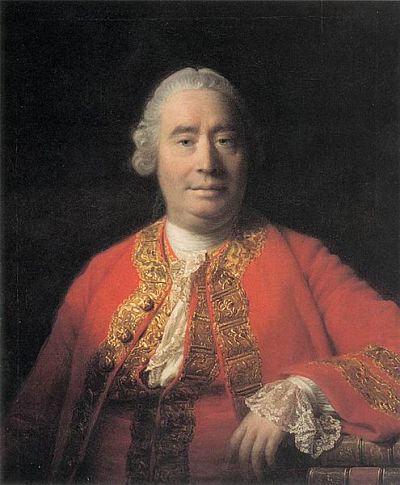
Wake me up, David Hume!
When it comes to hard thinkers, it is all too easy to read them as judges. Does this guy line up with what I think? If so, then I can strip mine his writing for pithy quotes that make me seem smart! If not, then I can take him down and a critical essay is always easier to write. There is an entire style of Christian apologetics that takes on the job of standing in judgement of the greats.
Do they have a Biblical worldview? Often, this is another way of saying: “Can this be read while I stay in a dogmatic slumber?”
We should have a Christian worldview, because I think Christianity is good, true, and beautiful. However, we cannot know other ideas, or even our own ideas, by first judging them. I am convinced that to read a book well one must begin by listening as if every word is true. A second reading will allow more critical thought and then a third reading can start the process of probing, dialog, and criticism.
A god might be able to understand without first embracing, but a man cannot. Of course, there is danger, great deadly danger, in embracing ideas that turn out to be false, ugly, and wicked. What to do?
We can be thankful that training can help us learn to love an idea as a hypothesis, tentatively, without simultaneously adopting it in our daily living. We consider, we take the argument on its own terms, but we need not act.
There is a difference between intellectual love and actual love. Intellectual love considers, admires brilliance, takes a great thinker on his or her terms, but stands a bit apart. The real lover is totally committed. The skill of intellectual detachment can be abused (obviously), but it is important, because it creates a compartment where we can examine ideas on their own terms and consider if we have been wrong, even totally wrong, all along.
David Hume and how we treat him is a test for all of us: skeptics, atheists, theists, and everyone else who loves big ideas argued boldly.
David Hume is a joy to read, but (as one student said to me) tricksy. When he writes about religion, does he mean everything he says? Is he a deist messing with traditional religion? Is he a closeted atheist or agnostic? What of his defense of faith?
If Plato is hard to pin down, because he is cryptic, Hume is hard to pin down because he is clear, but abundantly! In any given passage he seems to stake a claim, but he says so much over his whole body of work, with so much nuance (yet any given passage is a model of lucidity!), that taken as a whole, he can be hard to understand.
Is Hume a skeptic? Does he think science can be grounded in reason? What of ethics?
In reading people writing about Hume, I see two dangers: seeing the Hume we wish to see or seeing a devil to be damned. Hume is too deep, too careful, and, yes, too tricksy (old rouge!) to be labeled easily. There are few (if any!) things I could say about Hume (as a non-expert) that would not be disputed based on text from the author.
Yet Hume is not empty, contradictory, or a sophist. If anything surely is true of him, he is an intellectual mood and not a list of ideas. He is a mood of a mind awake . . . someone who wants to wake us up from comfortable assumptions too easily adopted. The Enlightenment loved science and would lionize anyone, like that old fraud Benjamin Franklin, who could mix some science with moral platitudes and easy living. David Hume liked easy living, but he did not like scientism. If you thought you could go from what is (which science can find), to what ought to be, then David Hume wanted you to wake up. More than one “new” atheist needs this reminder.
Yet religious types (like I am!) should not be too comfortable, because Hume blows up the comfortable sleep of those of us who believe in miracles. He points out (more or less) that we should never accept that miracles happen, because the extraordinary claims of miracles require such extraordinary evidence that we are never going to get it. If we saw a “miracle,” then it is more likely fraud, then a miracle.
My experience has been that theists like the Hume who is “woke” on scientism and atheists like the Hume who is “woke” on miracles. God help us (!), we have to love the Hume that is. He is on nobody’s side and that is good.
If I had to guess about Hume, then I would say he is a a philosopher like Nietzsche who is hard on all his contemporaries, because everyone does not see how much they take for granted. This is marvelous . . . and makes me wish to be like Hume: a mind awake.
——————–
This post is base on a discussion at The Saint Constantine School. Thanks especially to Ms. Clark for not letting me get stuck on my favorite ideas. Come join us in discussion!
Previous Post

October 22, 2016
The Matter of Britain: Cheer Up, We are Doomed
Next Post
October 24, 2016 Love Nature, Because God
Browse Our Archives
Select a Category Apologetics Art Culture Education On Books On Education Philosophy Politics Pop Culture Spiritual Reflections Uncategorized
Select a Month October 2026 September 2026 August 2026 July 2026 July 2025 June 2025 September 2024 July 2024 June 2024 December 2023 June 2023 September 2022 May 2022 April 2022 March 2022 February 2022 July 2021 June 2021 May 2021 April 2021 March 2021 February 2021 January 2021 December 2020 November 2020 October 2020 September 2020 August 2020 July 2020 June 2020 May 2020 April 2020 March 2020 February 2020 January 2020 December 2019 November 2019 October 2019 September 2019 August 2019 July 2019 June 2019 May 2019 April 2019 March 2019 February 2019 January 2019 December 2018 November 2018 October 2018 September 2018 August 2018 July 2018 June 2018 May 2018 April 2018 March 2018 February 2018 January 2018 December 2017 November 2017 October 2017 September 2017 August 2017 July 2017 June 2017 May 2017 April 2017 March 2017 February 2017 January 2017 December 2016 November 2016 October 2016 September 2016 August 2016 July 2016 June 2016 May 2016 April 2016 March 2016 February 2016 January 2016 December 2015 November 2015 October 2015 September 2015 August 2015 July 2015 June 2015 May 2015 April 2015 March 2015 February 2015 January 2015 November 2014 October 2014 September 2014 August 2014 July 2014 June 2014 May 2014 April 2014 March 2014 February 2014 January 2014 December 2013 November 2013 October 2013 September 2013 August 2013 July 2013 June 2013 May 2013 April 2013 March 2013 February 2013 January 2013 December 2012 November 2012 October 2012 September 2012 August 2012 July 2012 June 2012 May 2012
Follow Us!
TAKE THE
Religious Wisdom Quiz
Who was Samson's mother?
Select your answer to see how you score.
Manoah's wife Hannah Ruth Delilah
Books by This Author John Mark Reynolds
Related posts from Eidos

Why Classical Education Is a Conversation, Not a...

Does Classical Education Belong Only to the West?

Classical Education Must Teach Us to Make the...

Rooted: Why Classical Education Needs Community
TRENDING AT PATHEOS Evangelical

The REST of Your Life: A Creative Wrestles...
This week I had a conversation with a good friend from church....

How the author of the world's best hymn...
I've been working with John Newton for a while now. This makes...

Long before this Lectio Divina, Psalm 130 - the song - started...

What About the Trees? Another Living Parable
After I finished writing the last article about falling leaves as a...

Why Classical Education Is a Conversation, Not a...
Come and Read: Joy in Classical Education When I was a little...

Cornell University has received a great deal of negative publicity and intense...
view all Evangelical blogs
Ad-Free & Subscriber Log-In Subscription Support
- About Us
- 2026 Calendar
- Videos
- Podcasts
- Library of World Religions
- Faith In Media Tracker
- Advertise With Us
- Write for Us
- Privacy Policy
- Terms of Service
- Do Not Sell My Data
- Contact Us
- Radiant Digital
- Manage Newsletter Subscriptions
- Unsubscribe From Notifications
- Sitemap
Copyright 2008-2026, Patheos. All rights reserved.
Subscription Support Ad-Free & Subscriber Log-In
Follow Patheos