
BuddhistCatholicContemplativeEvangelicalGeneral ChristianHinduJewishLatter-day SaintMuslimNew VisionsProgressive Christian
Beliefs
- Buddhist
- Catholic
- Contemplative
- Evangelical
- General Christian
- Hindu
- Jewish
- Latter-day Saint
- More Voices
- Muslim
- New Visions
- Pagan
- Progressive Christian
Topics
- Religion News
- Food and Religion
- Sports and Religion
- Religious Art
- Religious Music and Entertainment
- Religious Events
- History and Religion
- Style and Religion
- Politics and Religion
- Women in Religion
- Recreation Outdoors and Religion
- Business Finance and Religion
- Careers Workplace and Religion
- Education and Religion
- Family Parenting and Religion
- Health Fitness and Religion
- Home and Religion
- Relationships and Religion
- Technology and Religion
- Travel and Religion
Columnists
- Buddhist Columnists
- Business Finance and Religion Columnists
- Careers Workplace and Religion Columnists
- Catholic Columnists
- Contemplative Columnists
- Education and Religion Columnists
- Evangelists Columnists
- Family Parenting and Religion Columnists
- General Christian Columnists
- Health Fitness and Religion Columnists
- Hindu Columnists
- History and Religion Columnists
- Home and Religion Columnists
- Jewish Columnists
- More Voices Columnists
- Latter Day Columnists
- Muslim Columnists
- New Visions Columnists
- Nonreligious Columnists
- Pagan Columnists
- Politics and Religion Columnists
- Progressive Columnists
- Recreation Outdoors and Religion Columnists
- Relationships and Religion Columnists
- Religion News Columnists
- Religious Art Columnists
- Religious Events Columnists
- Religious Music and Entertainment Columnists
- Sports and Religion Columnists
- Style and Religion Columnists
- Technology and Religion Columnists
- Travel and Religion Columnists
- Women in Religion Columnists
Resource Library
- 2026 Calendar
- Library of World Religions
- The 100 Most Holy Places on Earth
- Patheos Answers
- Podcasts
- Videos
- Faith Leaders Database
- Anglican Episcopalian
- Bahai
- Baptist
- Buddhism
- Christianity
- Confucianism
- Eastern Orthodoxy
- Hinduism
- Holiness and Pentecostal
- ISKCON
- Islam
- Judaism
- Lutheran
- Methodist
- The Church of Jesus Christ of Latter-day Saints
- New Age
- Paganism
- Presbytarian and Reformed
- Protestantism
- Religion Behind the Scenes
- Roman Catholic
- Scientology
- Shia Islam
- Sikhism
- Sufism
- Sunni Islam
- Taoism
- Zen
- See all religions
Research Tools
 Ad-Free & Subscriber Log-In Subscription Support
Ad-Free & Subscriber Log-In Subscription Support
Follow Patheos 

- Trending:
- Forgiveness
- |
- Marriage
- |
- Consciousness
- |
- Death Penalty
- |
- Election
- |
- Halloween

- Home
- Evangelical
- Thinking as a Woman is Necessary to Think Well (Theaetetus)
Thinking as a Woman is Necessary to Think Well (Theaetetus)
Last updated on: July 14, 2016 at 8:32 am by John Mark N. Reynolds
Thinking as a Woman is Necessary to Think Well (Theaetetus) 2016-07-13T23:35:27-04:00 John Mark N. Reynolds
Patheos Explore the world's faith through different perspectives on religion and spirituality! Patheos has the views of the prevalent religions and spiritualities of the world.
 Sometimes one has to say something so obviously good and true that saying it sounds foolish or even condescending. Yet even the best of us ignore the truth, so at times it needs to be said . . . especially when most of us are not the best of us!
Reading a great author, somebody like Plato, forces me to see these big, glaring, obvious but sometimes ignored truths. It’s embarrassing to see them, but worse to ignore them when they are seen!
Here is one:
If a man, it is vital to think as a woman and the best way to do this (as a man) is to listen to women. The ideal school will have leaders and teachers with both a male and a female voice. Why?
Diversity of perspectives is not the only good, but it is very good. Any person needs to see things differently to grow and men and women are very different.*
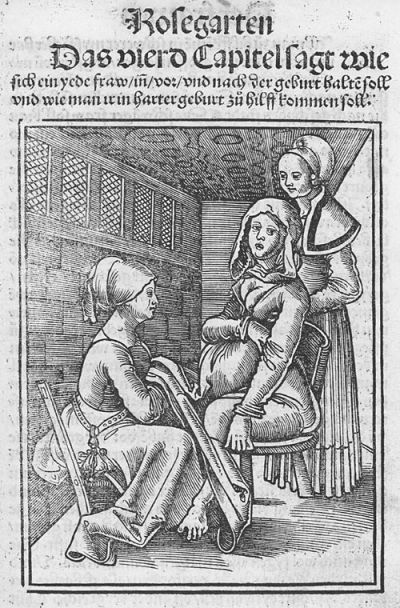
In Theaetetus, Socrates is having a discussion with a bright young man and compares the work of a good teacher and lover of wisdom to that work of a midwife. He (Socrates!) is helping his (male) student give birth!
Socrates says near the end:
Well now, dear lad, are we still pregnant, still in labor with any thoughts about knowledge? Or have we been delivered of them all?
Socrates proclaims that his mother and he are midwives: she of women, he of men.
Any commentator can point out two truths. First, Socrates is favorably using a woman centered analogy to describe the work of the mind despite the views of many in this city toward women. This is worth saying, but amounts to little more than “hoopla for Socrates.” Second, Plato is often accused of “despising the body,” but this is a very body centered image. This is one more example, out of jillions (start with Timaeus) that Plato does not dislike the physical.
There is a tougher truth, however, if you are me. I will never, ever fully understand this analogy as I could if I were a woman. Now there may be some philosophical analogies, like those comparing philosophy to making shoes, where a woman’s voice would be interesting, but not vital. Midwifery and giving birth are not that kind of example.
Whatever I know after two birthing classes and watching five births, it is not the same as what Hope experienced after two birthing classes and giving birth five times.
This is obvious, but needs to be said: a woman’s voice is privileged in explaining what this image of birth means. Much thinking is merely human, but sometimes, best I can, I must think as a thinking woman if I am to grasp some important truth. Plainly the best way to learn these skills, or how to hear this voice, will be to listen and learn from women.
Nobody should think from this that “thinking as a woman” only entails analogies related to giving birth! The different and valuable voice of Sophia (wisdom!) crosses every idea, every analogy, every discipline.
Plato has simply reminded us through this image of philosophy that a man, alone, cannot be fecund. There is absurdity to Socrates and Theaetetus discussing these things without a woman’s voice and that absurdity, the intellectual sterility of sameness, is part of the point. Humankind should see that both voices are valuable all the time, but too often we do not.
This image makes it plain: the obvious said with an example so plain even the foolish must see. Of course, the moment this is said one realizes that “different” is only relative to me, because I am a male. It is not “different” as in exotic, since more than half the world’s thinkers are female!
The woman giving birth is the student . . . the midwife is the teacher . . . and no man is needed. Socrates can be a midwife becomes he, a man, has learned to think as a woman! There are different analogies requiring different voices . . . and God has given us a wonderfully diverse cosmos with tribes, nations, women, men, to teach!
All of these ideas make me wish to listen and learn. There are deeper implications, harder truths, but at least my teachers can help me give birth . . . as I learn to think more humanly by learning a different voice.
—————————————-
*Leave aside for a moment whether these differences are the result of biological or social factors, or both in some combination. From the time I read Carol Gilligan, I have been persuaded there is a “different voice” than my own.
Plato is the greatest philosopher outside of Christendom. Reject him or accept him, nobody ignores him. This summer I will be looking at the first lines of all of his dialogues. Because he carefully crafted his dialogues, the first line often contains clues to the meaning of what will come next. I have written about how to read Plato in When Athens Met Jerusalem and The Great Books Reader. I tried my hand at Platonic myth making in Chasing Shadows.
Apology begins with the persuasiveness of crowds and the need for the elite to listen. Euthyphro tells us to avoid being a jerk for justice. We must be strong to finish what we start or we become Crito and face death with our eyes wide open as Phaedo shows Socrates did. Cratylus demonstrates that words are . . .interesting. The Theaetetus teaches us how to know.
Previous Post

July 13, 2016
Knowing Isn't So Easy (Theaetetus)
Next Post
July 15, 2016 Hated for Our Virtues: France, USA, and the World
Browse Our Archives
Select a Category Apologetics Art Culture Education On Books On Education Philosophy Politics Pop Culture Spiritual Reflections Uncategorized
Select a Month October 2026 September 2026 August 2026 July 2026 July 2025 June 2025 September 2024 July 2024 June 2024 December 2023 June 2023 September 2022 May 2022 April 2022 March 2022 February 2022 July 2021 June 2021 May 2021 April 2021 March 2021 February 2021 January 2021 December 2020 November 2020 October 2020 September 2020 August 2020 July 2020 June 2020 May 2020 April 2020 March 2020 February 2020 January 2020 December 2019 November 2019 October 2019 September 2019 August 2019 July 2019 June 2019 May 2019 April 2019 March 2019 February 2019 January 2019 December 2018 November 2018 October 2018 September 2018 August 2018 July 2018 June 2018 May 2018 April 2018 March 2018 February 2018 January 2018 December 2017 November 2017 October 2017 September 2017 August 2017 July 2017 June 2017 May 2017 April 2017 March 2017 February 2017 January 2017 December 2016 November 2016 October 2016 September 2016 August 2016 July 2016 June 2016 May 2016 April 2016 March 2016 February 2016 January 2016 December 2015 November 2015 October 2015 September 2015 August 2015 July 2015 June 2015 May 2015 April 2015 March 2015 February 2015 January 2015 November 2014 October 2014 September 2014 August 2014 July 2014 June 2014 May 2014 April 2014 March 2014 February 2014 January 2014 December 2013 November 2013 October 2013 September 2013 August 2013 July 2013 June 2013 May 2013 April 2013 March 2013 February 2013 January 2013 December 2012 November 2012 October 2012 September 2012 August 2012 July 2012 June 2012 May 2012
Follow Us!
TAKE THE
Religious Wisdom Quiz
What Christian group is known for wearing black hats and beards?
Select your answer to see how you score.
Mennonites Amish Quakers Orthodox Jews
Books by This Author John Mark Reynolds
Related posts from Eidos

Classical Education and the Art of Dying Well

Golden, Golden, Golden: My Mother's Last Lesson


When the Center Holds: A Tribute to My...
TRENDING AT PATHEOS Evangelical

The REST of Your Life: A Creative Wrestles...
This week I had a conversation with a good friend from church....

How the author of the world's best hymn...
I've been working with John Newton for a while now. This makes...

Long before this Lectio Divina, Psalm 130 - the song - started...

What About the Trees? Another Living Parable
After I finished writing the last article about falling leaves as a...

Why Classical Education Is a Conversation, Not a...
Come and Read: Joy in Classical Education When I was a little...

Cornell University has received a great deal of negative publicity and intense...
view all Evangelical blogs
Ad-Free & Subscriber Log-In Subscription Support
- About Us
- 2026 Calendar
- Videos
- Podcasts
- Library of World Religions
- Faith In Media Tracker
- Advertise With Us
- Write for Us
- Privacy Policy
- Terms of Service
- Do Not Sell My Data
- Contact Us
- Radiant Digital
- Manage Newsletter Subscriptions
- Unsubscribe From Notifications
- Sitemap
Copyright 2008-2026, Patheos. All rights reserved.
Subscription Support Ad-Free & Subscriber Log-In
Follow Patheos