
BuddhistCatholicContemplativeEvangelicalGeneral ChristianHinduJewishLatter-day SaintMuslimNew VisionsProgressive Christian
Beliefs
- Buddhist
- Catholic
- Contemplative
- Evangelical
- General Christian
- Hindu
- Jewish
- Latter-day Saint
- More Voices
- Muslim
- New Visions
- Pagan
- Progressive Christian
Topics
- Religion News
- Food and Religion
- Sports and Religion
- Religious Art
- Religious Music and Entertainment
- Religious Events
- History and Religion
- Style and Religion
- Politics and Religion
- Women in Religion
- Recreation Outdoors and Religion
- Business Finance and Religion
- Careers Workplace and Religion
- Education and Religion
- Family Parenting and Religion
- Health Fitness and Religion
- Home and Religion
- Relationships and Religion
- Technology and Religion
- Travel and Religion
Columnists
- Buddhist Columnists
- Business Finance and Religion Columnists
- Careers Workplace and Religion Columnists
- Catholic Columnists
- Contemplative Columnists
- Education and Religion Columnists
- Evangelists Columnists
- Family Parenting and Religion Columnists
- General Christian Columnists
- Health Fitness and Religion Columnists
- Hindu Columnists
- History and Religion Columnists
- Home and Religion Columnists
- Jewish Columnists
- More Voices Columnists
- Latter Day Columnists
- Muslim Columnists
- New Visions Columnists
- Nonreligious Columnists
- Pagan Columnists
- Politics and Religion Columnists
- Progressive Columnists
- Recreation Outdoors and Religion Columnists
- Relationships and Religion Columnists
- Religion News Columnists
- Religious Art Columnists
- Religious Events Columnists
- Religious Music and Entertainment Columnists
- Sports and Religion Columnists
- Style and Religion Columnists
- Technology and Religion Columnists
- Travel and Religion Columnists
- Women in Religion Columnists
Resource Library
- 2026 Calendar
- Library of World Religions
- The 100 Most Holy Places on Earth
- Patheos Answers
- Podcasts
- Videos
- Faith Leaders Database
- Anglican Episcopalian
- Bahai
- Baptist
- Buddhism
- Christianity
- Confucianism
- Eastern Orthodoxy
- Hinduism
- Holiness and Pentecostal
- ISKCON
- Islam
- Judaism
- Lutheran
- Methodist
- The Church of Jesus Christ of Latter-day Saints
- New Age
- Paganism
- Presbytarian and Reformed
- Protestantism
- Religion Behind the Scenes
- Roman Catholic
- Scientology
- Shia Islam
- Sikhism
- Sufism
- Sunni Islam
- Taoism
- Zen
- See all religions
Research Tools
 Ad-Free & Subscriber Log-In Subscription Support
Ad-Free & Subscriber Log-In Subscription Support
Follow Patheos 

- Trending:
- Forgiveness
- |
- Marriage
- |
- Consciousness
- |
- Death Penalty
- |
- Election
- |
- Halloween

- Home
- Evangelical
- Names Will Never Hurt Us (Cratylus)
Names Will Never Hurt Us (Cratylus)
Last updated on: July 3, 2016 at 9:38 pm by John Mark N. Reynolds
Names Will Never Hurt Us (Cratylus) 2016-07-03T21:38:18-04:00 John Mark N. Reynolds
Patheos Explore the world's faith through different perspectives on religion and spirituality! Patheos has the views of the prevalent religions and spiritualities of the world.
Sticks and stones may break my bones,
but words will never hurt me.
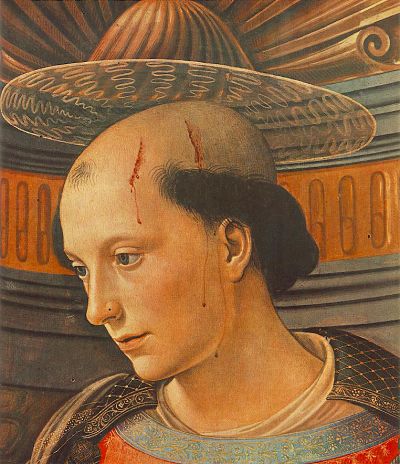
Stones broke his bones. His words hurt them.
How did such an obviously false rhyme get passed down to me on the playground?* Words are much more hurtful than getting punched.
I don’t remember a single fight that still matters to me, but several slurs from elementary school still sting.
When kids in Rochester called me “Reb” in fourth grade, because of my West Virginia accent, it hurt. A teacher said my accent would make every line I delivered in the school play funnier. I objected so strenuously based on my passion for all things Lincoln and Grant combined with family heritage that they gave me the nickname: “Yankee.”
O.K.
Words sting. Yet . . . maybe that is on me. If you hit me with a stone, it will break my bones whatever I will. If you throw words at me, then I can dodge them. Words don’t have to hurt, if they have no hook on which to hang in my soul.
Take Saint Stephen. He was stoned and they broke his bones, but his words were what stirred up the mob. They should not have been hurt by his words, but they were and so Stephen died. They broke his bones, he could not help that, but their words did not hurt him. His words, full of grace and truth, drove them mad.
What are words? They don’t seem real, but they are powerful, close to magical. That Hope said she loved me at the right time in the right place has produced four human beings and transformed thousands of lives. Certainly divine revelation takes words seriously as does the greatest of philosophers: Plato.
He wrote an odd little dialogue on words, Cratylus, that includes some strange fake word origins, word play, and the closest any philosopher comes to comedy while doing serious work. Sadly, the main point of the Cratylus can get lost in all the fun.
Cratylus begins with Hermogenes saying:
Here is Socrates; shall we take him as a partner in our discussion?
Sadly, most who read the dialogue forget the start. Hermogenes suggests to his friend that they take Socrates into their community. He uses words to form a partnership.
Whatever else words can do, they can form a community or destroy one. In all else that happens in the Cratylus, and much is just delightful nonsense, this truth is shown repeatedly.
Words link persons through discussion. They are magical only when we give them power. It is the one divine power we can be sure that God has given man: our words create bonds. Some of these ties are so powerful that they lead to the only physical act that can create new human life, but Plato shows even a greater bond. This relationship creates human civilization and makes human life worth living.
Words and the relationship of words to objects is not settled in Cratylus. Instead, we see a community trying to form by the playful discussion of ideas. This kind of relationship has produced science, literature, art, and philosophy as people attempt to see the truth together.
I have been in a room where that has happened. A teacher has leaned forward and looked at me and invited me to a community, a city, formed in words and sustained by words. As we lived out the vision of that community, the words became incarnate in our lives. The relationship became real.
This is a mystery.
Sticks and stones may break my bones, but those words healed me, helped me, humbled me.
—————————————–
*Once, dear children, we played outside at school, we were not particularly supervised, and we talked to each other using our mouths and not a screen. We knew folk wisdom, much of it nonsense, that we passed on from generation to generation. For example, I “learned” Bubble Yum is made soft by spider eggs. Then I learned that this lie was passed to us by rival gum makers to get us to stop buying Bubble Yum. It was an odd time the 1970’s.
Plato is the greatest philosopher outside of Christendom. Reject him or accept him, nobody ignores him. This summer I will be looking at the first lines of all of his dialogues. Because he carefully crafted his dialogues, the first line often contain clues to the meaning of what will come next. I have written about how to read Plato in When Athens Met Jerusalem and The Great Books Reader. I tried my hand at Platonic myth making in Chasing Shadows.
Apology begins with the persuasiveness of crowds and the need for the elite to listen. Euthyphro tells us to avoid being a jerk for justice. We must be strong to finish what we start or we become Crito and face death with our eyes wide open as Phaedo shows Socrates did. Cratylus demonstrates that words are . . .interesting.
Previous Post

July 2, 2016
My Life Long Pal: Three Things to Learn from Daniel Reynolds
Next Post
July 4, 2016 God, Patriotism, and Books in School
Browse Our Archives
Select a Category Apologetics Art Culture Education On Books On Education Philosophy Politics Pop Culture Spiritual Reflections Uncategorized
Select a Month October 2026 September 2026 August 2026 July 2026 July 2025 June 2025 September 2024 July 2024 June 2024 December 2023 June 2023 September 2022 May 2022 April 2022 March 2022 February 2022 July 2021 June 2021 May 2021 April 2021 March 2021 February 2021 January 2021 December 2020 November 2020 October 2020 September 2020 August 2020 July 2020 June 2020 May 2020 April 2020 March 2020 February 2020 January 2020 December 2019 November 2019 October 2019 September 2019 August 2019 July 2019 June 2019 May 2019 April 2019 March 2019 February 2019 January 2019 December 2018 November 2018 October 2018 September 2018 August 2018 July 2018 June 2018 May 2018 April 2018 March 2018 February 2018 January 2018 December 2017 November 2017 October 2017 September 2017 August 2017 July 2017 June 2017 May 2017 April 2017 March 2017 February 2017 January 2017 December 2016 November 2016 October 2016 September 2016 August 2016 July 2016 June 2016 May 2016 April 2016 March 2016 February 2016 January 2016 December 2015 November 2015 October 2015 September 2015 August 2015 July 2015 June 2015 May 2015 April 2015 March 2015 February 2015 January 2015 November 2014 October 2014 September 2014 August 2014 July 2014 June 2014 May 2014 April 2014 March 2014 February 2014 January 2014 December 2013 November 2013 October 2013 September 2013 August 2013 July 2013 June 2013 May 2013 April 2013 March 2013 February 2013 January 2013 December 2012 November 2012 October 2012 September 2012 August 2012 July 2012 June 2012 May 2012
Follow Us!
TAKE THE
Religious Wisdom Quiz
In Revelation, what does John eat that is sweet in his mouth but sour in his stomach?
Select your answer to see how you score.
A little scroll A sealed book The word of God Honey
Books by This Author John Mark Reynolds
Related posts from Eidos

Why Classical Education Is a Conversation, Not a...

Does Classical Education Belong Only to the West?

Classical Education Must Teach Us to Make the...

Rooted: Why Classical Education Needs Community
TRENDING AT PATHEOS Evangelical

The REST of Your Life: A Creative Wrestles...
This week I had a conversation with a good friend from church....

How the author of the world's best hymn...
I've been working with John Newton for a while now. This makes...

Long before this Lectio Divina, Psalm 130 - the song - started...

What About the Trees? Another Living Parable
After I finished writing the last article about falling leaves as a...

Why Classical Education Is a Conversation, Not a...
Come and Read: Joy in Classical Education When I was a little...

Cornell University has received a great deal of negative publicity and intense...
view all Evangelical blogs
Ad-Free & Subscriber Log-In Subscription Support
- About Us
- 2026 Calendar
- Videos
- Podcasts
- Library of World Religions
- Faith In Media Tracker
- Advertise With Us
- Write for Us
- Privacy Policy
- Terms of Service
- Do Not Sell My Data
- Contact Us
- Radiant Digital
- Manage Newsletter Subscriptions
- Unsubscribe From Notifications
- Sitemap
Copyright 2008-2026, Patheos. All rights reserved.
Subscription Support Ad-Free & Subscriber Log-In
Follow Patheos