
BuddhistCatholicContemplativeEvangelicalGeneral ChristianHinduJewishLatter-day SaintMuslimNew VisionsProgressive Christian
Beliefs
- Buddhist
- Catholic
- Contemplative
- Evangelical
- General Christian
- Hindu
- Jewish
- Latter-day Saint
- More Voices
- Muslim
- New Visions
- Pagan
- Progressive Christian
Topics
- Religion News
- Food and Religion
- Sports and Religion
- Religious Art
- Religious Music and Entertainment
- Religious Events
- History and Religion
- Style and Religion
- Politics and Religion
- Women in Religion
- Recreation Outdoors and Religion
- Business Finance and Religion
- Careers Workplace and Religion
- Education and Religion
- Family Parenting and Religion
- Health Fitness and Religion
- Home and Religion
- Relationships and Religion
- Technology and Religion
- Travel and Religion
Columnists
- Buddhist Columnists
- Business Finance and Religion Columnists
- Careers Workplace and Religion Columnists
- Catholic Columnists
- Contemplative Columnists
- Education and Religion Columnists
- Evangelists Columnists
- Family Parenting and Religion Columnists
- General Christian Columnists
- Health Fitness and Religion Columnists
- Hindu Columnists
- History and Religion Columnists
- Home and Religion Columnists
- Jewish Columnists
- More Voices Columnists
- Latter Day Columnists
- Muslim Columnists
- New Visions Columnists
- Nonreligious Columnists
- Pagan Columnists
- Politics and Religion Columnists
- Progressive Columnists
- Recreation Outdoors and Religion Columnists
- Relationships and Religion Columnists
- Religion News Columnists
- Religious Art Columnists
- Religious Events Columnists
- Religious Music and Entertainment Columnists
- Sports and Religion Columnists
- Style and Religion Columnists
- Technology and Religion Columnists
- Travel and Religion Columnists
- Women in Religion Columnists
Resource Library
- 2026 Calendar
- Library of World Religions
- The 100 Most Holy Places on Earth
- Patheos Answers
- Podcasts
- Videos
- Faith Leaders Database
- Anglican Episcopalian
- Bahai
- Baptist
- Buddhism
- Christianity
- Confucianism
- Eastern Orthodoxy
- Hinduism
- Holiness and Pentecostal
- ISKCON
- Islam
- Judaism
- Lutheran
- Methodist
- The Church of Jesus Christ of Latter-day Saints
- New Age
- Paganism
- Presbytarian and Reformed
- Protestantism
- Religion Behind the Scenes
- Roman Catholic
- Scientology
- Shia Islam
- Sikhism
- Sufism
- Sunni Islam
- Taoism
- Zen
- See all religions
Research Tools
 Ad-Free & Subscriber Log-In Subscription Support
Ad-Free & Subscriber Log-In Subscription Support
Follow Patheos 

- Trending:
- Forgiveness
- |
- Marriage
- |
- Consciousness
- |
- Death Penalty
- |
- Election
- |
- Halloween

- Home
- Evangelical
- Love Is Destroyed by the Lust for Control (Venus and Adonis)
Love Is Destroyed by the Lust for Control (Venus and Adonis)
Last updated on: June 13, 2016 at 11:53 am by John Mark N. Reynolds
Love Is Destroyed by the Lust for Control (Venus and Adonis) 2016-06-13T01:02:22-04:00 John Mark N. Reynolds
Patheos Explore the world's faith through different perspectives on religion and spirituality! Patheos has the views of the prevalent religions and spiritualities of the world.
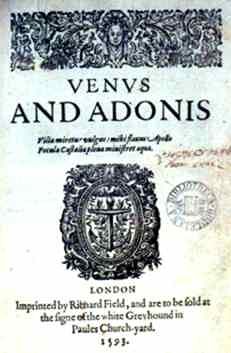 Love does not exist where there is a lust for control. If the insights of Saint Paul on love do not convince a Christian, then he has a problem. The last thing a lover would ask the beloved is to be “in charge,” because love demands nothing. A lover might be in charge in the work world, somebody had to marry Queen Victoria and Albert got the job, but love has its own economy that has nothing to do with power politics.
Some of the ancients, and sadly American campus culture, is less sure. Poets like Ovid go soft on assault or control by the “gods.” Power might be an aphrodisiac, but it is not the beginning of Christian love. After all, God who is love was all powerful and emptied Himself of power to come to Earth in solidarity with His beloved children. God’s love for us included emptying Himself and taking on the form of a servant.
When a man is in love, he is humble before the beloved, not arrogant. He is thankful for attention and never demands obedience. He would die for the beloved, but never demand the beloved serve him. Love cannot coexist with the lust for control. Where control is, love flees to God who gave it and sin and death destroy happiness. Ovid romanticized the least romantic thing on Earth: the will to power.
Thank goodness Shakespeare took a myth of Ovid (the attempted rape of Adonis by Venus) and made love plain in his first published work Venus and Adonis. If you doubt the positive difference Christianity made in classical culture, read Ovid and then Shakespeare and rejoice you live in this age.
Venus, the goddess of erotic love, “woos” Adonis, but her desire is immoderate and she uses her power from the start:
Being so enraged, desire doth lend her force
Courageously to pluck him from his horse.
Nothing good can come from a relationship built of frenzied desire and nothing good does come of it. Adonis is a young man out hunting . . . in love with hunting and not looking for sexual love, but Venus does not care about his desires. She wants what she wants.
Backward she push’d him, as she would be thrust,
And govern’d him in strength, though not in lust.
Venus does not care for his desire and here Shakespeare drives home his point for his male readers. Venus is treating Adonis the way many powerful men treat women:
He burns with bashful shame: she with her tears
Doth quench the maiden burning of his cheeks;
Then with her windy sighs and golden hairs
To fan and blow them dry again she seeks:
He saith she is immodest, blames her ‘miss;
What follows more she murders with a kiss.
Shakespeare has reversed the normal order of Elizabethan times so that a lord can see what happens when he demands that some woman be his lady.
Throughout the poem, the desire of Venus is to “feed” on Adonis. Like the devils in CS Lewis’ Screwtape Letters, what Venus calls “love” is simply the desire to use, consume, and pleasure herself. Nothing is left of Adonis as he is not allowed to speak, what does lust need with words, and even his fear stokes her desire. Venus is revealed not as the goddess of erotic love, but as the will to power. She boasts of her power over Mars and there is no love to be found in her passion.
She tries religious arguments: he has a duty to love her, because he should make children. As the poem continues, she becomes more violent:
She would, he will not in her arms be bound;
And when from thence he struggles to be gone,
She locks her lily fingers one in one.
He might have escaped her, but his horse runs away with a filly! The courtship of the two horses is more appropriate than that of Venus and Adonis as both the animals are willing!
Shakespeare has Venus go through every trick of the controlling “lover.” She pretends his rejection has killed her so that he stays with her all night and cares for her. She begs one kiss and wears him down:
Hot, faint, and weary, with her hard embracing,
Like a wild bird being tamed with too much handling,
Or as the fleet-foot roe that’s tired with chasing,
Or like the froward infant still’d with dandling,
He now obeys, and now no more resisteth,
While she takes all she can, not all she listeth.
He responds to her, not of love, but out of weariness with saying “no.” But he is not in love with Venus, because despite her amorous looks and claims of “love,” he knows, even though just a boy, that she is a liar:
‘Call it not love, for Love to heaven is fled,
Since sweating Lust on earth usurp’d his name;
Under whose simple semblance he hath fed
Upon fresh beauty, blotting it with blame;
Which the hot tyrant stains and soon bereaves,
As caterpillars do the tender leaves.‘Love comforteth like sunshine after rain,
But Lust’s effect is tempest after sun;
Love’s gentle spring doth always fresh remain,
Lust’s winter comes ere summer half be done;
Love surfeits not, Lust like a glutton dies;
Love is all truth, Lust full of forged lies.
Love is not lust. Lust is desire coupled to power, where love is desire coupled to humility. Adonis is recapitulating the ‘love chapter” in I Corinthians, but stops: “More I could tell, but more I dare not say; The text is old, the orator too green.” Adonis finally escapes Venus to continue his boyish pursuit of boar hunting where, of course, he dies. She mourns him extravagantly, curses love, and heads to her home to mourn forever . . . or until the next time she has lust.
If Saint Paul told us what love is, then Shakespeare has explained love’s counterfeit. Venus uses force, ignoring the will of the beloved. Venus lies to gain her ends. Venus will not take “no” for an answer. Venus is extravagant in desire, mourning, and passion, but false and flighty. At the other end of his career, Shakespeare will create Cordelia , everything Venus is not. Cordelia is a true lover of her country, her husband, and her father with a love that sacrifices and redeems all three.
God, make us to love like Cordelia, a love that “comforteth,” “remains fresh,” is moderate and so never ends, and “is all truth.” God who is love, fill us.
Aside: those tempted by the idea that Shakespeare did not write his plays need only read this poem plainly written by Shakespeare. The young genius was not writing Hamlet quite yet, but the capacity was there.
——————————————–
William Shakespeare went to God four hundred years ago. To recollect his death, I am writing a personal reflection on a few of his plays. The Winter’s Tale started things off, followed by As You Like It. Romeo and Juliet still matter, Lady Macbeth rebukes the lust for power, and Henry V is a hero. Richard II shows us not to presume on the grace of God or rebel against authority too easily. Coriolanus reminds us that our leaders need integrity and humility. Our life can be joyful if we realize that it is, at best, A Comedy of Errors. Hamlet needs to know himself better and talks to himself less. He is stuck with himself so he had better make his peace with God quickly and should stay far away from Ophelia. Shakespeare gets something wrong in Merchant of Venice . . . though not as badly as some in the English Labour Party or in my Twitter feed. Love if blind, but intellectualism is blind and impotent in Love’s Labours Lost. Brutus kills Caesar, but is overshadowed by him in Julius Caesar. We should learn not to make Much Ado about Nothing. We might all be Antony, but if we would avoid his fate then we must avoid flattery and the superficial love of Troilus and Cressida. We are fools, but our goal should be to accept it and not to degenerate into Biblical fools during our Midsummer Night’s Dream. Richard III is a symptom of a bad leadership community, but be careful that use Measure for Measure to guide your reaction to the mess. The modern university is Iago in Othello playing on our sins to destroy the nation. You can’t accumulate your way to a great leader and personal piety in Henry VI (Part I) is not enough to make a great king. God will save the King, not our stupid partisan squabbles seen in Henry VI (Part 2) and not kingmakers as existed in Henry VI (Part 3). Fortunately, in God’s world All’s Well That Ends Well. Two Gentlemen remind me that being in love is grand. King John keeps winning and so loses. Slander always gives way to truth in Cymbeline. We need patrons, but God help us if we flatter them and lose them as Athens did with Timon of Athens. We need good leaders and not have to hope against reason that one turns out well like young Prince Hal in Henry IV Part One. Being powerful is all fun and games, until it isn’t as Henry learns in Henry IV Part Two. Virtue can be jolly and edgy, as The Merry Wives of Windsor show. We can all be shrews and need The Taming of the Shrew. Pericles did not live in a Zootopia, his world was more realistic. No revenge lest we end like Titus Andronicus. Shakespeare shows what the fusion of Christianity and classicism did for all of us in Venus and Adonis.
Previous Post

June 12, 2016
The Toxic Fruit of Revenge (Titus Andronicus)
Next Post
June 14, 2016 Deliver Us From the Pursuit of Deadly Evil
Browse Our Archives
Select a Category Apologetics Art Culture Education On Books On Education Philosophy Politics Pop Culture Spiritual Reflections Uncategorized
Select a Month October 2026 September 2026 August 2026 July 2026 July 2025 June 2025 September 2024 July 2024 June 2024 December 2023 June 2023 September 2022 May 2022 April 2022 March 2022 February 2022 July 2021 June 2021 May 2021 April 2021 March 2021 February 2021 January 2021 December 2020 November 2020 October 2020 September 2020 August 2020 July 2020 June 2020 May 2020 April 2020 March 2020 February 2020 January 2020 December 2019 November 2019 October 2019 September 2019 August 2019 July 2019 June 2019 May 2019 April 2019 March 2019 February 2019 January 2019 December 2018 November 2018 October 2018 September 2018 August 2018 July 2018 June 2018 May 2018 April 2018 March 2018 February 2018 January 2018 December 2017 November 2017 October 2017 September 2017 August 2017 July 2017 June 2017 May 2017 April 2017 March 2017 February 2017 January 2017 December 2016 November 2016 October 2016 September 2016 August 2016 July 2016 June 2016 May 2016 April 2016 March 2016 February 2016 January 2016 December 2015 November 2015 October 2015 September 2015 August 2015 July 2015 June 2015 May 2015 April 2015 March 2015 February 2015 January 2015 November 2014 October 2014 September 2014 August 2014 July 2014 June 2014 May 2014 April 2014 March 2014 February 2014 January 2014 December 2013 November 2013 October 2013 September 2013 August 2013 July 2013 June 2013 May 2013 April 2013 March 2013 February 2013 January 2013 December 2012 November 2012 October 2012 September 2012 August 2012 July 2012 June 2012 May 2012
Follow Us!
TAKE THE
Religious Wisdom Quiz
Who tricked Isaac into giving him the blessing meant for his brother?
Select your answer to see how you score.
Esau Joseph Jacob Laban
Books by This Author John Mark Reynolds
Related posts from Eidos

Classical Education and the Art of Dying Well

Golden, Golden, Golden: My Mother's Last Lesson


When the Center Holds: A Tribute to My...
TRENDING AT PATHEOS Evangelical

The REST of Your Life: A Creative Wrestles...
This week I had a conversation with a good friend from church....

How the author of the world's best hymn...
I've been working with John Newton for a while now. This makes...

Long before this Lectio Divina, Psalm 130 - the song - started...

What About the Trees? Another Living Parable
After I finished writing the last article about falling leaves as a...

Why Classical Education Is a Conversation, Not a...
Come and Read: Joy in Classical Education When I was a little...

Cornell University has received a great deal of negative publicity and intense...
view all Evangelical blogs
Ad-Free & Subscriber Log-In Subscription Support
- About Us
- 2026 Calendar
- Videos
- Podcasts
- Library of World Religions
- Faith In Media Tracker
- Advertise With Us
- Write for Us
- Privacy Policy
- Terms of Service
- Do Not Sell My Data
- Contact Us
- Radiant Digital
- Manage Newsletter Subscriptions
- Unsubscribe From Notifications
- Sitemap
Copyright 2008-2026, Patheos. All rights reserved.
Subscription Support Ad-Free & Subscriber Log-In
Follow Patheos