
BuddhistCatholicContemplativeEvangelicalGeneral ChristianHinduJewishLatter-day SaintMuslimNew VisionsProgressive Christian
Beliefs
- Buddhist
- Catholic
- Contemplative
- Evangelical
- General Christian
- Hindu
- Jewish
- Latter-day Saint
- More Voices
- Muslim
- New Visions
- Pagan
- Progressive Christian
Topics
- Religion News
- Food and Religion
- Sports and Religion
- Religious Art
- Religious Music and Entertainment
- Religious Events
- History and Religion
- Style and Religion
- Politics and Religion
- Women in Religion
- Recreation Outdoors and Religion
- Business Finance and Religion
- Careers Workplace and Religion
- Education and Religion
- Family Parenting and Religion
- Health Fitness and Religion
- Home and Religion
- Relationships and Religion
- Technology and Religion
- Travel and Religion
Columnists
- Buddhist Columnists
- Business Finance and Religion Columnists
- Careers Workplace and Religion Columnists
- Catholic Columnists
- Contemplative Columnists
- Education and Religion Columnists
- Evangelists Columnists
- Family Parenting and Religion Columnists
- General Christian Columnists
- Health Fitness and Religion Columnists
- Hindu Columnists
- History and Religion Columnists
- Home and Religion Columnists
- Jewish Columnists
- More Voices Columnists
- Latter Day Columnists
- Muslim Columnists
- New Visions Columnists
- Nonreligious Columnists
- Pagan Columnists
- Politics and Religion Columnists
- Progressive Columnists
- Recreation Outdoors and Religion Columnists
- Relationships and Religion Columnists
- Religion News Columnists
- Religious Art Columnists
- Religious Events Columnists
- Religious Music and Entertainment Columnists
- Sports and Religion Columnists
- Style and Religion Columnists
- Technology and Religion Columnists
- Travel and Religion Columnists
- Women in Religion Columnists
Resource Library
- 2026 Calendar
- Library of World Religions
- The 100 Most Holy Places on Earth
- Patheos Answers
- Podcasts
- Videos
- Faith Leaders Database
- Anglican Episcopalian
- Bahai
- Baptist
- Buddhism
- Christianity
- Confucianism
- Eastern Orthodoxy
- Hinduism
- Holiness and Pentecostal
- ISKCON
- Islam
- Judaism
- Lutheran
- Methodist
- The Church of Jesus Christ of Latter-day Saints
- New Age
- Paganism
- Presbytarian and Reformed
- Protestantism
- Religion Behind the Scenes
- Roman Catholic
- Scientology
- Shia Islam
- Sikhism
- Sufism
- Sunni Islam
- Taoism
- Zen
- See all religions
Research Tools
 Ad-Free & Subscriber Log-In Subscription Support
Ad-Free & Subscriber Log-In Subscription Support
Follow Patheos 

- Trending:
- Forgiveness
- |
- Marriage
- |
- Consciousness
- |
- Death Penalty
- |
- Election
- |
- Halloween

- Home
- Evangelical
- Tyrants are Made, Not Born: How to Lose a Republic
Tyrants are Made, Not Born: How to Lose a Republic
Last updated on: May 7, 2016 at 8:54 pm by John Mark N. Reynolds
Tyrants are Made, Not Born: How to Lose a Republic 2016-05-07T20:54:24-04:00 John Mark N. Reynolds
Patheos Explore the world's faith through different perspectives on religion and spirituality! Patheos has the views of the prevalent religions and spiritualities of the world.
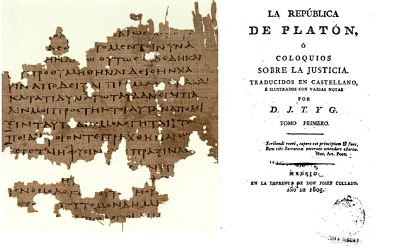 We don’t need to guess about how republics fail: we have history and philosophy to guide us. Republics end with tyrants, but that is an odd thing since a republican will hate tyrants by nature.
How do we get tyrants?
One wise man wrote on tyranny and the human soul and he tried to understand how tyrants were made. He knew that nobody was born a tyrant, but tyrants exist. He saw a so-called democracy advocate torture and murder the best man in the city, Socrates. How can we avoid tyranny and tyrants? If everyone is born rational and free, how are tyrants made? Plato thought about this question and proposed an answer Americans should consider just now.
Plato isn’t the inerrant word of God, but he is a thoughtful man who saw liberty used as an excuse to applaud sexual deviance, madness, and a hatred of wisdom.
If you have the time, go read Republic Book IX.* If not, start by considering what Plato had to say about the birth of a tyrant.
It begins with lawless fathers who have rejected any idea that their desires and pleasures should be moderated. Sex? Let’s have it. Food and drink? Let’s consume it. Money making? Isn’t that the very best thing?
Of course, liberty misused is soon liberty lost. The next generation goes a step further:
Then you must further imagine the same thing to happen to the son which has already happened to the father: –he is drawn into a perfectly lawless life, which by his seducers is termed perfect liberty; and his father and friends take part with his moderate desires, and the opposite party assist the opposite ones. As soon as these dire magicians and tyrant-makers find that they are losing their hold on him, they contrive to implant in him a master passion, to be lord over his idle and spendthrift lusts –a sort of monstrous winged drone –that is the only image which will adequately describe him.
Yes, he said, that is the only adequate image of him.
And when his other lusts, amid clouds of incense and perfumes and garlands and wines, and all the pleasures of a dissolute life, now let loose, come buzzing around him, nourishing to the utmost the sting of desire which they implant in his drone-like nature, then at last this lord of the soul, having Madness for the captain of his guard, breaks out into a frenzy: and if he finds in himself any good opinions or appetites in process of formation, and there is in him any sense of shame remaining, to these better principles he puts an end, and casts them forth until he has purged away temperance and brought in madness to the full.
Yes, he said, that is the way in which the tyrannical man is generated.
Don’t imagine that a lawless life is becoming a gangster. Plato is talking about moral law as well as the laws governments make. People might do the speed limit, but tell the decadent man to moderate his desires and he will go crazy. If anything gets in the way of fun or ease, he will reject it. A good man doesn’t need to be told what to do and this decadent man cannot be told what to do.
Slave owners have always understood (as Frederick Douglass explains in his autobiography) that the way to make a slave is to set loose his passions. He will associate liberty with a hangover and eventually will need a daddy to tell him what to do and to solve his problems. He is not a free man anymore, but the coddled. If you suggest his passion is unseemly, he will mock you. Why? He loves his desires more than goodness, his taste more than beauty, and his opinions more than truth.
A good people reject a tyrant, because they are good. If we have a higher law, something good, true, and beautiful, we do not need a tyrant to tell us what to do. If we keep God’s law, then man’s law can be small. If we cast off God’s law, then we will end up seeking a king, a lord, a tyrant to tell us how we should live. A slave can be given treats, but cannot be happy, because human happiness requires a flourishing body, soul, and heart. The indulgence of the decadent will eventually destroy some or all of his being. Generally, he will become immune to reason because reason might say: Stop. Think about it. Don’t do it.
To be happy, we need the laws of nature and of nature’s God. Reject those laws and soon we will find the sound of the demagogue, the promise of the tyrant that we can use hillbilly heroin, drop out of school, work less hard than our neighbors, loot our bank, lie on our job application, and still prosper. If we do not prosper, there must be an enemy out there somewhere that can be blamed.
We are no longer free because we will ignore any character defect, any decadence, to get what we want.
Put another way:
Where there is no vision, the people are unrestrained,
But happy is he who keeps the law.
______________________
I don’t always like his conclusions in his interpretive essay, but I love the translation of Allan Bloom.
Previous Post

May 6, 2016
Mountaineers are Always Human: Bigotry of the Elite
Next Post
May 8, 2016 Want to survive tough times? Buy Ketchup.
Browse Our Archives
Select a Category Apologetics Art Culture Education On Books On Education Philosophy Politics Pop Culture Spiritual Reflections Uncategorized
Select a Month October 2026 September 2026 August 2026 July 2026 July 2025 June 2025 September 2024 July 2024 June 2024 December 2023 June 2023 September 2022 May 2022 April 2022 March 2022 February 2022 July 2021 June 2021 May 2021 April 2021 March 2021 February 2021 January 2021 December 2020 November 2020 October 2020 September 2020 August 2020 July 2020 June 2020 May 2020 April 2020 March 2020 February 2020 January 2020 December 2019 November 2019 October 2019 September 2019 August 2019 July 2019 June 2019 May 2019 April 2019 March 2019 February 2019 January 2019 December 2018 November 2018 October 2018 September 2018 August 2018 July 2018 June 2018 May 2018 April 2018 March 2018 February 2018 January 2018 December 2017 November 2017 October 2017 September 2017 August 2017 July 2017 June 2017 May 2017 April 2017 March 2017 February 2017 January 2017 December 2016 November 2016 October 2016 September 2016 August 2016 July 2016 June 2016 May 2016 April 2016 March 2016 February 2016 January 2016 December 2015 November 2015 October 2015 September 2015 August 2015 July 2015 June 2015 May 2015 April 2015 March 2015 February 2015 January 2015 November 2014 October 2014 September 2014 August 2014 July 2014 June 2014 May 2014 April 2014 March 2014 February 2014 January 2014 December 2013 November 2013 October 2013 September 2013 August 2013 July 2013 June 2013 May 2013 April 2013 March 2013 February 2013 January 2013 December 2012 November 2012 October 2012 September 2012 August 2012 July 2012 June 2012 May 2012
Follow Us!
TAKE THE
Religious Wisdom Quiz
What does 1 John say the world and its desires are doing?
Select your answer to see how you score.
Passing away Being judged Growing darker Coming to an end
Books by This Author John Mark Reynolds
Related posts from Eidos

Yet I Love Her: History and the Church


The Iceberg is There: Verbosity Cannot Defeat Reality

TRENDING AT PATHEOS Evangelical

The REST of Your Life: A Creative Wrestles...
This week I had a conversation with a good friend from church....

How the author of the world's best hymn...
I've been working with John Newton for a while now. This makes...

Long before this Lectio Divina, Psalm 130 - the song - started...

What About the Trees? Another Living Parable
After I finished writing the last article about falling leaves as a...

Why Classical Education Is a Conversation, Not a...
Come and Read: Joy in Classical Education When I was a little...

Cornell University has received a great deal of negative publicity and intense...
view all Evangelical blogs
Ad-Free & Subscriber Log-In Subscription Support
- About Us
- 2026 Calendar
- Videos
- Podcasts
- Library of World Religions
- Faith In Media Tracker
- Advertise With Us
- Write for Us
- Privacy Policy
- Terms of Service
- Do Not Sell My Data
- Contact Us
- Radiant Digital
- Manage Newsletter Subscriptions
- Unsubscribe From Notifications
- Sitemap
Copyright 2008-2026, Patheos. All rights reserved.
Subscription Support Ad-Free & Subscriber Log-In
Follow Patheos