
BuddhistCatholicContemplativeEvangelicalGeneral ChristianHinduJewishLatter-day SaintMuslimNew VisionsProgressive Christian
Beliefs
- Buddhist
- Catholic
- Contemplative
- Evangelical
- General Christian
- Hindu
- Jewish
- Latter-day Saint
- More Voices
- Muslim
- New Visions
- Pagan
- Progressive Christian
Topics
- Religion News
- Food and Religion
- Sports and Religion
- Religious Art
- Religious Music and Entertainment
- Religious Events
- History and Religion
- Style and Religion
- Politics and Religion
- Women in Religion
- Recreation Outdoors and Religion
- Business Finance and Religion
- Careers Workplace and Religion
- Education and Religion
- Family Parenting and Religion
- Health Fitness and Religion
- Home and Religion
- Relationships and Religion
- Technology and Religion
- Travel and Religion
Columnists
- Buddhist Columnists
- Business Finance and Religion Columnists
- Careers Workplace and Religion Columnists
- Catholic Columnists
- Contemplative Columnists
- Education and Religion Columnists
- Evangelists Columnists
- Family Parenting and Religion Columnists
- General Christian Columnists
- Health Fitness and Religion Columnists
- Hindu Columnists
- History and Religion Columnists
- Home and Religion Columnists
- Jewish Columnists
- More Voices Columnists
- Latter Day Columnists
- Muslim Columnists
- New Visions Columnists
- Nonreligious Columnists
- Pagan Columnists
- Politics and Religion Columnists
- Progressive Columnists
- Recreation Outdoors and Religion Columnists
- Relationships and Religion Columnists
- Religion News Columnists
- Religious Art Columnists
- Religious Events Columnists
- Religious Music and Entertainment Columnists
- Sports and Religion Columnists
- Style and Religion Columnists
- Technology and Religion Columnists
- Travel and Religion Columnists
- Women in Religion Columnists
Resource Library
- 2026 Calendar
- Library of World Religions
- The 100 Most Holy Places on Earth
- Patheos Answers
- Podcasts
- Videos
- Faith Leaders Database
- Anglican Episcopalian
- Bahai
- Baptist
- Buddhism
- Christianity
- Confucianism
- Eastern Orthodoxy
- Hinduism
- Holiness and Pentecostal
- ISKCON
- Islam
- Judaism
- Lutheran
- Methodist
- The Church of Jesus Christ of Latter-day Saints
- New Age
- Paganism
- Presbytarian and Reformed
- Protestantism
- Religion Behind the Scenes
- Roman Catholic
- Scientology
- Shia Islam
- Sikhism
- Sufism
- Sunni Islam
- Taoism
- Zen
- See all religions
Research Tools
 Ad-Free & Subscriber Log-In Subscription Support
Ad-Free & Subscriber Log-In Subscription Support
Follow Patheos 

- Trending:
- Forgiveness
- |
- Marriage
- |
- Consciousness
- |
- Death Penalty
- |
- Election
- |
- Halloween

- Home
- Evangelical
- No Place for Kingmakers (Henry VI, Part 3)
No Place for Kingmakers (Henry VI, Part 3)
Last updated on: May 27, 2016 at 12:23 pm by John Mark N. Reynolds
No Place for Kingmakers (Henry VI, Part 3) 2016-05-27T12:23:22-04:00 John Mark N. Reynolds
Patheos Explore the world's faith through different perspectives on religion and spirituality! Patheos has the views of the prevalent religions and spiritualities of the world.
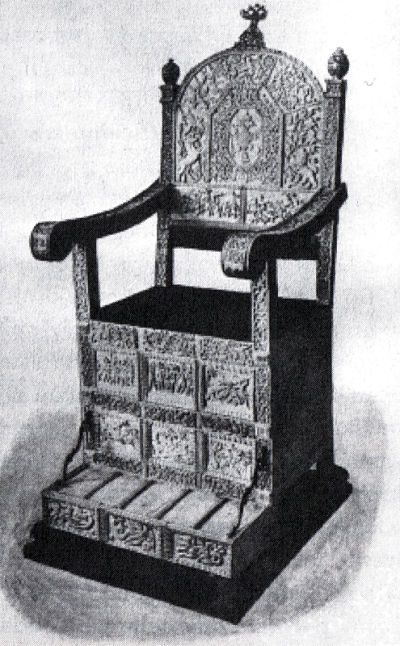 A sure way to spot a dysfunctional church, business, or organization is to look for kingmakers or would be kingmakers. The kingmaker is the man who makes the man: the person not out front, but who has the ‘real power.’
The kingmaker is the member of the elder board who thinks he really runs the church. “Pastors may come and go, but my family is forever.” Contradict the opinions of the kingmaker and your head will eventually roll. The kingmaker is the member of the business or ministry who is “the neck that turns the head” and allows the titular leader to shirk leadership responsibilities. In a nation, the kingmaker role is for the shadowy influence peddlers who try to wield power without appearing to wield power.
“I am not a politician or a government worker,” they cry as they manipulate the system with favors or money. A successful kingmakers loves pulling back the curtain and showing that the Great Oz does not run the show . . . they do.
Every system will attract kingmakers, the trick is to make sure they cannot succeed. If they do, there will be endless strife, bickering, and eventually failure. Nobody should wish to be a kingmaker because the role always involves lies. Why? The kingmaker props up someone else and pretends to those not in the know that the “king” has real power. This lie eventually is exposed and people rightly feel used. They liked the King, but nobody picked the kingmaker.
How can you tell a kingmaker from a good support team? A good team has clearly defined roles, including the role for the leader. The “king or queen” does his or her job, whatever it is, and the team supports that leadership. Everyone on the outside knows the power the leader has and is not deceived about who is doing the real work.
Academic ghostwriting is an example of the kingmaker role that people might miss. The apologist or leader is not as clever as people think, but the real brains prop him or her up to look like the leader is a thinker. The leader does not read your letter, the kingmaker does. The thinker knows nothing about the topic, but the research assistant or book the ideas come from does.
As is usually true, Shakespeare has wisdom to share. He gives us the best warning about the role of kingmaker and how it (almost) always ends in his play (the one with the worst title ever) Henry VI, Part 3. If you followed the first two in the series, you know King Henry is useless as a monarch. He is a confused and muddled man whose piety might make him a good monk, but is unsuited to be king. Sadly, Henry seems to like being king and so keeps accepting the role. Since he is the son of the awesome Henry V (the hero of Agincourt) people keep propping him up and using him as the figurehead leader. He is also easy to tear down.
The kingmaker in the play is Warwick, a character who first sides with Henry’s enemies (the House of York) and then when snubbed tries to restore Henry. Throughout the play he often has more power than either claimant to the throne, but will not take the job himself. If this were a proper humility, then there would be honor in humility, but Warwick wants the power (and marries his family into both sides) without the title. This cannot work. To remove oneself from the deadly glare of public attention that the crown gives while having all the power is a self-serving lie.
He is worst of all when he is propping up poor Henry.
The entire play shows that sham has replaced real leadership. People call men “father” and then fail to act as dutiful sons. They swear love to a women and then pursue someone else. Everyone is not what they seem and no title fits the man or woman who holds that title. England’s leadership (though not the heart of England) has become “unnatural.”
Of course, Warwick dies, but only after he drags the English Civil War forward through at least one more extraneous battle. He is careless with his enemies because he never knows when he will need a new front man. As a result, England bleeds. By the end of the play there is no legitimacy left in any leader because power, rule, and piety have all become separated. House of York or Lancaster? White Rose or Red? It does not matter: England will bleed.
England needs a leader who combines power, rule, and piety and Shakespeare foreshadows the man: a young boy (the future Henry VII) who is picked out by the pious old Henry and prophesied to be the man England needs. Nobody ever needs a kingmaker, especially the kingmaker who often ends alone like Warwick:
My blood, my want of strength, my sick heart shows.
That I must yield my body to the earth
And, by my fall, the conquest to my foe.
Thus yields the cedar to the axe’s edge,
Whose arms gave shelter to the princely eagle,
Under whose shade the ramping lion slept,
Whose top-branch overpeer’d Jove’s spreading tree
And kept low shrubs from winter’s powerful wind.
These eyes, that now are dimm’d with death’s black veil,
Have been as piercing as the mid-day sun,
To search the secret treasons of the world:
The wrinkles in my brows, now filled with blood,
Were liken’d oft to kingly sepulchres;
For who lived king, but I could dig his grave?
And who durst mine when Warwick bent his brow?
Lo, now my glory smear’d in dust and blood!
My parks, my walks, my manors that I had.
Even now forsake me, and of all my lands
Is nothing left me but my body’s length.
Why, what is pomp, rule, reign, but earth and dust?
And, live we how we can, yet die we must.
God, send us true leaders. God will save the King, but He is not in the business of saving kingmakers.
—————————————————————–
William Shakespeare went to God four hundred years ago. To recollect his death, I am writing a personal reflection on a few of his plays. The Winter’s Tale started things off, followed by As You Like It. Romeo and Juliet still matter, Lady Macbeth rebukes the lust for power, and Henry V is a hero. Richard II shows us not to presume on the grace of God or rebel against authority too easily. Coriolanus reminds us that our leaders need integrity and humility. Our life can be joyful if we realize that it is, at best, A Comedy of Errors. Hamlet needs to know himself better and talks to himself less. He is stuck with himself so he had better make his peace with God quickly and should stay far away from Ophelia. Shakespeare gets something wrong in Merchant of Venice . . . though not as badly as some in the English Labour Party or in my Twitter feed. Love if blind, but intellectualism is blind and impotent in Love’s Labours Lost. Brutus kills Caesar, but is overshadowed by him in Julius Caesar. We should learn not to make Much Ado about Nothing. We might all be Antony, but if we would avoid his fate then we must avoid flattery and the superficial love of Troilus and Cressida. We are fools, but our goal should be to accept it and not to degenerate into Biblical fools during our Midsummer Night’s Dream. Richard III is a symptom of a bad leadership community, but be careful that use Measure for Measure to guide your reaction to the mess. The modern university is Iago in Othello playing on our sins to destroy the nation. You can’t accumulate your way to a great leader and personal piety in Henry VI (Part I) is not enough to make a great king.
Previous Post

May 25, 2016
Use our Liberty to Create Hope
Next Post
May 27, 2016 Not Wanting What is Good For Me (All's Well That Ends Well)
Browse Our Archives
Select a Category Apologetics Art Culture Education On Books On Education Philosophy Politics Pop Culture Spiritual Reflections Uncategorized
Select a Month October 2026 September 2026 August 2026 July 2026 July 2025 June 2025 September 2024 July 2024 June 2024 December 2023 June 2023 September 2022 May 2022 April 2022 March 2022 February 2022 July 2021 June 2021 May 2021 April 2021 March 2021 February 2021 January 2021 December 2020 November 2020 October 2020 September 2020 August 2020 July 2020 June 2020 May 2020 April 2020 March 2020 February 2020 January 2020 December 2019 November 2019 October 2019 September 2019 August 2019 July 2019 June 2019 May 2019 April 2019 March 2019 February 2019 January 2019 December 2018 November 2018 October 2018 September 2018 August 2018 July 2018 June 2018 May 2018 April 2018 March 2018 February 2018 January 2018 December 2017 November 2017 October 2017 September 2017 August 2017 July 2017 June 2017 May 2017 April 2017 March 2017 February 2017 January 2017 December 2016 November 2016 October 2016 September 2016 August 2016 July 2016 June 2016 May 2016 April 2016 March 2016 February 2016 January 2016 December 2015 November 2015 October 2015 September 2015 August 2015 July 2015 June 2015 May 2015 April 2015 March 2015 February 2015 January 2015 November 2014 October 2014 September 2014 August 2014 July 2014 June 2014 May 2014 April 2014 March 2014 February 2014 January 2014 December 2013 November 2013 October 2013 September 2013 August 2013 July 2013 June 2013 May 2013 April 2013 March 2013 February 2013 January 2013 December 2012 November 2012 October 2012 September 2012 August 2012 July 2012 June 2012 May 2012
Follow Us!
TAKE THE
Religious Wisdom Quiz
What special power did Joseph have?
Select your answer to see how you score.
Building altars Writing scrolls Interpreting dreams Fighting giants
Books by This Author John Mark Reynolds
Related posts from Eidos

Classical Education Must Teach Us to Make the...

Classical Education and the Art of Dying Well

Golden, Golden, Golden: My Mother's Last Lesson

TRENDING AT PATHEOS Evangelical

The REST of Your Life: A Creative Wrestles...
This week I had a conversation with a good friend from church....

How the author of the world's best hymn...
I've been working with John Newton for a while now. This makes...

Long before this Lectio Divina, Psalm 130 - the song - started...

What About the Trees? Another Living Parable
After I finished writing the last article about falling leaves as a...

Why Classical Education Is a Conversation, Not a...
Come and Read: Joy in Classical Education When I was a little...

Cornell University has received a great deal of negative publicity and intense...
view all Evangelical blogs
Ad-Free & Subscriber Log-In Subscription Support
- About Us
- 2026 Calendar
- Videos
- Podcasts
- Library of World Religions
- Faith In Media Tracker
- Advertise With Us
- Write for Us
- Privacy Policy
- Terms of Service
- Do Not Sell My Data
- Contact Us
- Radiant Digital
- Manage Newsletter Subscriptions
- Unsubscribe From Notifications
- Sitemap
Copyright 2008-2026, Patheos. All rights reserved.
Subscription Support Ad-Free & Subscriber Log-In
Follow Patheos