
BuddhistCatholicContemplativeEvangelicalGeneral ChristianHinduJewishLatter-day SaintMuslimNew VisionsProgressive Christian
Beliefs
- Buddhist
- Catholic
- Contemplative
- Evangelical
- General Christian
- Hindu
- Jewish
- Latter-day Saint
- More Voices
- Muslim
- New Visions
- Pagan
- Progressive Christian
Topics
- Religion News
- Food and Religion
- Sports and Religion
- Religious Art
- Religious Music and Entertainment
- Religious Events
- History and Religion
- Style and Religion
- Politics and Religion
- Women in Religion
- Recreation Outdoors and Religion
- Business Finance and Religion
- Careers Workplace and Religion
- Education and Religion
- Family Parenting and Religion
- Health Fitness and Religion
- Home and Religion
- Relationships and Religion
- Technology and Religion
- Travel and Religion
Columnists
- Buddhist Columnists
- Business Finance and Religion Columnists
- Careers Workplace and Religion Columnists
- Catholic Columnists
- Contemplative Columnists
- Education and Religion Columnists
- Evangelists Columnists
- Family Parenting and Religion Columnists
- General Christian Columnists
- Health Fitness and Religion Columnists
- Hindu Columnists
- History and Religion Columnists
- Home and Religion Columnists
- Jewish Columnists
- More Voices Columnists
- Latter Day Columnists
- Muslim Columnists
- New Visions Columnists
- Nonreligious Columnists
- Pagan Columnists
- Politics and Religion Columnists
- Progressive Columnists
- Recreation Outdoors and Religion Columnists
- Relationships and Religion Columnists
- Religion News Columnists
- Religious Art Columnists
- Religious Events Columnists
- Religious Music and Entertainment Columnists
- Sports and Religion Columnists
- Style and Religion Columnists
- Technology and Religion Columnists
- Travel and Religion Columnists
- Women in Religion Columnists
Resource Library
- 2026 Calendar
- Library of World Religions
- The 100 Most Holy Places on Earth
- Patheos Answers
- Podcasts
- Videos
- Faith Leaders Database
- Anglican Episcopalian
- Bahai
- Baptist
- Buddhism
- Christianity
- Confucianism
- Eastern Orthodoxy
- Hinduism
- Holiness and Pentecostal
- ISKCON
- Islam
- Judaism
- Lutheran
- Methodist
- The Church of Jesus Christ of Latter-day Saints
- New Age
- Paganism
- Presbytarian and Reformed
- Protestantism
- Religion Behind the Scenes
- Roman Catholic
- Scientology
- Shia Islam
- Sikhism
- Sufism
- Sunni Islam
- Taoism
- Zen
- See all religions
Research Tools
 Ad-Free & Subscriber Log-In Subscription Support
Ad-Free & Subscriber Log-In Subscription Support
Follow Patheos 

- Trending:
- Forgiveness
- |
- Marriage
- |
- Consciousness
- |
- Death Penalty
- |
- Election
- |
- Halloween

- Home
- Evangelical
- Endurance and Not Words (Troilus and Cressida)
Endurance and Not Words (Troilus and Cressida)
Last updated on: May 26, 2016 at 11:44 am by John Mark N. Reynolds
Endurance and Not Words (Troilus and Cressida) 2016-05-26T11:44:04-04:00 John Mark N. Reynolds
Patheos Explore the world's faith through different perspectives on religion and spirituality! Patheos has the views of the prevalent religions and spiritualities of the world.
 I love you.
Very powerful to say today, but most powerful to say every day for thirty years or more. To endure in love is harder than to be in love and words are less important than deeds. This is as true in business and politics as it is in personal relationships. Anybody can say love words and even act on them once, but most of us cannot stand the pressure of change and chance.
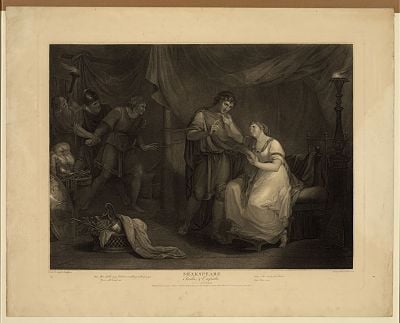
Shakespeare wrote an odd play, Troilus and Cressida, about two lovers in the middle of the Trojan War. The play is as much about the political and war chiefs as it is about the lovers and all fails. Love fails. Politics fails. Generalship fails. Why?
People talk about endurance, loyalty, and abiding love, but mostly they shift with opinion. Tell them a thing is bad and they hate it, tomorrow they will love it if the right people say it is so.
Pride is a greater motive to Achilles, Ajax, Agamemnon, and Hector, than virtue. Troilus says he will love Cressida forever, but once he has her, he seems terribly eager to leave her the next morning. If later he is jealous, the motive seems more like injured pride than love. Cressida is, perhaps, unfaithful, but she is in a tough spot . . . sold off to the enemy. . . doing the best she can . . . and Troilus is unfeeling about her situation.
There is nobody in the play that thinks first of others and then of self. Thersites, like the Homeric original, is ugly and crude, but also somewhat wise. He pops the word bubbles that the cartoonish nobility speak. Sadly, Thersites has nothing positive to put in the place of puffery. After everyone is deflated, nothing is left. He is wise enough not to believe flattery, but not good enough to speak the truth.
It is not enough to be busy mocking and exposing fakery if one has nothing good, true, and beautiful to put in its place. This is romance, but nobody is romantic. Everyone postures about honor, love of the community, or family, but all are like Uncle Pander in the play: full of words that do not mean anything when put to the test. Troilus lets his city send his “lover” off the Greeks. The Greeks are willing to play mind games with Achilles rather than tell the truth about the war, themselves, and the situation.
The war is based on a false adulterous love (Paris and Helen) and can only continue because when the truth is spoken (Helen is not worth the loss of life), both sides keep going because it is all they know.
If we are not careful, we shall be like these fools: more interested in professions of love, than love. Christianity is odd in that it demands we love everyone, even our enemies. This is hard today and only great saints actually end up doing it, but the striving to do is good. Just as reducing from three packs a day to one cigarette a day is better than doing nothing, so hating a great deal less without achieving divine perfection is good for our community.
We can only know this when we endure, when we are unwilling to lie to others or to self in order to “win.” Pander, aptly named, says to the lovers:
Go to, a bargain made: seal it, seal it; I’ll be the
witness. Here I hold your hand, here my cousin’s.
If ever you prove false one to another, since I have 1850
taken such pains to bring you together, let all
pitiful goers-between be called to the world’s end
after my name; call them all Pandars; let all
constant men be Troiluses, all false women Cressids,
and all brokers-between Pandars! say, amen.
We all wish to be true lovers and never pander to base desire. We want to speak the truth, but we can only do so when we see the truth, speak the truth, and endure in the truth . . . even in defeat.
We must be able to say to all the members of the commonwealth with endurance:
I love you.
————————————————–
William Shakespeare went to God four hundred years ago. To recollect his death, I am writing a personal reflection on a few of his plays. The Winter’s Tale started things off, followed by As You Like It. Romeo and Juliet still matter, Lady Macbeth rebukes the lust for power, and Henry V is a hero. Richard II shows us not to presume on the grace of God or rebel against authority too easily. Coriolanus reminds us that our leaders need integrity and humility. Our life can be joyful if we realize that it is, at best, A Comedy of Errors. Hamlet needs to know himself better and talks to himself less. He is stuck with himself so he had better make his peace with God quickly and should stay far away from Ophelia. Shakespeare gets something wrong in Merchant of Venice . . . though not as badly as some in the English Labour Party or in my Twitter feed. Love if blind, but intellectualism is blind and impotent in Love’s Labours Lost. Brutus kills Caesar, but is overshadowed by him in Julius Caesar. We should learn not to make Much Ado about Nothing. We might all be Antony, but if we would avoid his fate then we must avoid flattery and the superficial love of Troilus and Cressida.
Previous Post

May 13, 2016
More than an "N" Christian: in the Family
Next Post
May 15, 2016 Have a Galilee Moment: Jesus is Here as He Always Has Been
Browse Our Archives
Select a Category Apologetics Art Culture Education On Books On Education Philosophy Politics Pop Culture Spiritual Reflections Uncategorized
Select a Month October 2026 September 2026 August 2026 July 2026 July 2025 June 2025 September 2024 July 2024 June 2024 December 2023 June 2023 September 2022 May 2022 April 2022 March 2022 February 2022 July 2021 June 2021 May 2021 April 2021 March 2021 February 2021 January 2021 December 2020 November 2020 October 2020 September 2020 August 2020 July 2020 June 2020 May 2020 April 2020 March 2020 February 2020 January 2020 December 2019 November 2019 October 2019 September 2019 August 2019 July 2019 June 2019 May 2019 April 2019 March 2019 February 2019 January 2019 December 2018 November 2018 October 2018 September 2018 August 2018 July 2018 June 2018 May 2018 April 2018 March 2018 February 2018 January 2018 December 2017 November 2017 October 2017 September 2017 August 2017 July 2017 June 2017 May 2017 April 2017 March 2017 February 2017 January 2017 December 2016 November 2016 October 2016 September 2016 August 2016 July 2016 June 2016 May 2016 April 2016 March 2016 February 2016 January 2016 December 2015 November 2015 October 2015 September 2015 August 2015 July 2015 June 2015 May 2015 April 2015 March 2015 February 2015 January 2015 November 2014 October 2014 September 2014 August 2014 July 2014 June 2014 May 2014 April 2014 March 2014 February 2014 January 2014 December 2013 November 2013 October 2013 September 2013 August 2013 July 2013 June 2013 May 2013 April 2013 March 2013 February 2013 January 2013 December 2012 November 2012 October 2012 September 2012 August 2012 July 2012 June 2012 May 2012
Follow Us!
TAKE THE
Religious Wisdom Quiz
Which book is famous for hundreds of short sayings about wise living?
Select your answer to see how you score.
Leviticus Revelation Psalms Proverbs
Books by This Author John Mark Reynolds
Related posts from Eidos

Classical Education Must Teach Us to Make the...


The Man of All Talents: the Extraordinary Life...

TRENDING AT PATHEOS Evangelical

The REST of Your Life: A Creative Wrestles...
This week I had a conversation with a good friend from church....

How the author of the world's best hymn...
I've been working with John Newton for a while now. This makes...

Long before this Lectio Divina, Psalm 130 - the song - started...

What About the Trees? Another Living Parable
After I finished writing the last article about falling leaves as a...

Why Classical Education Is a Conversation, Not a...
Come and Read: Joy in Classical Education When I was a little...

Cornell University has received a great deal of negative publicity and intense...
view all Evangelical blogs
Ad-Free & Subscriber Log-In Subscription Support
- About Us
- 2026 Calendar
- Videos
- Podcasts
- Library of World Religions
- Faith In Media Tracker
- Advertise With Us
- Write for Us
- Privacy Policy
- Terms of Service
- Do Not Sell My Data
- Contact Us
- Radiant Digital
- Manage Newsletter Subscriptions
- Unsubscribe From Notifications
- Sitemap
Copyright 2008-2026, Patheos. All rights reserved.
Subscription Support Ad-Free & Subscriber Log-In
Follow Patheos